Takoyaki: Calories, Nutrition and Health Benefits
Osaka's beloved octopus balls - crispy outside, tender inside, packed with umami flavor and surprisingly good protein from the sea.
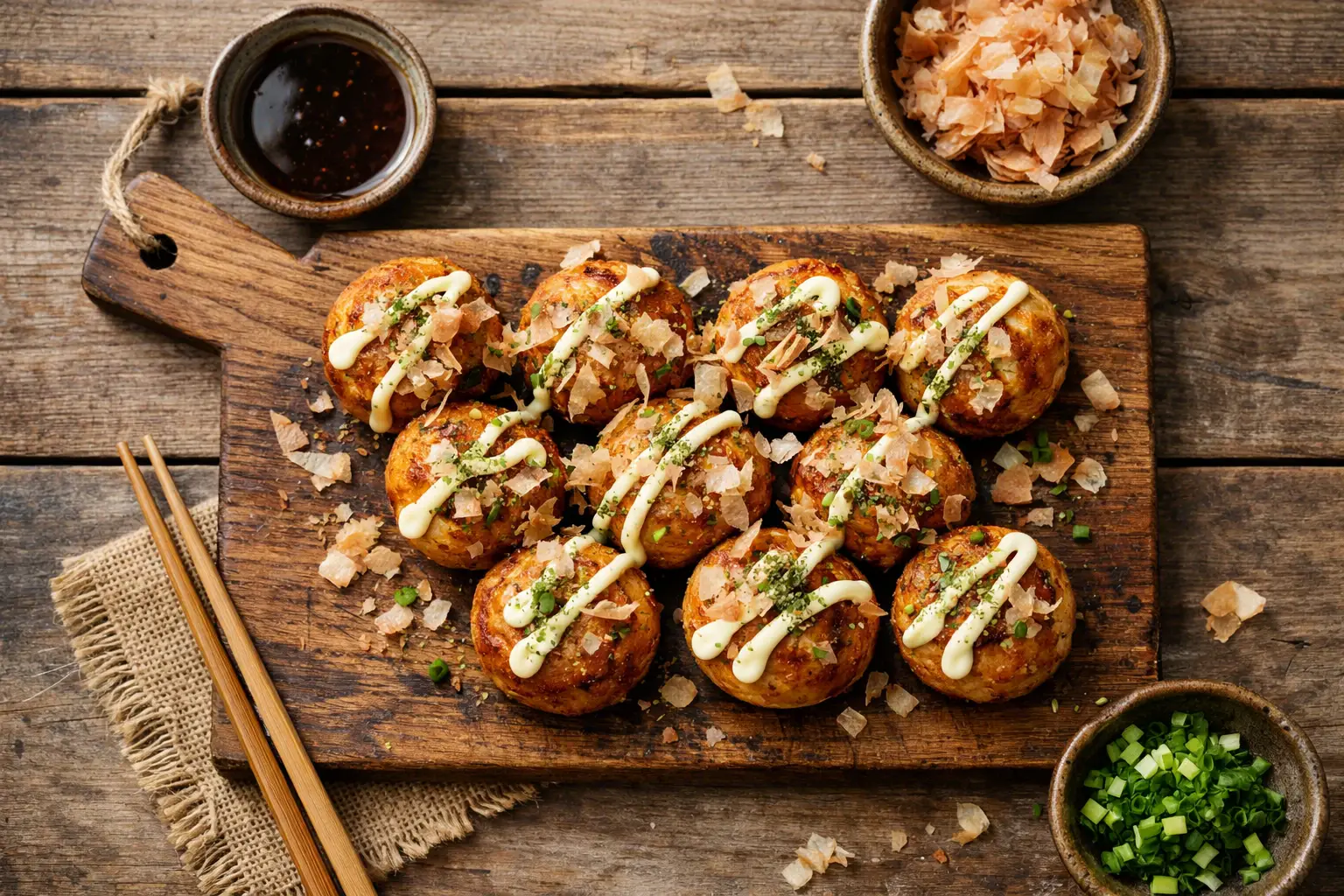
Quick Nutrition Facts
Per 6 Pieces (132g)
| Nutrient | Amount |
|---|---|
| Calories | 350 kcal |
| Protein | 14g |
| Carbohydrates | 42g |
| Fiber | 2g |
| Sugars | 5g |
| Fat | 12g |
| Saturated Fat | 4g |
| Sodium | 890mg |
| Iron | 2.1mg |
| Calcium | 71mg |
Macronutrient Breakdown
 ChatGPT
  Claude
  AI Mode
  Perplexity
NUTRITIONIST INSIGHT
Takoyaki delivers 14g of high-quality protein from octopus, making it more nutritious than many fried snacks. The octopus provides iron and vitamin B12 for energy. Enjoy as an occasional treat, but watch the sodium - one serving has 39% of your daily limit.
Myth Busters
MYTH #1: Takoyaki Is Just Empty Calories
TRUTH: Unlike many fried snacks, takoyaki contains quality protein from octopus (14g per serving). Octopus is rich in vitamin B12, iron, and selenium, providing genuine nutritional value alongside the carbs and fat.
MYTH #2: All Street Food Is Unhealthy
TRUTH: Takoyaki is one of the healthier Japanese street foods. Japanese cuisine patterns, including street foods in moderation, are associated with longevity and lower obesity rates. It's the frequency and portions that matter.
MYTH #3: You Should Avoid Takoyaki When Dieting
TRUTH: Total calorie balance matters more than avoiding specific foods. 2-3 pieces (about 115 calories) can fit into any diet. Skipping the mayo topping saves 50-100 calories. Flexible dieting approaches show better long-term adherence than strict food avoidance.
MYTH #4: Octopus Is High in Mercury
TRUTH: Octopus is actually low in mercury compared to larger predatory fish. Takoyaki is safer than tuna or swordfish during pregnancy. The main concerns are sodium and proper cooking, not heavy metals.
MYTH #5: Takoyaki Is Too High in Sodium
TRUTH: Yes, at 890mg per serving (39% DV), takoyaki is sodium-dense. But this is from the sauce and seasonings, not the takoyaki itself. Skip or reduce the sauce to cut sodium by 40-50%. Most sodium in diets comes from processed foods, making occasional takoyaki a minor contributor.
NutriScore by Health Goals
| Health Goal | NutriScore | Why This Score? |
|---|---|---|
| Weight Loss |  | 350 calories and 12g fat per serving is calorie-dense. Limit to 2-3 pieces, skip mayo to reduce 100+ calories. |
| Muscle Gain |  | 14g complete protein from octopus supports muscle synthesis. Good post-workout with carbs for glycogen. Pair with vegetables. |
| Diabetes Management | | 42g refined carbs from wheat batter spikes blood sugar. Fried batter foods show rapid glucose release. Limit to 2 pieces with protein. |
| PCOS Management | | Refined carbs and fried preparation affect insulin sensitivity. Save for occasional treats only. |
| Pregnancy Nutrition |  | Octopus is low in mercury and safe when fully cooked. Watch sodium intake; provides iron and B12. Limit to 4-6 pieces weekly. |
| Viral/Flu Recovery | | Easy-to-digest protein, iron for energy recovery. Warm food soothes throat. High sodium helps with hydration. Good comfort food during recovery. |
PERSONALIZED NUTRITION
Track your meals with NutriScan for personalized NutriScores based on your specific health goals!
Blood Sugar Response to Takoyaki
Understanding how takoyaki affects your blood glucose helps you make smarter decisions about when and how much to enjoy.
Typical Glucose Response Curve
This chart shows typical blood glucose response for general healthy individuals. Individual responses may vary. Not medical advice.
How to Flatten the Spike
Pairing carb-rich foods with protein and fiber slows glucose absorption and reduces the peak blood sugar level:
- 🥗 Start with a salad - Fiber-rich vegetables slow carb absorption
- 🍵 Green tea - Catechins may help moderate glucose response
- 🥢 Edamame appetizer - Adds protein and fiber before the carbs arrive
- 🥒 Pickled vegetables (tsukemono) - Fermented foods support gut health and glucose control
Skip the sweet takoyaki sauce or use less to reduce added sugars and moderate the glucose spike.
Cultural Significance
Takoyaki was invented in 1935 by street vendor Tomekichi Endo in Osaka, making it a relatively modern Japanese creation with deep cultural roots.
In Japan:
- Symbol of Osaka's food culture - the city has more takoyaki shops per capita than anywhere else
- Festival staple at matsuri (traditional festivals) across Japan
- Home cooking tradition - many families own takoyaki pans for gatherings
- Regional variations include Tokyo's round shape vs Osaka's slightly flattened balls
Global Impact:
- Spread worldwide through Japanese restaurants and food trucks
- Popular street food in Southeast Asia, particularly Taiwan and Thailand
- Fusion versions include cheese-filled, curry-flavored, and dessert varieties
- Recognized globally as an iconic Japanese comfort food
Compare & Substitute
Takoyaki vs Similar Japanese Street Foods (Per 100g)
| Nutrient | 🐙 Takoyaki | 🥟 Gyoza | 🍳 Okonomiyaki | 🍢 Yakitori |
|---|---|---|---|---|
| Calories | 265 kcal | 230 kcal | 200 kcal | 150 kcal |
| Carbs | 32g | 25g | 24g | 2g |
| Fiber | 1.5g | 1.8g | 2.5g | 0g |
| Protein | 11g | 10g | 8g | 27g |
| Fat | 9g | 10g | 9g | 5g |
| Sodium | 675mg | 520mg | 580mg | 650mg |
| Best For | Quick snack, protein | Balanced meal, variety | Satisfying, vegetables | High protein, low carb |
Frequently Asked Questions
How many calories are in takoyaki?
A standard serving of 6 takoyaki pieces (132g) contains approximately 350 calories. Each individual ball has about 58 calories. The calories come from the wheat flour batter (54% carbs), oil used in cooking (33% fat), and octopus filling (13% protein).
Calorie breakdown by topping:
- Plain takoyaki (no toppings): ~280 calories
- With takoyaki sauce only: ~310 calories
- With sauce + mayo: ~350-380 calories
- With all toppings (sauce, mayo, bonito, aonori): ~380-400 calories
Is takoyaki healthy to eat?
Takoyaki offers genuine nutritional benefits alongside its indulgent nature. The octopus provides 14g of complete protein, iron (12% DV), and vitamin B12. However, it's a fried food with significant sodium (39% DV per serving).
Healthier takoyaki tips:
- Limit to 3-4 pieces as part of a balanced meal
- Skip or reduce mayo to cut 50-100 calories
- Pair with vegetables or salad
- Choose homemade over heavily sauced restaurant versions
Can diabetics eat takoyaki?
Diabetics should be cautious with takoyaki due to its 42g carbohydrates per serving from refined wheat flour. The fried batter causes rapid glucose release.
Tips for diabetics:
- Limit to 2-3 pieces maximum (about 20g carbs)
- Always pair with protein or non-starchy vegetables
- Avoid on empty stomach - eat after fiber-rich foods
- Monitor blood sugar 2 hours after eating
- Skip the sweet takoyaki sauce
Is takoyaki good for weight loss?
Takoyaki is calorie-dense and not ideal for weight loss. At 350 calories per serving with 12g fat, it can quickly consume a significant portion of daily calorie budgets.
If including in weight loss diet:
- Limit to 2-3 pieces (about 115 calories)
- Count as your carb portion for that meal
- Skip mayo topping (saves 50-100 calories)
- Pair with vegetable-heavy dishes
- Enjoy as occasional treat, not regular snack
Is takoyaki safe during pregnancy?
Yes, takoyaki is generally safe during pregnancy when fully cooked. Octopus is low in mercury compared to larger predatory fish, making it a safer seafood choice.
Pregnancy considerations:
- Ensure octopus is thoroughly cooked through (no raw centers)
- Watch sodium intake - limit to 4-6 pieces per week
- Benefits: Iron (helps prevent anemia), B12, protein
- Avoid if you have gestational diabetes due to carb content
What is takoyaki made of?
Core ingredients:
- Batter: Wheat flour, eggs, dashi (fish stock), water
- Filling: Diced octopus (tako), tempura scraps (tenkasu), pickled ginger (beni shoga), green onions
Toppings (traditional):
- Takoyaki sauce (similar to Worcestershire)
- Japanese mayonnaise
- Bonito flakes (katsuobushi)
- Aonori (green seaweed powder)
Allergen note: Contains wheat, egg, fish, and sometimes soy - not suitable for gluten-free, vegan, or shellfish-allergy diets.
How many takoyaki should I eat per serving?
Recommended portions by goal:
- Weight loss: 2-3 pieces (115 calories, 21g carbs)
- Maintenance: 4-6 pieces (one standard serving)
- Muscle gain/athletes: 6-8 pieces with protein supplement
- Diabetics: 2-3 pieces maximum with protein pairing
A typical restaurant serving is 6-8 pieces. For healthier portions, share one order between two people or order as an appetizer before a vegetable-heavy main course.


Similar Nutritious Foods
4505 Chicharrones Classic Chili Salt
7 Eleven Japan Crispy Corn Cheese
Explore More Nutrition Tools & Resources
AI Calorie Counter App - Snap a Photo, Get Macros
AI Nutritionist App That Reads Your Logged Meals
Best Protein Supplements for Women
Bulking Meal Plan App That Sets Your Surplus
ChatGPT Calorie Counter Alternative That Keeps the Total
ChatGPT Diet Plan Alternative That Tracks What You Eat
ChatGPT Weight Loss Coach Alternative With a Food Log
Fast Food Calorie Counter App That Reads the Tray
Free Calorie Tracker App with AI Photo Scans | NutriScan
Indian Diet Plan App With Veg and Non Veg Meals
Indian Food Calorie Calculator - Get Instant Nutrition Facts for Desi Meals — 2026
Intermittent Fasting for Women, Timer and Meal Log App
Intermittent Fasting Tracker App - Free Fasting Timer
Macro Tracker App That Fills the Numbers From a Photo
Mediterranean Diet Meal Plan App That Counts the Oil
Micronutrient Tracker App for Vitamins and Minerals
MyFitnessPal Alternative That Stays Free | NutriScan
NutriScore App: A Free Grade on Every Meal | NutriScan
Nutrition Label Scanner App for the Amount You Ate
Second Trimester Protein Guide
Vegetarian Meal Plan App With a Protein Target
Voice Calorie Counter - Speak to Track Meals Hands-Free
Water and Calorie Tracker App - Free Water Log