Beef Tallow: Calories, Nutrition and Health Benefits
Traditional rendered beef fat prized for high-heat cooking, rich in fat-soluble vitamins, and making a comeback in ancestral and keto diets.
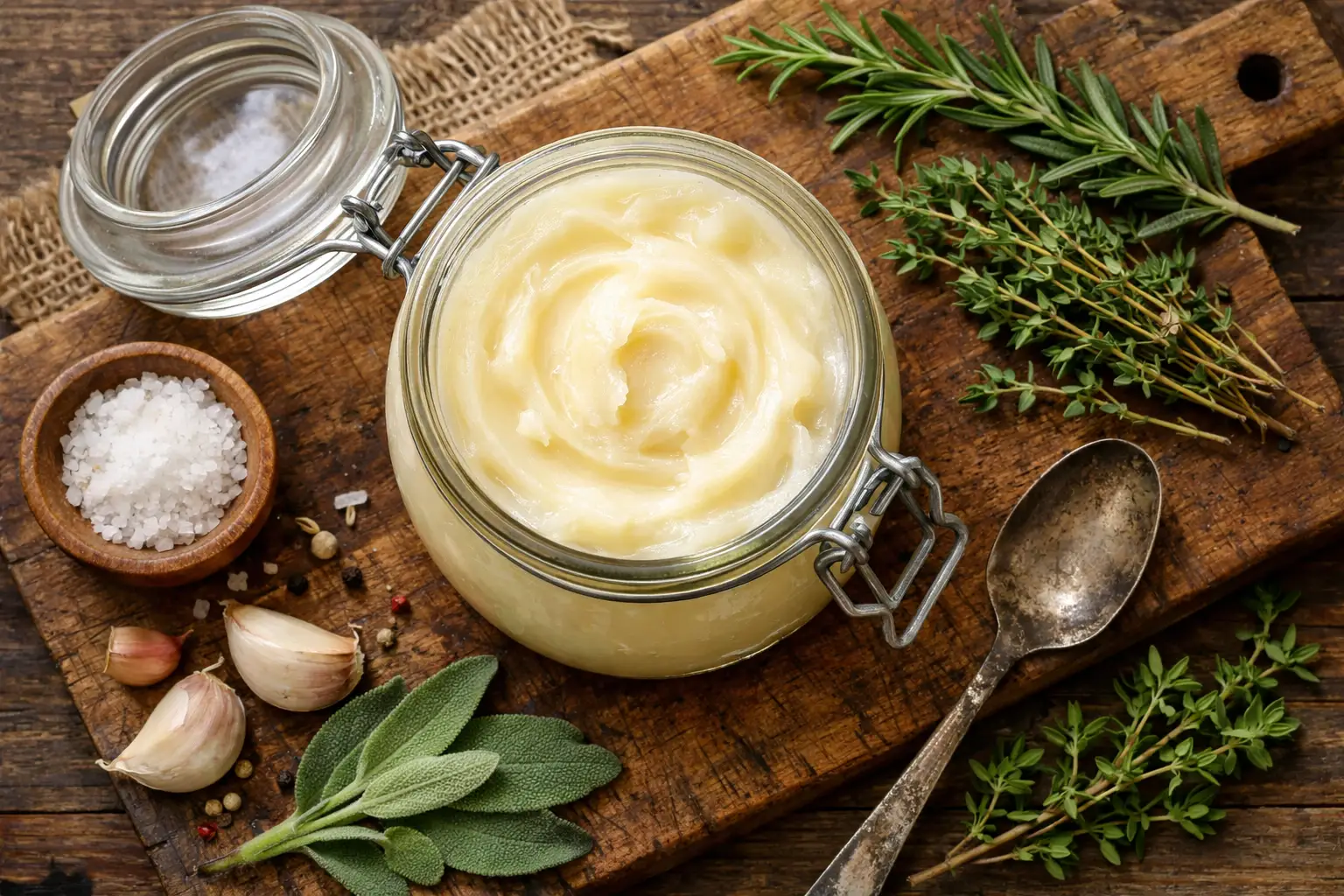
Quick Nutrition Facts
Per 1 Tablespoon (13g)
| Nutrient | Amount |
|---|---|
| Calories | 117 kcal |
| Protein | 0g |
| Carbohydrates | 0g |
| Fiber | 0g |
| Sugars | 0g |
| Total Fat | 13g |
| Saturated Fat | 6.5g |
| Monounsaturated Fat | 5.4g |
| Polyunsaturated Fat | 0.5g |
| Cholesterol | 14mg |
| Vitamin D | 3.6 IU |
| Vitamin E | 0.35mg |
Macronutrient Breakdown
 ChatGPT
  Claude
  AI Mode
  Perplexity
NUTRITIONIST INSIGHT
Beef tallow is nearly 50% monounsaturated fat (the same type found in olive oil) and contains stearic acid, a saturated fat shown to be neutral on LDL cholesterol. Its high smoke point (420-480°F) makes it one of the most stable cooking fats for high-heat methods.
Myth Busters
MYTH #1: All Saturated Fat in Tallow Is Bad for Your Heart
TRUTH: Not all saturated fatty acids behave the same. Tallow is rich in stearic acid, which research shows is neutral on LDL cholesterol because the body converts it to oleic acid (a heart-healthy monounsaturated fat). The overall fatty acid profile matters more than total saturated fat content.
MYTH #2: Tallow Directly Causes Heart Disease
TRUTH: The relationship between dietary fat and heart disease is complex. Harvard research confirms that replacing saturated fat with unsaturated fat reduces CVD risk markers, but tallow consumed in moderation within a whole-food diet shows different metabolic effects than in processed food contexts.
MYTH #3: Tallow Has No Nutritional Value
TRUTH: Tallow provides fat-soluble vitamins D and E, and grass-fed tallow contains vitamin A and conjugated linoleic acid (CLA), studied for anti-inflammatory properties. It also supplies essential fatty acids needed for hormone production and cell membrane integrity.
MYTH #4: Plant Oils Are Always Healthier Than Tallow
TRUTH: While extra virgin olive oil has strong evidence for heart benefits, highly refined seed oils can produce harmful compounds when heated. Tallow's saturated structure makes it more heat-stable, producing fewer oxidation byproducts at high temperatures than many polyunsaturated oils.
MYTH #5: Tallow Is Just Junk Food Grease
TRUTH: McDonald's famously fried in tallow until 1990, switching to partially hydrogenated vegetable oils that introduced trans fats. Tallow has been a staple cooking fat for thousands of years across civilizations. The modern ancestral health movement recognizes its nutritional value when sourced from grass-fed cattle.
NutriScore by Health Goals
| Health Goal | NutriScore | Why This Score? |
|---|---|---|
| Weight Loss |  | 117 calories per tablespoon, calorie-dense. Use sparingly (1 tsp for cooking). Satiating fat helps control hunger but portions matter. |
| Muscle Gain |  | Good calorie source for bulking. Fat supports testosterone production. No protein content, so pair with protein-rich foods. |
| Diabetes Management |  | Zero carbs, GI of 0, no blood sugar impact. Mayo Clinic notes high saturated fat may affect insulin sensitivity long-term. Use in moderation. |
| PCOS Management | | Fat supports hormone balance but excess saturated fat may worsen inflammation. Limit to 1 tbsp daily, prefer grass-fed. |
| Pregnancy Nutrition | | Fat-soluble vitamins D and E support fetal development. ACOG recommends balanced fat intake. Choose grass-fed for CLA and vitamin A. |
| Viral/Flu Recovery | | Calorie-dense energy source when appetite is low. Fat-soluble vitamins support immune function. Easy to add to broths and soups. |
PERSONALIZED NUTRITION
Track your meals with NutriScan for personalized NutriScores based on your specific health goals!
Blood Sugar Response to Beef Tallow
Beef tallow contains zero carbohydrates, so it has virtually no direct impact on blood glucose levels. The glycemic index is 0.
Typical Glucose Response Curve
This chart shows typical blood glucose response for general healthy individuals. Individual responses may vary. Not medical advice.
How Fat Affects Blood Sugar
Fat slows gastric emptying and glucose absorption when eaten with carbohydrate-rich foods, which can help flatten post-meal glucose spikes:
- 🍳 Cook vegetables in tallow - Adds satiety and slows carb absorption
- 🥩 Use for searing meat - Enhances flavor without adding carbs
- 🥔 Roast root vegetables in tallow - Reduces glycemic impact of starchy foods
- 🍲 Add to bone broth - Boosts calories and fat-soluble vitamin absorption
Note: While tallow does not raise blood sugar directly, chronic high saturated fat intake may affect insulin sensitivity over time. Use in moderation.
Cultural Significance
Beef tallow has been a cornerstone of human cooking and industry for millennia.
Ancient & Traditional Uses:
- Egyptians used rendered animal fat for cooking, soap-making, and religious rituals
- Romans relied on tallow for frying, roasting, and making topical balms
- British fish and chips were traditionally fried in beef tallow before WWII
- Medieval Europe depended on tallow candles as the primary light source
Indigenous Heritage:
- Plains tribes (Lakota, Blackfoot, Cree) rendered bison tallow as a primary energy fat
- Pemmican (dried meat + tallow + berries) sustained communities through harsh winters
- Nose-to-tail practices ensured no part of the animal was wasted
Modern Revival:
- Ancestral health, carnivore, and keto movements are driving a tallow renaissance
- Grass-fed tallow marketed as a zero-waste, nose-to-tail product
- Growing use in natural skincare (tallow closely matches human sebum composition)
- Procter & Gamble was founded on tallow-based candle and soap manufacturing
Compare & Substitute
Beef Tallow vs Other Cooking Fats (Per 100g)
| Nutrient | 🥩 Beef Tallow | 🧈 Butter | 🥥 Coconut Oil | 🫒 Olive Oil (EVOO) | 🐷 Lard |
|---|---|---|---|---|---|
| Calories | 902 kcal | 717 kcal | 862 kcal | 884 kcal | 902 kcal |
| Saturated Fat | 49.8g | 50.5g | 82.5g | 14g | 39g |
| MUFA | 41.8g | 23.4g | 6.3g | 73g | 45g |
| PUFA | 4.0g | 3.0g | 1.7g | 11g | 11g |
| Cholesterol | 109mg | 215mg | 0mg | 0mg | 95mg |
| Smoke Point | 420-480°F | 300-350°F | 350-400°F | 375-410°F | 370-400°F |
| Best For | High-heat frying, searing | Baking, low-heat sauteing | Medium-heat cooking, baking | Dressings, medium-heat saute | Frying, pastry, pie crusts |
Source: USDA FoodData Central; NCBI Fat Composition Table
Frequently Asked Questions
Is beef tallow healthy to cook with?
Beef tallow has a high smoke point (420-480°F) making it one of the most stable fats for frying, searing, and roasting. It contains fat-soluble vitamins D and E, and its stearic acid content is considered neutral on LDL cholesterol.
Best practices: Use 1 tablespoon per cooking session, choose grass-fed when available, and balance with other fat sources like olive oil throughout the day.
How many calories are in a tablespoon of tallow?
1 tablespoon (13g) contains 117 calories, all from fat. The fat breaks down to 6.5g saturated, 5.4g monounsaturated, and 0.5g polyunsaturated fat. This is similar to other cooking fats like lard (117 cal) and slightly more than butter (102 cal per tbsp).
Is tallow better than butter for cooking?
Tallow has a much higher smoke point (420-480°F vs 300-350°F for butter), making it better for high-heat cooking. Tallow also has lower cholesterol (109mg vs 215mg per 100g) and more monounsaturated fat. Butter has more flavor variety and contains vitamin A.
Choose tallow for: Deep frying, searing steaks, roasting vegetables. Choose butter for: Baking, finishing sauces, spreading.
Can diabetics use beef tallow?
Tallow has zero carbohydrates and a glycemic index of 0, so it does not raise blood sugar directly. It can be a useful cooking fat for diabetics following low-carb diets.
Important: High saturated fat intake over time may affect insulin sensitivity. Limit to 1-2 tablespoons daily, balance with unsaturated fats, and consult your healthcare provider.
What is the difference between tallow and lard?
Tallow is rendered beef fat; lard is rendered pork fat. Tallow has more saturated fat (49.8g vs 39g per 100g), a higher smoke point (420-480°F vs 370-400°F), and a more neutral flavor. Lard has more polyunsaturated fat (11g vs 4g) and is traditionally preferred for pie crusts and pastries.
Does grass-fed tallow have more nutrients?
Yes, grass-fed beef tallow contains significantly more fat-soluble vitamins A and D, higher levels of conjugated linoleic acid (CLA), and more omega-3 fatty acids compared to grain-fed tallow. CLA has been studied for anti-inflammatory and body composition benefits.


Similar Nutritious Foods
4505 Chicharrones Classic Chili Salt
7 Eleven Japan Crispy Corn Cheese
Explore More Nutrition Tools & Resources
AI Calorie Counter App - Snap a Photo, Get Macros
AI Nutritionist App That Reads Your Logged Meals
Best Protein Supplements for Women
Bulking Meal Plan App That Sets Your Surplus
ChatGPT Calorie Counter Alternative That Keeps the Total
ChatGPT Diet Plan Alternative That Tracks What You Eat
ChatGPT Weight Loss Coach Alternative With a Food Log
Fast Food Calorie Counter App That Reads the Tray
Free Calorie Tracker App with AI Photo Scans | NutriScan
Indian Diet Plan App With Veg and Non Veg Meals
Indian Food Calorie Calculator - Get Instant Nutrition Facts for Desi Meals — 2026
Intermittent Fasting for Women, Timer and Meal Log App
Intermittent Fasting Tracker App - Free Fasting Timer
Macro Tracker App That Fills the Numbers From a Photo
Mediterranean Diet Meal Plan App That Counts the Oil
Micronutrient Tracker App for Vitamins and Minerals
MyFitnessPal Alternative That Stays Free | NutriScan
NutriScore App: A Free Grade on Every Meal | NutriScan
Nutrition Label Scanner App for the Amount You Ate
Second Trimester Protein Guide
Vegetarian Meal Plan App With a Protein Target
Voice Calorie Counter - Speak to Track Meals Hands-Free
Water and Calorie Tracker App - Free Water Log