Tamales: Calories, Nutrition and Health Benefits
Traditional Mexican comfort food made with seasoned corn masa steamed in corn husks, offering protein and fiber with a rich cultural heritage.
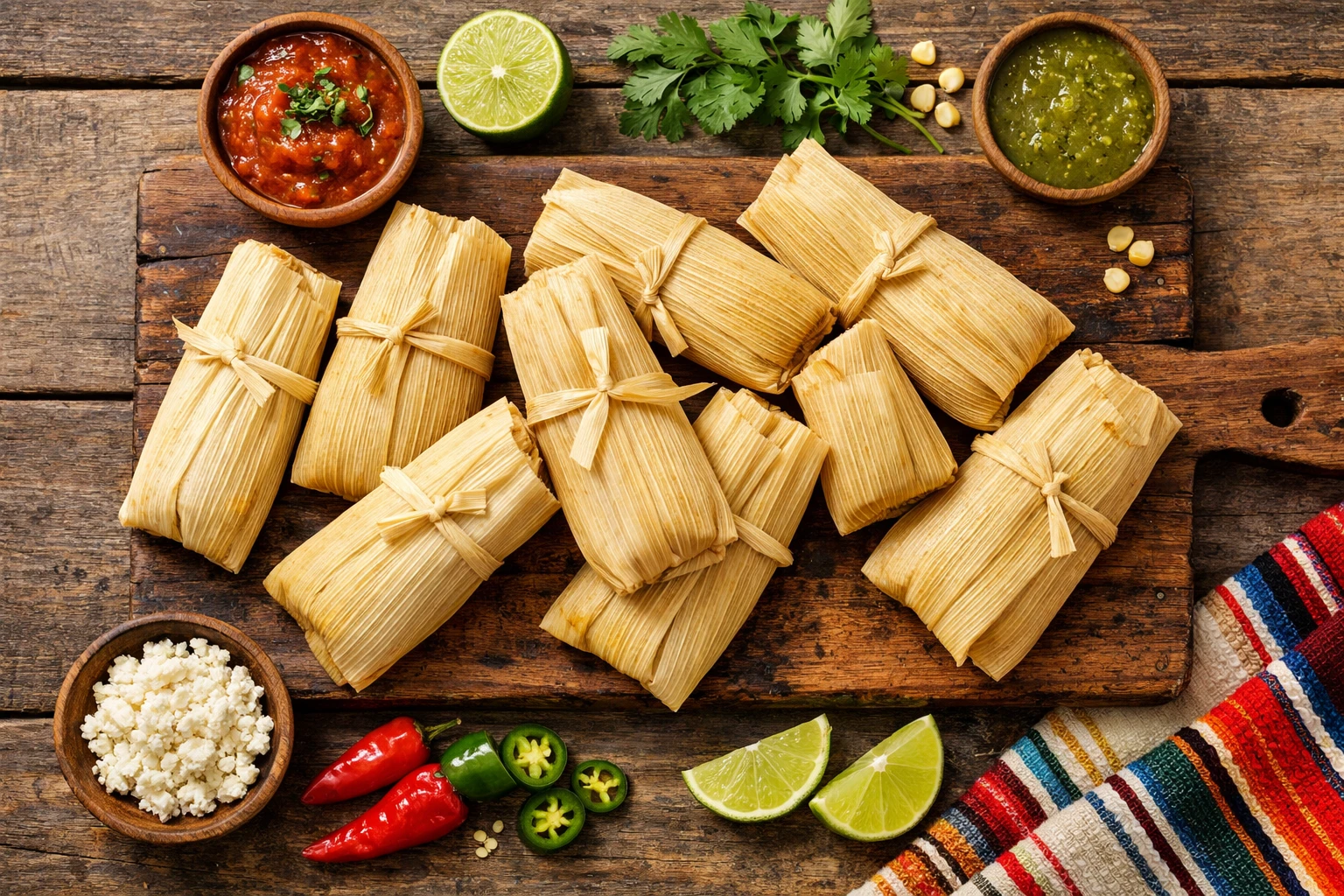
Quick Nutrition Facts
Per 1 Tamal (166g) - Pork/Chicken
| Nutrient | Amount |
|---|---|
| Calories | 280 kcal |
| Protein | 10g |
| Carbohydrates | 30g |
| Fiber | 5g |
| Sugars | 1.6g |
| Fat | 12g |
| Saturated Fat | 4.4g |
| Sodium | 427mg |
| Iron | 2.2mg |
| Vitamin B12 | 1.0mcg |
Macronutrient Breakdown
 ChatGPT
  Claude
  AI Mode
  Perplexity
NUTRITIONIST INSIGHT
Tamales provide 15% of your daily iron needs and are a good source of B vitamins from the corn masa. The fiber content (5g per tamal) aids digestion, though portion control is key due to higher calorie density.
Myth Busters
MYTH #1: All Tamales Are Unhealthy
TRUTH: Tamale healthiness depends on ingredients. Traditional corn masa provides fiber and B vitamins. Lean chicken or vegetable fillings create a balanced meal. The issue is portion size and lard content, not tamales themselves.
MYTH #2: Tamales Are Just Empty Carbs
TRUTH: A tamal provides 10g protein, 5g fiber, and essential minerals like iron (15% DV) and B12 (42% DV). The nixtamalized corn masa increases calcium absorption and bioavailability of niacin.
MYTH #3: You Can't Eat Tamales on a Diet
TRUTH: One small tamale (150-200 cal) fits into most diet plans. Choose lean protein fillings, skip extra sauce, and pair with a side salad. The fiber content promotes satiety, helping control overall intake.
MYTH #4: Store-Bought Tamales Are Just as Good as Homemade
TRUTH: Commercial tamales often contain more sodium (600+ mg) and preservatives. Homemade tamales allow control over fat content (using less lard or substituting healthier fats) and sodium levels.
MYTH #5: Tamales Are Too High in Fat
TRUTH: While traditional recipes use lard (12g fat per tamal), modern recipes can substitute vegetable oil or reduce fat by 40% without sacrificing texture. The fat also helps with vitamin absorption.
NutriScore by Health Goals
| Health Goal | NutriScore | Why This Score? |
|---|---|---|
| Weight Loss |  | 280 calories with 12g fat per tamal. Limit to 1 small tamal, choose lean fillings, skip added sauces. |
| Muscle Gain |  | Good protein (10g) and carbs (30g) for post-workout recovery. Iron and B12 support muscle function. |
| Diabetes Management |  | High GI (57-82) and 30g carbs per tamal. Limit portions, pair with fiber-rich vegetables, monitor blood sugar closely. |
| PCOS Management | | Moderate glycemic impact. Choose vegetable or lean protein fillings, limit to half a tamal. |
| Pregnancy Nutrition | | Good source of iron (15% DV) and folate from corn masa. B12 supports fetal development. Watch sodium intake. |
| Viral/Flu Recovery | | Easy to digest, provides energy and protein for recovery. The warm, soft texture is gentle on the stomach. |
PERSONALIZED NUTRITION
Track your meals with NutriScan for personalized NutriScores based on your specific health goals!
Blood Sugar Response to Tamales
Understanding how tamales affect your blood glucose can help you make informed decisions about when and how to eat them.
Typical Glucose Response Curve
This chart shows typical blood glucose response for general healthy individuals. Individual responses may vary. Not medical advice.
How to Flatten the Spike
Pairing tamales with protein-rich sides or vegetables slows glucose absorption and reduces the peak blood sugar level:
- 🥗 Side salad with vinegar dressing - Vinegar helps moderate glucose response
- 🫘 Black beans or pinto beans - Adds fiber and plant protein
- 🥑 Guacamole or sliced avocado - Healthy fats slow digestion
- 🌶️ Salsa verde or pico de gallo - Low-calorie, adds fiber and nutrients
This combination not only reduces the glucose spike but also adds nutritional value and promotes satiety.
Cultural Significance
Tamales are one of the oldest prepared foods in the Americas, with evidence dating back to 8000 BCE in Mesoamerica.
In Mexico:
- Essential for celebrations: Christmas, Día de los Muertos, weddings, baptisms
- Each region has unique styles: Oaxacan tamales in banana leaves, Yucatan tamales with achiote
- Families gather for "tamaladas" - communal tamale-making parties
- Over 500 varieties exist across Mexico with diverse fillings
Global Impact:
- Spread throughout Latin America with local variations (humitas, hallacas)
- Symbol of Mexican-American identity and cultural preservation
- Traditional food gifted during holidays and special occasions
- UNESCO recognizes Mexican cuisine as Intangible Cultural Heritage
Compare & Substitute
Tamales vs Similar Mexican Foods (Per Serving)
| Nutrient | 🫔 Tamales (1 tamal) | 🌮 Tacos (2 small) | 🌯 Burrito (1 medium) | 🥙 Quesadilla (1 medium) |
|---|---|---|---|---|
| Calories | 280 kcal | 320 kcal | 450 kcal | 380 kcal |
| Carbs | 30g | 24g | 55g | 30g |
| Fiber | 5g | 3g | 6g | 2g |
| Protein | 10g | 14g | 18g | 16g |
| Fat | 12g | 16g | 18g | 20g |
| Sodium | 427mg | 520mg | 980mg | 680mg |
| Best For | Special occasions, comfort | Quick meals, variety | High protein needs | Cheese cravings |
Frequently Asked Questions
How many calories are in a tamale?
A typical pork or chicken tamale contains 280-350 calories. Tamales with cheese or higher fat fillings can reach 400+ calories. A smaller corn tamale has about 150-200 calories.
By filling type:
- Pork tamale: 280-320 calories
- Chicken tamale: 250-300 calories
- Cheese tamale: 300-350 calories
- Bean tamale: 200-250 calories
- Vegetable tamale: 150-200 calories
Are tamales healthy?
Tamales can be part of a healthy diet when eaten in moderation. The corn masa provides fiber (5g) and B vitamins, while traditional fillings offer protein (10g).
Health benefits:
- Iron (15% DV) for blood health
- Vitamin B12 (42% DV) for energy
- Fiber supports digestive health
- Protein aids muscle maintenance
Watch out for:
- High sodium (400-600mg per tamal)
- Saturated fat from lard
- Calorie density (limit portions)
Can diabetics eat tamales?
Diabetics should approach tamales cautiously due to high glycemic index (57-82) and carb content (30g per tamal).
Tips for diabetics:
- Limit to half a tamal
- Choose lean protein fillings (chicken, vegetables)
- Pair with fiber-rich vegetables
- Monitor blood sugar 2 hours after eating
- Avoid sweet tamales (tamales de dulce)
Green or vegetable tamales have slightly lower glycemic impact. Always consult your healthcare provider.
What is the healthiest type of tamale?
The healthiest tamales are made with lean fillings and reduced-fat masa.
Healthiest options:
- Vegetable tamales (tamales de rajas) - Lower calories, more fiber
- Chicken tamales - Lean protein, less saturated fat
- Bean tamales - Plant protein, high fiber
- Green chili tamales - Antioxidants from peppers
Least healthy: Sweet tamales (tamales de dulce), cheese-heavy versions, or those made with excess lard.
Are tamales high in sodium?
Yes, tamales are relatively high in sodium at 400-600mg per tamale (17-26% daily value). Sodium comes from salt in the masa, seasoned meats, and sauces.
For those watching sodium:
- Limit to one tamale
- Skip additional salty sauces
- Make homemade with reduced salt
- Balance with low-sodium foods throughout the day
How many tamales should I eat?
General Guidelines:
- Weight loss: 1 small tamale (150-200 cal), pair with salad
- Maintenance: 1-2 tamales with vegetables
- Athletes/high activity: 2-3 tamales post-workout
- Diabetes/PCOS: Half a tamale maximum
Tamales are calorie-dense, so portion control is essential. Track your meals with NutriScan app to balance tamales within your daily goals.
When is the best time to eat tamales?
Depends on your goal:
- Weight Loss: Lunch (allows time to burn calories), never late at night
- Muscle Gain: Post-workout for carb replenishment and protein
- Diabetes: Midday meal with vegetables, not on empty stomach
- General: Breakfast or lunch for sustained energy
IMPORTANT NOTE
Avoid eating tamales late at night as the high calorie and fat content may disrupt sleep and digestion.
Can I freeze tamales?
Yes, tamales freeze exceptionally well for 3-6 months. This makes them perfect for meal prep.
Freezing tips:
- Wrap individually in plastic wrap, then foil
- Label with date and filling type
- Reheat by steaming (20-30 min from frozen)
- Avoid microwave reheating which makes them tough


Similar Nutritious Foods
4505 Chicharrones Classic Chili Salt
7 Eleven Japan Crispy Corn Cheese
Explore More Nutrition Tools & Resources
AI Calorie Counter App - Snap a Photo, Get Macros
AI Nutritionist App That Reads Your Logged Meals
Best Protein Supplements for Women
Bulking Meal Plan App That Sets Your Surplus
ChatGPT Calorie Counter Alternative That Keeps the Total
ChatGPT Diet Plan Alternative That Tracks What You Eat
ChatGPT Weight Loss Coach Alternative With a Food Log
Fast Food Calorie Counter App That Reads the Tray
Free Calorie Tracker App with AI Photo Scans | NutriScan
Indian Diet Plan App With Veg and Non Veg Meals
Indian Food Calorie Calculator - Get Instant Nutrition Facts for Desi Meals — 2026
Intermittent Fasting for Women, Timer and Meal Log App
Intermittent Fasting Tracker App - Free Fasting Timer
Macro Tracker App That Fills the Numbers From a Photo
Mediterranean Diet Meal Plan App That Counts the Oil
Micronutrient Tracker App for Vitamins and Minerals
MyFitnessPal Alternative That Stays Free | NutriScan
NutriScore App: A Free Grade on Every Meal | NutriScan
Nutrition Label Scanner App for the Amount You Ate
Second Trimester Protein Guide
Vegetarian Meal Plan App With a Protein Target
Voice Calorie Counter - Speak to Track Meals Hands-Free
Water and Calorie Tracker App - Free Water Log