Tandoori Chicken: Calories, Nutrition and Health Benefits
Iconic Indian dish featuring lean protein, aromatic spices, and clay-oven perfection for muscle building and weight management.
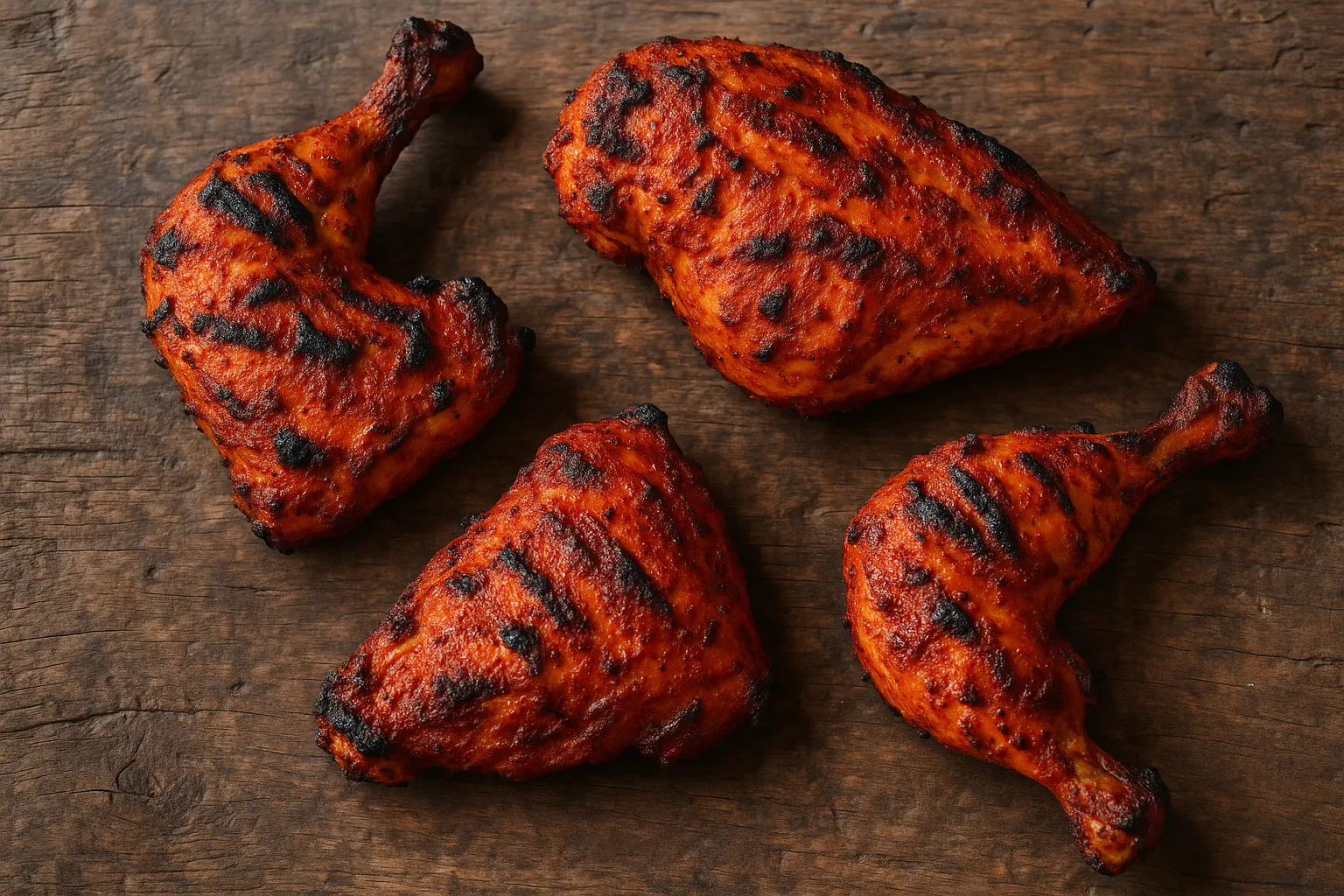
Quick Nutrition Facts
Per 100g (about 1 medium piece)
| Nutrient | Amount |
|---|---|
| Calories | 165 kcal |
| Protein | 29.5g |
| Carbohydrates | 4.2g |
| Fiber | 0.8g |
| Sugars | 2.1g |
| Fat | 4.8g |
| Saturated Fat | 1.2g |
| Sodium | 420mg |
| Vitamin B6 | 0.6mg |
| Niacin | 8.2mg |
Macronutrient Breakdown
 ChatGPT
  Claude
  AI Mode
  Perplexity
NUTRITIONIST INSIGHT
Tandoori chicken delivers exceptional protein (29.5g per 100g) with minimal fat (4.8g). The yogurt marinade adds probiotics while spices like turmeric and cumin provide anti-inflammatory benefits.
Myth Busters
MYTH #1: Tandoori Chicken Is High in Calories
TRUTH: At 165 calories per 100g, tandoori chicken is one of the leanest protein sources. Compare to fried chicken (280+ kcal) or butter chicken (220+ kcal). The clay oven cooking requires minimal oil.
MYTH #2: Red Color Comes from Artificial Dyes
TRUTH: Traditional tandoori color comes from natural ingredients: Kashmiri red chili (mild heat, deep color), paprika, and turmeric. Avoid restaurants using artificial food coloring; authentic preparation uses only spices.
MYTH #3: Diabetics Should Avoid Tandoori Chicken
TRUTH: Tandoori chicken is ideal for diabetes management with only 4.2g carbs and high protein (29.5g) that stabilizes blood sugar. Skip the naan and pair with salad or vegetables.
MYTH #4: The Marinade Makes It Unhealthy
TRUTH: Yogurt-based marinade adds probiotics for gut health, lactic acid for tenderization, and calcium. Spices like ginger, garlic, and cumin have anti-inflammatory and digestive benefits.
MYTH #5: Tandoori Chicken Is Too High in Sodium
TRUTH: At 420mg sodium per 100g, it's moderate but manageable. Request less salt when ordering; home preparation allows complete sodium control. Balance with low-sodium sides like cucumber raita.
MYTH #6: Clay Oven Cooking Creates Carcinogens
TRUTH: Unlike charcoal grilling or deep frying, tandoor cooking at 480°C (900°F) uses dry heat with minimal smoke. Yogurt marinade reduces heterocyclic amine formation; cook to proper internal temp (165°F).
NutriScore by Health Goals
| Health Goal | NutriScore | Why This Score? |
|---|---|---|
| Weight Loss |  | Only 165 calories with 29.5g protein for maximum satiety. Minimal fat (4.8g) keeps calories low. Ideal for calorie deficit. |
| Muscle Gain | | Exceptional lean protein (29.5g) with complete amino acid profile for muscle synthesis. Low fat allows room for healthy fats from other sources. |
| Diabetes Management | | Only 4.2g carbs with zero blood sugar spike. High protein stabilizes glucose. Perfect protein choice. |
| PCOS Management | | Low carb (4.2g), high protein supports hormone balance and weight management. Anti-inflammatory spices reduce insulin resistance. |
| Pregnancy Nutrition |  | Excellent protein (29.5g) for fetal development, B vitamins for energy. Ensure fully cooked (165°F internal). Moderate sodium; balance with low-sodium sides. |
| Viral/Flu Recovery | | Easy-to-digest protein for tissue repair, selenium boosts immunity, spices have antimicrobial properties. Niacin (8.2mg) supports energy metabolism. |
PERSONALIZED NUTRITION
Track your meals with NutriScan for personalized NutriScores based on your specific health goals!
Blood Sugar Response to Tandoori Chicken
Understanding how tandoori chicken affects blood glucose shows its exceptional benefits for metabolic health.
Typical Glucose Response Curve
*This chart shows minimal blood glucose response due to high protein, low carb content. Individual responses may vary. Not medical advice.*
Why Tandoori Chicken Stabilizes Blood Sugar
Tandoori chicken has virtually no impact on blood glucose due to its protein-rich, low-carb profile:
- 🍗 29.5g high-quality protein - Slows digestion and stabilizes insulin response
- 📊 Only 4.2g carbs - Minimal glucose load on the body
- 🔥 Zero glycemic index - Pure protein source with no sugar conversion
- 🌶️ Anti-inflammatory spices - Turmeric and cumin improve insulin sensitivity
Pair with high-fiber vegetables (broccoli, cauliflower, salad greens) for a complete blood-sugar-friendly meal.
Cultural Significance
Tandoori chicken traces its roots to the Mughal era and Punjab region, perfected in the clay tandoor ovens of North India.
In India:
- Popularized by Kundan Lal Gujral at Moti Mahal restaurant, Delhi (1947)
- Traditional Punjab dish using natural spices and yogurt marinade
- Cooked in cylindrical clay ovens (tandoors) at 480°C (900°F)
- Key spice blend: Kashmiri red chili, turmeric, garam masala, ginger, garlic
- Served with mint chutney and raw onion rings
Global Impact:
- Inspired British Chicken Tikka Masala (UK's national dish)
- Available in every major Indian restaurant worldwide
- Clay oven cooking method adopted globally for authentic flavor
- UNESCO intangible cultural heritage nominee for traditional cooking technique
Compare & Substitute
Tandoori Chicken vs Similar Proteins (Per 100g)
| Nutrient | 🍗 Tandoori Chicken | 🍗 Grilled Chicken | 🍖 Chicken Tikka | 🥩 Lean Beef (Grilled) |
|---|---|---|---|---|
| Calories | 165 kcal | 165 kcal | 189 kcal | 250 kcal |
| Carbs | 4.2g | 0g | 5.3g | 0g |
| Fiber | 0.8g | 0g | 1.1g | 0g |
| Protein | 29.5g | 31g | 28g | 26g |
| Fat | 4.8g | 3.6g | 6.5g | 15g |
| Sodium | 420mg | 63mg | 380mg | 54mg |
| Vitamin B | High (B6, Niacin) | High (B6, B12) | High (B6, Niacin) | Very High (B12) |
| Best For | Flavor with low fat/cal | Maximum protein, minimal fat | Richer flavor, appetizer | Higher iron needs |
Frequently Asked Questions
Is tandoori chicken good for weight loss?
Yes, tandoori chicken is one of the best protein choices for weight loss. With only 165 calories and 29.5g protein per 100g, it provides maximum satiety with minimal calories.
Best practices: Consume 150-200g per meal (250-330 calories); pair with salad or grilled vegetables; avoid naan, rice, or creamy sides; choose breast pieces for lowest fat.
The high protein-to-calorie ratio makes it ideal for maintaining muscle mass during calorie deficit.
Can diabetics eat tandoori chicken?
Tandoori chicken is ideal for diabetes management with only 4.2g carbs per 100g and zero impact on blood sugar. The high protein content (29.5g) helps stabilize glucose levels throughout the day.
Tips for diabetics: Pair with non-starchy vegetables; avoid naan, rice, or potato sides; choose low-sodium preparation when possible; monitor portion to 150-200g; pair with cucumber raita (no sugar added).
Studies show high-protein, low-carb meals improve glycemic control in type 2 diabetes.
How much protein is in tandoori chicken?
Tandoori chicken contains 29.5g of complete protein per 100g, providing all essential amino acids needed for muscle repair and growth. A typical restaurant serving (150g) provides approximately 44g of protein.
This makes tandoori chicken one of the most protein-dense foods available, comparable to lean chicken breast but with added flavor from spices.
What are the main health benefits of tandoori chicken?
Key Benefits:
- Muscle Building: 29.5g complete protein supports muscle synthesis and recovery
- Weight Management: Low calories (165) with high satiety from protein
- Blood Sugar Control: Only 4.2g carbs stabilize glucose levels
- Heart Health: Minimal saturated fat (1.2g) and lean protein
- Immunity: Selenium, zinc, and B vitamins boost immune function
- Anti-Inflammatory: Turmeric, cumin, and ginger reduce inflammation
When is the best time to eat tandoori chicken?
Depends on your goal:
- Weight Loss: Lunch or dinner (high protein prevents evening snacking). Avoid late night.
- Muscle Gain: Post-workout (within 2 hours) or dinner for overnight muscle repair.
- Diabetes: Any meal, ideally lunch when insulin sensitivity is highest. Pair with vegetables.
- General Health: Lunch or early dinner for optimal digestion.
IMPORTANT NOTE
Ensure chicken is fully cooked to 165°F internal temperature to prevent foodborne illness. Pregnant women should verify proper cooking.
Is tandoori chicken healthier than fried chicken?
Tandoori chicken is significantly healthier than fried chicken across all metrics:
Tandoori vs Fried (per 100g):
- Calories: 165 vs 280+ kcal (41% fewer)
- Fat: 4.8g vs 18g+ (73% less)
- Protein: 29.5g vs 23g (28% more)
- Cooking method: Clay oven vs deep-fried oil
- Trans fats: 0g vs present in fried versions
Tandoori cooking preserves nutrients while fried chicken absorbs unhealthy oils and creates advanced glycation end products (AGEs).
How many pieces of tandoori chicken should I eat per day?
General Guidelines:
- 150-200g (2-3 medium pieces) - Weight loss, general health (250-330 calories)
- 200-250g (3-4 pieces) - Muscle gain, athletes, active individuals (330-410 calories)
- 150g (2-3 pieces) - Diabetes management, PCOS (pair with vegetables)
- 100-150g (1-2 pieces) - Pregnancy (ensure fully cooked)
Avoid excess: Watch sodium intake if consuming daily; balance with low-sodium meals. Vary protein sources throughout the week.
Track your meals with NutriScan app to see how tandoori chicken fits your personal nutrition goals.
Can I eat tandoori chicken on a keto diet?
Yes, tandoori chicken is excellent for keto with only 4.2g net carbs per 100g (3.4g after subtracting fiber). The high protein (29.5g) and moderate fat (4.8g) fit keto macros perfectly.
Keto tips: Add healthy fats with sides (avocado, olive oil, full-fat raita); pair with leafy greens and cruciferous vegetables; avoid naan, rice, and sweetened marinades.
Consume 150-200g per meal as a primary protein source with additional fats from other sources.




Similar Nutritious Foods
4505 Chicharrones Classic Chili Salt
7 Eleven Japan Crispy Corn Cheese
Explore More Nutrition Tools & Resources
AI Calorie Counter App - Snap a Photo, Get Macros
AI Nutritionist App That Reads Your Logged Meals
Best Protein Supplements for Women
Bulking Meal Plan App That Sets Your Surplus
ChatGPT Calorie Counter Alternative That Keeps the Total
ChatGPT Diet Plan Alternative That Tracks What You Eat
ChatGPT Weight Loss Coach Alternative With a Food Log
Fast Food Calorie Counter App That Reads the Tray
Free Calorie Tracker App with AI Photo Scans | NutriScan
Indian Diet Plan App With Veg and Non Veg Meals
Indian Food Calorie Calculator - Get Instant Nutrition Facts for Desi Meals — 2026
Intermittent Fasting for Women, Timer and Meal Log App
Intermittent Fasting Tracker App - Free Fasting Timer
Macro Tracker App That Fills the Numbers From a Photo
Mediterranean Diet Meal Plan App That Counts the Oil
Micronutrient Tracker App for Vitamins and Minerals
MyFitnessPal Alternative That Stays Free | NutriScan
NutriScore App: A Free Grade on Every Meal | NutriScan
Nutrition Label Scanner App for the Amount You Ate
Second Trimester Protein Guide
Vegetarian Meal Plan App With a Protein Target
Voice Calorie Counter - Speak to Track Meals Hands-Free
Water and Calorie Tracker App - Free Water Log