Teff Grain: Calories, Nutrition and Health Benefits
Ethiopia's ancient superfood grain packed with calcium, iron, and complete protein for gluten-free nutrition.
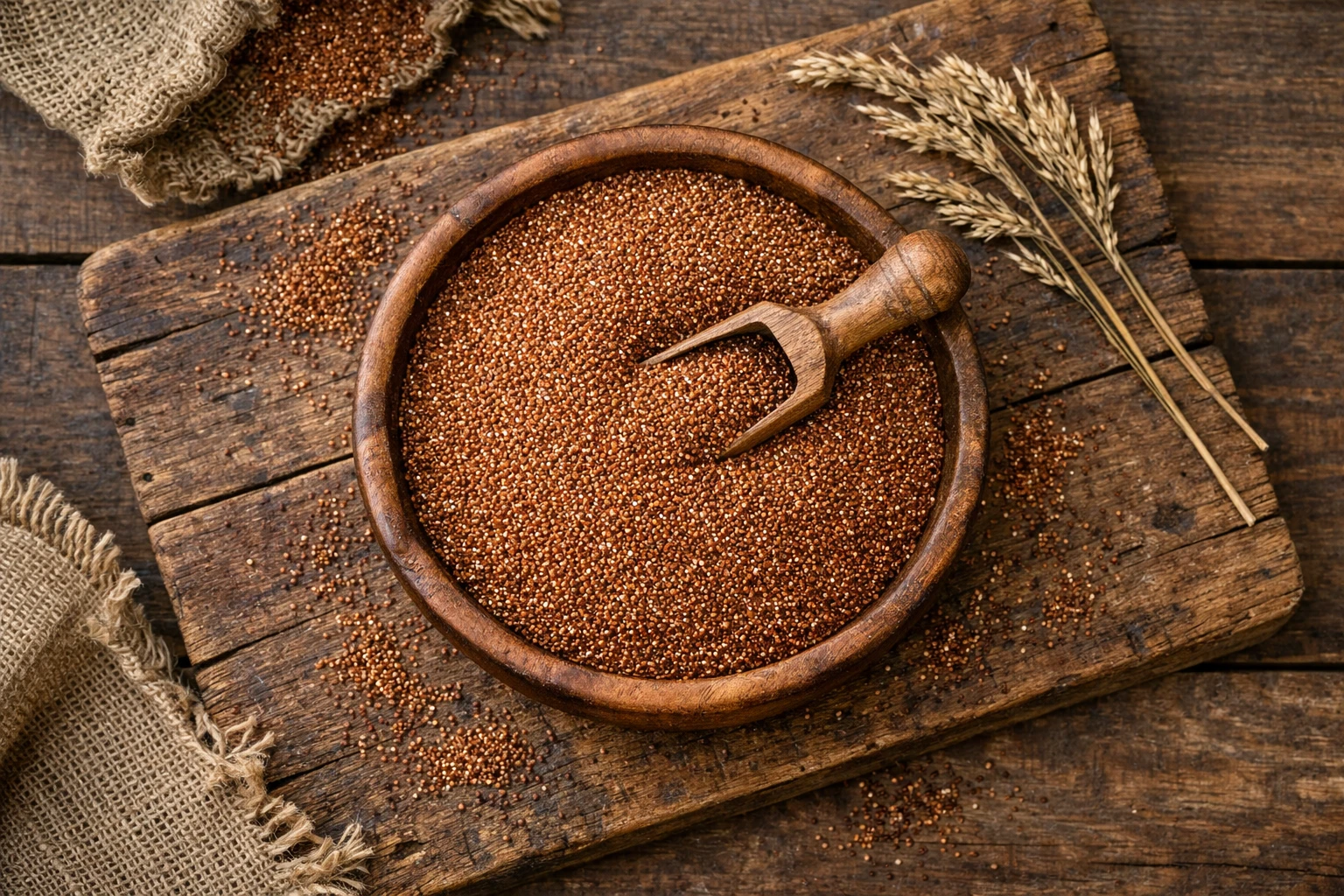
Quick Nutrition Facts
Per 100g Dry Teff Grain
| Nutrient | Amount |
|---|---|
| Calories | 367 kcal |
| Protein | 13g |
| Carbohydrates | 73g |
| Fiber | 8g |
| Sugars | 1.8g |
| Fat | 2g |
| Calcium | 180mg |
| Iron | 7.6mg |
| Magnesium | 184mg |
| Zinc | 3.6mg |
Macronutrient Breakdown
 ChatGPT
  Claude
  AI Mode
  Perplexity
NUTRITIONIST INSIGHT
Teff delivers more calcium than most grains (180mg per 100g) - crucial for bone health on plant-based diets. The resistant starch in teff supports gut bacteria and improves insulin sensitivity.
Myth Busters
MYTH #1: Ancient Grains Are Just a Marketing Fad
TRUTH: Teff has been Ethiopia's dietary staple for over 6,000 years. Its superior calcium and iron content make it nutritionally superior to modern refined grains, not just trendy.
MYTH #2: Gluten-Free Grains Lack Protein
TRUTH: Teff contains 13g protein per 100g dry - 30% more than brown rice. It includes all eight essential amino acids, making it a complete plant protein source.
MYTH #3: Teff Is Too High in Carbs for Weight Loss
TRUTH: The 73g carbs come with 8g fiber and resistant starch that slow digestion and promote fullness. High-fiber whole grains support weight management better than low-carb processed foods.
MYTH #4: You Need Dairy for Calcium
TRUTH: 100g teff provides 18% daily calcium needs - more than quinoa or oats. Regular consumption supports bone density without dairy, especially beneficial for lactose-intolerant individuals.
MYTH #5: Gluten-Free Means Nutrient-Poor
TRUTH: Unlike refined gluten-free products, whole teff grain is nutrient-dense with iron (42% DV), magnesium (46% DV), zinc (33% DV), and B vitamins naturally present.
MYTH #6: Teff Is Hard to Digest
TRUTH: The tiny grain size makes teff easier to digest than larger grains. The resistant starch acts as prebiotic fiber, feeding beneficial gut bacteria and improving digestive health.
NutriScore by Health Goals
| Health Goal | NutriScore | Why This Score? |
|---|---|---|
| Weight Loss |  | High fiber (8g) and resistant starch promote fullness. 1/4 cup dry makes satisfying meal base under 200 calories. |
| Muscle Gain | | 13g complete protein per 100g dry, rich in amino acids. Complex carbs fuel workouts; pair with protein for muscle recovery. |
| Diabetes Management |  | Low-medium GI (57) and high fiber slow glucose release. Use 1/2 cup cooked portions, pair with protein. |
| PCOS Management | | Resistant starch improves insulin sensitivity; magnesium supports hormone balance. Use moderate portions (1/2 cup cooked). |
| Pregnancy Nutrition | | Exceptional iron (7.6mg) prevents anemia; calcium supports fetal bone development; folate aids neural tube formation. |
| Viral/Flu Recovery | | Easy to digest, provides sustained energy. Iron and zinc support immune function. Cook as porridge for gentle nutrition during illness. |
PERSONALIZED NUTRITION
Track your meals with NutriScan for personalized NutriScores based on your specific health goals!
Blood Sugar Response to Teff
Understanding how teff affects your blood glucose helps you incorporate this ancient grain optimally.
Typical Glucose Response Curve
This chart shows typical blood glucose response for general healthy individuals. Individual responses may vary. Not medical advice.
How to Flatten the Spike
Pairing teff with protein or healthy fat creates balanced meals with minimal glucose spikes:
- 🥚 Scrambled eggs - Complete protein source
- 🥑 Avocado slices - Healthy fats slow absorption
- 🥛 Greek yogurt (for porridge) - Protein and probiotics
- 🌰 Almonds or walnuts - Healthy fats and fiber
These combinations extend energy release and improve satiety for 4-6 hours.
Cultural Significance
Teff has been cultivated in the Ethiopian Highlands for over 6,000 years, making it one of the world's oldest cultivated grains.
In Ethiopia:
- The only country that produces teff as a staple crop
- Foundation of injera, the traditional fermented flatbread
- Sustains 50+ million Ethiopians daily as dietary cornerstone
- White teff considered premium, brown teff more nutrient-dense
- Cultural symbol featured in traditional ceremonies and celebrations
Global Impact:
- Gaining recognition as gluten-free superfood in Western markets
- NASA selected teff for potential space agriculture due to nutrient density
- Growing demand driving cultivation in US, Australia, India
- Supports Ethiopian economy as major agricultural export
Compare & Substitute
Teff vs Similar Grains (Per 100g Dry)
| Nutrient | 🌾 Teff | 🍚 Quinoa | 🌾 Brown Rice | 🌾 Millet |
|---|---|---|---|---|
| Calories | 367 kcal | 368 kcal | 370 kcal | 378 kcal |
| Carbs | 73g | 64g | 77g | 73g |
| Fiber | 8g | 7g | 3.5g | 8.5g |
| Protein | 13g | 14g | 7.9g | 11g |
| Fat | 2g | 6g | 2.9g | 4.2g |
| Calcium | 180mg | 47mg | 23mg | 8mg |
| Iron | 7.6mg | 4.6mg | 1.5mg | 3mg |
| Magnesium | 184mg | 197mg | 143mg | 114mg |
| Best For | Bone health, iron need | Complete protein, versatile | Budget-friendly, accessible | Gluten-free, alkaline |
Frequently Asked Questions
Is teff grain good for weight loss?
Yes, teff supports weight loss through high fiber (8g per 100g dry) that promotes fullness and steady energy release. The resistant starch helps control appetite and reduce calorie absorption.
Best practices: Cook 1/4 cup dry teff (yields 3/4 cup cooked) with vegetables for satisfying meals under 200 calories; use as porridge for breakfast; replace refined grains in recipes.
Can diabetics eat teff grain?
Yes, diabetics can eat teff. It has a low-medium glycemic index (GI 57) and high fiber that slows glucose absorption.
Tips for diabetics:
- Use moderate portions: 1/2 cup cooked (about 2 tablespoons dry)
- Always pair with protein (eggs, fish, legumes) or healthy fat
- Best timing: breakfast or lunch; monitor 2-hour post-meal glucose
- Choose brown teff over white for slightly lower GI
Regular consumption may improve long-term blood sugar control due to resistant starch benefits.
How much protein is in teff?
Teff contains 13g protein per 100g dry grain. One cup cooked teff provides approximately 10g protein, making it higher than most grains and excellent for plant-based diets.
Teff includes all eight essential amino acids, making it a complete protein source - rare among grains. Pair with legumes for even more protein.
Is teff grain gluten-free?
Yes, teff is 100% naturally gluten-free. It's safe for celiac disease, gluten sensitivity, and wheat allergies.
Important notes:
- Always check packaging for "certified gluten-free" label
- Cross-contamination can occur during processing
- Teff flour makes excellent gluten-free baking substitute
- Use in place of wheat for injera, porridge, baked goods
What are the main health benefits of teff?
Key Benefits:
- Bone Health: 180mg calcium per 100g supports bone density
- Prevents Anemia: 7.6mg iron (42% DV) crucial for red blood cell formation
- Digestive Health: 8g fiber and resistant starch feed beneficial gut bacteria
- Blood Sugar Control: Low-medium GI and fiber slow glucose release
- Complete Protein: All essential amino acids for muscle and tissue repair
- Heart Health: Magnesium, potassium, and fiber support cardiovascular function
How do you cook teff grain?
Basic Cooking Method:
Use 1:3 ratio - 1 cup teff to 3 cups water or broth. Bring to boil, reduce heat to low, cover, simmer 15-20 minutes until water absorbs. Yields about 2.5 cups cooked.
Porridge: Use 1:4 ratio (1 cup teff to 4 cups liquid), simmer 20 minutes, stir occasionally.
Tips: Rinse before cooking; add salt during cooking; toast dry teff 2-3 minutes for nuttier flavor; store cooked teff refrigerated up to 5 days.
What does teff taste like?
Teff has a mild, slightly sweet, earthy flavor with nutty undertones. White teff is milder and sweeter; brown teff has a more pronounced earthy taste.
The texture is unique - when cooked, individual grains remain separate with slight chewiness, similar to poppy seeds. In porridge form, it becomes creamy and smooth. The subtle flavor works well in both sweet (porridge with fruit) and savory (grain bowls, side dishes) applications.
Where can I buy teff grain?
Available at:
- Health food stores (Whole Foods, Natural Grocers)
- Online: Amazon, Thrive Market, Bob's Red Mill website
- Ethiopian/African specialty markets
- Some mainstream supermarkets (natural foods section)
- International grocery stores
Forms: Whole grain (brown or white), flour, flakes. Start with Bob's Red Mill or Maskal Teff brands for quality assurance.


Similar Nutritious Fruits
4505 Chicharrones Classic Chili Salt
7 Eleven Japan Crispy Corn Cheese
Explore More Nutrition Tools & Resources
AI Calorie Counter App - Snap a Photo, Get Macros
AI Nutritionist App That Reads Your Logged Meals
Best Protein Supplements for Women
Bulking Meal Plan App That Sets Your Surplus
ChatGPT Calorie Counter Alternative That Keeps the Total
ChatGPT Diet Plan Alternative That Tracks What You Eat
ChatGPT Weight Loss Coach Alternative With a Food Log
Fast Food Calorie Counter App That Reads the Tray
Free Calorie Tracker App with AI Photo Scans | NutriScan
Indian Diet Plan App With Veg and Non Veg Meals
Indian Food Calorie Calculator - Get Instant Nutrition Facts for Desi Meals — 2026
Intermittent Fasting for Women, Timer and Meal Log App
Intermittent Fasting Tracker App - Free Fasting Timer
Macro Tracker App That Fills the Numbers From a Photo
Mediterranean Diet Meal Plan App That Counts the Oil
Micronutrient Tracker App for Vitamins and Minerals
MyFitnessPal Alternative That Stays Free | NutriScan
NutriScore App: A Free Grade on Every Meal | NutriScan
Nutrition Label Scanner App for the Amount You Ate
Second Trimester Protein Guide
Vegetarian Meal Plan App With a Protein Target
Voice Calorie Counter - Speak to Track Meals Hands-Free
Water and Calorie Tracker App - Free Water Log