Tinned Sardines in Olive Oil: Calories, Nutrition and Health Benefits
A protein powerhouse packed with omega-3s, calcium, and vitamin D. One of the most nutrient-dense foods available in a convenient tin.
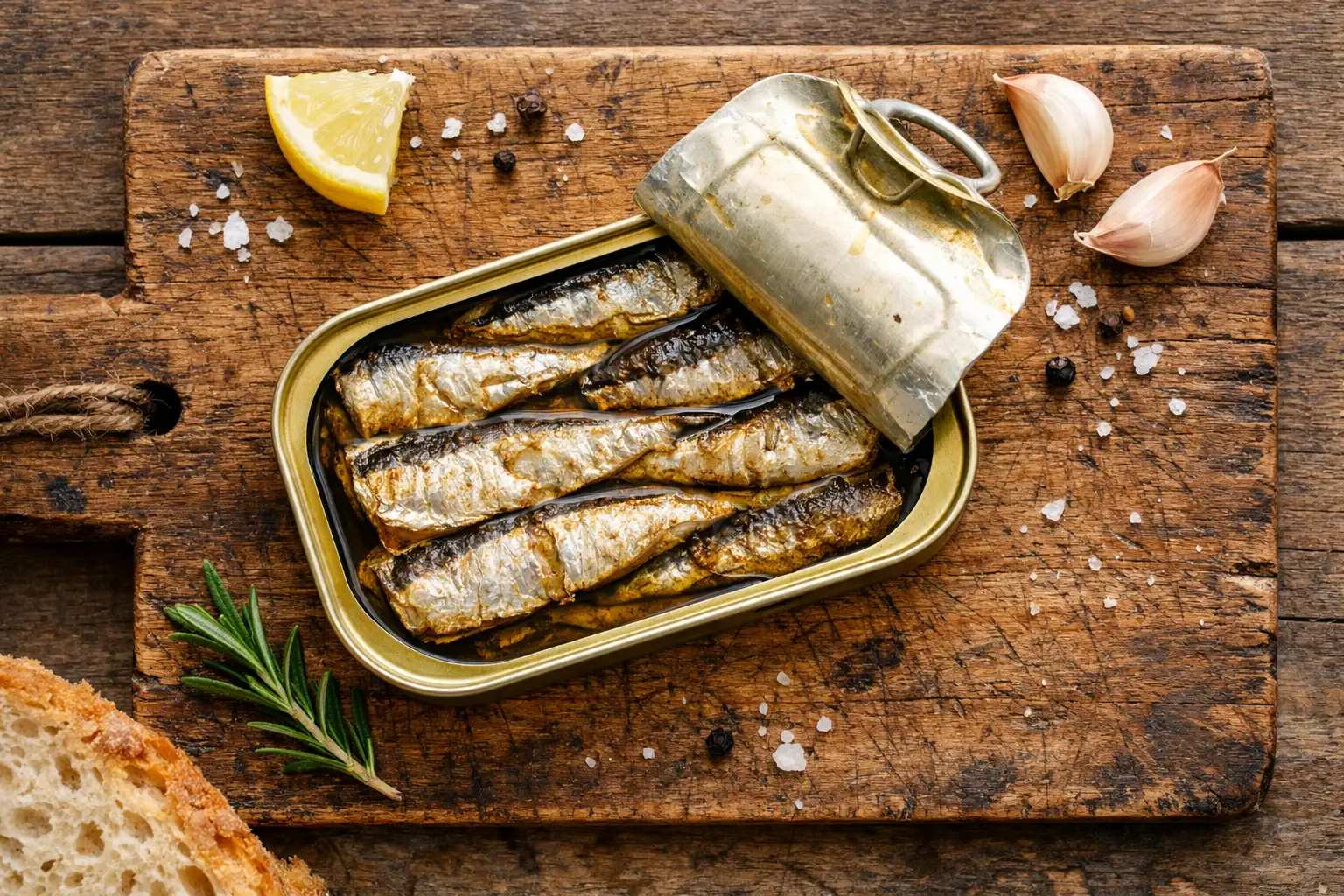
Quick Nutrition Facts
Per 100g Drained (Sardines in Olive Oil)
| Nutrient | Amount |
|---|---|
| Calories | 208 kcal |
| Protein | 25g |
| Carbohydrates | 0g |
| Fiber | 0g |
| Sugars | 0g |
| Fat | 11g |
| Omega-3 (EPA+DHA) | 1,480mg |
| Calcium | 382mg |
| Vitamin D | 4.8mcg |
| Vitamin B12 | 8.9mcg |
Macronutrient Breakdown
 ChatGPT
  Claude
  AI Mode
  Perplexity
NUTRITIONIST INSIGHT
Sardines are one of the few foods providing complete protein, omega-3s, calcium, and vitamin D in one serving. The edible bones deliver 38% of daily calcium needs. Choose sardines over fish oil supplements for superior nutrient absorption.
How Much Protein in a Can of Sardines?
A standard 3.75 oz can holds 92 g of drained sardines, which works out to 22.7 g of protein and 191 calories, using the USDA entry for sardines canned in oil with bones. The larger 4.4 oz tins common in European brands drain to roughly 90 to 105 g and land between 22 g and 26 g of protein.
Per 100 g drained sardines in olive oil
| Nutrient | Amount |
|---|---|
| Calories | 208 kcal |
| Protein | 25 g |
| Carbohydrates | 0 g |
| Sugars | 0 g |
| Fiber | 0 g |
| Fat | 11 g |
| Calcium | 382 mg |
| Vitamin B12 | 8.9 mcg |
How a can stacks up against other tinned fish, per 100 g
| Food | Protein | Calories | Omega-3 |
|---|---|---|---|
| Sardines in olive oil | 25 g | 208 kcal | 1,480 mg |
| Tinned mackerel | 23 g | 156 kcal | 1,800 mg |
| Tuna | 29 g | 132 kcal | 300 mg |
Tuna wins on protein per calorie. Sardines win on almost everything else: five times the omega-3 of tuna and 382 mg of calcium per 100 g, which comes from the soft edible bones. One can covers about 45 percent of the 50 g daily protein reference intake used on food labels.
Myth Busters
MYTH #1: Tinned Sardines Are Unhealthy Processed Food
TRUTH: Canning preserves nutrients remarkably well. Research shows sardines retain their omega-3s, protein, and minerals through the canning process. The heat softens bones, making calcium more bioavailable.
MYTH #2: Sardines Are High in Mercury
TRUTH: Sardines are among the lowest mercury fish available. Their small size and short lifespan mean minimal mercury accumulation. FDA lists them as a "Best Choice" for pregnancy and children.
MYTH #3: The Oil Makes Sardines Fattening
TRUTH: Olive oil adds healthy monounsaturated fats that aid omega-3 absorption. A 100g serving has only 208 calories with 25g protein. The fat content promotes satiety and helps you eat less overall.
MYTH #4: Fresh Fish Is Always Better Than Canned
TRUTH: Tinned sardines are often fresher than "fresh" fish. They're canned within hours of catching, locking in nutrients. Fresh fish may spend days in transit, losing nutritional value. Canned sardines provide comparable omega-3 benefits to fresh fish.
MYTH #5: Sardines Smell Too Strong to Eat Regularly
TRUTH: Quality sardines in olive oil have a mild, pleasant flavor. The strong smell comes from poor storage or low-quality products. Rinse before eating to reduce sodium and mellow flavor if needed.
MYTH #6: You Shouldn't Eat the Bones
TRUTH: The soft, edible bones are the best part nutritionally. They provide 382mg calcium per 100g - more than a glass of milk. The canning process makes them completely safe and digestible.
NutriScore by Health Goals
| Health Goal | NutriScore | Why This Score? |
|---|---|---|
| Weight Loss |  | Zero carbs, 25g protein promotes satiety, omega-3s reduce inflammation linked to obesity. Limit to 1-2 cans weekly for sodium. |
| Muscle Gain | | Complete protein (25g/100g), omega-3s reduce muscle soreness, vitamin D supports testosterone. Ideal post-workout. |
| Diabetes Management | | Zero carbs, zero glycemic impact. Studies show sardine consumption may help prevent type 2 diabetes and improve insulin sensitivity. |
| PCOS Management | | Anti-inflammatory omega-3s, zero carbs won't spike insulin, protein supports hormone balance. |
| Pregnancy Nutrition | | FDA "Best Choice" for low mercury, DHA for fetal brain development, calcium for bone formation. 2-3 servings/week recommended. |
| Viral/Flu Recovery | | High protein supports immune function, zinc and selenium boost immunity, easy to digest when appetite is low. |
PERSONALIZED NUTRITION
Track your meals with NutriScan for personalized NutriScores based on your specific health goals!
Blood Sugar Response to Sardines
Understanding how sardines affect blood glucose helps optimize meal planning for stable energy.
Typical Glucose Response Curve
*This chart shows typical blood glucose response for general healthy individuals. Sardines cause virtually no glucose spike due to zero carbs. Individual responses may vary. Not medical advice.*
Optimize Your Sardine Meals
Pairing sardines with fiber-rich foods creates balanced, satisfying meals:
- Whole grain crackers or toast - Adds fiber, the fat slows carb absorption
- Leafy green salad - Fiber + sardines = sustained energy for hours
- Avocado - Combined healthy fats maximize omega-3 absorption
- Lemon juice - Enhances iron absorption and cuts richness
Sardines alone won't spike blood sugar, making them ideal for diabetics and low-carb diets.
Cultural Significance
Sardines have sustained Mediterranean and coastal communities for millennia, prized for nutrition and preservation.
In the Mediterranean:
- Portugal, Spain, and Italy consider tinned sardines a culinary tradition
- Portuguese "conservas" (tinned fish) are gourmet delicacies aged like wine
- Traditional sardine festivals celebrate the summer catch
- Grilled sardines are iconic in Portuguese cuisine (sardinhas assadas)
In India:
- Sardines (Mathi/Chaala) are staples in Kerala and Goan coastal cuisine
- Traditionally cooked in coconut oil with curry leaves and spices
- Affordable protein source for fishing communities
- Dried sardines used in chutneys and side dishes
Global Impact:
- Over 2 million tonnes caught annually worldwide
- Sustainable "Best Choice" by Monterey Bay Aquarium Seafood Watch
- Emergency food supply due to long shelf life (3-5 years)
- One of the most affordable complete protein sources globally
Compare & Substitute
Sardines vs Similar Protein Sources (Per 100g)
| Nutrient | Sardines (Olive Oil) | Tuna (Canned) | Salmon (Canned) | Chicken Breast | Eggs |
|---|---|---|---|---|---|
| Calories | 208 kcal | 116 kcal | 167 kcal | 165 kcal | 155 kcal |
| Protein | 25g | 26g | 20g | 31g | 13g |
| Fat | 11g | 1g | 8g | 3.6g | 11g |
| Omega-3 | 1,480mg | 270mg | 1,800mg | 70mg | 180mg |
| Calcium | 382mg | 11mg | 232mg | 15mg | 56mg |
| Vitamin D | 4.8mcg | 1.7mcg | 11mcg | 0.1mcg | 2mcg |
| Mercury | Very Low | Moderate | Low | N/A | N/A |
| Best For | Omega-3s, calcium, budget | Lean protein | Omega-3s, vitamin D | Max protein | Versatility |
Frequently Asked Questions
What is the nutritional value of sardines in olive oil?
Per 100g drained, sardines in olive oil give 208 calories and 25g protein, along with 11g fat and zero carbs.
Per 100g drained:
- 208 calories, 25g protein, 11g fat, 0g carbs
- Omega-3 (EPA and DHA): 1,480mg
- Calcium: 382mg from the edible bones
- Vitamin D: 4.8mcg, Vitamin B12: 8.9mcg
Per standard 3.75 oz can (92g drained): 191 calories, 22.7g protein, 10g fat, 1,362mg omega-3 and 351mg calcium.
Drain the oil properly, since the oil clinging to the fish is what pushes the calorie count up.
How much protein in a can of sardines?
A standard 3.75 oz can holds 92 g of drained sardines and delivers 22.7 g of protein for 191 calories. Larger 4.4 oz European tins drain to 90 to 105 g and give 22 g to 26 g of protein. Per 100 g, sardines carry 25 g of protein, 382 mg of calcium and 1,480 mg of omega-3, so one can covers about 45 percent of the 50 g daily protein reference intake.
Are tinned sardines good for weight loss?
Yes, sardines excel for weight loss. 25g protein per 100g promotes satiety and maintains muscle mass during calorie restriction. Zero carbs mean no blood sugar spikes that trigger hunger. Omega-3s may reduce inflammation associated with obesity.
Best practices: Choose sardines in water or drain olive oil for fewer calories (about 150 kcal/100g drained). Limit to 1-2 cans weekly to manage sodium intake.
Can diabetics eat tinned sardines?
Sardines are ideal for diabetics. Zero carbohydrates mean zero glycemic impact on blood sugar levels.
Why sardines help diabetes:
- No blood sugar spike after eating
- Research shows regular sardine consumption may help prevent type 2 diabetes
- Omega-3s improve insulin sensitivity
- Reduce cardiovascular risk (major concern for diabetics)
Eat 2-3 servings weekly. Choose low-sodium versions if managing blood pressure.
How much protein is in tinned sardines?
Tinned sardines provide 25g of complete protein per 100g drained. A standard 125g can delivers about 31g of protein with all essential amino acids.
This rivals chicken breast gram-for-gram while adding omega-3s, calcium, and vitamin D that chicken lacks.
What are the main health benefits of sardines?
Key Benefits:
- Heart Health: 1,480mg omega-3s (EPA+DHA) reduce triglycerides and inflammation
- Bone Strength: 382mg calcium from edible bones plus vitamin D for absorption
- Brain Function: DHA supports cognitive health and may reduce dementia risk
- Muscle Maintenance: 25g complete protein with vitamin D for muscle function
- Immune Support: Selenium, zinc, and B12 support immune function
- Pregnancy Nutrition: Low mercury, high DHA for fetal brain development
Are tinned sardines safe during pregnancy?
Yes, sardines are one of the safest and most beneficial fish during pregnancy. FDA classifies them as "Best Choices" due to very low mercury levels.
Benefits for pregnancy:
- DHA omega-3s crucial for fetal brain and eye development
- Calcium and vitamin D support baby's bone formation
- Protein supports maternal tissue growth
- B12 prevents neural tube defects
Pregnant women can safely eat 2-3 servings (8-12 oz) weekly.
How often should I eat tinned sardines?
General Guidelines:
- 2-3 servings per week - Optimal for most adults (provides adequate omega-3s)
- 1 serving weekly - Minimum for heart health benefits
- Daily consumption - Safe but choose low-sodium versions; watch sodium intake
Athletes and muscle builders: Can eat more frequently (4-5 times weekly) due to higher protein needs. Rinse to reduce sodium.
How should I store and eat tinned sardines?
Storage: Unopened cans last 3-5 years in cool, dry place. Once opened, transfer to airtight container and refrigerate; consume within 2-3 days.
Serving ideas:
- On toast with avocado and lemon
- Mixed into salads with greens and olive oil
- With crackers as high-protein snack
- Mashed into pasta with garlic and capers
- Curry-style with coconut milk and spices




Similar Nutritious Foods
4505 Chicharrones Classic Chili Salt
7 Eleven Japan Crispy Corn Cheese
Explore More Nutrition Tools & Resources
AI Calorie Counter App - Snap a Photo, Get Macros
AI Nutritionist App That Reads Your Logged Meals
Best Protein Supplements for Women
Bulking Meal Plan App That Sets Your Surplus
ChatGPT Calorie Counter Alternative That Keeps the Total
ChatGPT Diet Plan Alternative That Tracks What You Eat
ChatGPT Weight Loss Coach Alternative With a Food Log
Fast Food Calorie Counter App That Reads the Tray
Free Calorie Tracker App with AI Photo Scans | NutriScan
Indian Diet Plan App With Veg and Non Veg Meals
Indian Food Calorie Calculator - Get Instant Nutrition Facts for Desi Meals — 2026
Intermittent Fasting for Women, Timer and Meal Log App
Intermittent Fasting Tracker App - Free Fasting Timer
Macro Tracker App That Fills the Numbers From a Photo
Mediterranean Diet Meal Plan App That Counts the Oil
Micronutrient Tracker App for Vitamins and Minerals
MyFitnessPal Alternative That Stays Free | NutriScan
NutriScore App: A Free Grade on Every Meal | NutriScan
Nutrition Label Scanner App for the Amount You Ate
Second Trimester Protein Guide
Vegetarian Meal Plan App With a Protein Target
Voice Calorie Counter - Speak to Track Meals Hands-Free
Water and Calorie Tracker App - Free Water Log