Tinned Sardines in Spicy Olive Oil: Calories, Nutrition and Health Benefits
The trending pantry staple that delivers 21g protein, 1.5g omega-3s, and 382mg calcium per 100g in a beautifully packaged, shelf-stable tin.
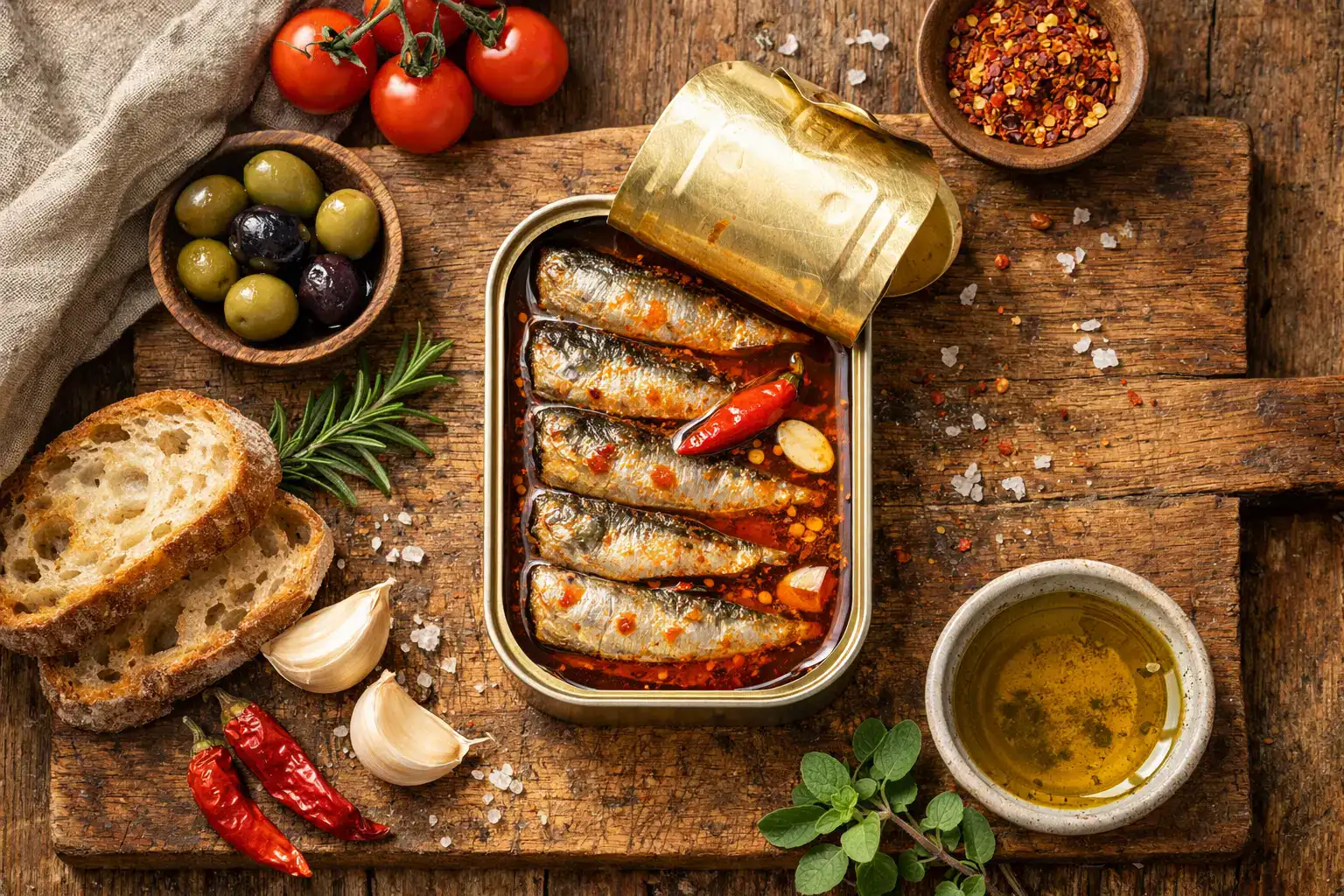
Quick Nutrition Facts
Per 100g (drained, in spicy olive oil)
| Nutrient | Amount |
|---|---|
| Calories | 220 kcal |
| Protein | 21g |
| Carbohydrates | 1g |
| Fiber | 0g |
| Sugars | 0g |
| Fat | 14g |
| Omega-3 (EPA+DHA) | 1.5g |
| Calcium | 382mg |
| Vitamin D | 4.8mcg |
| Vitamin B12 | 8.9mcg |
| Selenium | 52.7mcg |
| Iron | 2.9mg |
| Sodium | 505mg |
Macronutrient Breakdown
 ChatGPT
  Claude
  AI Mode
  Perplexity
NUTRITIONIST INSIGHT
Tinned sardines in spicy olive oil pack an extraordinary nutrient density: 21g complete protein, 382mg calcium (38% DV), and 1.5g omega-3s per 100g. The capsaicin from chili adds a mild thermogenic effect that may support metabolism. Eating the bones provides bioavailable calcium comparable to dairy.
Myth Busters
MYTH #1: Canned Fish Is Less Nutritious Than Fresh
TRUTH: Canning preserves most nutrients and actually increases bioavailable calcium because the bones soften and become edible. Sardines retain their omega-3 fatty acid content through the canning process, making them nutritionally comparable to fresh fish.
MYTH #2: Sardines Are Too High in Mercury
TRUTH: Sardines are among the lowest-mercury fish available because they are small, short-lived, and feed low on the food chain. The FDA lists sardines as a "Best Choice" fish, safe even for pregnant women at 2-3 servings per week.
MYTH #3: The Oil Adds Too Many Calories
TRUTH: When drained, sardines in olive oil contain about 220 kcal per 100g. The olive oil contributes heart-healthy monounsaturated fats and improves absorption of fat-soluble vitamins D and E. Olive oil plus omega-3s create a powerful anti-inflammatory combination.
MYTH #4: Tinned Sardines Are Loaded With Sodium
TRUTH: At 505mg sodium per 100g, sardines contain less sodium than most deli meats, cheese, or processed snacks. Draining the oil and rinsing can reduce sodium by 30-40%. For sodium-sensitive individuals, look for "no salt added" varieties.
MYTH #5: Sardines Cause Gout
TRUTH: While sardines contain purines, moderate consumption (2-3 servings per week) does not significantly raise uric acid in most people. The omega-3 fatty acids in sardines actually have anti-inflammatory properties that may counteract inflammatory pathways. Only those with active gout flares should limit intake.
NutriScore by Health Goals
| Health Goal | NutriScore | Why This Score? |
|---|---|---|
| Weight Loss |  | 220 cal per 100g with 21g protein keeps you full. Near-zero carbs support low-carb and keto diets. High protein-to-calorie ratio aids satiety. |
| Muscle Gain | | 21g complete protein with all essential amino acids. Omega-3s reduce exercise-induced inflammation and support recovery. Calcium and vitamin D support bone strength. |
| Diabetes Management | | Virtually zero carbs with negligible glycemic impact. Research shows sardine-enriched diets may help prevent type 2 diabetes in people with prediabetes. |
| PCOS Management | | Anti-inflammatory omega-3s help manage PCOS symptoms. Zero sugar, high protein stabilizes insulin levels. Vitamin D supports hormonal balance. |
| Pregnancy Nutrition | | Low mercury, safe for pregnancy per Mayo Clinic and ACOG. DHA supports fetal brain development, calcium supports bone growth. |
| Viral/Flu Recovery |  | Protein supports immune cell production. Vitamin D and selenium boost immune function. May be harder to digest during acute illness; start with small portions. |
PERSONALIZED NUTRITION
Track your meals with NutriScan for personalized NutriScores based on your specific health goals!
Blood Sugar Response to Tinned Sardines
Understanding how tinned sardines affect your blood glucose helps you plan meals effectively. As a near-zero carbohydrate food, sardines have minimal impact on blood sugar.
Typical Glucose Response Curve
*This chart shows typical blood glucose response for general healthy individuals. Individual responses may vary. Not medical advice.*
How to Optimize Your Meal
Sardines paired with complex carbs create a balanced glycemic response by slowing glucose absorption:
- 🍞 Whole grain toast or crackers - Adds fiber and sustained energy
- 🥗 Mixed green salad with lemon - Vitamin C enhances iron absorption from sardines
- 🍋 Lemon juice and herbs - Cuts richness, adds vitamin C without carbs
- 🥑 Avocado on toast - Healthy fats complement omega-3s for heart health
This combination provides a complete, balanced meal with minimal blood sugar impact.
Cultural Significance
Tinned sardines have deep roots in Mediterranean and global culinary traditions, with a recent revival driven by the "beautiful tin" movement on social media.
Mediterranean Heritage:
- Portugal, Spain, and Morocco have centuries-old sardine canning traditions
- Portuguese "conservas" culture treats tinned fish as artisanal food, not emergency pantry items
- Spanish "tapas" tradition features sardines with piquillo peppers and olive oil
- Annual sardine festivals celebrate the catch across coastal Mediterranean towns
Global Tinned Fish Renaissance:
- TikTok and Instagram "tinned fish date night" trend brought sardines to younger audiences
- Artisanal brands with designer packaging turned canned fish into a premium category
- Pantry cooking movement during and after the pandemic elevated tinned sardines
- High protein, shelf-stable, and affordable: sardines fit modern nutrition priorities
In India:
- Sardines ("mathi" in Malayalam) are a staple in Kerala and Goa coastal cuisine
- Traditionally fried with turmeric and chili, served with rice and coconut chutney
- Ayurveda recognizes oily fish for joint health and brain nourishment
Compare & Substitute
Tinned Sardines vs Similar Protein Sources (Per 100g)
| Nutrient | 🐟 Sardines (Spicy Oil) | 🐟 Tuna (Canned) | 🐟 Mackerel (Canned) | 🐟 Anchovies (Oil) |
|---|---|---|---|---|
| Calories | 220 kcal | 132 kcal | 262 kcal | 210 kcal |
| Protein | 21g | 29g | 24g | 29g |
| Fat | 14g | 1g | 16g | 10g |
| Carbs | 1g | 0g | 0g | 0g |
| Omega-3 | 1.5g | 0.3g | 2.7g | 2.1g |
| Calcium | 382mg | 12mg | 241mg | 147mg |
| Vitamin D | 4.8mcg | 1.7mcg | 7.3mcg | 1.6mcg |
| Mercury | Very Low | Moderate | Low | Very Low |
| Best For | Calcium, balanced omega-3 | Lean protein, low cal | Highest omega-3 | Umami flavor, sauces |
Frequently Asked Questions
Are tinned sardines healthy?
Tinned sardines are among the most nutrient-dense foods per calorie. A 100g serving delivers 21g protein, 382mg calcium (38% DV), 8.9mcg vitamin B12 (371% DV), and 1.5g omega-3 fatty acids. They are low in mercury, affordable, and shelf-stable for years.
Best practices: Choose sardines packed in olive oil for added heart-healthy fats. Drain before eating to reduce sodium and excess oil calories.
Can diabetics eat sardines?
Sardines are excellent for diabetes management. With virtually zero carbohydrates, they cause negligible blood sugar response.
Why sardines benefit diabetics:
- Near-zero glycemic impact from less than 1g carbs per 100g
- Omega-3s improve insulin sensitivity over time
- High protein promotes satiety and stable blood sugar
- A 12-month study found sardine-enriched diets reduced type 2 diabetes risk in prediabetic patients
No portion restrictions needed for blood sugar control. Watch sodium intake if you have hypertension.
How much protein is in a can of sardines?
A standard drained can (92g) provides approximately 21g of complete protein with all essential amino acids. Per 100g, sardines deliver 21g protein, making them one of the most protein-dense affordable foods available.
For muscle gain, pair with rice or bread for a complete meal. Two cans per day provides 42g protein for under $4.
Are sardines safe during pregnancy?
Yes, sardines are one of the safest fish choices during pregnancy. They contain very low mercury levels and are listed as a "Best Choice" by the FDA.
Pregnancy benefits:
- DHA omega-3: Supports fetal brain and eye development
- Calcium: 382mg per 100g supports fetal bone growth
- Vitamin D: Supports immune function for mother and baby
- B12: Essential for neural tube development
- Iron: Prevents pregnancy-related anemia
Aim for 2-3 servings per week within the 8-12 oz recommended weekly seafood intake.
What are the main health benefits of sardines?
Key Benefits:
- Heart Health: 1.5g omega-3s per 100g reduce triglycerides and inflammation
- Bone Strength: 382mg calcium plus vitamin D supports bone density
- Brain Function: DHA omega-3 supports cognitive health and memory
- Anti-Inflammatory: Omega-3s and selenium reduce chronic inflammation
- Immune Support: Vitamin D and selenium boost immune defenses
- Muscle Maintenance: 21g complete protein per 100g prevents muscle loss
How often should you eat sardines?
General Guidelines:
- 2-3 servings per week - Most adults (optimal omega-3 intake)
- 3-4 servings per week - Athletes, pregnant women (higher protein and DHA needs)
- 1-2 servings per week - Those with gout history or sodium restrictions
Watch out for: Sodium intake (505mg per 100g). If eating sardines frequently, choose low-sodium varieties or rinse before eating. Track with NutriScan app to monitor sodium and omega-3 balance.




Similar Nutritious Foods
4505 Chicharrones Classic Chili Salt
7 Eleven Japan Crispy Corn Cheese
Explore More Nutrition Tools & Resources
AI Calorie Counter App - Snap a Photo, Get Macros
AI Nutritionist App That Reads Your Logged Meals
Best Protein Supplements for Women
Bulking Meal Plan App That Sets Your Surplus
ChatGPT Calorie Counter Alternative That Keeps the Total
ChatGPT Diet Plan Alternative That Tracks What You Eat
ChatGPT Weight Loss Coach Alternative With a Food Log
Fast Food Calorie Counter App That Reads the Tray
Free Calorie Tracker App with AI Photo Scans | NutriScan
Indian Diet Plan App With Veg and Non Veg Meals
Indian Food Calorie Calculator - Get Instant Nutrition Facts for Desi Meals — 2026
Intermittent Fasting for Women, Timer and Meal Log App
Intermittent Fasting Tracker App - Free Fasting Timer
Macro Tracker App That Fills the Numbers From a Photo
Mediterranean Diet Meal Plan App That Counts the Oil
Micronutrient Tracker App for Vitamins and Minerals
MyFitnessPal Alternative That Stays Free | NutriScan
NutriScore App: A Free Grade on Every Meal | NutriScan
Nutrition Label Scanner App for the Amount You Ate
Second Trimester Protein Guide
Vegetarian Meal Plan App With a Protein Target
Voice Calorie Counter - Speak to Track Meals Hands-Free
Water and Calorie Tracker App - Free Water Log