Tirokafteri (Greek Feta Dip): Calories, Nutrition and Health Benefits
A fiery Greek mezze dip blending whipped feta with hot peppers, delivering bold Mediterranean flavor with 250 calories and 24g fat per 100g.
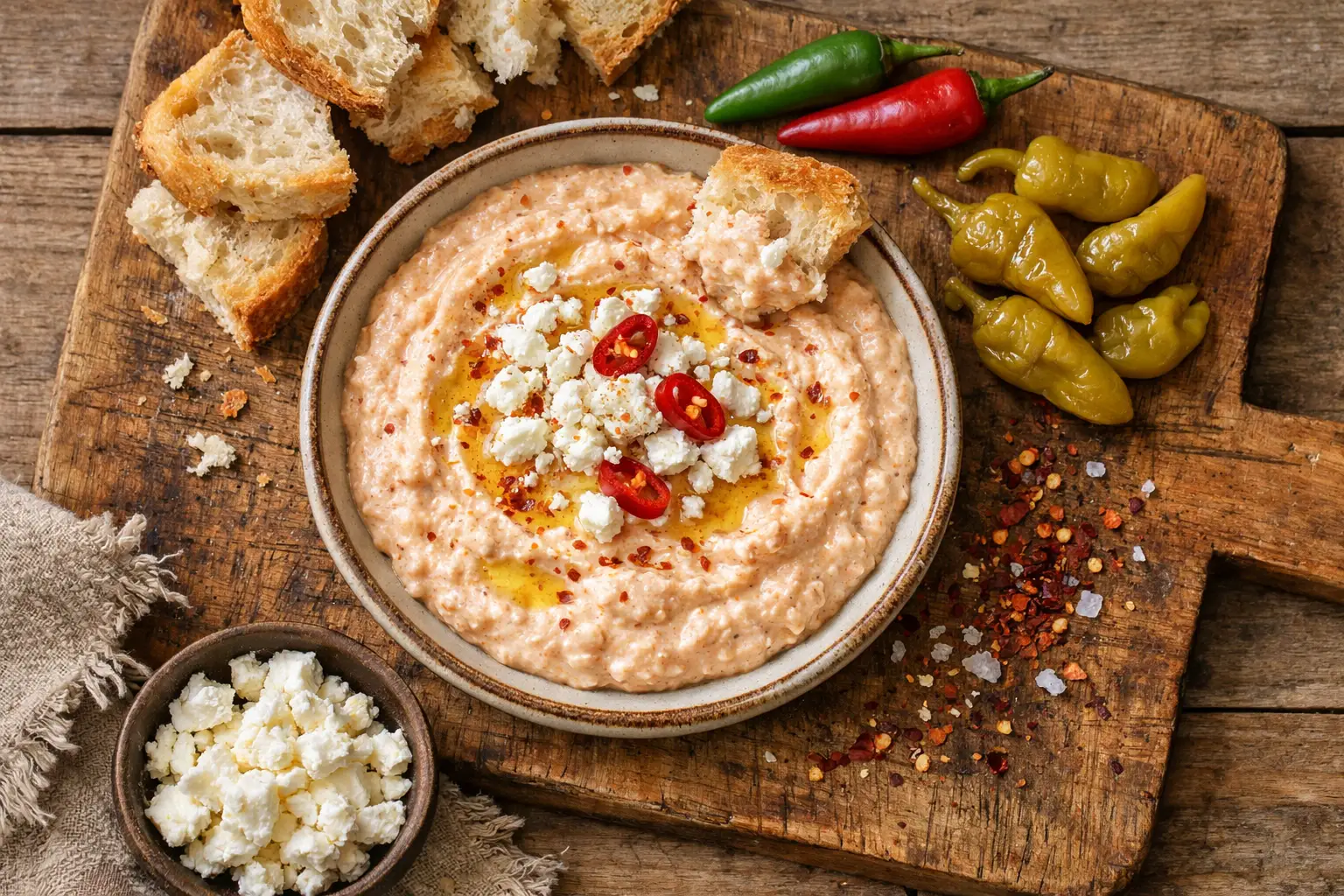
Quick Nutrition Facts
Per 2 Tablespoons (30g) | Per 100g in parentheses
| Nutrient | Amount |
|---|---|
| Calories | 75 kcal (250) |
| Protein | 1.8g (6g) |
| Carbohydrates | 1.2g (4g) |
| Fiber | 0.2g (0.5g) |
| Sugars | 0.6g (2g) |
| Fat | 7.2g (24g) |
| Saturated Fat | 3g (10g) |
| Calcium | 105mg (350mg) |
| Sodium | 240mg (800mg) |
| Vitamin A | 42mcg (140mcg) |
Macronutrient Breakdown
 ChatGPT
  Claude
  AI Mode
  Perplexity
NUTRITIONIST INSIGHT
Tirokafteri is a calorie-dense dip where 86% of calories come from fat. The capsaicin from hot peppers may temporarily boost metabolism, while feta provides 35% of daily calcium per 100g. Stick to 2-tablespoon portions and pair with raw vegetables instead of bread for a lower-calorie, higher-fiber snack.
Myth Busters
MYTH #1: Tirokafteri Is Just Empty Calories
TRUTH: Despite being high in fat, tirokafteri provides meaningful nutrition. Feta cheese delivers 350mg calcium per 100g, along with phosphorus that supports bone density. The capsaicin from hot peppers has documented metabolic benefits.
MYTH #2: All Feta Dips Are the Same Nutritionally
TRUTH: Tirokafteri varies significantly by recipe. Versions with more olive oil add heart-healthy monounsaturated fats, while yogurt-based variants are lower in calories (127-190 kcal/100g vs 250+). The fat source matters: olive oil provides anti-inflammatory oleic acid.
MYTH #3: Tirokafteri Is Too Salty to Be Healthy
TRUTH: While feta is sodium-rich (~800mg/100g), a typical 30g serving provides 240mg sodium (10% DV). Within a balanced Mediterranean diet, moderate dairy consumption including cheese is associated with better cardiovascular outcomes.
MYTH #4: Spicy Foods Like Tirokafteri Cause Stomach Ulcers
TRUTH: Capsaicin does not cause ulcers. Research shows capsaicin may actually protect the stomach lining by boosting mucus production. Only avoid if you already have GERD or active gastritis.
MYTH #5: You Cannot Eat Tirokafteri on a Low-Carb Diet
TRUTH: With only 4g carbs per 100g, tirokafteri is one of the most keto-friendly dips available. A 30g serving has just 1.2g net carbs, making it ideal for low-carb and ketogenic eating patterns.
NutriScore by Health Goals
| Health Goal | NutriScore | Why This Score? |
|---|---|---|
| Weight Loss |  | Calorie-dense at 250 kcal/100g. Limit to 1-2 tbsp portions. Pair with raw veggies, not bread. |
| Muscle Gain | | Only 6g protein per 100g. Better as a flavor accent than a protein source. Add to high-protein meals. |
| Diabetes Management |  | Very low carb (4g/100g) with minimal blood sugar impact. Adding cheese to carb-rich foods lowers their glycemic response. Watch sodium. |
| PCOS Management | | Low carb is favorable, but high saturated fat (10g/100g) may affect inflammation. Use sparingly. |
| Pregnancy Nutrition | | Good calcium source (350mg/100g). Must use pasteurized feta only to avoid listeria risk. Supports fetal bone development with calcium and phosphorus. |
| Viral/Flu Recovery | | Easy to eat, capsaicin clears congestion, calcium and protein support recovery. Gentle on sore throats when served smooth. |
PERSONALIZED NUTRITION
Track your meals with NutriScan for personalized NutriScores based on your specific health goals!
Blood Sugar Response to Tirokafteri
Tirokafteri has minimal impact on blood glucose due to its very low carbohydrate content (4g per 100g). The high fat content slows any glucose absorption significantly.
Typical Glucose Response Curve
*This chart shows typical blood glucose response for general healthy individuals. Individual responses may vary. Not medical advice.*
How to Flatten the Spike
Adding protein and fat to meals slows glucose absorption and tirokafteri itself acts as a glucose-lowering accompaniment:
- 🥒 Raw cucumber and bell pepper sticks - High fiber, low carb vehicle for the dip
- 🫒 Whole grain pita (small portion) - Fiber slows carb absorption
- 🥚 Paired with boiled eggs - Added protein further blunts any glucose rise
- 🥗 As salad dressing - Spread thin over greens for flavor without carb load
This combination keeps the overall glycemic load of your meal low while adding satisfying flavor.
Cultural Significance
Tirokafteri (τυροκαυτερή) literally means "burning cheese" in Greek, reflecting the fiery kick from hot peppers blended into whipped feta.
In Greece:
- Essential mezze dish served in tavernas across the country, especially in northern Greece
- Traditionally made with barrel-aged feta, roasted hot peppers, olive oil, and lemon
- Served alongside bread, grilled meats, and other dips like tzatziki and melitzanosalata
- Recipes vary by region: Macedonian versions are fiercer, while island versions use milder peppers
Global Adoption:
- Gaining popularity worldwide as part of the Mediterranean diet trend
- Featured in Australian food media as a 2026 trending food
- Adapted in fusion cuisines: served with crudités, as burger topping, or pizza drizzle
- Commercial versions now available in international supermarkets
Compare & Substitute
Tirokafteri vs Similar Dips (Per 100g)
| Nutrient | 🧀 Tirokafteri | 🥒 Tzatziki | 🫒 Hummus | 🧅 French Onion Dip |
|---|---|---|---|---|
| Calories | 250 kcal | 56 kcal | 166 kcal | 210 kcal |
| Carbs | 4g | 4g | 14g | 8g |
| Fiber | 0.5g | 0.3g | 6g | 0.5g |
| Protein | 6g | 3g | 8g | 3g |
| Fat | 24g | 3.5g | 10g | 19g |
| Calcium | 350mg | 64mg | 38mg | 45mg |
| Sodium | 800mg | 217mg | 379mg | 550mg |
| Best For | Low-carb, calcium boost | Low-calorie snacking | Plant protein, fiber | Comfort food, parties |
Frequently Asked Questions
How many calories are in tirokafteri?
Tirokafteri contains approximately 250 calories per 100g. A standard 2-tablespoon serving (30g) has about 75 calories. The calorie density comes primarily from feta cheese (264 kcal/100g) and olive oil.
Portion guide: 2 tablespoons with raw vegetables makes a satisfying 80-calorie snack.
Is tirokafteri safe during pregnancy?
Tirokafteri is safe only when made with pasteurized feta cheese. Unpasteurized soft cheeses carry listeria risk, which is dangerous during pregnancy.
Safety checklist:
- Confirm feta is pasteurized (check label)
- Homemade versions: use pasteurized feta only
- Restaurant versions: ask about cheese source
- The calcium (350mg/100g) and protein support fetal development
Can diabetics eat tirokafteri?
Yes, tirokafteri is a favorable option for diabetics due to its very low carbohydrate content (4g per 100g). A 30g serving has just 1.2g carbs with negligible blood sugar impact.
Tips for diabetics:
- Use as a dip with low-carb vegetables (cucumber, celery, bell pepper)
- Avoid pairing with high-carb bread or crackers
- Monitor sodium intake (800mg per 100g)
- The fat and protein content helps stabilize blood sugar
What is tirokafteri made of?
Traditional tirokafteri contains feta cheese (60-70%), hot peppers (fresh or roasted), extra virgin olive oil, lemon juice, and sometimes Greek yogurt for creaminess. The heat level varies by pepper type: Florina peppers give mild heat, while bird's eye chilis make it fiery.
How long does tirokafteri last in the fridge?
Homemade tirokafteri keeps 5-7 days refrigerated in an airtight container. The olive oil and lemon juice act as natural preservatives. Always use a clean spoon to prevent contamination. Commercially prepared versions may last 2-3 weeks unopened.
Is tirokafteri keto-friendly?
Yes, tirokafteri is excellent for keto diets. With only 4g net carbs per 100g and 24g fat, it fits perfectly within ketogenic macros. A 30g serving provides just 1.2g net carbs, well within daily keto limits.




Similar Nutritious Foods
4505 Chicharrones Classic Chili Salt
7 Eleven Japan Crispy Corn Cheese
Explore More Nutrition Tools & Resources
AI Calorie Counter App - Snap a Photo, Get Macros
AI Nutritionist App That Reads Your Logged Meals
Best Protein Supplements for Women
Bulking Meal Plan App That Sets Your Surplus
ChatGPT Calorie Counter Alternative That Keeps the Total
ChatGPT Diet Plan Alternative That Tracks What You Eat
ChatGPT Weight Loss Coach Alternative With a Food Log
Fast Food Calorie Counter App That Reads the Tray
Free Calorie Tracker App with AI Photo Scans | NutriScan
Indian Diet Plan App With Veg and Non Veg Meals
Indian Food Calorie Calculator - Get Instant Nutrition Facts for Desi Meals — 2026
Intermittent Fasting for Women, Timer and Meal Log App
Intermittent Fasting Tracker App - Free Fasting Timer
Macro Tracker App That Fills the Numbers From a Photo
Mediterranean Diet Meal Plan App That Counts the Oil
Micronutrient Tracker App for Vitamins and Minerals
MyFitnessPal Alternative That Stays Free | NutriScan
NutriScore App: A Free Grade on Every Meal | NutriScan
Nutrition Label Scanner App for the Amount You Ate
Second Trimester Protein Guide
Vegetarian Meal Plan App With a Protein Target
Voice Calorie Counter - Speak to Track Meals Hands-Free
Water and Calorie Tracker App - Free Water Log