Tomato Sauce: Calories, Nutrition and Health Benefits
Versatile, lycopene-rich condiment that transforms meals with concentrated tomato goodness, minimal calories, and powerful antioxidants.
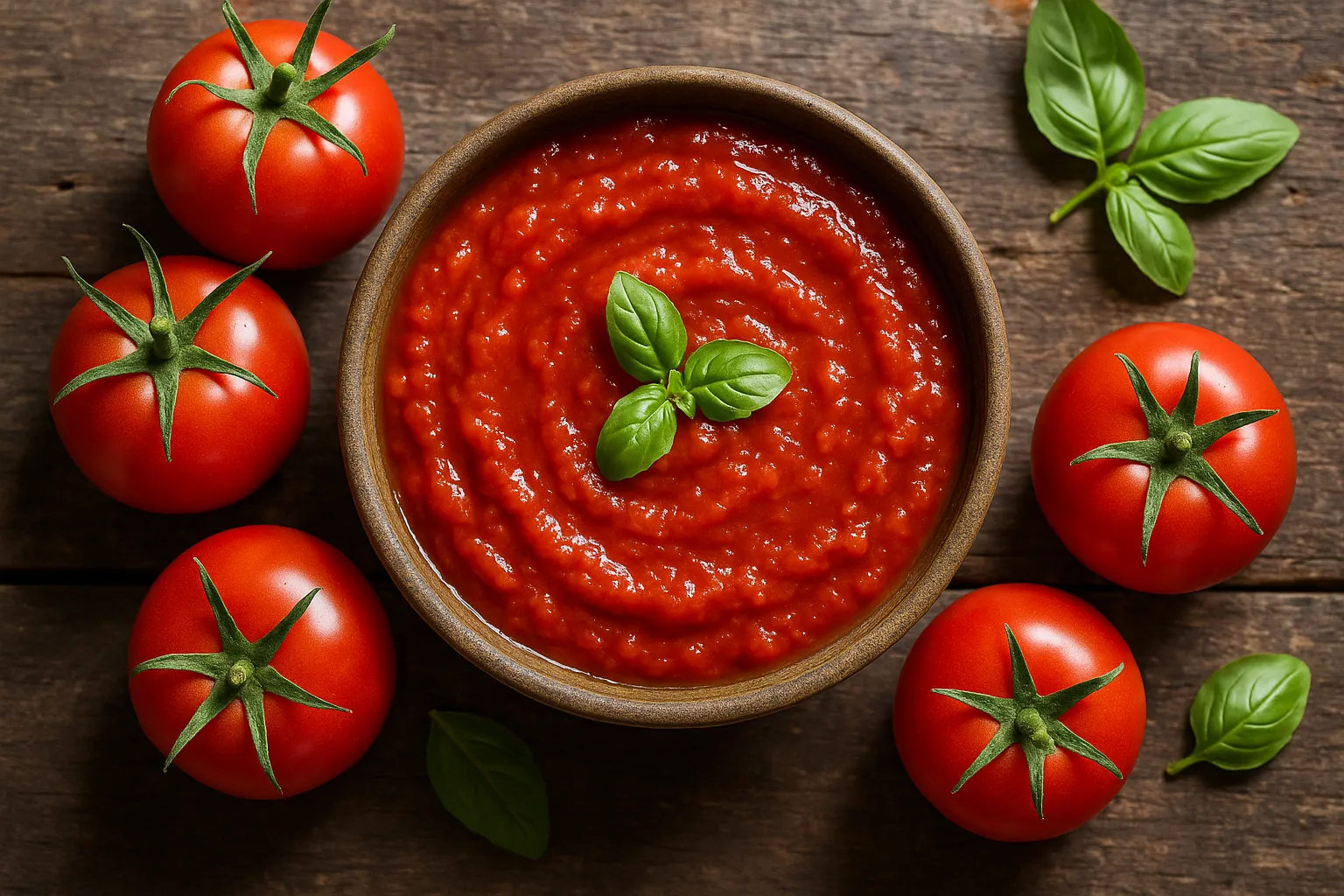
Quick Nutrition Facts
Per 100g Plain Tomato Sauce
| Nutrient | Amount |
|---|---|
| Calories | 29 kcal |
| Protein | 1.3g |
| Carbohydrates | 6.5g |
| Fiber | 1.5g |
| Sugars | 4.2g |
| Fat | 0.2g |
| Lycopene | 11mg |
| Vitamin C | 9.3mg |
| Vitamin A | 490 IU |
| Potassium | 297mg |
Macronutrient Breakdown
 ChatGPT
  Claude
  AI Mode
  Perplexity
NUTRITIONIST INSIGHT
Cooking tomatoes increases lycopene bioavailability by 35-55% compared to raw tomatoes. Adding olive oil to tomato sauce enhances absorption of this fat-soluble antioxidant, making it more effective for heart and prostate health.
Myth Busters
MYTH #1: Tomato Sauce Is High in Sugar
TRUTH: Plain tomato sauce contains 4.2g natural sugars from tomatoes per 100g - similar to fresh tomatoes. The "high sugar" concern applies to commercial sauces with added sugars (8-12g per 100g). Choose no-sugar-added or homemade versions for optimal nutrition.
MYTH #2: Tomato Sauce Causes Heartburn in Everyone
TRUTH: While tomato acidity (pH 4.5-5.5) can trigger acid reflux in sensitive individuals, most people tolerate tomato sauce well. If you have GERD, limit portion size, avoid late-night consumption, or choose low-acid tomato varieties. Not everyone experiences heartburn.
MYTH #3: Store-Bought Tomato Sauce Is As Healthy As Homemade
TRUTH: Commercial tomato sauces often contain 4-8g added sugars, 300-500mg sodium, and preservatives per 100g. Homemade sauce with fresh tomatoes, herbs, and olive oil provides superior nutrition without additives. Check labels carefully for hidden sugars.
MYTH #4: Canned Tomatoes Are Less Nutritious Than Fresh
TRUTH: Canned tomatoes retain 80-90% of nutrients and often have higher lycopene due to heat processing. Choose BPA-free cans or glass jars. For sauce-making, canned tomatoes are nutritionally comparable to fresh.
MYTH #5: Tomato Sauce Should Be Avoided for Weight Loss
TRUTH: With only 29 calories per 100g, plain tomato sauce is excellent for weight loss. It adds flavor and volume to meals without excess calories. The fiber and water content promote satiety. Avoid high-calorie cream-based or sugary pasta sauces.
MYTH #6: You Need to Peel Tomatoes for Sauce
TRUTH: Tomato skins contain additional fiber, antioxidants, and nutrients. While peeling creates smoother texture, it's not necessary for nutrition. If you prefer smoother sauce, blend thoroughly or use a food mill instead of peeling before cooking.
NutriScore by Health Goals
| Health Goal | NutriScore | Why This Score? |
|---|---|---|
| Weight Loss |  | Only 29 calories per 100g, adds flavor without calories, fiber promotes fullness. Choose no-sugar-added varieties. |
| Muscle Gain |  | Low protein (1.3g) but excellent carb source for pasta/rice dishes, lycopene reduces exercise inflammation. Pair with protein. |
| Diabetes Management | | Low glycemic load, lycopene may improve insulin sensitivity. Choose no-sugar-added, monitor total carbs in meal. |
| PCOS Management | | Anti-inflammatory lycopene, low calorie, no added sugars (homemade). Supports weight management and reduces inflammation. |
| Pregnancy Nutrition | | Lycopene supports placental health, vitamin C for iron absorption, folate in tomatoes. Choose low-sodium varieties. |
| Viral/Flu Recovery | | Vitamin C for immunity (9.3mg), easy to digest, anti-inflammatory lycopene, gentle on upset stomach. Warm tomato soup provides comfort and hydration. |
PERSONALIZED NUTRITION
Track your meals with NutriScan for personalized NutriScores based on your specific health goals!
Blood Sugar Response to Tomato Sauce
Tomato sauce has minimal impact on blood sugar due to low carbohydrate content and high fiber-to-carb ratio.
Typical Glucose Response Curve
This chart shows typical blood glucose response for general healthy individuals. Individual responses may vary. Not medical advice.
How to Use for Stable Blood Sugar
Pairing tomato sauce with protein and fiber creates balanced, low-glycemic meals:
- 🍝 Whole grain pasta with grilled chicken - Complex carbs, protein, and sauce
- 🍆 Eggplant parmesan - Fiber-rich vegetables with moderate cheese
- 🥚 Shakshuka (eggs in tomato sauce) - High protein, minimal carbs
- 🐟 Fish in tomato sauce - Lean protein, omega-3s, lycopene
These combinations provide sustained energy without blood sugar spikes.
Cultural Significance
Tomato sauce became a culinary staple in the late 18th century, transforming from a basic preserve to a global flavor foundation.
In Italy:
- Marinara sauce originated in Naples as a quick sailors' sauce
- Foundation of Italian-American cuisine (pizza, pasta, lasagna)
- Regional variations: Sicilian (sweet), Roman (simple), Neapolitan (fresh basil)
- San Marzano tomatoes considered the gold standard
In India:
- Introduced during British colonial period
- Essential in Indo-Chinese cuisine (Manchurian, noodles)
- Popular in North Indian curries (paneer tikka masala)
- Tomato ketchup widely used as condiment
Global Impact:
- Mexican salsa roja (cooked tomato sauce with chilies)
- Spanish sofrito base for paellas and stews
- Middle Eastern shakshuka sauce with eggs
- American pizza and pasta culture
Compare & Substitute
Tomato Sauce vs Similar Condiments (Per 100g)
| Nutrient | 🍅 Tomato Sauce | 🍝 Marinara | 🌶️ Salsa | 🍅 Ketchup |
|---|---|---|---|---|
| Calories | 29 kcal | 55 kcal | 36 kcal | 112 kcal |
| Carbs | 6.5g | 8.4g | 8.1g | 27.4g |
| Fiber | 1.5g | 2.1g | 1.8g | 0.3g |
| Protein | 1.3g | 1.5g | 1.5g | 1.0g |
| Sugars | 4.2g (natural) | 6.8g | 5.8g | 22.8g (added) |
| Sodium | 10-20mg (homemade) | 400mg | 430mg | 907mg |
| Lycopene | 11mg (high) | 13mg (high) | 8mg | 10mg |
| Best For | Low calorie, control | Rich flavor, pasta | Fresh, spicy | Occasional condiment |
Frequently Asked Questions
Is tomato sauce good for weight loss?
Yes, plain tomato sauce is excellent for weight loss. With only 29 calories per 100g and 1.5g fiber, it adds substantial flavor and volume to meals without excess calories.
Best practices: Choose homemade or no-sugar-added varieties; avoid cream-based sauces (200+ calories); use as base for vegetable dishes; pair with whole grains and lean protein; check labels for hidden sugars.
Can diabetics eat tomato sauce?
Yes, diabetics can eat plain tomato sauce. With 6.5g carbs per 100g and low glycemic load, it has minimal blood sugar impact when consumed in normal portions.
Tips for diabetics:
- Choose no-sugar-added or homemade varieties
- Limit to 1/2-1 cup per meal
- Pair with protein and fiber-rich foods
- Check labels: avoid sauces with 8+ grams added sugar
- Monitor total carbohydrate count in complete meal
Research suggests lycopene may improve insulin sensitivity and cardiovascular health in diabetics.
What are the main health benefits of tomato sauce?
Key Benefits:
- Lycopene for Heart Health: 11mg lycopene per 100g reduces LDL oxidation and cardiovascular disease risk
- Prostate Health: Regular lycopene intake associated with reduced prostate cancer risk
- Low Calorie: Only 29 calories per 100g supports weight management
- Vitamin C (9.3mg): Immune support and iron absorption
- Vitamin A (490 IU): Vision and skin health
- Potassium (297mg): Blood pressure regulation
Cooking tomatoes increases lycopene bioavailability by 35-55% compared to raw.
Is homemade tomato sauce healthier than store-bought?
Homemade tomato sauce is typically healthier due to complete control over ingredients:
Homemade Advantages:
- No added sugars (store-bought often has 4-8g per 100g)
- Lower sodium (10-20mg vs 300-500mg in commercial)
- No preservatives or artificial flavors
- Fresh herbs and olive oil for added nutrients
- Customizable spice levels and consistency
When to choose store-bought: If selecting commercial sauce, choose no-sugar-added, low-sodium (under 140mg per serving), organic when possible, glass jars over BPA cans.
Does cooking tomatoes really increase lycopene?
Yes, cooking tomatoes increases lycopene bioavailability significantly. Heat breaks down tomato cell walls, releasing bound lycopene and converting it to a more absorbable form.
Evidence:
- Cooking increases lycopene availability by 35-55%
- Longer cooking times enhance bioavailability further
- Adding olive oil improves absorption (lycopene is fat-soluble)
- Tomato paste/sauce has 5-10x more lycopene than fresh tomatoes per gram
Optimal preparation: Simmer tomatoes with olive oil for 30+ minutes; use tomato paste or puree for concentrated lycopene; combine cooked and raw tomatoes for diverse nutrients.
How much sodium is in tomato sauce?
Sodium content varies dramatically based on type:
Sodium Levels:
- Homemade (no added salt): 10-20mg per 100g
- Store-bought low-sodium: 100-200mg per 100g
- Regular store-bought: 300-500mg per 100g
- Restaurant/jarred pasta sauce: 500-700mg per 100g
Recommendation: Choose low-sodium (under 140mg per serving) or no-salt-added varieties; make homemade sauce to control sodium; for blood pressure management, limit to low-sodium options; rinse canned tomatoes to reduce sodium by 30-40%.
How much tomato sauce should I eat per day?
General Guidelines:
- For flavor and nutrition: 1/2-1 cup (100-200g) daily
- Weight loss: 1/2-1 cup as meal base (low calorie)
- Heart health: 1 cup daily for optimal lycopene (11-22mg)
- Diabetes: 1/2 cup per meal (monitor total carbs)
Important: Choose no-sugar-added, low-sodium varieties for daily consumption; pair with vegetables, whole grains, lean protein; watch portion sizes of higher-calorie pasta/pizza dishes.
Track your meals with NutriScan app to see how tomato sauce fits your personal nutrition goals.
Can I eat tomato sauce if I have acid reflux?
People with acid reflux (GERD) may need to limit tomato sauce due to acidity (pH 4.5-5.5), but tolerance varies individually.
Tips for acid reflux:
- Eat smaller portions (1/4-1/2 cup)
- Avoid eating within 3 hours of bedtime
- Choose low-acid tomato varieties (San Marzano)
- Add small amount of baking soda to neutralize acidity (1/4 tsp per cup)
- Pair with non-acidic foods (grains, lean protein)
- Avoid heavy cream or high-fat additions (worsen reflux)
Alternative: If tomatoes trigger symptoms, try butternut squash or carrot-based sauces with similar texture and sweetness.


Similar Nutritious Foods
4505 Chicharrones Classic Chili Salt
7 Eleven Japan Crispy Corn Cheese
Explore More Nutrition Tools & Resources
AI Calorie Counter App - Snap a Photo, Get Macros
AI Nutritionist App That Reads Your Logged Meals
Best Protein Supplements for Women
Bulking Meal Plan App That Sets Your Surplus
ChatGPT Calorie Counter Alternative That Keeps the Total
ChatGPT Diet Plan Alternative That Tracks What You Eat
ChatGPT Weight Loss Coach Alternative With a Food Log
Fast Food Calorie Counter App That Reads the Tray
Free Calorie Tracker App with AI Photo Scans | NutriScan
Indian Diet Plan App With Veg and Non Veg Meals
Indian Food Calorie Calculator - Get Instant Nutrition Facts for Desi Meals — 2026
Intermittent Fasting for Women, Timer and Meal Log App
Intermittent Fasting Tracker App - Free Fasting Timer
Macro Tracker App That Fills the Numbers From a Photo
Mediterranean Diet Meal Plan App That Counts the Oil
Micronutrient Tracker App for Vitamins and Minerals
MyFitnessPal Alternative That Stays Free | NutriScan
NutriScore App: A Free Grade on Every Meal | NutriScan
Nutrition Label Scanner App for the Amount You Ate
Second Trimester Protein Guide
Vegetarian Meal Plan App With a Protein Target
Voice Calorie Counter - Speak to Track Meals Hands-Free
Water and Calorie Tracker App - Free Water Log