Tsukemen: Calories, Nutrition and Health Benefits
Japan's beloved dipping noodle dish featuring thick, chewy noodles served cold alongside a rich, concentrated broth for an interactive eating experience.
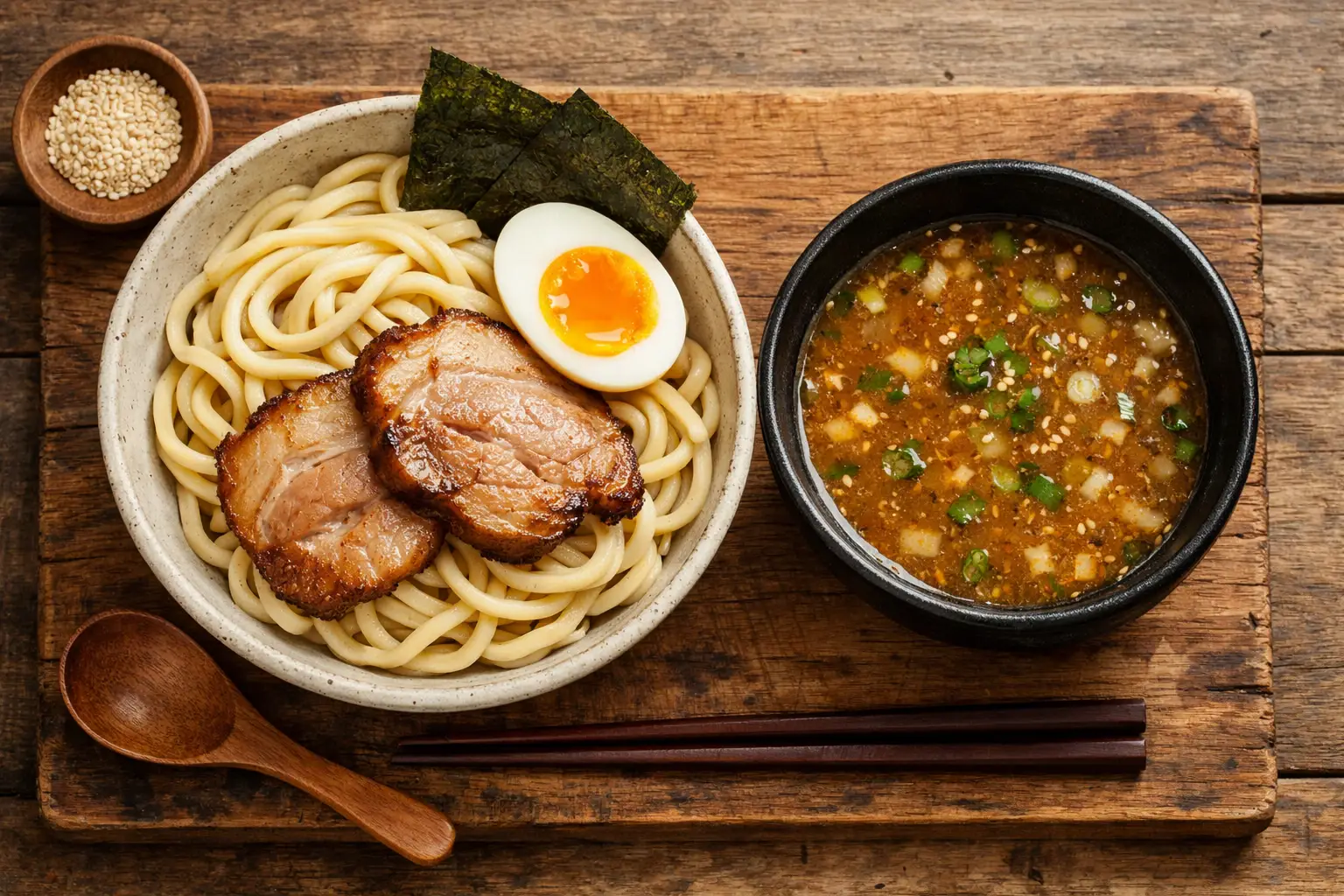
Quick Nutrition Facts
Per 1 Bowl Tsukemen (235g noodles)
| Nutrient | Amount |
|---|---|
| Calories | 471 kcal |
| Protein | 14.1g |
| Carbohydrates | 82.4g |
| Fiber | 3.5g |
| Sugars | 2.4g |
| Fat | 9.4g |
| Saturated Fat | 2.4g |
| Sodium | 1412mg |
| Iron | 2.4mg |
| Potassium | 118mg |
Macronutrient Breakdown
 ChatGPT
  Claude
  AI Mode
  Perplexity
NUTRITIONIST INSIGHT
Tsukemen's separated serving style lets you control broth intake - a smart strategy for managing sodium. The thick wheat noodles provide sustained energy, and adding extra vegetables to your order boosts fiber without significantly increasing calories.
Myth Busters
MYTH #1: Tsukemen Is Just Cold Ramen
TRUTH: Tsukemen is a distinct dish with thicker, chewier noodles specifically made to hold up when dipped. The concentrated broth is 2-3x more intense than regular ramen soup, creating a completely different flavor and texture experience.
MYTH #2: All Noodles Have the Same Glycemic Impact
TRUTH: Cooking and serving method matters. Cold noodles form resistant starch during cooling, which lowers glycemic response compared to hot noodles. Tsukemen's cold noodles may have a slightly lower glycemic impact than hot ramen.
MYTH #3: Tsukemen Broth Is Too Unhealthy to Consume
TRUTH: While high in sodium, bone-based broths provide collagen, amino acids, and minerals. The key is moderation - don't drink all the broth. Dipping lets you control exactly how much broth you consume with each bite.
MYTH #4: Tsukemen Has No Nutritional Value
TRUTH: Tsukemen provides 14g protein, 13% daily iron, B vitamins from wheat flour, and complex carbohydrates. Wheat noodles contain essential amino acids when combined with protein-rich toppings like egg and pork.
MYTH #5: You Should Avoid Noodles for Weight Loss
TRUTH: Portion control matters more than complete avoidance. A standard tsukemen is about 471 calories for noodles alone. Ordering half-size (hanmen) and loading up on vegetable toppings makes it a reasonable occasional meal during weight management.
NutriScore by Health Goals
| Health Goal | NutriScore | Why This Score? |
|---|---|---|
| Weight Loss |  | 471 calories for noodles is moderate, but full servings with broth and toppings reach 700-900 cal. Order half-size, skip drinking broth. |
| Muscle Gain |  | Good carb-to-protein ratio (82g carbs, 14g protein) for post-workout recovery. Add extra chashu and egg for 25-30g total protein. |
| Diabetes Management |  | High carbohydrates (82g) and moderate-high glycemic index typical of wheat noodles (GI 71-87). Eat half portions with extra protein. |
| PCOS Management | | Refined wheat flour affects insulin. Limit to occasional treat, choose whole wheat options when available. |
| Pregnancy Nutrition | | Iron (13% DV) and protein are beneficial, but high sodium requires caution. Ensure broth is fully cooked. |
| Viral/Flu Recovery | | Warm broth aids hydration and comfort. Protein and carbs support energy. The sodium actually helps with electrolyte replacement during illness. |
PERSONALIZED NUTRITION
Track your meals with NutriScan for personalized NutriScores based on your specific health goals!
Blood Sugar Response to Tsukemen
Understanding how tsukemen affects your blood glucose can help you make informed decisions about portions and pairings.
Typical Glucose Response Curve
This chart shows typical blood glucose response for general healthy individuals. Individual responses may vary. Not medical advice.
How to Flatten the Spike
Pairing high-carb foods with protein and fiber slows glucose absorption and reduces the peak blood sugar level:
- Add extra protein toppings - Extra chashu pork, ajitama egg, or chicken slows digestion
- Request vegetable additions - Menma (bamboo shoots), spinach, or bean sprouts add fiber
- Eat protein first - Start with the egg and meat before noodles
- Don't finish all the broth - Reduces both sodium and overall glycemic load
This combination not only reduces the glucose spike but also extends energy release, keeping you fuller for longer.
Cultural Significance
Tsukemen was invented in 1961 by Kazuo Yamagishi at his Tokyo ramen shop, Taishoken. It revolutionized how Japanese people eat noodles.
In Japan:
- Originally created to give tired kitchen staff a quick, refreshing meal
- Now found in over 10,000 dedicated tsukemen shops across Japan
- Summer favorite - cold noodles are refreshing in humid Japanese summers
- "Atsumori" style offers warm noodles for winter months
Regional Variations:
- Tokyo style: Thick, wavy noodles with rich tonkotsu-shoyu broth
- Osaka style: Often lighter, with more seafood-based broths
- Tsukemen festivals: Annual events celebrating the dish with dozens of competing shops
Global Spread:
- Popular in ramen-focused cities like New York, Los Angeles, London, and Sydney
- Often more expensive than regular ramen due to preparation complexity
- Vegetarian versions gaining popularity with mushroom and vegetable-based broths
Compare & Substitute
Tsukemen vs Similar Noodle Dishes (Per Serving)
| Nutrient | Tsukemen | Regular Ramen | Udon | Soba |
|---|---|---|---|---|
| Calories | 471 kcal | 436 kcal | 310 kcal | 336 kcal |
| Carbs | 82g | 68g | 62g | 68g |
| Fiber | 3.5g | 2.8g | 2.5g | 4g |
| Protein | 14g | 12g | 9g | 14g |
| Fat | 9g | 15g | 1g | 2g |
| Sodium | 1412mg | 1800mg | 660mg | 480mg |
| Best For | Satisfying meal, interactive experience | Hot comfort food | Lower calorie option | Higher fiber, buckwheat benefits |
Frequently Asked Questions
How many calories are in tsukemen?
A standard bowl of tsukemen contains approximately 471-550 calories for the noodles and basic broth. With typical toppings (chashu pork, soft-boiled egg, nori), expect 700-900 calories for a complete meal.
Calorie breakdown:
- Noodles alone: 400-471 calories
- Dipping broth: 100-150 calories
- Chashu (2 slices): 120-150 calories
- Ajitama egg: 70-80 calories
Is tsukemen healthy?
Tsukemen offers nutritional benefits but requires moderation due to high sodium.
Benefits:
- 14g protein supports muscle health
- Iron (13% DV) for blood cell production
- Complex carbohydrates for sustained energy
- Collagen from bone broth (if traditional recipe)
Concerns:
- 1400mg+ sodium (60% daily value)
- High refined carbohydrates
- Often low in vegetables unless added
Tips: Add vegetable toppings, don't drink all the broth, and balance with lighter meals the same day.
What is the difference between ramen and tsukemen?
Key differences:
- Temperature: Tsukemen noodles are served cold or room temperature; ramen is served hot in broth
- Noodle thickness: Tsukemen uses thicker, chewier noodles that hold up to dipping
- Broth intensity: Tsukemen broth is concentrated (you dip, not drink)
- Eating style: Dip noodles into broth vs. eating noodles swimming in soup
- Portion: Tsukemen often has more noodles since broth is separate
Can diabetics eat tsukemen?
Diabetics should approach tsukemen with caution due to high carbohydrate content (82g) and moderate-high glycemic index.
Tips for diabetics:
- Order half-size portion (hanmen) to reduce carbs to ~40g
- Choose whole wheat noodles when available
- Add extra protein toppings to slow glucose absorption
- Eat protein and vegetables before noodles
- Monitor blood sugar 2 hours after eating
Consult your healthcare provider for personalized guidance.
Is tsukemen high in sodium?
Yes, tsukemen is high in sodium with 1400-2000mg per serving (60-85% of daily recommended value).
Sodium sources:
- Dipping broth: 800-1200mg
- Noodles (salted): 300-400mg
- Toppings (chashu, egg): 200-400mg
To reduce sodium:
- Don't drink the leftover broth
- Request less salt in broth (if ordering fresh)
- Balance with low-sodium meals throughout the day
When is the best time to eat tsukemen?
Depends on your goal:
- Weight Loss: Lunch (gives time to burn calories). Avoid late dinner.
- Muscle Gain: Post-workout lunch for carb replenishment and protein recovery.
- Diabetes: Early lunch with extra protein, never on empty stomach.
- Energy: 2-3 hours before sustained physical activity.
IMPORTANT NOTE
Avoid tsukemen as a late dinner if watching weight or blood sugar - the high carbohydrates are harder to process before sleep.
How do you eat tsukemen properly?
Traditional eating method:
- Pick up a small portion of noodles with chopsticks
- Dip into the broth briefly (don't soak)
- Slurp the noodles (it's polite in Japan!)
- Enjoy toppings between noodle bites
- At the end, request "soup-wari" - broth diluted with hot water to drink
Pro tip: Many shops offer "atsumori" (warm noodles) in colder months.


Similar Nutritious Foods
4505 Chicharrones Classic Chili Salt
7 Eleven Japan Crispy Corn Cheese
Explore More Nutrition Tools & Resources
AI Calorie Counter App - Snap a Photo, Get Macros
AI Nutritionist App That Reads Your Logged Meals
Best Protein Supplements for Women
Bulking Meal Plan App That Sets Your Surplus
ChatGPT Calorie Counter Alternative That Keeps the Total
ChatGPT Diet Plan Alternative That Tracks What You Eat
ChatGPT Weight Loss Coach Alternative With a Food Log
Fast Food Calorie Counter App That Reads the Tray
Free Calorie Tracker App with AI Photo Scans | NutriScan
Indian Diet Plan App With Veg and Non Veg Meals
Indian Food Calorie Calculator - Get Instant Nutrition Facts for Desi Meals — 2026
Intermittent Fasting for Women, Timer and Meal Log App
Intermittent Fasting Tracker App - Free Fasting Timer
Macro Tracker App That Fills the Numbers From a Photo
Mediterranean Diet Meal Plan App That Counts the Oil
Micronutrient Tracker App for Vitamins and Minerals
MyFitnessPal Alternative That Stays Free | NutriScan
NutriScore App: A Free Grade on Every Meal | NutriScan
Nutrition Label Scanner App for the Amount You Ate
Second Trimester Protein Guide
Vegetarian Meal Plan App With a Protein Target
Voice Calorie Counter - Speak to Track Meals Hands-Free
Water and Calorie Tracker App - Free Water Log