Tteokbokki: Calories, Nutrition and Health Benefits
Korea's iconic spicy street food featuring chewy rice cakes in gochujang sauce—beloved for bold flavor, challenging for blood sugar.
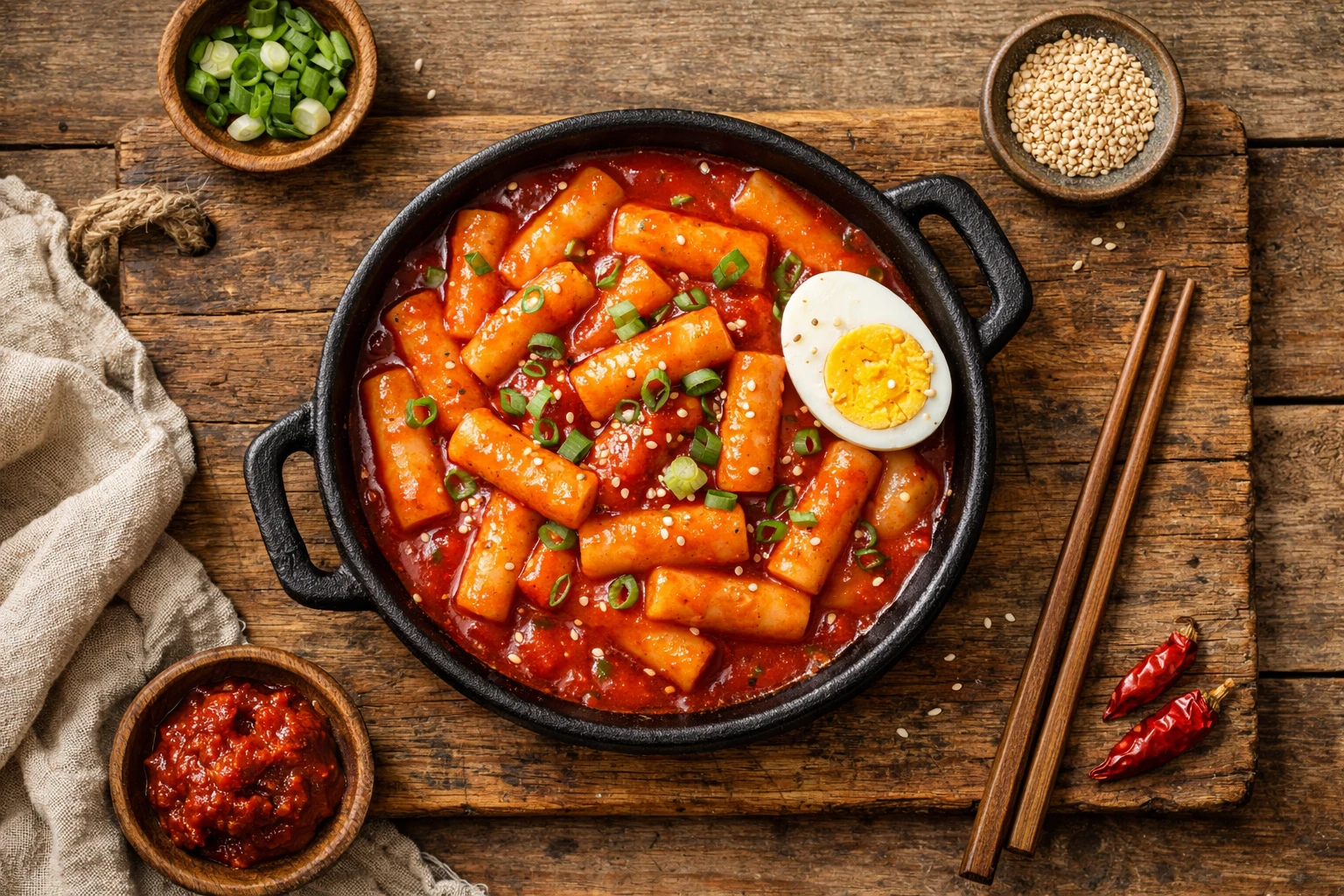
Quick Nutrition Facts
Per 100g Serving
| Nutrient | Amount |
|---|---|
| Calories | 131 kcal |
| Protein | 4.08g |
| Carbohydrates | 19.8g |
| Fiber | 0.7g |
| Sugars | 1.6g |
| Fat | 4.04g |
| Sodium | 198mg |
| Potassium | 100mg |
| Calcium | 19mg |
| Iron | 0.4mg |
Macronutrient Breakdown
 ChatGPT
  Claude
  AI Mode
  Perplexity
NUTRITIONIST INSIGHT
Tteokbokki's gochujang contains capsaicin that boosts metabolism and fat oxidation. The traditional white rice cake base has a high glycemic index (70+), but using konjac or fiber-enriched rice cakes with extra vegetables can create a blood sugar-friendly version.
Myth Busters
MYTH #1: Tteokbokki Is Always Unhealthy
TRUTH: Traditional white rice cake tteokbokki has high glycemic index and refined carbs. However, fiber-enriched rice cakes significantly reduce fasting blood glucose and insulin resistance when consumed regularly. Modified versions using konjac rice cakes, abundant vegetables, and reduced sugar can fit healthy eating patterns.
MYTH #2: Spicy Food Harms Your Stomach
TRUTH: Capsaicin in gochujang actually promotes metabolic health by increasing thermogenesis and fat oxidation. Most people tolerate moderate spice well; only those with active ulcers or severe acid reflux need caution. The fermented components provide probiotic benefits for gut health.
MYTH #3: Korean Street Food Can't Support Weight Loss
TRUTH: While traditional fried street snacks are calorie-dense, tteokbokki offers superior satiety through vegetable incorporation. Eating vegetables first before rice cakes slows glucose absorption. Modified tteokbokki with konjac cakes and extra vegetables provides only 130-150 calories per serving with improved fullness.
MYTH #4: All Rice Cakes Have the Same Nutritional Value
TRUTH: Plain white rice cakes (GI 70+) spike blood sugar rapidly. Brown rice and konjac rice cakes contain significantly more fiber and lower glycemic impact. Konjac glucomannan reduces postprandial glucose by slowing carbohydrate absorption through its high viscosity.
MYTH #5: Diabetics Must Completely Avoid Tteokbokki
TRUTH: While traditional tteokbokki challenges blood sugar control, strategic modifications enable inclusion. Eating protein and vegetables before carbohydrates significantly attenuates glucose spikes. Using half portions with fiber-rich rice cakes, abundant vegetables, and protein allows occasional enjoyment while monitoring response.
MYTH #6: Fermented Foods Like Gochujang Are Too High in Sodium
TRUTH: While gochujang contains sodium, fermented foods improve gut microbiota diversity and reduce inflammatory markers. Recent research found sodium intake during pregnancy wasn't associated with hypertension risk. Moderate gochujang use in balanced meals provides metabolic benefits that may offset sodium concerns for most people.
NutriScore by Health Goals
| Health Goal | NutriScore | Why This Score? |
|---|---|---|
| Weight Loss |  | Traditional version has 328 calories per cup with refined carbs. Modified with konjac cakes and vegetables reduces to 130-150 calories with better satiety. Limit to 1-2 times weekly. |
| Muscle Gain |  | Provides 10g protein per cup serving; carbs support glycogen replenishment. Add egg or tofu for complete protein. Gochujang capsaicin may enhance fat oxidation during muscle building. |
| Diabetes Management |  | White rice cakes have GI 70+, causing rapid glucose spikes. Use fiber-enriched or konjac alternatives, eat vegetables first, limit to half cup portions, always monitor blood sugar. |
| PCOS Management | | High-fiber diets reduce insulin resistance in PCOS. Traditional tteokbokki worsens it. Choose konjac versions, add vegetables, limit frequency. |
| Pregnancy Nutrition | | Safe in moderation; gochujang fermented foods support maternal gut health. Reduce spice if sensitive. With gestational diabetes, use modified versions and monitor closely. |
| Viral/Flu Recovery | | Provides quick energy; gochujang capsaicin has anti-inflammatory properties. Easy to digest when less spicy. Add vegetables for vitamin C and immune support. |
PERSONALIZED NUTRITION
Track your meals with NutriScan for personalized NutriScores based on your specific health goals!
Blood Sugar Response to Tteokbokki
Understanding how tteokbokki affects your blood glucose helps you make informed decisions about preparation and portion control.
Typical Glucose Response Curve
This chart shows typical blood glucose response for traditional white rice cake tteokbokki. Individual responses vary. Not medical advice.
How to Flatten the Spike
Strategic meal sequencing and composition significantly reduce glucose elevation from high-carb meals:
- 🥬 Eat vegetables first - Consume cabbage, carrots, or leafy greens 5-10 minutes before rice cakes to slow absorption
- 🥚 Add protein before carbs - Include eggs, tofu, or fish cake; protein consumed 10 minutes before carbs reduces spikes
- 🍄 Choose fiber-rich rice cakes - Konjac or fiber-enriched versions contain glucomannan that delays starch digestion
- 🥄 Reduce portion size - Use half cup rice cakes instead of full cup; double vegetables to maintain satisfaction
This approach can reduce peak glucose by 20-30% while preserving the tteokbokki experience.
Cultural Significance
Tteokbokki originated during Korea's Joseon Dynasty (1392-1897) as a royal court dish called gungjung tteokbokki, featuring soy sauce-based seasoning rather than the spicy gochujang version popular today.
In Korea:
- Modern spicy tteokbokki emerged in 1953 when a street vendor in Seoul's Sindang-dong created the gochujang-based sauce
- Represents quintessential Korean street food culture, sold from pojangmacha (street food tents)
- Popular comfort food and social dining experience, especially among students and young adults
- Regional variations exist: Busan's tteokbokki uses thinner, longer rice cakes with seafood
Global Impact:
- Korean Wave (Hallyu) spread tteokbokki worldwide through K-dramas and social media
- Instant tteokbokki products generate over $100 million annually in global sales
- Featured prominently in Korean entertainment, cementing its iconic status
- Fusion versions include cheese tteokbokki, carbonara tteokbokki, and rose tteokbokki
Compare & Substitute
Tteokbokki vs Similar Korean Street Foods (Per 100g)
| Nutrient | 🌶️ Tteokbokki | 🍜 Japchae | 🍲 Bibimbap | 🥟 Mandu |
|---|---|---|---|---|
| Calories | 131 kcal | 110 kcal | 120 kcal | 195 kcal |
| Carbs | 19.8g | 22g | 18g | 25g |
| Fiber | 0.7g | 1.5g | 2.1g | 1.2g |
| Protein | 4.1g | 2.8g | 6.5g | 8.5g |
| Fat | 4.0g | 2.5g | 3.8g | 7.2g |
| Sodium | 198mg | 285mg | 245mg | 320mg |
| GI | High (70+) | Medium (55-65) | Medium (50-60) | Medium (55-65) |
| Best For | Quick energy, metabolism boost | Lower calorie Korean option | Balanced meal with vegetables | Higher protein, more filling |
Frequently Asked Questions
Is tteokbokki good for weight loss?
Traditional tteokbokki presents challenges for weight loss due to refined carbohydrates and high glycemic index causing rapid blood sugar spikes followed by increased hunger. A typical 250g cup contains 328 calories, predominantly from starch. However, modified tteokbokki using konjac rice cakes (which contain glucomannan fiber), doubled vegetables, reduced sugar sauce, and added protein creates a 130-150 calorie serving with superior satiety.
Best practices: Limit to 1-2 times weekly; use konjac or fiber-enriched rice cakes; eat vegetables first; add protein like eggs or tofu; reduce portion to half cup rice cakes.
Can diabetics eat tteokbokki?
Diabetics should approach traditional tteokbokki cautiously due to its high glycemic index (70+) from white rice cakes, which cause rapid glucose elevation. Research shows white rice cake consumption significantly increases blood sugar in both healthy and diabetic individuals.
Tips for diabetics: Use konjac or fiber-enriched rice cakes (GI reduced by 30-40%); eat vegetables 5-10 minutes before rice cakes; include protein with the meal; limit to half cup portions; eliminate added sugar from sauce; monitor blood sugar 2 hours post-meal. Some diabetics may need to avoid entirely based on individual glucose response.
How many calories are in tteokbokki?
Tteokbokki contains 131 calories per 100g. A typical restaurant serving of 1 cup (250g) provides approximately 328 calories with 49.5g carbohydrates, 10.2g protein, and 10.1g fat. Calorie content varies based on sauce sweetness, oil content, and additional ingredients like fish cakes or cheese.
Modified versions using konjac rice cakes with extra vegetables reduce calories to 130-150 per serving while improving satiety and nutritional density.
What are the main health benefits of tteokbokki?
Key Benefits:
- Metabolism Boost: Gochujang's capsaicin increases thermogenesis and fat oxidation by 20-30 calories per meal
- Gut Health: Fermented gochujang provides probiotics and reduces inflammatory markers
- Quick Energy: Carbohydrates provide rapid fuel for physical activity when timed appropriately
- Satiety from Vegetables: Cabbage and carrots add fiber for fullness and blood sugar control
- Iron and B Vitamins: Rice cakes fortified with nutrients support energy metabolism
Benefits maximize when using fiber-rich rice cake alternatives and abundant vegetable incorporation.
Is tteokbokki safe during pregnancy?
Yes, tteokbokki is safe during pregnancy in moderation. The fermented gochujang supports maternal gut microbiota diversity. However, pregnant women should consider spice tolerance (reduce gochujang if experiencing heartburn), ensure thorough cooking of all ingredients, and practice portion control.
For gestational diabetes: Traditional tteokbokki's high glycemic load challenges glucose control. Use modified versions with half cup rice cakes maximum, fiber-rich alternatives, abundant vegetables, and protein. Monitor blood sugar closely and consult your healthcare provider for personalized guidance.
How can I make tteokbokki healthier?
Evidence-based modifications:
Use konjac or brown rice cakes instead of white (reduces GI by 30-40% and adds 6-7g fiber per serving); double vegetable content with cabbage, carrots, mushrooms, and green onions; add protein sources like boiled eggs or tofu (10-15g additional protein); reduce or eliminate added sugar in sauce; eat vegetables first before rice cakes (10-minute gap optimal); reduce portion to half cup rice cakes (saves 100-150 calories).
These modifications transform tteokbokki from a refined carb challenge into a more balanced, blood sugar-friendly meal while preserving authentic flavor and cultural significance.


Similar Nutritious Foods
4505 Chicharrones Classic Chili Salt
7 Eleven Japan Crispy Corn Cheese
Explore More Nutrition Tools & Resources
AI Calorie Counter App - Snap a Photo, Get Macros
AI Nutritionist App That Reads Your Logged Meals
Best Protein Supplements for Women
Bulking Meal Plan App That Sets Your Surplus
ChatGPT Calorie Counter Alternative That Keeps the Total
ChatGPT Diet Plan Alternative That Tracks What You Eat
ChatGPT Weight Loss Coach Alternative With a Food Log
Fast Food Calorie Counter App That Reads the Tray
Free Calorie Tracker App with AI Photo Scans | NutriScan
Indian Diet Plan App With Veg and Non Veg Meals
Indian Food Calorie Calculator - Get Instant Nutrition Facts for Desi Meals — 2026
Intermittent Fasting for Women, Timer and Meal Log App
Intermittent Fasting Tracker App - Free Fasting Timer
Macro Tracker App That Fills the Numbers From a Photo
Mediterranean Diet Meal Plan App That Counts the Oil
Micronutrient Tracker App for Vitamins and Minerals
MyFitnessPal Alternative That Stays Free | NutriScan
NutriScore App: A Free Grade on Every Meal | NutriScan
Nutrition Label Scanner App for the Amount You Ate
Second Trimester Protein Guide
Vegetarian Meal Plan App With a Protein Target
Voice Calorie Counter - Speak to Track Meals Hands-Free
Water and Calorie Tracker App - Free Water Log