Tuna Melt Sandwich: Calories, Nutrition and Health Benefits
The classic American comfort food combining protein-rich tuna, melted cheese, and toasted bread - a satisfying meal with 28g protein and heart-healthy omega-3s.
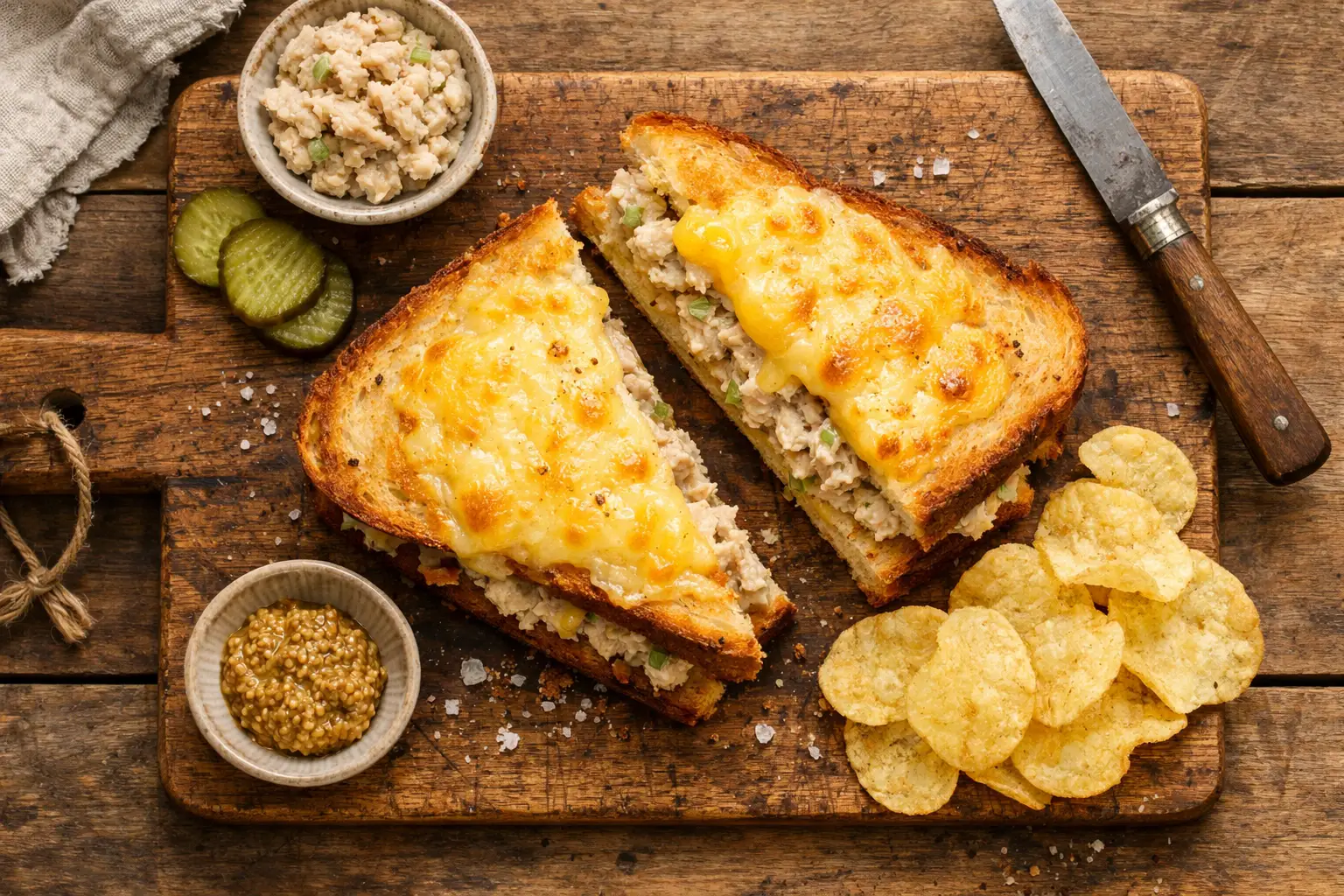
Quick Nutrition Facts
Per 1 Tuna Melt Sandwich (200g)
| Nutrient | Amount |
|---|---|
| Calories | 450 kcal |
| Protein | 28g |
| Carbohydrates | 32g |
| Fiber | 2g |
| Sugars | 4g |
| Fat | 24g |
| Saturated Fat | 8g |
| Omega-3 | 0.5g |
| Sodium | 780mg |
| Calcium | 200mg |
Macronutrient Breakdown
 ChatGPT
  Claude
  AI Mode
  Perplexity
NUTRITIONIST INSIGHT
Tuna melts deliver exceptional protein density with 28g per sandwich. The omega-3 fatty acids in canned tuna support cardiovascular health and brain function. Opt for light canned tuna and whole grain bread to maximize nutritional value.
Myth Busters
MYTH #1: Tuna Melts Are Unhealthy Junk Food
TRUTH: A properly made tuna melt provides 28g protein, omega-3 fatty acids, and B vitamins. Canned tuna is a functional food recommended for cardiovascular health. The cheese adds calcium and the bread provides energy.
MYTH #2: Pregnant Women Can't Eat Tuna
TRUTH: Light canned tuna (skipjack) is safe during pregnancy - up to 12 ounces weekly. Only limit albacore (white) tuna to 6 ounces due to higher mercury. Tuna provides essential omega-3s for fetal brain development.
MYTH #3: Tuna Has Too Much Mercury
TRUTH: Light canned tuna has among the lowest mercury levels of any tuna variety. The FDA considers it a "best choice" fish. Only high-mercury fish like bigeye tuna should be avoided. Regular consumption of light tuna is safe for most people.
MYTH #4: Cheese Makes Tuna Melts Too Fatty
TRUTH: While cheese adds 8g saturated fat, it also provides 200mg calcium and additional protein. Use reduced-fat cheese to cut saturated fat by 50% while keeping the melty texture. One tuna melt has similar fat to a chicken Caesar salad.
MYTH #5: Canned Tuna Is Less Nutritious Than Fresh
TRUTH: Canned light tuna retains most nutrients including protein, omega-3s, selenium, and B vitamins. The canning process actually makes some nutrients more bioavailable. It's also more affordable and convenient than fresh tuna.
NutriScore by Health Goals
| Health Goal | NutriScore | Why This Score? |
|---|---|---|
| Weight Loss |  | 450 calories but very high satiety from 28g protein. Use light mayo and whole grain bread to reduce to 350 cal. |
| Muscle Gain |  | Excellent 28g complete protein for muscle synthesis. Add extra tuna or a second sandwich post-workout for 50g+ protein. |
| Diabetes Management | | High protein helps stabilize blood sugar. Choose whole grain bread (GI 51 vs white 75). Skip sweetened spreads. |
| PCOS Management | | Omega-3s reduce inflammation. High protein supports insulin sensitivity. Limit to 1 sandwich and use whole grains. |
| Pregnancy Nutrition | | Light tuna safe up to 12 oz/week. Provides omega-3s and protein for baby. Avoid albacore tuna. |
| Viral/Flu Recovery | | Easy to eat, protein-rich for immune function. Warm and comforting. Selenium supports immune response. |
PERSONALIZED NUTRITION
Track your meals with NutriScan for personalized NutriScores based on your specific health goals!
Blood Sugar Response to Tuna Melt
Understanding how tuna melts affect your blood glucose can help you make informed meal choices.
Typical Glucose Response Curve
This chart shows typical blood glucose response for general healthy individuals. Individual responses may vary. Not medical advice.
How to Flatten the Spike
Pairing carbohydrates with protein and fat slows glucose absorption and reduces the blood sugar peak:
- Whole grain bread - Lower glycemic index (51) than white bread (75)
- Add vegetables - Lettuce, tomato, or a side salad adds fiber
- Light mayo - Reduces overall calories while maintaining satiety
- Eat slowly - Take 15-20 minutes to finish for better digestion
The high protein content of tuna naturally helps moderate the glycemic response of the bread.
Cultural Significance
The tuna melt emerged as an American diner classic in the mid-20th century, combining the convenience of canned tuna with comfort food appeal.
In America:
- Popular lunch counter staple since the 1960s
- Featured in countless diners, delis, and home kitchens
- Regional variations include adding pickles, onions, or peppers
- Often served with tomato soup or french fries
Global Variations:
- UK: Tuna and cheese toastie, often with sweetcorn
- Japan: Tuna mayo onigiri inspired fusion versions
- Australia: Tuna cheese jaffle (toasted sandwich press)
- France: Croque-thon (tuna croque-monsieur style)
Modern Trends:
- Air fryer tuna melts gaining popularity for crispier texture
- Keto versions using cheese wraps instead of bread
- Gourmet versions with artisan cheeses and sourdough
Compare & Substitute
Tuna Melt vs Similar Sandwiches (Per Serving)
| Nutrient | Tuna Melt | Grilled Cheese | Chicken Salad Sandwich | BLT Sandwich |
|---|---|---|---|---|
| Calories | 450 kcal | 400 kcal | 480 kcal | 350 kcal |
| Protein | 28g | 14g | 22g | 12g |
| Carbs | 32g | 30g | 35g | 28g |
| Fat | 24g | 26g | 28g | 20g |
| Fiber | 2g | 2g | 3g | 2g |
| Sodium | 780mg | 600mg | 650mg | 900mg |
| Omega-3 | 0.5g | Trace | Trace | Trace |
| Best For | Protein, omega-3s | Comfort, quick meal | Moderate protein | Lower calorie option |
Frequently Asked Questions
How many calories are in a tuna melt sandwich?
A standard tuna melt sandwich contains 400-500 calories depending on preparation. Key factors:
- Bread choice: White bread (140 cal) vs whole grain (160 cal for extra fiber)
- Mayo amount: 2 tbsp regular (180 cal) vs light mayo (70 cal)
- Cheese: 1 slice American (70 cal) vs cheddar (110 cal)
Lighter version: Use light mayo, one cheese slice, and open-faced style for 300-350 calories.
Is a tuna melt good for weight loss?
Tuna melts can support weight loss when made mindfully. The 28g protein promotes satiety, keeping you full for hours.
Tips for weight loss:
- Use light mayo (saves 110 calories)
- Choose reduced-fat cheese
- Make it open-faced (one bread slice)
- Add lettuce and tomato for volume
- Pair with a side salad instead of chips
Can diabetics eat tuna melt sandwiches?
Yes, diabetics can enjoy tuna melts in moderation. The high protein content helps stabilize blood sugar response.
Tips for diabetics:
- Choose whole grain or sourdough bread (lower GI)
- Skip sweetened relishes or sauces
- Include vegetables for added fiber
- Monitor portions - half sandwich may be appropriate
- Test blood sugar 2 hours after eating
How much protein is in a tuna melt?
A tuna melt provides approximately 28g of protein:
- Canned tuna (3 oz): 20g protein
- American cheese (1 slice): 5g protein
- Bread (2 slices): 3g protein
This makes it one of the most protein-dense sandwiches available.
Is tuna safe to eat during pregnancy?
Light canned tuna is safe during pregnancy when consumed in moderation:
- Safe: Light (skipjack) tuna - up to 12 oz (340g) per week
- Limit: White (albacore) tuna - up to 6 oz (170g) per week
- Avoid: Bigeye tuna, fresh tuna steaks in large amounts
Tuna provides valuable omega-3s, protein, and selenium for fetal development.
What's the healthiest way to make a tuna melt?
Healthier tuna melt recipe:
- Use water-packed light tuna (lower calories, lower mercury)
- Mix with Greek yogurt instead of mayo
- Add diced celery and onion for fiber and crunch
- Use whole grain bread
- Choose part-skim mozzarella or Swiss cheese
- Toast in oven or air fryer (less butter than pan-frying)
This version delivers 320-350 calories with the same 28g protein.
How often can I eat tuna melts?
For most adults, 2-3 tuna melts per week is reasonable considering:
- Mercury limits: Light tuna is low-mercury but moderation is wise
- Sodium: 780mg is 34% of daily value
- Variety: Rotate with other protein sources
Track your omega-3 intake with NutriScan app to ensure balanced nutrition.


Similar Nutritious Foods
4505 Chicharrones Classic Chili Salt
7 Eleven Japan Crispy Corn Cheese
Explore More Nutrition Tools & Resources
AI Calorie Counter App - Snap a Photo, Get Macros
AI Nutritionist App That Reads Your Logged Meals
Best Protein Supplements for Women
Bulking Meal Plan App That Sets Your Surplus
ChatGPT Calorie Counter Alternative That Keeps the Total
ChatGPT Diet Plan Alternative That Tracks What You Eat
ChatGPT Weight Loss Coach Alternative With a Food Log
Fast Food Calorie Counter App That Reads the Tray
Free Calorie Tracker App with AI Photo Scans | NutriScan
Indian Diet Plan App With Veg and Non Veg Meals
Indian Food Calorie Calculator - Get Instant Nutrition Facts for Desi Meals — 2026
Intermittent Fasting for Women, Timer and Meal Log App
Intermittent Fasting Tracker App - Free Fasting Timer
Macro Tracker App That Fills the Numbers From a Photo
Mediterranean Diet Meal Plan App That Counts the Oil
Micronutrient Tracker App for Vitamins and Minerals
MyFitnessPal Alternative That Stays Free | NutriScan
NutriScore App: A Free Grade on Every Meal | NutriScan
Nutrition Label Scanner App for the Amount You Ate
Second Trimester Protein Guide
Vegetarian Meal Plan App With a Protein Target
Voice Calorie Counter - Speak to Track Meals Hands-Free
Water and Calorie Tracker App - Free Water Log