Ube Halaya (Purple Yam Jam): Calories, Nutrition and Health Benefits
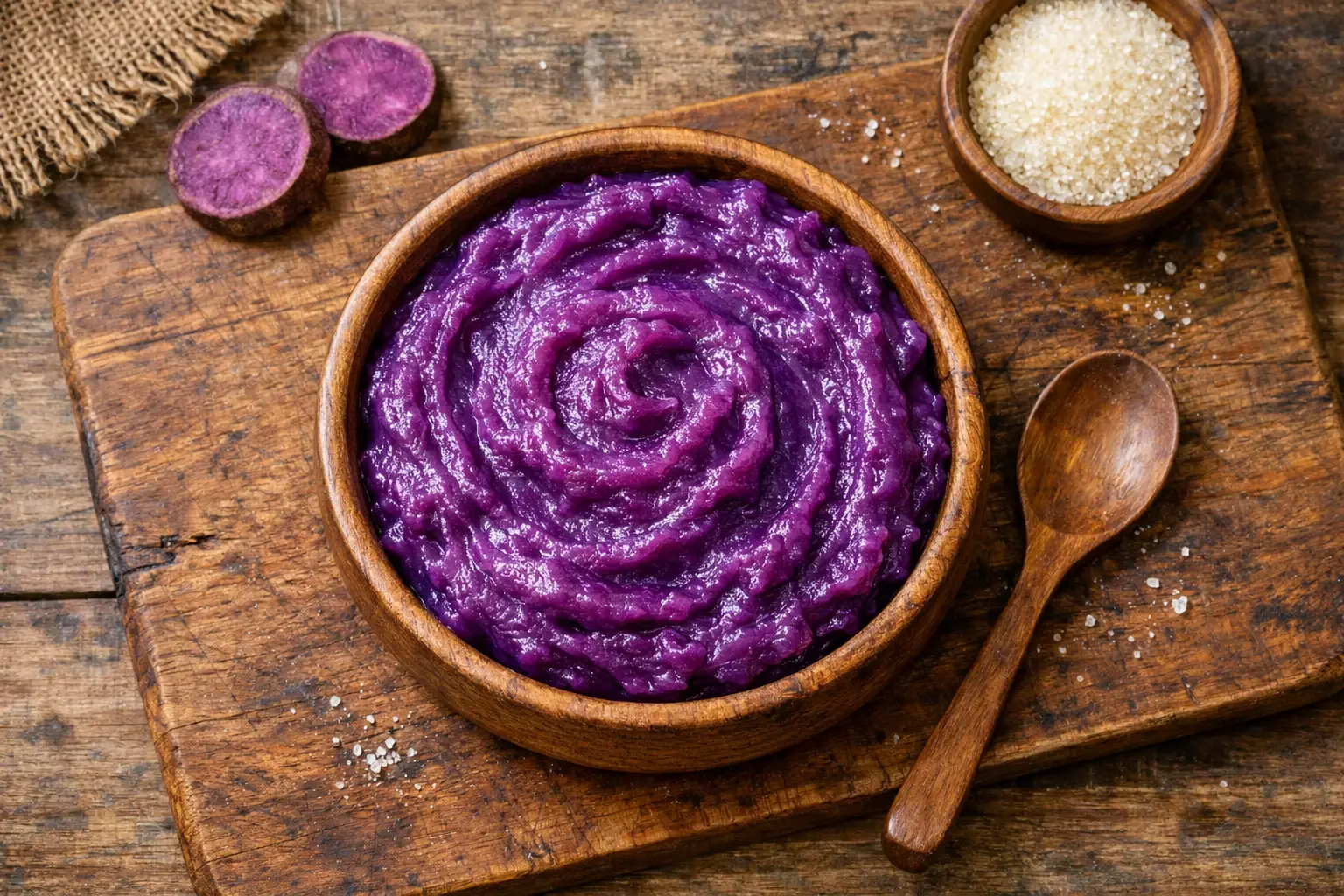
A vibrant Filipino dessert spread made from purple yam, packed with anthocyanins and natural sweetness, enjoyed as a jam, filling, or standalone treat.
Quick Nutrition Facts
Per 1 Serving of Ube Halaya (60g)
| Nutrient | Amount |
|---|---|
| Calories | 180 kcal |
| Protein | 2g |
| Carbohydrates | 38g |
| Fiber | 1.5g |
| Sugars | 25g |
| Fat | 3g |
| Potassium | 120mg |
| Vitamin C | 5mg |
| Vitamin A | 40mcg |
| Calcium | 45mg |
Macronutrient Breakdown
 ChatGPT
  Claude
  AI Mode
  Perplexity
NUTRITIONIST INSIGHT
Ube halaya gets its stunning purple color from anthocyanins, powerful antioxidants that exceed 90% inhibition levels. While the dessert is calorie-dense due to added sweeteners, plain cooked ube retains these benefits with far fewer calories and more fiber.
Myth Busters
MYTH #1: Ube Halaya Is a Health Food Because It Contains Purple Yam
TRUTH: While raw ube is nutritious, ube halaya adds condensed milk, sugar, and butter, tripling the calorie density. A 60g serving has 180 calories and 25g sugar. The anthocyanins remain beneficial, but treat ube halaya as a dessert, not a health food.
MYTH #2: Ube Halaya and Taro Are the Same Thing
TRUTH: Ube (Dioscorea alata) and taro (Colocasia esculenta) are completely different plants. Ube has a naturally vibrant purple flesh, while taro is white/light purple with a different flavor. They differ in nutritional profiles and culinary uses.
MYTH #3: The Purple Color Means It Has Artificial Dye
TRUTH: Ube's deep purple comes from natural anthocyanin pigments, not artificial coloring. These same compounds give blueberries and purple cabbage their colors. Some commercial products may add extra food coloring, but traditional ube halaya relies on the yam's natural pigment.
MYTH #4: Ube Halaya Is Too Sweet for Any Health Benefit
TRUTH: Even in dessert form, ube halaya retains anthocyanins, potassium, and vitamin C from the purple yam. Research shows purple yam resistant starch helps control cholesterol and body weight. Smaller portions (30g) let you enjoy benefits while managing sugar intake.
MYTH #5: All Ube Halaya Has the Same Nutrition
TRUTH: Nutrition varies widely by recipe. Traditional versions use coconut milk and less sugar (150 cal/60g), while commercial ones add condensed milk and butter (200+ cal/60g). Homemade ube halaya lets you control sugar and fat content.
NutriScore by Health Goals
| Health Goal | NutriScore | Why This Score? |
|---|---|---|
| Weight Loss |  | 300 cal/100g with 25g added sugars per serving. Choose plain cooked ube (118 cal/100g) instead. Limit to 30g portions if consumed. |
| Muscle Gain |  | Provides quick carbs (38g) for glycogen replenishment but only 2g protein. Pair with protein-rich foods for post-workout nutrition. |
| Diabetes Management | | High sugar content spikes blood glucose. Purple yam resistant starch may help, but added sugars negate this. Choose plain ube instead. |
| PCOS Management | | Added sugars worsen insulin resistance. If consumed, limit to 30g and pair with protein/fat to slow absorption. |
| Pregnancy Nutrition | | Provides vitamin C and potassium beneficial during pregnancy. Moderate portions recommended due to sugar content. Consult your doctor. |
| Viral/Flu Recovery |  | Easy to digest, provides quick energy and antioxidants. The soft texture is gentle on sore throats. Good source of vitamin C for immune support. |
PERSONALIZED NUTRITION
Track your meals with NutriScan for personalized NutriScores based on your specific health goals!
Blood Sugar Response to Ube Halaya
Understanding how ube halaya affects your blood glucose can help you make informed decisions about portion sizes and pairings.
Typical Glucose Response Curve
*This chart shows typical blood glucose response for general healthy individuals. Individual responses may vary. Not medical advice.*
How to Flatten the Spike
Pairing carb-rich foods with protein or healthy fat slows glucose absorption and reduces the peak blood sugar level:
- 🥜 Nut butter spread - Adds healthy fats and protein to balance the sugar
- 🧀 Cheese pairing - Provides protein and fat to slow digestion
- 🥛 Unsweetened Greek yogurt - Protein-rich base instead of eating halaya alone
- 🌰 Crushed nuts topping (almonds, cashews) - Healthy fats and extra fiber
This combination not only reduces the glucose spike but also extends energy release, keeping you fuller for longer.
Cultural Significance
Ube halaya is one of the most iconic desserts in Filipino cuisine, with roots tracing back centuries in Philippine culinary tradition.
In the Philippines:
- Central to Filipino celebrations: fiestas, Christmas (Noche Buena), birthdays, and weddings
- Ube halaya serves as filling for hopia, ensaymada, pandesal, and ice cream
- Each region has its own variation: Baguio ube is prized for its intense purple color
- The name "halaya" comes from the Spanish word for "jam" or "preserve"
Global Impact:
- Ube has become a global food trend, appearing in lattes, doughnuts, and ice cream worldwide
- Filipino diaspora communities have popularized ube desserts in the US, Middle East, and Europe
- The vibrant purple color makes it highly shareable on social media, driving its viral popularity
- Growing demand has boosted Philippine ube farming and exports
Compare & Substitute
Ube Halaya vs Similar Dessert Spreads (Per 100g)
| Nutrient | 💜 Ube Halaya | 🍠 Sweet Potato Jam | 🫘 Red Bean Paste | 🥥 Coconut Jam (Kaya) |
|---|---|---|---|---|
| Calories | 300 kcal | 250 kcal | 240 kcal | 330 kcal |
| Carbs | 63g | 55g | 52g | 50g |
| Fiber | 2.5g | 2g | 4g | 1g |
| Protein | 3g | 2g | 7g | 4g |
| Fat | 5g | 4g | 0.5g | 14g |
| Sugar | 42g | 38g | 35g | 40g |
| Vitamin C | 8mg | 12mg | 0mg | 1mg |
| Best For | Antioxidants, flavor | Vitamin A, lower cal | Higher protein, fiber | Rich flavor, energy |
Frequently Asked Questions
How many calories are in ube halaya?
A typical 60g serving of ube halaya contains 180 calories, with 38g carbohydrates, 3g fat, and 2g protein. Per 100g, it provides about 300 calories. Calorie content varies by recipe: traditional coconut milk versions are lighter (250 cal/100g), while those with condensed milk and butter are richer (320+ cal/100g).
Portion guide: A tablespoon (15g) has about 45 calories, making it easier to enjoy in controlled amounts.
Is ube halaya healthy?
Ube halaya contains beneficial nutrients from purple yam, including anthocyanins, vitamin C, and potassium. However, the added sugar, condensed milk, and butter make it calorie-dense.
To maximize health benefits:
- Make homemade ube halaya with less sugar and coconut milk instead of condensed milk
- Limit portions to 30-45g per serving
- Choose plain cooked ube for everyday nutrition
- Reserve ube halaya as an occasional treat
Can diabetics eat ube halaya?
Diabetics should be cautious with ube halaya due to its high sugar content (25g per 60g serving).
Tips for diabetics:
- Limit to 30g portions (about 1 tablespoon)
- Always pair with protein or healthy fat
- Choose plain cooked ube instead, which has a lower glycemic response
- Monitor blood sugar 2 hours after eating
Research suggests plain purple yam may help with glycemic control, but the added sugars in halaya negate much of this benefit. Always consult your healthcare provider.
What is the difference between ube and ube halaya?
Ube (raw purple yam): 118 cal/100g, 2g fiber, no added sugar, low fat. A nutritious root vegetable.
Ube halaya (purple yam jam): 300 cal/100g, 42g sugar/100g, added condensed milk, butter, and coconut milk. A sweet dessert spread.
The key difference is preparation. Ube halaya cooks the yam with sweeteners and dairy, transforming a healthy vegetable into a calorie-dense dessert. For nutrition, choose plain ube. For celebrations and treats, enjoy ube halaya in moderation.
Is ube halaya good for weight loss?
Ube halaya is not ideal for weight loss at 300 cal/100g with high sugar content.
Better alternatives for weight loss:
- Plain steamed ube: 118 cal/100g with 2g fiber
- Ube smoothie with unsweetened milk
- Mashed ube with a drizzle of honey instead of full halaya
If you enjoy ube halaya, limit to 30g portions (90 calories) and count it as a dessert in your daily calorie budget.
What are the health benefits of purple yam anthocyanins?
Purple yam anthocyanins provide powerful antioxidant activity. Research highlights several benefits:
- Cardiovascular health: May help reduce blood pressure and improve cholesterol levels
- Blood sugar control: Resistant starch in purple yam helps manage glucose
- Anti-inflammatory: Anthocyanins reduce inflammatory biomarkers
- Weight management: Purple yam resistant starch helps control body weight and fat accumulation
- Gut health: Dietary fiber promotes beneficial gut microbiota
Track your meals with NutriScan app to see how ube halaya fits your personal nutrition goals.




Similar Nutritious Foods
4505 Chicharrones Classic Chili Salt
7 Eleven Japan Crispy Corn Cheese
Explore More Nutrition Tools & Resources
AI Calorie Counter App - Snap a Photo, Get Macros
AI Nutritionist App That Reads Your Logged Meals
Best Protein Supplements for Women
Bulking Meal Plan App That Sets Your Surplus
ChatGPT Calorie Counter Alternative That Keeps the Total
ChatGPT Diet Plan Alternative That Tracks What You Eat
ChatGPT Weight Loss Coach Alternative With a Food Log
Fast Food Calorie Counter App That Reads the Tray
Free Calorie Tracker App with AI Photo Scans | NutriScan
Indian Diet Plan App With Veg and Non Veg Meals
Indian Food Calorie Calculator - Get Instant Nutrition Facts for Desi Meals — 2026
Intermittent Fasting for Women, Timer and Meal Log App
Intermittent Fasting Tracker App - Free Fasting Timer
Macro Tracker App That Fills the Numbers From a Photo
Mediterranean Diet Meal Plan App That Counts the Oil
Micronutrient Tracker App for Vitamins and Minerals
MyFitnessPal Alternative That Stays Free | NutriScan
NutriScore App: A Free Grade on Every Meal | NutriScan
Nutrition Label Scanner App for the Amount You Ate
Second Trimester Protein Guide
Vegetarian Meal Plan App With a Protein Target
Voice Calorie Counter - Speak to Track Meals Hands-Free
Water and Calorie Tracker App - Free Water Log