Ube (Purple Yam): Calories, Nutrition and Health Benefits
Filipino purple superfood with vibrant color, low glycemic index, and powerful anthocyanins for blood sugar control and antioxidant protection.
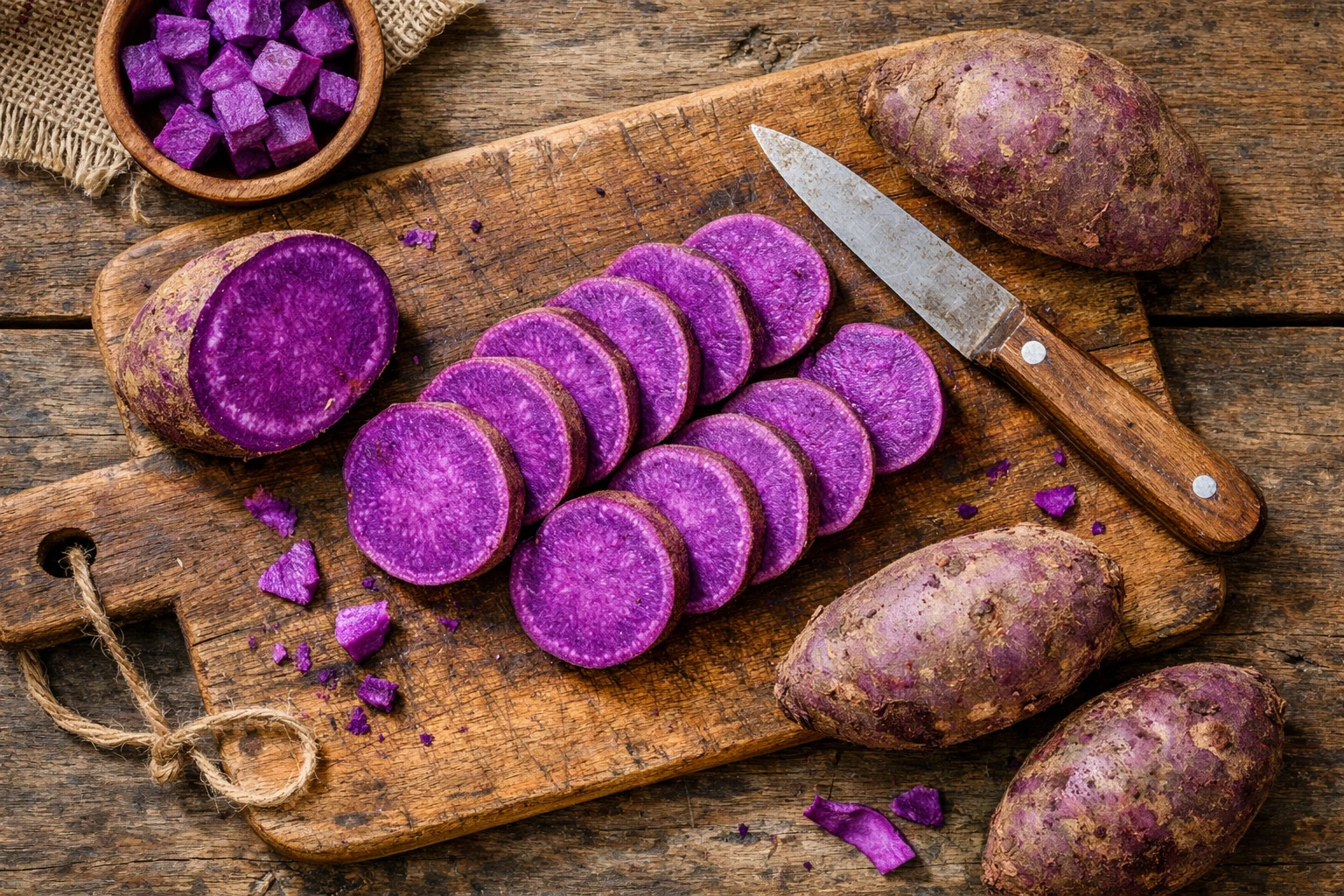
Quick Nutrition Facts
Per 100g Cooked Ube
| Nutrient | Amount |
|---|---|
| Calories | 120 kcal |
| Protein | 1-2g |
| Carbohydrates | 27g |
| Fiber | 4g |
| Fat | Minimal |
| Vitamin C | 40% DV |
| Potassium | 13% DV |
| Glycemic Index | 24 (Low) |
| Anthocyanins | High |
Macronutrient Breakdown
 ChatGPT
  Claude
  AI Mode
  Perplexity
NUTRITIONIST INSIGHT
Ube's GI of 24 makes it exceptional for blood sugar control—one of the lowest among root vegetables. The anthocyanins responsible for its purple color provide powerful antioxidant and anti-inflammatory benefits.
Myth Busters
MYTH #1: Ube Is Too High in Calories for Weight Loss
TRUTH: Cooked ube has only 120 calories per 100g with 4g fiber promoting fullness and GI 24 preventing blood sugar spikes. Fresh ube is higher in fat (50% dry weight), so choose cooked ube and portion-control to 100-150g servings.
MYTH #2: Diabetics Should Avoid Ube Because It's a Starch
TRUTH: Ube is excellent for diabetics with GI 24 (low glycemic). Flavonoids reduce blood sugar, improve insulin sensitivity, and protect insulin-producing pancreatic cells. Studies show purple yam extracts reduce oxidative stress and improve blood sugar control.
MYTH #3: Ube and Sweet Potato Are the Same Thing
TRUTH: Ube (purple yam) is a distinct species with lower GI (24 vs 44-94), higher anthocyanin content, and purple flesh throughout. Sweet potatoes are orange/white inside with different nutrient profiles. Ube is nuttier and sweeter.
MYTH #4: The Purple Color Is Artificial Dye
TRUTH: Ube's vibrant purple comes from natural anthocyanins—the same antioxidants in blueberries and blackberries. These compounds have antimicrobial, anti-inflammatory, and antioxidant properties that protect cells from damage.
MYTH #5: Ube Has No Nutritional Value Beyond Carbs
TRUTH: Ube provides 40% DV vitamin C for immunity, 13% DV potassium for blood pressure, 4g fiber for digestion, plus calcium, zinc, and phosphorus. The anthocyanins offer significant antioxidant protection.
MYTH #6: Ube Is Unsafe During Pregnancy
TRUTH: Ube supports healthy pregnancy with calcium, folate, vitamin C, and protein for fetal development. May help prevent neural tube defects and reduce miscarriage risk. Consult healthcare providers for personalized guidance.
NutriScore by Health Goals
| Health Goal | NutriScore | Why This Score? |
|---|---|---|
| Weight Loss |  | 120 calories per 100g, 4g fiber promotes fullness, GI 24 stabilizes blood sugar. Limit to 100-150g portions; fresh ube is higher in fat. |
| Muscle Gain | | Low-medium protein (1-2g per 100g) but excellent post-workout carbs (27g) for glycogen replenishment. Pair with protein sources. |
| Diabetes Management |  | Exceptional for diabetes: GI 24 (low), flavonoids improve insulin sensitivity and protect pancreatic cells. Eat 100-150g with protein; monitor blood sugar. |
| PCOS Management | | Low GI prevents insulin spikes that worsen PCOS. Anthocyanins reduce inflammation. Limit to 100-150g daily; choose cooked over fresh. |
| Pregnancy Nutrition | | Rich in folate, calcium, vitamin C, and protein for fetal development. May help prevent neural tube defects and reduce miscarriage risk. Provides 40% DV vitamin C. |
| Viral/Flu Recovery | | 40% DV vitamin C boosts immunity and white blood cell production. Easy to digest, gentle on stomach, provides steady energy. |
PERSONALIZED NUTRITION
Track your meals with NutriScan for personalized NutriScores based on your specific health goals!
Blood Sugar Response to Ube
Understanding how ube affects blood glucose showcases why it's exceptional for diabetes management and metabolic health.
Typical Glucose Response Curve
*This chart shows typical blood glucose response for healthy individuals eating 100g cooked ube. Individual responses may vary. Not medical advice.*
Why Ube's Blood Sugar Response Is Exceptional
Ube's GI of 24 creates minimal blood sugar elevation compared to other starches. Carbohydrates break down slowly for steady energy without insulin spikes.
Optimal pairing for even better control:
- 🥜 Nuts or nut butter - Healthy fats slow glucose absorption further
- 🥛 Greek yogurt - Protein + probiotics enhance satiety
- 🥚 Eggs - Complete protein balances the carb load
- 🥑 Avocado - Healthy fats extend energy release
These combinations flatten the glucose curve and provide sustained energy for 3-4 hours.
Cultural Significance
Ube (Dioscorea alata) is a beloved Filipino ingredient with deep cultural roots across Southeast Asia and the Pacific Islands.
In Filipino Culture:
- Star ingredient in traditional desserts: ube halaya (jam), ice cream, cakes, cheesecakes
- Vibrant purple color symbolizes celebration and festivity
- Used in religious festivals and family gatherings
- Growing global popularity through Filipino diaspora and social media
- Instagram-worthy aesthetic drives modern fusion desserts
Traditional Preparation:
- Boiled, roasted, or pan-fried for savory dishes
- Mashed with coconut milk and sugar for halaya
- Steamed and eaten as breakfast or snack
- Minimal processing preserves heat-sensitive vitamin C
Global Impact:
- Rising trend in US, Canada, Australia dessert menus
- Specialty ingredient in artisan ice cream, baked goods, beverages
- Purple yam powder used for natural food coloring
- Nutritional benefits gaining recognition beyond aesthetics
Compare & Substitute
Ube vs Similar Root Vegetables (Per 100g Cooked)
| Nutrient | 🍠 Ube Purple Yam | 🍠 Sweet Potato (Orange) | 🥔 White Potato | 🥔 Taro |
|---|---|---|---|---|
| Calories | 120 kcal | 90 kcal | 77 kcal | 142 kcal |
| Carbs | 27g | 21g | 17g | 35g |
| Fiber | 4g | 3g | 2g | 4.1g |
| Protein | 1-2g | 2g | 2g | 1.5g |
| Fat | Minimal | 0.2g | 0.1g | 0.2g |
| Vitamin C | 40% DV | 37% DV | 20% DV | 11% DV |
| Potassium | 13% DV | 14% DV | 10% DV | 13% DV |
| Glycemic Index | 24 (Low) | 44-94 (Med-High) | 78 (High) | 48 (Low-Med) |
| Best For | Diabetes, antioxidants, low GI | Beta-carotene, vitamin A | Budget-friendly starch | Asian cuisine, fiber |
Frequently Asked Questions
Is ube good for weight loss?
Ube can support weight loss when portion-controlled. With 120 calories per 100g and 4g fiber promoting fullness, plus low GI (24) stabilizing blood sugar and reducing cravings, it's a smart carb choice.
Best practices: Limit to 100-150g servings; choose cooked over fresh ube (fresh is 50% fat by dry weight); pair with protein for sustained satiety; eat as post-workout carb or afternoon snack.
Can diabetics eat ube?
Yes, ube is exceptional for diabetics. With GI 24 (low glycemic), flavonoids reduce blood sugar, improve insulin sensitivity, and protect insulin-producing pancreatic cells.
Tips for diabetics: Eat 100-150g portions; pair with protein or healthy fat; best timing is mid-morning or afternoon; monitor blood sugar 2 hours after eating. Animal studies show purple yam extract lowers appetite, encourages weight loss, and improves blood sugar control.
What is the difference between ube and sweet potato?
Ube (purple yam, Dioscorea alata) is a distinct species from sweet potato (Ipomoea batatas) with key differences in nutrition and flavor.
Key differences: Ube has lower GI (24 vs 44-94), higher anthocyanin content, purple flesh throughout, nuttier-sweeter flavor; sweet potatoes have orange/white flesh, higher beta-carotene (vitamin A), earthier taste. Both are nutritious; choose based on blood sugar goals and flavor preference.
What are the health benefits of ube?
Ube provides comprehensive health benefits across multiple body systems through vitamins, minerals, fiber, and anthocyanins.
Key benefits: 40% DV vitamin C for immunity and collagen production; 13% DV potassium for blood pressure regulation; 4g fiber for digestive health and satiety; anthocyanins for antioxidant protection and reduced inflammation; low GI for blood sugar control; supports cardiovascular health, brain health, and may reduce cancer risk.
Is ube safe during pregnancy?
Yes, ube supports healthy pregnancy with calcium, folate, vitamin C, and protein for fetal development. May help prevent neural tube defects and reduce miscarriage risk.
Pregnancy benefits: Folate for neural tube development; calcium for bone formation; vitamin C for iron absorption and immunity; protein for tissue growth. Eat 100-150g portions cooked; avoid raw preparation. Consult healthcare providers for personalized guidance on portion sizes and frequency.
How much ube should I eat per day?
100-150g (1-2 medium pieces) cooked ube is a reasonable portion for most people. Individual needs vary by health goals and activity level.
Guidelines: Weight loss: 100g max; Diabetes: 100-150g with protein; Muscle gain: 150-200g post-workout; General health: 100-150g daily. Fresh ube is significantly higher in calories and fat than cooked, so adjust portions accordingly (50-75g fresh equivalent). Track intake with NutriScan app to see how ube fits your nutrition goals.




Similar Nutritious Superfoods
4505 Chicharrones Classic Chili Salt
7 Eleven Japan Crispy Corn Cheese
Explore More Nutrition Tools & Resources
AI Calorie Counter App - Snap a Photo, Get Macros
AI Nutritionist App That Reads Your Logged Meals
Best Protein Supplements for Women
Bulking Meal Plan App That Sets Your Surplus
ChatGPT Calorie Counter Alternative That Keeps the Total
ChatGPT Diet Plan Alternative That Tracks What You Eat
ChatGPT Weight Loss Coach Alternative With a Food Log
Fast Food Calorie Counter App That Reads the Tray
Free Calorie Tracker App with AI Photo Scans | NutriScan
Indian Diet Plan App With Veg and Non Veg Meals
Indian Food Calorie Calculator - Get Instant Nutrition Facts for Desi Meals — 2026
Intermittent Fasting for Women, Timer and Meal Log App
Intermittent Fasting Tracker App - Free Fasting Timer
Macro Tracker App That Fills the Numbers From a Photo
Mediterranean Diet Meal Plan App That Counts the Oil
Micronutrient Tracker App for Vitamins and Minerals
MyFitnessPal Alternative That Stays Free | NutriScan
NutriScore App: A Free Grade on Every Meal | NutriScan
Nutrition Label Scanner App for the Amount You Ate
Second Trimester Protein Guide
Vegetarian Meal Plan App With a Protein Target
Voice Calorie Counter - Speak to Track Meals Hands-Free
Water and Calorie Tracker App - Free Water Log