Vegetable Salad: Calories, Nutrition and Health Benefits
Nutrient-dense raw vegetables in every bite—the foundation of healthy eating with minimal calories and maximum vitamins.
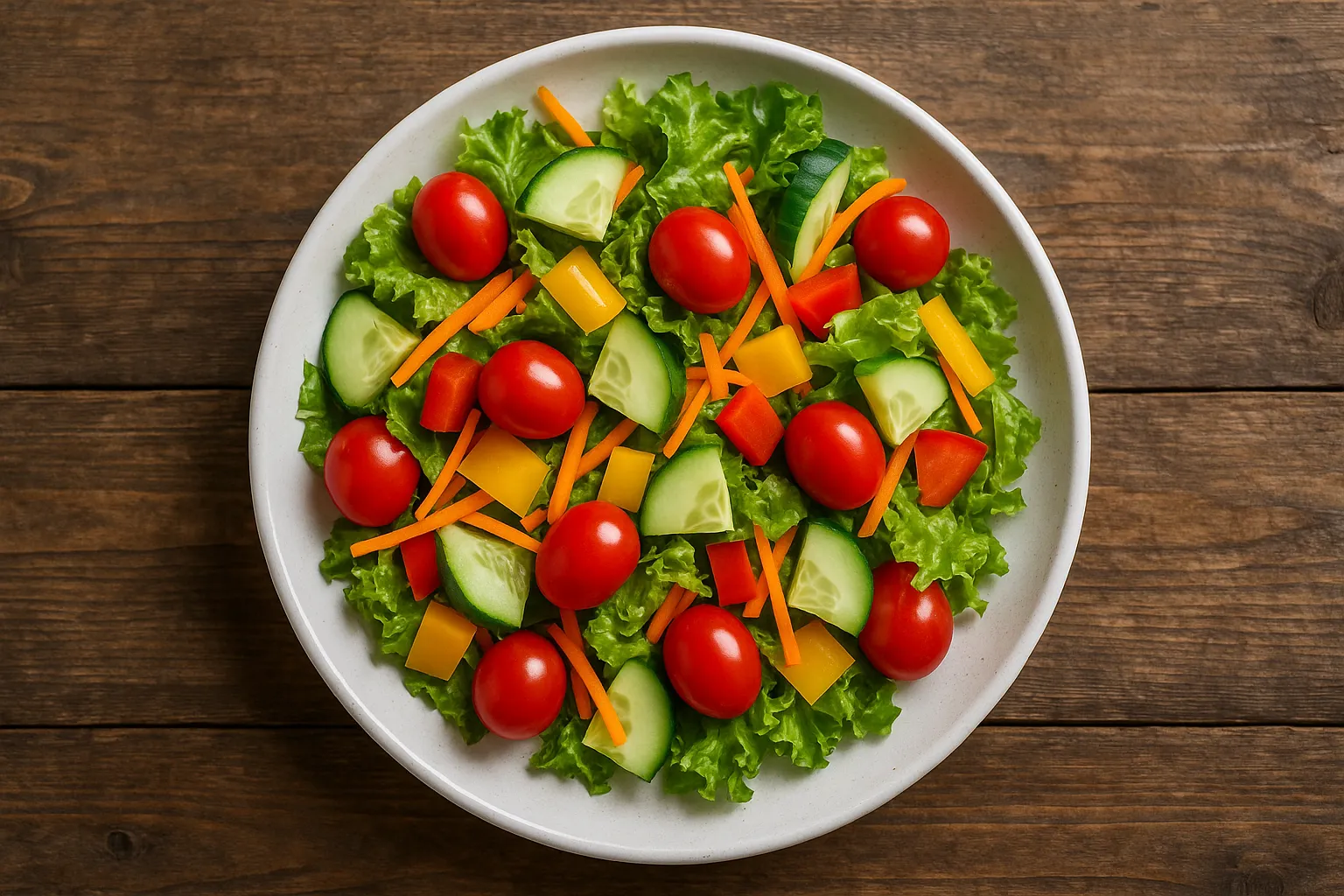
Quick Nutrition Facts
Per 1 Cup Mixed Salad (150g)
| Nutrient | Amount |
|---|---|
| Calories | 35 kcal |
| Protein | 2.1g |
| Carbohydrates | 6.5g |
| Fiber | 2.5g |
| Sugars | 3.2g |
| Fat | 0.3g |
| Vitamin A | 450 mcg |
| Vitamin C | 18.5mg |
| Potassium | 225mg |
| Folate | 65 mcg |
Macronutrient Breakdown
 ChatGPT
  Claude
  AI Mode
  Perplexity
NUTRITIONIST INSIGHT
Raw vegetable salads are volume champions for weight loss—you can eat large portions with minimal calories. The fiber content supports gut health and blood sugar stability, while the diverse phytonutrients provide antioxidant and anti-inflammatory benefits.
Myth Busters
MYTH #1: Salads Don't Have Enough Calories to Be a Meal
TRUTH: While a plain salad is low-calorie, it becomes a complete meal when combined with protein sources (chicken, paneer, tofu) and healthy fats (nuts, seeds, olive oil). A protein-rich salad with 300-400 calories provides sustained energy and muscle support.
MYTH #2: All Vegetables are Equal in Nutrition
TRUTH: Different colored vegetables provide different nutrient profiles. Dark leafy greens offer minerals, orange vegetables provide beta-carotene, red vegetables contain lycopene, and cruciferous varieties provide sulforaphane. Eat the rainbow for maximum nutrition.
MYTH #3: Raw Salads Cause Bloating and Digestion Issues
TRUTH: For most people, raw vegetables support digestive health through fiber and water content. Bloating is often related to portion size or dressing choice, not the vegetables themselves. Start with smaller portions if transitioning to higher fiber intake.
MYTH #4: Store-Bought Salad Dressing is as Healthy as Oil and Vinegar
TRUTH: Commercial dressings often contain added sugars, preservatives, and unhealthy fats; a 2-tablespoon serving can add 100+ calories. Simple oil-based or yogurt-based homemade dressings provide superior nutrition and lower sugar content.
MYTH #5: Salads Won't Help You Build Muscle
TRUTH: Salads become muscle-supportive when combined with adequate protein and served post-workout. Add grilled chicken, paneer, legumes, or Greek yogurt to transform a light salad into a complete muscle-building meal with 20+ grams of protein.
NutriScore by Health Goals
| Health Goal | NutriScore | Why This Score? |
|---|---|---|
| Weight Loss |  | Only 35 calories per cup, 2.5g fiber promotes fullness, zero added fats. Unlimited quantity allowed; can form 50% of your meal. |
| Muscle Gain |  | Low protein (2.1g) without added sources. Add grilled chicken, paneer, or eggs to make it muscle-building. Pair salad with protein smoothie or lean meat. |
| Diabetes Management | | Excellent for blood sugar control with minimal glycemic impact and high fiber. Raw vegetables have GI <15; best eaten before other carbs. |
| PCOS Management | | Low glycemic load, high fiber, and antioxidants support insulin sensitivity. The nutrient density benefits hormonal balance; eat with healthy fats for nutrient absorption. |
| Pregnancy Nutrition | | Rich in folate (65 mcg per cup) for fetal neural development, vitamin C for immune support, and minerals essential for pregnancy. Raw vegetables are safe if properly washed. |
| Viral/Flu Recovery |  | High vitamin C content supports immune recovery. Light and easily digestible. Ensure proper food safety; may need to avoid raw vegetables if immunocompromised. |
PERSONALIZED NUTRITION
Track your meals with NutriScan for personalized NutriScores based on your specific health goals!
Blood Sugar Response to Vegetable Salad
Raw vegetable salads have minimal impact on blood glucose, making them ideal for diabetes management and blood sugar stability.
Typical Glucose Response Curve
This chart shows typical blood glucose response for general healthy individuals. Individual responses may vary. Not medical advice.
How to Maximize Salad Benefits
Pairing salad with protein and healthy fats enhances nutrient absorption and satiety:
- 🍗 Grilled chicken or paneer - Complete protein for muscle preservation
- 🥜 Nuts and seeds (almonds, walnuts, sunflower seeds) - Healthy fats aid vitamin absorption
- 🧀 Greek yogurt or curd dressing - Probiotics and additional protein
- 🍞 Whole grain bread or brown rice - Sustained energy without spiking glucose
Eating salad before consuming starches slows glucose absorption and maintains stable energy levels.
Cultural Significance
Salads in traditional form have existed for centuries across cultures, with modern vegetable salads becoming a staple of health-conscious eating globally.
In India:
- Kachumber salad (cucumber, tomato, onion) served as cooling accompaniment to spiced curries
- Raita (yogurt with raw vegetables) forms part of balanced thali meals
- Sprout salads gaining popularity for detox and wellness trends
- Ayurveda emphasizes raw vegetables in spring and summer diets for digestive fire
Global Impact:
- Mediterranean and Asian cuisines incorporate raw vegetable sides as staple meals
- Farm-to-table movement emphasizes local, seasonal vegetables in salads
- Increasing awareness of plant-based nutrition driving salad consumption globally
Compare & Substitute
Vegetable Salad vs Similar Low-Calorie Foods (Per 100g)
| Nutrient | 🥗 Salad Mix | 🥬 Spinach Raw | 🍅 Tomato | 🥒 Cucumber |
|---|---|---|---|---|
| Calories | 23 kcal | 23 kcal | 18 kcal | 16 kcal |
| Carbs | 4.3g | 3.6g | 3.9g | 3.6g |
| Fiber | 1.7g | 2.2g | 1.2g | 0.5g |
| Protein | 1.4g | 2.9g | 0.9g | 0.6g |
| Fat | 0.2g | 0.4g | 0.2g | 0.1g |
| Vitamin A | 300 mcg | 469 mcg | 42 mcg | 45 mcg |
| Vitamin C | 12.3mg | 28.1mg | 12.7mg | 3.2mg |
| Best For | Balanced variety, full meals | Mineral density, iron absorption | Lycopene, versatile cooking | Hydration, low-calorie bulk |
Frequently Asked Questions
Is vegetable salad good for weight loss?
Yes. A cup of mixed salad contains only 35 calories but provides 2.5g of fiber that promotes fullness and satiety. The high water content creates volume without excess calories, allowing you to eat larger portions while maintaining a calorie deficit. Salads can form 50% of weight loss meals.
Best practices: Eat salad before higher-calorie foods to trigger early satiety; use oil-based or yogurt dressings (limit to 2 tablespoons); avoid cheese-heavy toppings.
Can diabetics eat vegetable salads?
Absolutely. Raw vegetable salads have minimal glycemic impact due to low carbohydrates, high fiber, and minimal sugars. Most vegetables have a glycemic index below 15, making them ideal for blood sugar stability. Eating salad before starches slows glucose absorption.
Tips for diabetics: Eat salad before carbohydrate-containing foods; choose non-starchy vegetables; add protein for sustained energy; monitor added sugars in dressings.
How much protein is in a vegetable salad?
A cup of raw mixed vegetables provides approximately 2.1g of protein, varying by vegetable composition. While salad alone is not protein-rich, it becomes a complete meal when combined with grilled chicken (25g protein), paneer (12g), tofu (10g), or legumes. Add nuts for additional protein and healthy fats.
What are the main health benefits of vegetable salads?
Key Benefits:
- Digestive Health: 2.5g fiber per cup supports regular bowel movements
- Immune Support: Vitamin C and phytonutrients boost immunity
- Blood Pressure: Potassium content supports cardiovascular health
- Weight Management: Low calorie density allows large portions
- Chronic Disease Prevention: Antioxidants reduce inflammation
- Nutrient Density: Raw vegetables retain vitamins lost during cooking
What vegetables should I include in a healthy salad?
Create a nutrient-complete salad using:
- Leafy Greens (spinach, lettuce, arugula) - Minerals and folate
- Colorful Vegetables (red tomatoes, orange carrots, yellow peppers) - Different phytonutrients
- Cruciferous (broccoli, cabbage) - Sulforaphane for detoxification
- Hydrating (cucumber, celery) - High water content, low calories
- Root Vegetables (beets, radish) - Micronutrients and sweetness
Aim for 5-6 different vegetables per salad to maximize nutrient variety.
What is the best dressing for a healthy salad?
Choose dressings that enhance nutrition without excess calories:
- Olive oil + balsamic vinegar - Healthy monounsaturated fats; 120 calories per 2 tablespoons
- Yogurt-based - Protein and probiotics; 40-60 calories per 2 tablespoons
- Lemon juice + minimal oil - Vitamin C and minimal calories
- Avoid: Store-bought creamy dressings (100+ calories, high sugars, trans fats)
Limit dressing to 2 tablespoons per serving to maintain the salad's low-calorie advantage.


Similar Nutritious Foods
4505 Chicharrones Classic Chili Salt
7 Eleven Japan Crispy Corn Cheese
Explore More Nutrition Tools & Resources
AI Calorie Counter App - Snap a Photo, Get Macros
AI Nutritionist App That Reads Your Logged Meals
Best Protein Supplements for Women
Bulking Meal Plan App That Sets Your Surplus
ChatGPT Calorie Counter Alternative That Keeps the Total
ChatGPT Diet Plan Alternative That Tracks What You Eat
ChatGPT Weight Loss Coach Alternative With a Food Log
Fast Food Calorie Counter App That Reads the Tray
Free Calorie Tracker App with AI Photo Scans | NutriScan
Indian Diet Plan App With Veg and Non Veg Meals
Indian Food Calorie Calculator - Get Instant Nutrition Facts for Desi Meals — 2026
Intermittent Fasting for Women, Timer and Meal Log App
Intermittent Fasting Tracker App - Free Fasting Timer
Macro Tracker App That Fills the Numbers From a Photo
Mediterranean Diet Meal Plan App That Counts the Oil
Micronutrient Tracker App for Vitamins and Minerals
MyFitnessPal Alternative That Stays Free | NutriScan
NutriScore App: A Free Grade on Every Meal | NutriScan
Nutrition Label Scanner App for the Amount You Ate
Second Trimester Protein Guide
Vegetarian Meal Plan App With a Protein Target
Voice Calorie Counter - Speak to Track Meals Hands-Free
Water and Calorie Tracker App - Free Water Log