Watercress: Calories, Nutrition and Health Benefits
The #1 CDC-ranked powerhouse vegetable with just 11 calories per 100g, packed with vitamins A, C, K, and cancer-fighting isothiocyanates.
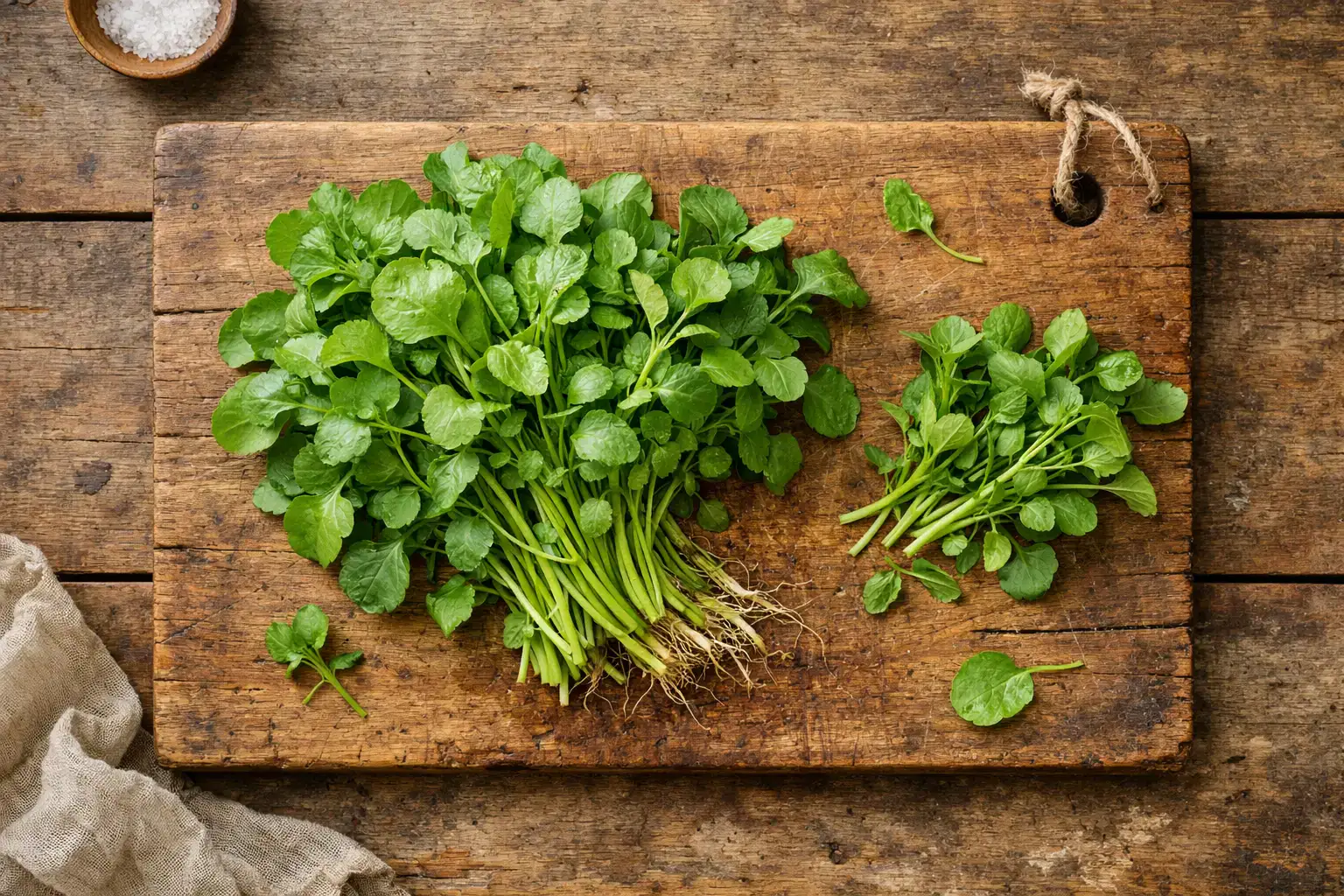
Quick Nutrition Facts
Per 1 Cup Chopped, Raw (34g)
| Nutrient | Amount |
|---|---|
| Calories | 4 kcal |
| Protein | 0.8g |
| Carbohydrates | 0.4g |
| Fiber | 0.2g |
| Sugars | 0.1g |
| Fat | 0.03g |
| Vitamin K | 85mcg |
| Vitamin C | 14.6mg |
| Vitamin A | 1085 IU |
| Calcium | 41mg |
| Potassium | 112mg |
Macronutrient Breakdown
 ChatGPT
  Claude
  AI Mode
  Perplexity
NUTRITIONIST INSIGHT
Watercress scored a perfect 100/100 on the CDC Powerhouse Fruits and Vegetables nutrient density index, making it the single most nutrient-dense food tested. Just one cup provides 106% of your daily vitamin K and 24% of vitamin C for only 4 calories.
Myth Busters
MYTH #1: Watercress Is Just a Garnish with No Real Nutrition
TRUTH: Watercress is the #1 most nutrient-dense vegetable according to CDC research. Per calorie, it delivers more vitamins A, C, and K than spinach or kale. It contains 2.3g protein per 100g, more than most leafy greens.
MYTH #2: Watercress Contains Too Much Vitamin K for Blood Thinner Users
TRUTH: While watercress is rich in vitamin K (250mcg per 100g), the key for blood thinner users is consistency, not avoidance. Eating a consistent amount of vitamin K daily allows your doctor to adjust medication properly.
MYTH #3: You Can't Eat Watercress Raw
TRUTH: Raw watercress is perfectly safe and retains more nutrients than cooked. Simply wash thoroughly under running water to remove any soil or bacteria. Raw consumption preserves heat-sensitive vitamin C and isothiocyanates.
MYTH #4: Watercress Causes Kidney Stones
TRUTH: Watercress has moderate oxalate levels, far lower than spinach. Its high water content (95%) and potassium actually support kidney health. Only those with existing oxalate-type kidney stones need to moderate intake.
MYTH #5: Watercress and Spinach Are Nutritionally Identical
TRUTH: Watercress outscores spinach on the CDC nutrient density index (100 vs 86.43). Watercress has higher vitamin C, lower oxalates, and unique isothiocyanates like PEITC that spinach lacks.
NutriScore by Health Goals
| Health Goal | NutriScore | Why This Score? |
|---|---|---|
| Weight Loss |  | Only 11 calories per 100g with 2.3g protein. One of the lowest-calorie foods available with high nutrient density. |
| Muscle Gain |  | Good protein for a leafy green (2.3g/100g), rich in calcium (120mg) and potassium (330mg) for muscle function. |
| Diabetes Management | | Virtually zero glycemic impact with only 1.3g carbs per 100g. Animal studies show watercress extract may reduce serum glucose. |
| PCOS Management | | Anti-inflammatory isothiocyanates, negligible sugar content, and high antioxidant profile support hormonal balance. |
| Pregnancy Nutrition | | Rich in folate for neural tube development, vitamin K for blood clotting, calcium for bone formation, and iron to prevent anemia. |
| Viral/Flu Recovery | | 43mg vitamin C per 100g (48% DV), vitamin A for immune function, and anti-inflammatory compounds aid recovery. |
PERSONALIZED NUTRITION
Track your meals with NutriScan for personalized NutriScores based on your specific health goals!
Blood Sugar Response to Watercress
Watercress has a negligible impact on blood glucose due to its extremely low carbohydrate content (1.3g per 100g). It is classified as a very low glycemic food.
Typical Glucose Response Curve
This chart shows typical blood glucose response for general healthy individuals. Individual responses may vary. Not medical advice.
How to Flatten the Spike
Adding watercress to meals can help moderate postprandial glycemic response when consumed alongside higher-carb foods:
- 🥚 Eggs and watercress salad - Complete protein with virtually zero carb impact
- 🐟 Grilled salmon with watercress - Omega-3 fats and protein for sustained energy
- 🥑 Avocado and watercress toast - Healthy fats slow carb absorption from bread
- 🍋 Lemon-dressed watercress side - Vitamin C enhances iron absorption
This combination keeps blood sugar stable while maximizing nutrient absorption from the meal.
Cultural Significance
Watercress (Nasturtium officinale) is one of the oldest known leaf vegetables consumed by humans, dating back to ancient Persia and Greece.
Historical Use:
- Hippocrates built the first hospital near a stream to grow watercress for patients
- Ancient Romans ate watercress before battles believing it gave them courage
- Victorian-era London sold watercress as "poor man's bread," eaten in bunches by workers
- Listed in the first-ever English herbal medicine guide (1597) for treating scurvy
In India:
- Known as "jal kumbhi" or "chandrasoor" in some regions
- Used in Ayurvedic medicine for respiratory and digestive health
- Grown in Kashmir and Himalayan foothills near freshwater streams
- Added to chutneys and salads in northern Indian cuisine
Global Impact:
- Cultivated commercially in over 20 countries
- UK has the longest continuous watercress farm (since 1808)
- Growing popularity in health-conscious diets after the CDC #1 ranking
Compare & Substitute
Watercress vs Similar Leafy Greens (Per 100g)
| Nutrient | 🌿 Watercress | 🥬 Spinach | 🥗 Kale | 🌱 Arugula |
|---|---|---|---|---|
| Calories | 11 kcal | 23 kcal | 49 kcal | 25 kcal |
| Carbs | 1.3g | 3.6g | 8.8g | 3.7g |
| Fiber | 0.5g | 2.2g | 3.6g | 1.6g |
| Protein | 2.3g | 2.9g | 4.3g | 2.6g |
| Fat | 0.1g | 0.4g | 0.9g | 0.7g |
| Vitamin C | 43mg | 28mg | 120mg | 15mg |
| Calcium | 120mg | 99mg | 150mg | 160mg |
| Vitamin K | 250mcg | 483mcg | 390mcg | 109mcg |
| Best For | Lowest calories, CDC #1 density | Iron and folate, versatile cooking | Highest fiber and vitamin C | Peppery flavor, salads |
Frequently Asked Questions
Is watercress good for weight loss?
Yes, watercress is one of the best foods for weight loss. At only 11 calories per 100g, you can eat large volumes without significant calorie intake. It provides 2.3g protein per 100g, which is high for a leafy green and helps maintain muscle during calorie restriction.
Best practices: Add 1-2 cups to meals as a base, use in smoothies for volume, pair with lean protein for satisfying low-calorie meals.
Can diabetics eat watercress?
Watercress is excellent for diabetics. With only 1.3g carbohydrates per 100g, it has virtually zero impact on blood sugar. Research in diabetic animal models showed watercress extract significantly reduced serum glucose levels.
Tips for diabetics:
- Use as a salad base instead of higher-carb options
- Add to soups and stir-fries for nutrient density
- Pair with protein and healthy fats for balanced meals
- No portion restriction needed due to minimal carb content
What makes watercress the healthiest vegetable?
Watercress earned a perfect 100/100 score on the CDC Powerhouse Fruits and Vegetables nutrient density index. This means per calorie, it delivers more of 17 essential nutrients than any other fruit or vegetable tested.
Key nutrients per 100g: 250mcg vitamin K (312% DV), 43mg vitamin C (48% DV), 3191 IU vitamin A (64% DV), 120mg calcium (12% DV), plus cancer-fighting isothiocyanates.
Does watercress help prevent cancer?
Research shows watercress contains phenethyl isothiocyanate (PEITC), a compound with significant anti-cancer properties. A study published in the American Journal of Clinical Nutrition found that daily watercress consumption reduced DNA damage in lymphocytes by 17% and increased blood antioxidant levels.
Key findings:
- DNA Protection: Reduced lymphocyte DNA damage in healthy adults
- Carcinogen Detoxification: PEITC enhanced detoxification of tobacco-specific carcinogens
- Tumor Suppression: Suppressed matrix metalloproteinase-9 activity in breast cancer cells
- Antioxidant Boost: Increased carotenoid and antioxidant levels in blood
How much watercress should I eat daily?
General Guidelines:
- 1-2 cups daily (34-68g) - Most people (4-8 calories, 106-212% vitamin K)
- 2-3 cups daily - Athletes, those seeking anti-cancer benefits
- 1/2-1 cup daily - If on blood thinners (maintain consistent vitamin K intake)
Track your meals with NutriScan app to see how watercress fits your personal nutrition goals.
Is watercress safe during pregnancy?
Yes, watercress is safe and nutritious during pregnancy when washed thoroughly. It provides folate essential for neural tube development, vitamin K for blood clotting, and calcium for fetal bone growth.
Pregnancy tips:
- Wash thoroughly under running water before eating
- Avoid wild-foraged watercress (risk of parasites from contaminated water)
- Buy commercially grown watercress from reputable sources
- Excellent addition to smoothies, salads, and soups


Similar Nutritious Foods
4505 Chicharrones Classic Chili Salt
7 Eleven Japan Crispy Corn Cheese
Explore More Nutrition Tools & Resources
AI Calorie Counter App - Snap a Photo, Get Macros
AI Nutritionist App That Reads Your Logged Meals
Best Protein Supplements for Women
Bulking Meal Plan App That Sets Your Surplus
ChatGPT Calorie Counter Alternative That Keeps the Total
ChatGPT Diet Plan Alternative That Tracks What You Eat
ChatGPT Weight Loss Coach Alternative With a Food Log
Fast Food Calorie Counter App That Reads the Tray
Free Calorie Tracker App with AI Photo Scans | NutriScan
Indian Diet Plan App With Veg and Non Veg Meals
Indian Food Calorie Calculator - Get Instant Nutrition Facts for Desi Meals — 2026
Intermittent Fasting for Women, Timer and Meal Log App
Intermittent Fasting Tracker App - Free Fasting Timer
Macro Tracker App That Fills the Numbers From a Photo
Mediterranean Diet Meal Plan App That Counts the Oil
Micronutrient Tracker App for Vitamins and Minerals
MyFitnessPal Alternative That Stays Free | NutriScan
NutriScore App: A Free Grade on Every Meal | NutriScan
Nutrition Label Scanner App for the Amount You Ate
Second Trimester Protein Guide
Vegetarian Meal Plan App With a Protein Target
Voice Calorie Counter - Speak to Track Meals Hands-Free
Water and Calorie Tracker App - Free Water Log