Wattleseed: Calories, Nutrition and Health Benefits
Australia's ancient superfood—exceptionally high in protein and fiber with a unique nutty, coffee-like flavor from 40,000 years of Aboriginal tradition.
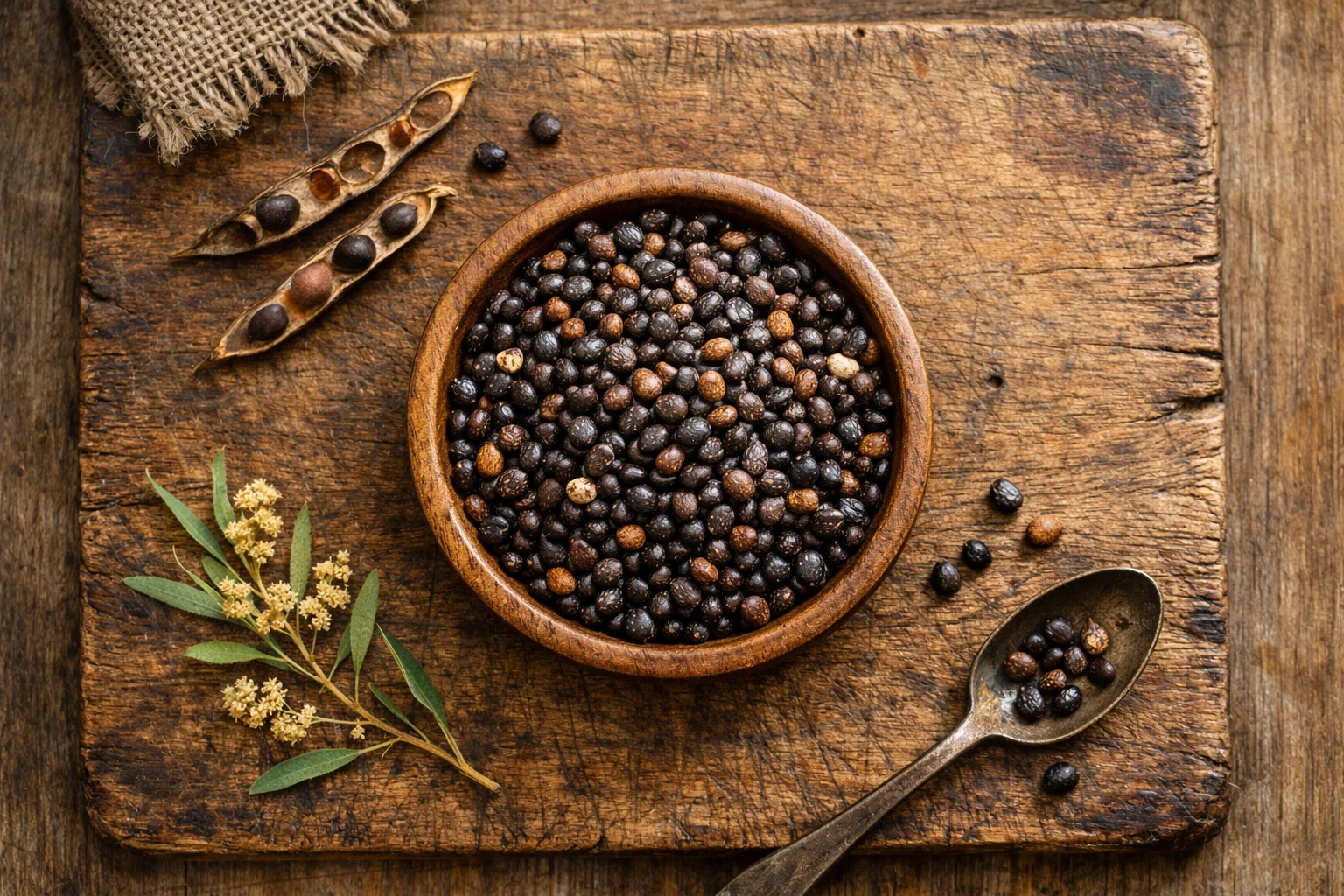
Quick Nutrition Facts
Per 100g Ground Wattleseed
| Nutrient | Amount |
|---|---|
| Calories | 283 kcal |
| Protein | 20.3g |
| Carbohydrates | 10.5g |
| Fiber | 54.2g |
| Sugars | 0g |
| Fat | 6.1g |
| Potassium | 974mg |
| Calcium | 419mg |
| Iron | 6mg |
| Magnesium | 243mg |
Macronutrient Breakdown
 ChatGPT
  Claude
  AI Mode
  Perplexity
NUTRITIONIST INSIGHT
Wattleseed delivers an extraordinary 54g of fiber per 100g—more than 10x the fiber in oats. Combined with 20g protein and zero sugars, it's one of the most nutrient-dense plant foods on Earth.
Myth Busters
MYTH #1: Wattleseed Is Just Another Grain
TRUTH: Wattleseed is a legume seed, not a grain. It contains 20g protein per 100g—higher than most legumes—and exceptional fiber content that grains can't match.
MYTH #2: All Acacia Seeds Are Edible
TRUTH: Only specific Acacia species are safe to eat. Aboriginal knowledge identifies edible varieties like Acacia aneura (Mulga) and Acacia victoriae. Never consume unidentified Acacia seeds—some species contain toxic compounds.
MYTH #3: Wattleseed Contains Caffeine
TRUTH: Despite its coffee-like flavor, wattleseed contains zero caffeine. The roasted, nutty taste comes from Maillard reactions during traditional roasting, not caffeine content.
MYTH #4: You Need Large Amounts for Benefits
TRUTH: Due to its concentrated nutrition, just 1-2 teaspoons (5-10g) provides meaningful fiber and protein. The intense flavor also means a little goes a long way in recipes.
MYTH #5: Wattleseed Is a New Superfood Trend
TRUTH: Aboriginal Australians have harvested wattleseed for over 40,000 years. It's one of the world's oldest continuously consumed plant foods—only recently gaining mainstream recognition.
NutriScore by Health Goals
| Health Goal | NutriScore | Why This Score? |
|---|---|---|
| Weight Loss |  | Exceptional 54g fiber promotes satiety, 20g protein prevents muscle loss, zero sugars, only 283 cal per 100g. |
| Muscle Gain | | 20g complete plant protein per 100g, 974mg potassium prevents cramps, 6mg iron supports oxygen delivery. |
| Diabetes Management | | Zero sugars, extremely low GI due to 54g fiber, slows glucose absorption significantly. |
| PCOS Management | | Low GI, high fiber improves insulin sensitivity, anti-inflammatory properties from selenium. |
| Pregnancy Nutrition |  | Rich in folate (40mcg), iron (6mg), and calcium (419mg) for fetal development. Use in moderation; consult healthcare provider. |
| Viral/Flu Recovery | | Selenium (31.7mcg) and zinc support immunity, easily digestible when ground, provides sustained energy. |
PERSONALIZED NUTRITION
Track your meals with NutriScan for personalized NutriScores based on your specific health goals!
Blood Sugar Response to Wattleseed
Understanding how wattleseed affects your blood glucose can help you make informed dietary choices.
Typical Glucose Response Curve
This chart shows typical blood glucose response for general healthy individuals. Individual responses may vary. Not medical advice.
How to Flatten the Spike
Wattleseed's extremely high fiber content naturally minimizes blood sugar spikes. Enhance the effect by:
- 🥛 Adding to yogurt or smoothies - Protein and fat slow absorption further
- 🥜 Combining with nut butter - Healthy fats extend satiety
- 🍳 Using in savory dishes - Pair with eggs or tofu for complete protein
- ☕ Blending into coffee substitute - Caffeine-free energy with minimal glucose impact
The 54g fiber per 100g means even small amounts significantly slow carbohydrate digestion from other foods in your meal.
Cultural Significance
Wattleseed represents one of humanity's oldest continuously used food sources, central to Aboriginal Australian culture for over 40,000 years.
In Aboriginal Australia:
- Called "wattleseed" after the Acacia genus; traditional names vary by nation (e.g., "mulga" for Acacia aneura)
- Women traditionally harvested, roasted, and ground seeds using grinding stones
- Provided crucial survival food in arid regions—stores well for years
- Over 120 Acacia species in Australia, with ~47 identified as edible
- Seeds were ground into flour for damper (bush bread) and porridge
Modern Revival:
- Key ingredient in contemporary Australian cuisine since the 1980s
- Featured in coffee blends, ice cream, breads, and fine dining
- Recognized by FSANZ (Food Standards Australia New Zealand) as a traditional food
- Growing commercial cultivation supports both nutrition and Indigenous communities
Compare & Substitute
Wattleseed vs Similar High-Protein Seeds (Per 100g)
| Nutrient | 🌾 Wattleseed | 🫘 Chickpeas | 🌱 Chia Seeds | 🥜 Hemp Seeds |
|---|---|---|---|---|
| Calories | 283 kcal | 164 kcal | 486 kcal | 553 kcal |
| Carbs | 10.5g | 27g | 42g | 8.7g |
| Fiber | 54.2g | 7.6g | 34g | 4g |
| Protein | 20.3g | 8.9g | 17g | 31.6g |
| Fat | 6.1g | 2.6g | 31g | 48.8g |
| Potassium | 974mg | 291mg | 407mg | 1200mg |
| Iron | 6mg | 2.9mg | 7.7mg | 7.9mg |
| Best For | Fiber, low-carb, minerals | Budget protein, versatile | Omega-3s, smoothies | Complete protein, keto |
Frequently Asked Questions
What is wattleseed?
Wattleseed comes from Australian Acacia species, traditionally harvested and roasted by Aboriginal peoples for over 40,000 years. The seeds are ground into a flour with a distinctive nutty, coffee-chocolate flavor.
Key facts: 20.3g protein per 100g, 54.2g fiber, zero sugars, zero caffeine despite coffee-like taste. Commonly used in 1-2 teaspoon amounts in beverages and baking.
Is wattleseed good for diabetics?
Wattleseed is excellent for blood sugar management. With zero sugars and 54g fiber per 100g, it has an extremely low glycemic index.
Benefits for diabetics:
- High fiber slows glucose absorption from entire meals
- Zero sugar content means no blood glucose spike
- Can be used as flour substitute in low-GI baking
- 1-2 teaspoons in smoothies adds nutrition without raising blood sugar
How much protein is in wattleseed?
Wattleseed contains 20.3g of protein per 100g—exceptionally high for a plant food. This rivals many legumes and exceeds most grains.
The protein includes essential amino acids, though like most plant proteins, it benefits from combining with complementary sources (nuts, grains, dairy).
What are the main health benefits of wattleseed?
Key Benefits:
- Digestive Health: 54.2g fiber (200%+ DV) supports gut microbiome
- Blood Pressure: 974mg potassium regulates cardiovascular function
- Bone Health: 419mg calcium and 243mg magnesium strengthen bones
- Energy Production: 6mg iron prevents anemia, supports oxygen transport
- Immune Function: 31.7mcg selenium—exceptional antioxidant mineral
- Blood Sugar Control: Zero sugars + massive fiber = very low GI
How do you use wattleseed?
Culinary applications:
- Coffee substitute/additive: 1 tsp ground wattleseed per cup (caffeine-free)
- Smoothies: 1-2 tsp for nutty flavor and fiber boost
- Baking: Replace 10-20% flour in bread, muffins, pancakes
- Ice cream/desserts: Infuse into cream or add to chocolate
- Savory dishes: Season meats, add to sauces and marinades
Flavor profile: Nutty, coffee-like, hints of chocolate and hazelnut. Pairs well with vanilla, cinnamon, chocolate, and dairy.
Is wattleseed safe during pregnancy?
Wattleseed in culinary amounts is generally considered safe during pregnancy. It provides beneficial nutrients including folate (40mcg), iron (6mg), and calcium (419mg).
Recommendations:
- Use 1-2 teaspoons per day as flavor/nutrition enhancement
- Provides pregnancy-supportive minerals
- Always source from reputable suppliers
- Consult your healthcare provider for personalized advice
Where can I buy wattleseed?
Wattleseed is available from:
- Australian specialty food stores
- Online retailers (Amazon, specialty spice shops)
- Health food stores (ground or whole)
- Direct from Australian Indigenous enterprises
Tips: Buy ground for convenience; whole seeds require grinding. Store in cool, dry place—lasts 2+ years properly stored.


Similar Nutritious Foods
4505 Chicharrones Classic Chili Salt
7 Eleven Japan Crispy Corn Cheese
Explore More Nutrition Tools & Resources
AI Calorie Counter App - Snap a Photo, Get Macros
AI Nutritionist App That Reads Your Logged Meals
Best Protein Supplements for Women
Bulking Meal Plan App That Sets Your Surplus
ChatGPT Calorie Counter Alternative That Keeps the Total
ChatGPT Diet Plan Alternative That Tracks What You Eat
ChatGPT Weight Loss Coach Alternative With a Food Log
Fast Food Calorie Counter App That Reads the Tray
Free Calorie Tracker App with AI Photo Scans | NutriScan
Indian Diet Plan App With Veg and Non Veg Meals
Indian Food Calorie Calculator - Get Instant Nutrition Facts for Desi Meals — 2026
Intermittent Fasting for Women, Timer and Meal Log App
Intermittent Fasting Tracker App - Free Fasting Timer
Macro Tracker App That Fills the Numbers From a Photo
Mediterranean Diet Meal Plan App That Counts the Oil
Micronutrient Tracker App for Vitamins and Minerals
MyFitnessPal Alternative That Stays Free | NutriScan
NutriScore App: A Free Grade on Every Meal | NutriScan
Nutrition Label Scanner App for the Amount You Ate
Second Trimester Protein Guide
Vegetarian Meal Plan App With a Protein Target
Voice Calorie Counter - Speak to Track Meals Hands-Free
Water and Calorie Tracker App - Free Water Log