Whey Protein Smoothie: Calories, Nutrition and Benefits
High-protein powerhouse delivering 26g complete protein and essential nutrients in a delicious, convenient package perfect for muscle recovery and sustained energy.
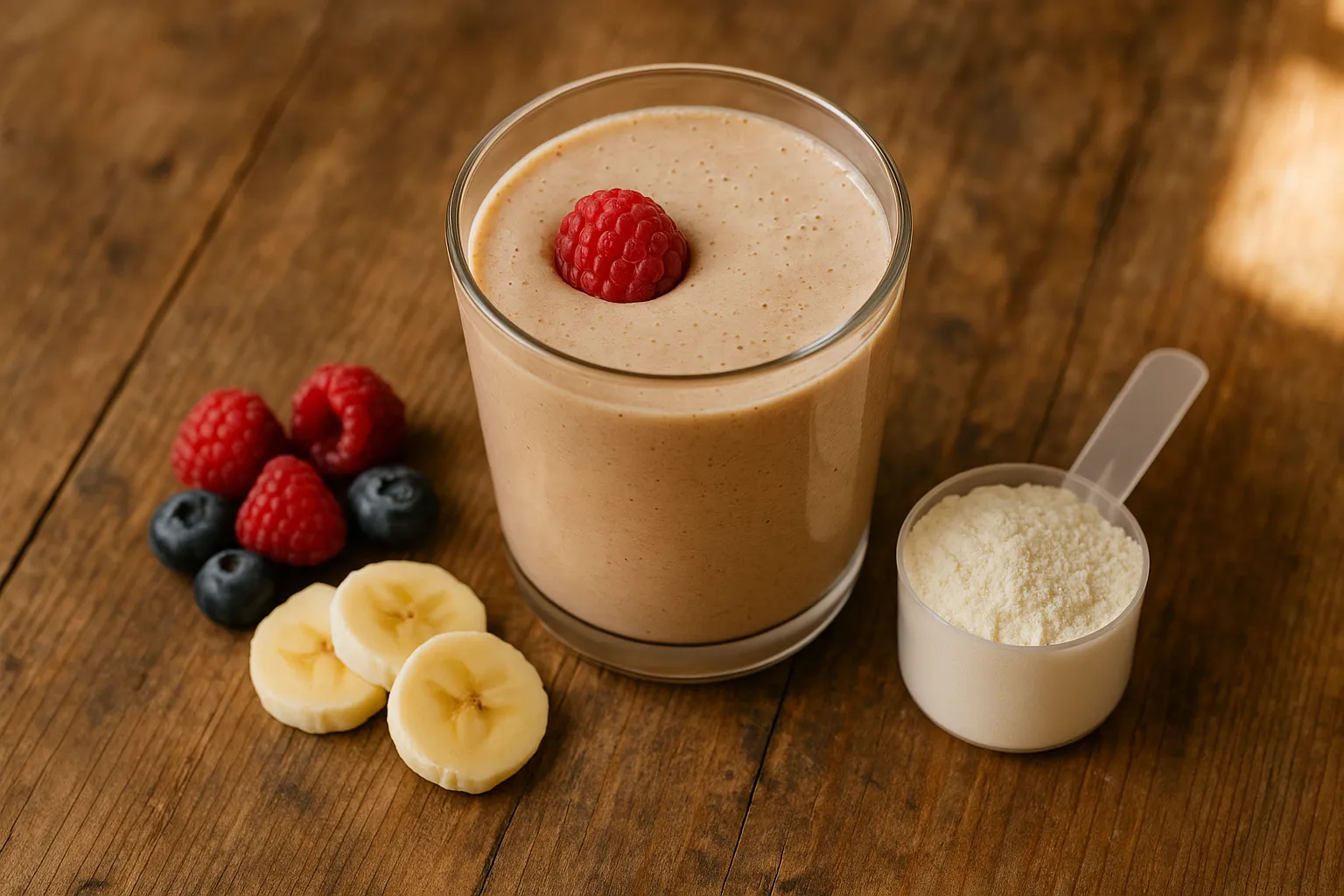
Quick Nutrition Facts
Per 1 Smoothie (300ml)
| Nutrient | Amount |
|---|---|
| Calories | 220 kcal |
| Protein | 26g |
| Carbohydrates | 24g |
| Fiber | 2.5g |
| Sugars | 16g |
| Fat | 3g |
| Calcium | 250mg |
| Potassium | 380mg |
| Vitamin B12 | 1.2mcg |
| BCAAs | 5.5g |
Macronutrient Breakdown
 ChatGPT
  Claude
  AI Mode
  Perplexity
NUTRITIONIST INSIGHT
Whey protein smoothies provide complete protein with all 9 essential amino acids and 5.5g BCAAs. Consuming within 30-60 minutes post-workout maximizes muscle protein synthesis and accelerates recovery.
Myth Busters
MYTH #1: Protein Smoothies Make You Bulky
TRUTH: Protein alone doesn't cause bulk—excess calories plus resistance training do. Women and men in calorie deficit will lose fat while preserving lean muscle with whey smoothies. Whey protein actually aids fat loss while maintaining muscle mass.
MYTH #2: You Must Drink Protein Immediately After Workout
TRUTH: The "anabolic window" is wider than once believed. While optimal timing is within 2 hours post-workout, total daily protein intake matters most. That said, consuming whey within 30-60 minutes does enhance recovery when combined with carbohydrates.
MYTH #3: More Protein Is Always Better
TRUTH: Muscle protein synthesis maxes out at 20-30g per meal. Consuming 50-60g in one smoothie provides no additional benefit and may stress kidneys. Distribute protein across 4-5 meals daily for optimal muscle building.
MYTH #4: Whey Protein Is Only for Bodybuilders
TRUTH: Everyone benefits from adequate protein. Whey smoothies support weight loss (increases satiety), aging adults (prevents muscle loss), busy professionals (convenient nutrition), and recovery from illness or surgery.
MYTH #5: Plant Protein Is Just as Good as Whey
TRUTH: While plant proteins are valuable, whey provides higher leucine content (2.5g vs 1.5g), faster absorption, and complete amino acid profile. Whey stimulates muscle protein synthesis 20-30% more effectively than plant proteins.
MYTH #6: Smoothies Spike Blood Sugar Like Soda
TRUTH: High protein content (26g) dramatically blunts glucose response. Whey reduces postprandial blood glucose by 20-30% compared to carb-only drinks. Adding fiber from berries further stabilizes blood sugar.
NutriScore by Health Goals
| Health Goal | NutriScore | Why This Score? |
|---|---|---|
| Weight Loss |  | High protein (26g) increases satiety, preserves muscle during deficit, only 220 calories. Whey suppresses hunger more than other proteins. |
| Muscle Gain | | Perfect protein-to-carb ratio (26g:24g) for recovery, 5.5g BCAAs stimulate muscle protein synthesis, fast absorption post-workout. |
| Diabetes Management | | Whey stimulates insulin and reduces blood glucose spikes by 20-30%. Use unsweetened powder and low-sugar fruits. |
| PCOS Management |  | High protein improves insulin sensitivity and supports weight management. Use low-sugar recipe with berries, avoid added sweeteners. |
| Pregnancy Nutrition | | Excellent protein source (26g) supporting fetal development and maternal muscle maintenance. Calcium and B12 support bone health and red blood cell formation. |
| Viral/Flu Recovery | | Easy-to-digest complete protein aids tissue repair, supports immune function, prevents muscle wasting during illness. Adds hydration and micronutrients. |
PERSONALIZED NUTRITION
Track your protein smoothies with NutriScan for personalized NutriScores based on your specific health goals!
Blood Sugar Response to Whey Smoothie
Understanding how protein smoothies affect blood glucose helps optimize recipes and timing for different health goals.
Typical Glucose Response Curve
This chart shows typical blood glucose response for general healthy individuals consuming a balanced whey smoothie. Individual responses may vary. Not medical advice.
How to Optimize Blood Sugar Control
Creating balanced whey smoothies with strategic ingredient combinations minimizes glucose spikes:
- 🫐 Low-sugar berries (blueberries, strawberries, raspberries) - High antioxidants, low glycemic load
- 🥜 Nut butter (almond, peanut) - Adds healthy fats and further slows glucose absorption
- 🥬 Leafy greens (spinach, kale) - Boosts fiber and micronutrients without affecting taste
- 🌰 Chia or flaxseeds - Provides omega-3s and soluble fiber for sustained energy
This combination creates a low-glycemic smoothie (GI <40) that keeps blood sugar stable for 3-4 hours while delivering complete nutrition.
Cultural Significance
Protein smoothies evolved from 1960s bodybuilding culture but have become mainstream wellness staples embraced globally.
In India:
- Traditional "protein lassi" blends yogurt, milk, and nuts—ancient precursor to modern smoothies
- Ayurvedic protein drinks using milk, almonds, dates, and cardamom for strength (Badam milk)
- Modern fitness boom (2010s+) popularized whey protein among urban millennials
- Regional variations: Mango protein smoothie (summer), Kesar pista whey shake (North India)
Global Impact:
- $19 billion global protein supplement market (2024), growing 8% annually
- 50+ million Americans consume protein shakes regularly (2024 data)
- Convenience culture drives smoothie bar expansion—Smoothie King, Jamba Juice, local cafes
- Sustainability shift toward plant-whey blends and eco-friendly packaging
Compare & Substitute
Protein Smoothie Options Compared (Per 300ml serving)
| Nutrient | 🥤 Whey Smoothie | 🥛 Greek Yogurt Smoothie | 🌱 Vegan Protein Smoothie | 🍌 Fruit Smoothie (No Protein) |
|---|---|---|---|---|
| Calories | 220 kcal | 200 kcal | 240 kcal | 180 kcal |
| Protein | 26g | 18g | 20g | 3g |
| Carbs | 24g | 28g | 30g | 42g |
| Fiber | 2.5g | 2g | 5g | 4g |
| Fat | 3g | 5g | 6g | 1g |
| BCAAs | 5.5g | 3.5g | 3g | <1g |
| Absorption Rate | Fast (30-45 min) | Medium (60-90 min) | Medium (60-90 min) | N/A |
| Best For | Post-workout | Breakfast, sustained energy | Vegan athletes | Quick carbs, not for recovery |
Frequently Asked Questions
Is a whey protein smoothie good for weight loss?
Yes, whey protein smoothies are excellent for weight loss. The 26g high-quality protein increases satiety (fullness) by 50% compared to carb-heavy beverages, helping you eat fewer calories throughout the day.
Weight loss benefits: Preserves lean muscle during calorie deficit; Boosts metabolism by 80-100 calories daily through thermic effect of protein; Reduces hunger hormones (ghrelin) and increases fullness hormones (GLP-1, PYY); Only 220 calories—perfect meal replacement.
Pro tip: Replace breakfast or lunch with whey smoothie containing protein powder, berries, spinach, and almond milk. Limit to 1-2 smoothies daily within calorie goals.
When is the best time to drink a whey protein smoothie?
Optimal timing depends on your goal:
- Post-workout (within 30-60 minutes): Best for muscle recovery and protein synthesis. Combines with carbs to replenish glycogen.
- Morning (breakfast): Kickstarts metabolism, provides sustained energy, reduces mid-morning cravings.
- Between meals (snack): Prevents muscle breakdown, maintains energy levels, controls appetite.
- Pre-bedtime: Supports overnight recovery (consider adding casein for slower release).
Bottom line: Total daily protein intake (1.6-2.2g per kg body weight) matters more than precise timing. Consistency is key.
Can diabetics drink whey protein smoothies?
Yes, diabetics can benefit significantly from whey protein smoothies. Whey stimulates insulin release and reduces postprandial blood glucose by 20-30% compared to carb-only drinks.
Diabetes-friendly smoothie guidelines: Use unsweetened whey protein powder (zero added sugar); Choose low-GI fruits (berries, green apple); Add fiber (chia seeds, spinach, flaxseed); Include healthy fat (almond butter) to further slow glucose absorption; Monitor blood sugar 2 hours after consumption.
Sample recipe: 1 scoop whey, 1/2 cup berries, 1 cup unsweetened almond milk, 1 tbsp almond butter, handful spinach = <15g net carbs.
How much protein should be in a smoothie?
Optimal protein per smoothie:
- 20-30g: Ideal for most adults—maximizes muscle protein synthesis without waste
- 25-40g: Post-workout recovery for athletes and bodybuilders
- 15-25g: Weight loss meal replacement (prioritize satiety)
- 30-40g: Muscle gain bulk phase combined with strength training
Important: Muscle protein synthesis peaks at 20-30g per meal. Consuming 50-60g in one smoothie provides no additional benefit and may stress kidneys. Distribute protein across 4-5 meals daily.
Most people benefit from 25-30g per smoothie (1 scoop whey powder + milk base).
Are whey protein smoothies safe during pregnancy?
Yes, whey protein smoothies are safe and beneficial during pregnancy for meeting increased protein needs (71-100g daily in 2nd-3rd trimesters).
Pregnancy benefits: Supports fetal growth and development; Provides 25-30g complete protein with all essential amino acids; Adds calcium (250mg) for bone health; Supplies vitamin B12 for red blood cell formation; Convenient nutrition for morning sickness when solid foods are difficult.
Safety precautions: Choose third-party tested, NSF-certified whey protein; Avoid products with artificial sweeteners, caffeine, or herbal additives; Ensure pasteurized ingredients; Limit added sugars.
Always consult your obstetrician before adding supplements during pregnancy.
What makes whey protein smoothies better than regular smoothies?
Whey protein smoothies provide critical advantages:
- Complete protein: 20-30g with all 9 essential amino acids (regular smoothies: 2-5g incomplete protein)
- BCAAs for recovery: 5-6g leucine, isoleucine, valine stimulate muscle protein synthesis
- Blood sugar control: Whey reduces glucose spikes by 20-30% (fruit-only smoothies spike blood sugar)
- Satiety: Increases fullness by 50% compared to carb-only smoothies, supports weight management
- Faster absorption: Whey digests in 30-45 minutes, delivering amino acids when muscles need them most
Regular fruit smoothies are delicious but lack protein for muscle recovery, cause blood sugar roller coasters, and leave you hungry within 1-2 hours.


Similar Nutritious Foods & Drinks
4505 Chicharrones Classic Chili Salt
7 Eleven Japan Crispy Corn Cheese
Explore More Nutrition Tools & Resources
AI Calorie Counter App - Snap a Photo, Get Macros
AI Nutritionist App That Reads Your Logged Meals
Best Protein Supplements for Women
Bulking Meal Plan App That Sets Your Surplus
ChatGPT Calorie Counter Alternative That Keeps the Total
ChatGPT Diet Plan Alternative That Tracks What You Eat
ChatGPT Weight Loss Coach Alternative With a Food Log
Fast Food Calorie Counter App That Reads the Tray
Free Calorie Tracker App with AI Photo Scans | NutriScan
Indian Diet Plan App With Veg and Non Veg Meals
Indian Food Calorie Calculator - Get Instant Nutrition Facts for Desi Meals — 2026
Intermittent Fasting for Women, Timer and Meal Log App
Intermittent Fasting Tracker App - Free Fasting Timer
Macro Tracker App That Fills the Numbers From a Photo
Mediterranean Diet Meal Plan App That Counts the Oil
Micronutrient Tracker App for Vitamins and Minerals
MyFitnessPal Alternative That Stays Free | NutriScan
NutriScore App: A Free Grade on Every Meal | NutriScan
Nutrition Label Scanner App for the Amount You Ate
Second Trimester Protein Guide
Vegetarian Meal Plan App With a Protein Target
Voice Calorie Counter - Speak to Track Meals Hands-Free
Water and Calorie Tracker App - Free Water Log