White Chutney (Coconut Chutney): Calories, Nutrition and Health Benefits
A creamy South Indian condiment made from fresh coconut, packed with healthy fats and digestive benefits.
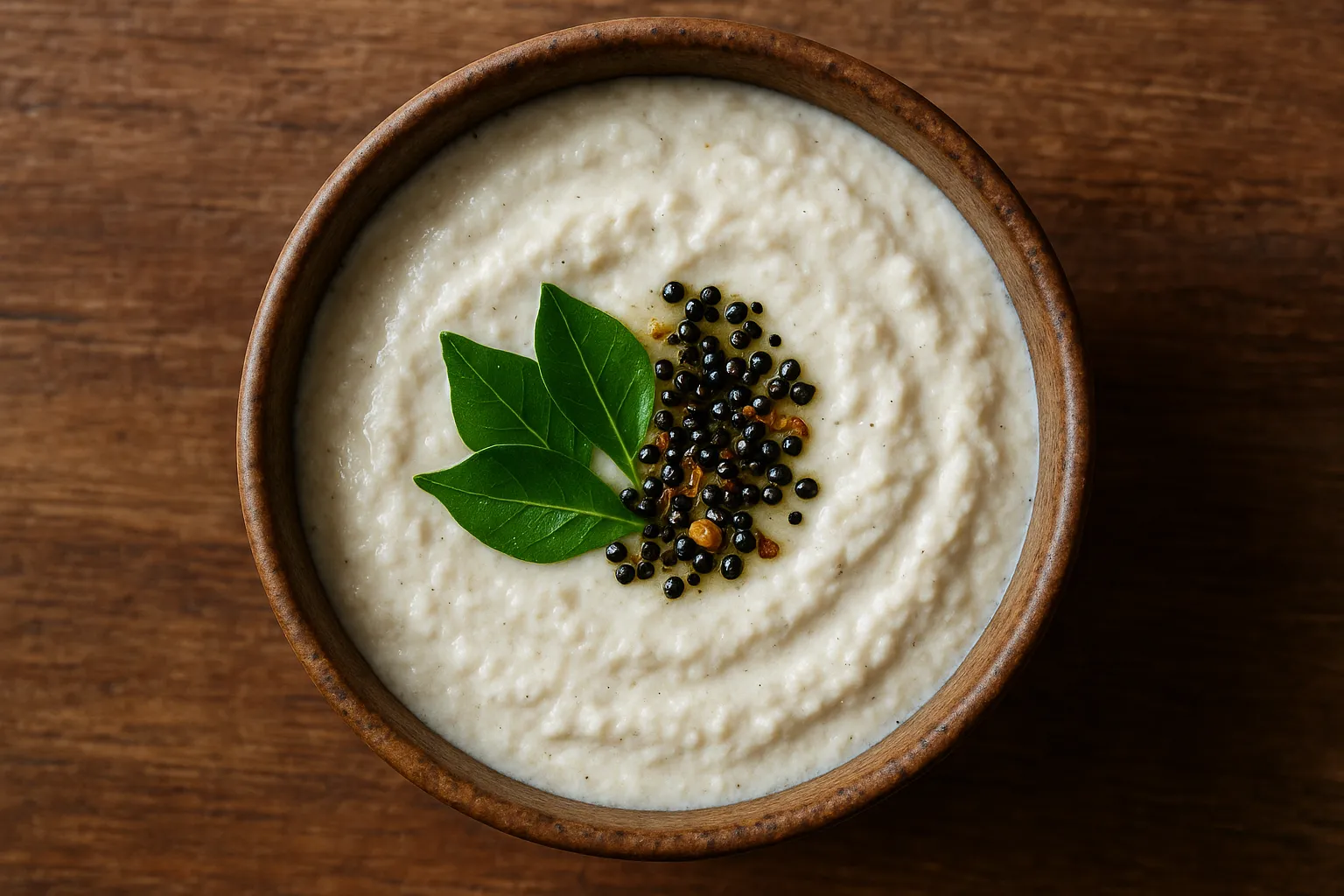
Quick Nutrition Facts
Per 2 Tablespoons (30g)
| Nutrient | Amount |
|---|---|
| Calories | 35 kcal |
| Protein | 1g |
| Carbohydrates | 3g |
| Fiber | 0.8g |
| Sugars | 1g |
| Fat | 2g |
| Iron | 0.5mg |
| Potassium | 55mg |
| Calcium | 4mg |
| Vitamin C | 0.5mg |
Macronutrient Breakdown
 ChatGPT
  Claude
  AI Mode
  Perplexity
NUTRITIONIST INSIGHT
White chutney made from fresh coconut provides medium-chain triglycerides (MCTs) that are quickly absorbed for energy. The natural probiotics from fermentation support gut health—consume fresh within 4-6 hours for maximum benefits.
Myth Busters
MYTH #1: Coconut Is Too High in Fat to Be Healthy
TRUTH: Coconut contains primarily MCT fats that are metabolized differently than other saturated fats. MCTs boost metabolism, support brain health, and don't contribute to heart disease when consumed in moderation (2-3 tbsp of chutney daily).
MYTH #2: White Chutney Causes Weight Gain
TRUTH: At only 35 calories per 2 tbsp, white chutney is a low-calorie condiment. Fresh coconut chutney made with minimal oil and consumed in appropriate portions (2-4 tbsp) supports weight management by adding flavor without excess calories.
MYTH #3: All Chutneys Are the Same Nutritionally
TRUTH: Coconut chutney differs significantly from sugar-laden tomato or mango chutneys. It's naturally low in sugar (1g per serving), provides healthy fats instead of added sugars, and contains no preservatives when made fresh at home.
MYTH #4: Chutney Has No Nutritional Value
TRUTH: Fresh coconut chutney provides lauric acid (antimicrobial), iron (0.5mg per serving), natural probiotics from fermentation, and healthy fats for satiety. Green chilies add vitamin C; curry leaves contribute antioxidants and minerals.
MYTH #5: Coconut Products Raise Cholesterol
TRUTH: Studies show coconut's MCT fats may actually improve HDL (good) cholesterol. The lauric acid in coconut raises HDL more than LDL. Moderation is key—2-3 tbsp daily is safe for most people.
MYTH #6: Store-Bought Is the Same as Fresh
TRUTH: Fresh homemade coconut chutney contains live enzymes, more nutrients, no preservatives, and beneficial bacteria from natural fermentation. Store-bought versions often have added oil, sugar, and preservatives that reduce health benefits.
NutriScore by Health Goals
| Health Goal | NutriScore | Why This Score? |
|---|---|---|
| Weight Loss |  | Low-calorie (35 cal per 2 tbsp), provides satiety from healthy fats. MCTs may boost metabolism. Use fresh coconut, limit to 2-3 tbsp daily, minimize tempering oil. |
| Muscle Gain | | Provides quick-absorbing MCT energy for workouts, pairs perfectly with protein-rich idli/dosa, supports muscle recovery with anti-inflammatory properties. |
| Diabetes Management |  | Low glycemic index, only 3g carbs per serving. Healthy fats slow glucose absorption. No added sugar needed; fresh coconut naturally sweet. |
| PCOS Management | | Low carb, anti-inflammatory coconut supports hormone balance. MCT fats don't spike insulin. Limit to 2-3 tbsp daily, pair with low-GI foods. |
| Pregnancy Nutrition | | Provides healthy fats for fetal brain development, iron for blood health, easy-to-digest. Ensure fresh preparation to avoid bacterial contamination. |
| Viral/Flu Recovery | | Lauric acid has antimicrobial properties, easy to digest, provides quick MCT energy, supports immune function. Ginger and curry leaves add anti-inflammatory benefits. |
PERSONALIZED NUTRITION
Track your meals with NutriScan for personalized NutriScores based on your specific health goals!
Blood Sugar Response to White Chutney
White chutney has minimal impact on blood glucose due to its low carb content and healthy fat composition.
Typical Glucose Response Curve
This chart shows typical blood glucose response for general healthy individuals. Individual responses may vary. Not medical advice.
Perfect Pairings for Balanced Nutrition
Coconut chutney's healthy fats complement carb-rich South Indian foods, creating balanced meals:
- 🍛 Idli or Dosa - Fermented rice provides probiotics; chutney adds healthy fats
- 🥔 Vada (lentil fritters) - Protein from lentils + healthy coconut fats
- 🫓 Uttapam - Whole grain base balanced with coconut's MCTs
- 🥣 Upma - Semolina provides energy; chutney aids satiety
This combination delivers sustained energy, improved digestion, and better nutrient absorption.
Cultural Significance
Coconut chutney is a cornerstone of South Indian cuisine, representing tradition, hospitality, and balanced nutrition.
In South India:
- Daily breakfast essential: served with idli, dosa, vada, uttapam across Tamil Nadu, Karnataka, Kerala, Andhra Pradesh
- Temple prasadam: offered to deities and distributed to devotees
- Regional variations: Kerala adds grated coconut and curry leaves; Karnataka uses roasted gram dal; Tamil Nadu incorporates onions
- Ayurvedic perspective: cooling effect balances spicy foods; aids digestive fire (agni)
Global Impact:
- Popularized worldwide through Indian restaurants and food blogs
- Vegan-friendly condiment gaining recognition in plant-based diets
- Demonstrates Indian cuisine's use of fresh, whole-food ingredients
- Inspires fusion adaptations: coconut pesto, coconut hummus, salad dressings
Compare & Substitute
White Chutney vs Other Indian Condiments (Per 2 tbsp/30g)
| Nutrient | 🥥 White Chutney | 🌿 Green Chutney | 🍅 Tomato Chutney | 🥜 Peanut Chutney |
|---|---|---|---|---|
| Calories | 35 kcal | 15 kcal | 25 kcal | 60 kcal |
| Carbs | 3g | 2g | 5g | 3g |
| Fiber | 0.8g | 1g | 0.6g | 1.2g |
| Protein | 1g | 0.5g | 0.4g | 2.5g |
| Fat | 2g | 0.5g | 0.3g | 5g |
| Iron | 0.5mg | 0.3mg | 0.2mg | 0.8mg |
| Vitamin C | 0.5mg | 8mg | 2mg | 0.2mg |
| Best For | Healthy fats | Low calorie | Tangy flavor | High protein |
Frequently Asked Questions
Is white chutney good for weight loss?
Yes, white chutney can support weight loss when used in moderation. At 35 calories per 2 tbsp, it's a low-calorie way to add flavor and healthy fats to meals.
Weight loss benefits: MCT fats boost metabolism and increase satiety; adds flavor without sugar; pairs with low-calorie fermented foods (idli, dosa); contains no refined carbs.
Best practices: Limit to 2-3 tbsp daily; use fresh coconut (not dried); minimize tempering oil to 1 tsp; pair with steamed idli rather than fried vada.
Can diabetics eat white chutney?
Diabetics can safely enjoy white chutney. With only 3g carbs per 2 tbsp serving and a low glycemic index, it has minimal blood sugar impact.
Diabetes-friendly aspects: Healthy fats slow glucose absorption; naturally low in sugar; no added sugars needed; pairs well with fermented foods that support gut health.
Recommendations: Limit to 2-3 tbsp per meal; avoid sugar in recipe; use fresh coconut; pair with protein-rich accompaniments (sambar, dal); monitor blood sugar if consuming larger portions.
How much protein is in white chutney?
White chutney contains 1g protein per 2 tbsp. While not a significant protein source, it complements protein-rich South Indian foods perfectly.
To increase protein: Pair with sambar (lentil soup, 3g protein per 1/2 cup); serve with idli made from urad dal (2g per idli); add to mixed lentil dosa; combine with vegetable kootu (lentil-vegetable stew).
What are the main health benefits of coconut chutney?
Key Benefits:
- Healthy MCT Fats: Quick energy for brain and body; may boost metabolism
- Antimicrobial Properties: Lauric acid fights bacteria and viruses
- Digestive Support: Natural probiotics from fermentation aid gut health
- Anti-inflammatory: Coconut, curry leaves, and ginger reduce inflammation
- Iron Content: 0.5mg per serving supports blood health
- Immunity Boost: Lauric acid converts to monolaurin, supporting immune function
When is the best time to eat white chutney?
Traditional & Optimal Timing:
- Breakfast: With idli, dosa, or uttapam for sustained morning energy
- Post-Workout: MCT fats provide quick energy; pair with protein-rich idli
- Lunch: As condiment with South Indian thali for balanced nutrition
- Avoid Dinner (if weight loss goal): Fats metabolize slower at night
Freshness Matters: Consume within 4-6 hours of preparation for maximum probiotic benefits and safety. Refrigerate for up to 24 hours maximum.
Is coconut chutney healthy?
Coconut chutney is healthy when made fresh with quality ingredients:
Healthy Preparation:
- Use fresh coconut (not dried or desiccated)
- Minimal tempering oil (1 tsp mustard seeds + curry leaves)
- No added sugar (coconut is naturally sweet)
- Fresh green chilies and ginger (anti-inflammatory)
- Consume within 4-6 hours (maximum probiotic benefit)
Less Healthy Versions:
- Store-bought with preservatives and added oils
- Made with dried coconut (higher calories, fewer nutrients)
- Excessive tempering oil (3+ tsp)
- Added sugar or artificial flavors
Track homemade vs. store-bought with NutriScan app to compare nutritional differences.
How long does white chutney last?
Food Safety Guidelines:
- Room Temperature: 4-6 hours maximum (tropical climates: 2-3 hours)
- Refrigerated: Up to 24 hours in airtight container
- Not Recommended: Freezing (texture and probiotic benefits degrade)
Freshness Indicators:
- ✅ Fresh: Creamy white, mild coconut aroma, smooth texture
- ❌ Spoiled: Sour smell, watery separation, yellowing, mold spots
Best Practice: Prepare fresh daily in small batches for maximum nutrition and food safety, especially during pregnancy or for young children.
Can I make white chutney without oil?
Yes! Oil-free coconut chutney is healthier and lower in calories:
Oil-Free Tempering Alternatives:
- Dry roast spices: Toast mustard seeds, curry leaves in a hot pan (no oil)
- Skip tempering: Blend coconut with chilies, ginger, salt—naturally delicious
- Water-based: Use 1 tbsp water instead of oil for tempering
Benefits: Reduces calories by 40-50 per serving; focuses on coconut's natural MCT fats; suitable for oil-free diets; easier digestion.


Similar Nutritious Foods
4505 Chicharrones Classic Chili Salt
7 Eleven Japan Crispy Corn Cheese
Explore More Nutrition Tools & Resources
AI Calorie Counter App - Snap a Photo, Get Macros
AI Nutritionist App That Reads Your Logged Meals
Best Protein Supplements for Women
Bulking Meal Plan App That Sets Your Surplus
ChatGPT Calorie Counter Alternative That Keeps the Total
ChatGPT Diet Plan Alternative That Tracks What You Eat
ChatGPT Weight Loss Coach Alternative With a Food Log
Fast Food Calorie Counter App That Reads the Tray
Free Calorie Tracker App with AI Photo Scans | NutriScan
Indian Diet Plan App With Veg and Non Veg Meals
Indian Food Calorie Calculator - Get Instant Nutrition Facts for Desi Meals — 2026
Intermittent Fasting for Women, Timer and Meal Log App
Intermittent Fasting Tracker App - Free Fasting Timer
Macro Tracker App That Fills the Numbers From a Photo
Mediterranean Diet Meal Plan App That Counts the Oil
Micronutrient Tracker App for Vitamins and Minerals
MyFitnessPal Alternative That Stays Free | NutriScan
NutriScore App: A Free Grade on Every Meal | NutriScan
Nutrition Label Scanner App for the Amount You Ate
Second Trimester Protein Guide
Vegetarian Meal Plan App With a Protein Target
Voice Calorie Counter - Speak to Track Meals Hands-Free
Water and Calorie Tracker App - Free Water Log