White Miso Paste: Calories, Nutrition and Health Benefits
Japan's ancient fermented superfood delivering probiotics, complete protein, and immune support in every spoonful.
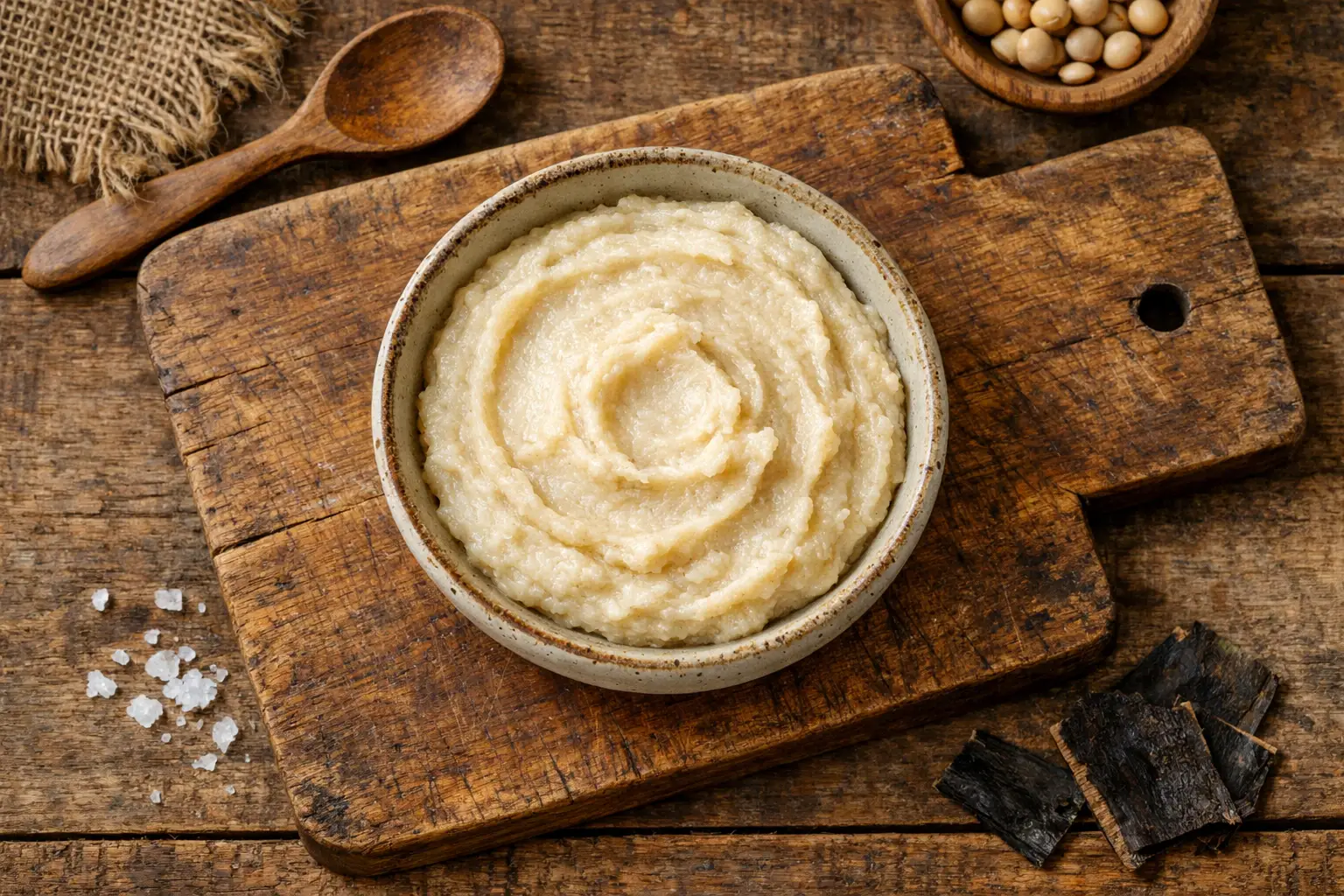
Quick Nutrition Facts
Per 1 Tablespoon (17g) | Per 100g in brackets
| Nutrient | Amount |
|---|---|
| Calories | 34 kcal (199) |
| Protein | 2.2g (13g) |
| Carbohydrates | 4.3g (25g) |
| Fiber | 0.9g (5.4g) |
| Sugars | 3.6g (21g) |
| Fat | 1g (6g) |
| Sodium | 634mg (3,728mg) |
| Manganese | 0.1mg (0.9mg) |
| Zinc | 0.4mg (2.6mg) |
| Vitamin K | 5mcg (29mcg) |
Macronutrient Breakdown
 ChatGPT
  Claude
  AI Mode
  Perplexity
NUTRITIONIST INSIGHT
White miso is a probiotic powerhouse with only 34 calories per tablespoon. Its fermentation produces beneficial bacteria that support gut health, immune function, and nutrient absorption. Unlike most high-sodium foods, research shows miso does not raise blood pressure.
Myth Busters
MYTH #1: Miso Is Too High in Sodium to Be Healthy
TRUTH: While miso contains significant sodium, research shows habitual miso consumption does not increase blood pressure. Fermentation compounds like peptides may actually promote salt excretion, offsetting sodium's effects. A typical tablespoon has 634mg sodium.
MYTH #2: All Miso Paste Is the Same
TRUTH: White miso (shiro) ferments 1-3 months and has a milder, sweeter taste. Red miso (aka) ferments 6-36 months with more intense flavor. Both contain beneficial probiotics, but white miso has lower sodium and is gentler for beginners.
MYTH #3: Cooking Miso Kills All the Probiotics
TRUTH: High heat can reduce probiotic counts, but miso still provides nutritional value when cooked. For maximum probiotic benefit, add miso to soups after removing from heat, keeping temperatures below 60C (140F).
MYTH #4: Miso Is Only for Soup
TRUTH: Miso is incredibly versatile. Use it in salad dressings, marinades, glazes, dips, and even desserts. Its umami flavor enhances dishes without adding many calories. A tablespoon adds just 34 calories and a rich depth of flavor.
MYTH #5: Fermented Soy Products Are Unsafe
TRUTH: Fermented soy products like miso have been consumed safely for over 1,300 years. Fermentation actually breaks down anti-nutrients like phytic acid and trypsin inhibitors, making soy proteins more digestible and bioavailable.
NutriScore by Health Goals
| Health Goal | NutriScore | Why This Score? |
|---|---|---|
| Weight Loss |  | Only 34 cal per tbsp, high protein density (13g/100g), probiotics support metabolism and reduce bloating. |
| Muscle Gain | | 13g complete plant protein per 100g, zinc (2.6mg) supports muscle repair, versatile for high-protein meals. |
| Diabetes Management | | Habitual miso consumption is associated with improved glycemic variability in type 2 diabetes. Low GI, fermented compounds support insulin sensitivity. |
| PCOS Management | | Soy isoflavones may support hormonal balance, probiotics aid gut-hormone axis, moderate sodium intake. |
| Pregnancy Nutrition | | Fermented soy is safe in pregnancy; miso may protect against prenatal depression. Good source of protein, zinc, and B vitamins. Consult your doctor on intake. |
| Viral/Flu Recovery |  | Miso regulates immune activation and tolerance, easy to digest as warm soup, provides electrolytes and protein for recovery. |
PERSONALIZED NUTRITION
Track your meals with NutriScan for personalized NutriScores based on your specific health goals!
Blood Sugar Response to White Miso
Understanding how white miso affects your blood glucose helps you use it effectively in meals. Miso has a low glycemic index due to its high protein and fat content relative to carbs.
Typical Glucose Response Curve
This chart shows typical blood glucose response for general healthy individuals. Individual responses may vary. Not medical advice.
How to Flatten the Spike
Pairing miso with fiber-rich vegetables and protein further stabilizes blood sugar response:
- 🥬 Leafy greens and seaweed - Adds fiber and minerals to miso soup
- 🍶 Tofu cubes - Boosts protein content and slows glucose absorption
- 🥚 Soft-boiled egg - Complete protein pairs perfectly with miso broth
- 🍄 Mushrooms - Low-calorie, high-fiber addition with umami synergy
This combination provides sustained energy while keeping blood sugar stable, making miso soup an ideal meal starter.
Cultural Significance
Miso has been a cornerstone of Japanese cuisine for over 1,300 years, originating from Chinese fermented soybean paste (jiang) that arrived in Japan around the 7th century.
In Japan:
- Central to daily diet: average Japanese person consumes miso soup 1-3 times daily
- Regional varieties reflect local terrains: Shinshu miso (yellow), Hatcho miso (dark), Saikyo miso (sweet white)
- Traditional fermentation in cedar barrels takes months to years
- Used in ceremonial foods and seasonal celebrations
In India and Asia:
- Similar fermented soy traditions exist: Indian kinema, Korean doenjang, Chinese doubanjiang
- Growing popularity in Indian fusion cuisine for umami flavor
- Ayurvedic alignment: fermented foods support agni (digestive fire)
Global Adoption:
- Miso has become a staple in plant-based and health-conscious diets worldwide
- Used in modern gastronomy for umami-rich sauces, glazes, and desserts
- Recognized by nutritionists as a functional food for gut health
Compare & Substitute
White Miso vs Similar Condiments (Per 100g)
| Nutrient | 🫘 White Miso | 🫘 Red Miso | 🥫 Soy Sauce | 🧈 Tahini |
|---|---|---|---|---|
| Calories | 199 kcal | 198 kcal | 53 kcal | 595 kcal |
| Carbs | 25g | 22g | 5g | 21g |
| Fiber | 5.4g | 5.4g | 0.8g | 9.3g |
| Protein | 13g | 13g | 8g | 17g |
| Fat | 6g | 6g | 0.1g | 54g |
| Sodium | 3,728mg | 3,647mg | 5,493mg | 115mg |
| Probiotics | Yes (live cultures) | Yes (more complex) | No | No |
| Best For | Mild soups, dressings, dips | Hearty stews, marinades | Quick seasoning | Rich sauces, high fat needs |
Frequently Asked Questions
How many calories are in white miso paste?
White miso paste contains 199 calories per 100g. A typical serving of 1 tablespoon (17g) has about 34 calories with 2.2g protein, 4.3g carbohydrates, and 1g fat. This makes it a calorie-efficient way to add flavor and nutrition to meals.
Is miso paste good for gut health?
Yes, miso is one of the best fermented foods for gut health. It contains live lactic acid bacteria and beneficial yeasts from fermentation. These probiotics support digestive health, immune function, and microbiome diversity. For maximum benefit, add miso to dishes after cooking to preserve live cultures.
Is miso paste high in sodium?
100g of miso contains about 3,728mg sodium, but a typical serving is only 1 tablespoon (17g) with 634mg sodium. Studies show habitual miso consumption does not raise blood pressure despite sodium content, possibly because fermentation compounds promote salt excretion.
Can diabetics eat miso paste?
Miso paste can be beneficial for diabetics. Research shows habitual miso consumption improves glycemic variability in type 2 diabetes patients. The fermented soy compounds support insulin sensitivity. Use standard serving sizes (1-2 tablespoons) and monitor overall sodium intake.
Is miso paste safe during pregnancy?
Fermented soy products like miso are generally considered safe during pregnancy. Research involving over 1,700 women found miso consumption may protect against prenatal depression. Miso provides protein, zinc, and B vitamins important for fetal development. Consult your healthcare provider about recommended intake.
What is the difference between white and red miso?
White miso (shiro) ferments for 1-3 months, producing a milder, sweeter flavor with slightly lower sodium. Red miso (aka) ferments for 6-36 months, creating a stronger, saltier, more complex taste. Both contain beneficial probiotics. White miso is better for dressings and light soups; red miso suits hearty stews and marinades.


Similar Nutritious Foods
4505 Chicharrones Classic Chili Salt
7 Eleven Japan Crispy Corn Cheese
Explore More Nutrition Tools & Resources
AI Calorie Counter App - Snap a Photo, Get Macros
AI Nutritionist App That Reads Your Logged Meals
Best Protein Supplements for Women
Bulking Meal Plan App That Sets Your Surplus
ChatGPT Calorie Counter Alternative That Keeps the Total
ChatGPT Diet Plan Alternative That Tracks What You Eat
ChatGPT Weight Loss Coach Alternative With a Food Log
Fast Food Calorie Counter App That Reads the Tray
Free Calorie Tracker App with AI Photo Scans | NutriScan
Indian Diet Plan App With Veg and Non Veg Meals
Indian Food Calorie Calculator - Get Instant Nutrition Facts for Desi Meals — 2026
Intermittent Fasting for Women, Timer and Meal Log App
Intermittent Fasting Tracker App - Free Fasting Timer
Macro Tracker App That Fills the Numbers From a Photo
Mediterranean Diet Meal Plan App That Counts the Oil
Micronutrient Tracker App for Vitamins and Minerals
MyFitnessPal Alternative That Stays Free | NutriScan
NutriScore App: A Free Grade on Every Meal | NutriScan
Nutrition Label Scanner App for the Amount You Ate
Second Trimester Protein Guide
Vegetarian Meal Plan App With a Protein Target
Voice Calorie Counter - Speak to Track Meals Hands-Free
Water and Calorie Tracker App - Free Water Log