Wild Blueberries (Frozen): Calories, Nutrition and Health Benefits
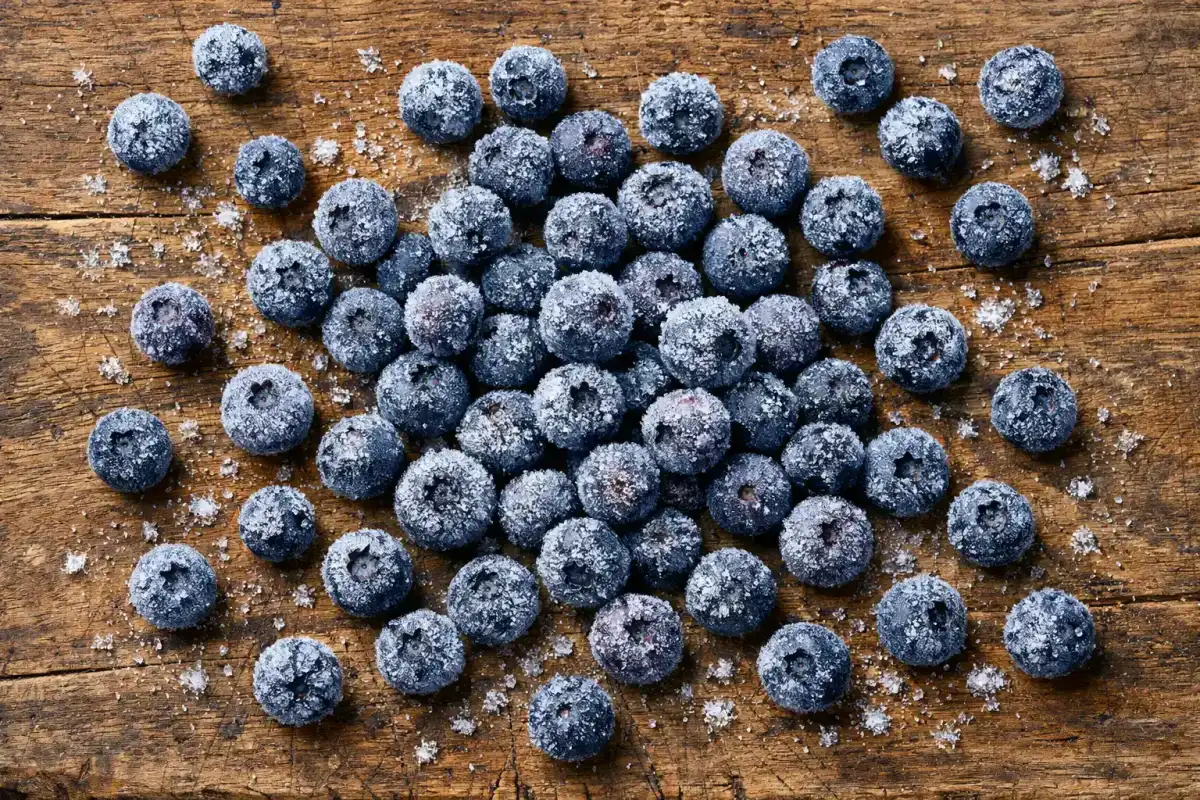
Tiny, intensely flavored wild blueberries pack 33% more anthocyanins than regular blueberries, delivering brain-boosting, heart-protective power in just 80 calories per cup.
Quick Nutrition Facts
Per 1 Cup Frozen Wild Blueberries (140g)
| Nutrient | Amount |
|---|---|
| Calories | 80 kcal |
| Protein | 1g |
| Carbohydrates | 20g |
| Fiber | 4g |
| Sugars | 10g |
| Fat | 0.5g |
| Vitamin C | 6mg |
| Vitamin K | 28mcg |
| Manganese | 0.5mg |
| Anthocyanins | ~487mg/100g |
Macronutrient Breakdown
 ChatGPT
  Claude
  AI Mode
  Perplexity
NUTRITIONIST INSIGHT
Wild blueberries contain nearly twice the antioxidant capacity of regular blueberries per serving. Their intense purple color signals high anthocyanin content, which crosses the blood-brain barrier and supports cognitive function, memory, and mood.
Myth Busters
MYTH #1: Frozen Blueberries Lose Their Nutrients
TRUTH: Flash-freezing preserves most anthocyanins and antioxidants. Research shows frozen blueberries retain comparable nutrient levels to fresh, making them a convenient year-round option.
MYTH #2: Wild and Regular Blueberries Are Nutritionally Identical
TRUTH: Wild blueberries (Vaccinium angustifolium) are smaller with a higher skin-to-fruit ratio, providing about 33% more anthocyanins per serving than cultivated highbush blueberries.
MYTH #3: Blueberries Are Too High in Sugar for Diabetics
TRUTH: Wild blueberries have a low GI (~53) and research shows their polyphenols improve glucose management and insulin sensitivity. Moderate portions of 1/2 to 1 cup are suitable for most diabetics.
MYTH #4: You Need Fresh Berries for Brain Benefits
TRUTH: Studies on children aged 7-10 showed improved executive function and memory from wild blueberry drinks, and frozen berries deliver the same anthocyanins responsible for these cognitive benefits.
MYTH #5: All Berry Antioxidants Are the Same
TRUTH: Wild blueberries have twice the antioxidant capacity of cultivated blueberries and most other berries, likely due to their harsh northern growing conditions that force higher phytochemical production.
NutriScore by Health Goals
| Health Goal | NutriScore | Why This Score? |
|---|---|---|
| Weight Loss |  | Only 80 calories per cup with 4g fiber for satiety. Low energy density makes them ideal for volume eating. |
| Muscle Gain |  | 20g carbs for glycogen replenishment. Antioxidants reduce exercise-induced oxidative stress and support recovery. |
| Diabetes Management | | Low GI (~53), anthocyanins improve insulin sensitivity and glucose management. Limit to 1/2-1 cup, pair with protein. |
| PCOS Management | | Anti-inflammatory anthocyanins may help manage insulin resistance. Low glycemic load per serving supports hormonal balance. |
| Pregnancy Nutrition | | Rich in folate, vitamin C, and manganese. ACOG recommends fruits as part of healthy pregnancy nutrition. Safe to consume frozen. |
| Viral/Flu Recovery | | Vitamin C for immunity, anthocyanins have anti-inflammatory properties. Easy to consume in smoothies when appetite is low. |
PERSONALIZED NUTRITION
Track your meals with NutriScan for personalized NutriScores based on your specific health goals!
Blood Sugar Response to Wild Blueberries
Understanding how wild blueberries affect your blood glucose can help you make informed decisions about when and how to eat them.
Typical Glucose Response Curve
This chart shows typical blood glucose response for general healthy individuals. Individual responses may vary. Not medical advice.
How to Flatten the Spike
Pairing wild blueberries with protein or healthy fat slows glucose absorption and reduces the peak blood sugar level:
- 🥛 Greek yogurt or skyr - Adds protein and probiotics for a balanced snack
- 🥜 Almond butter or walnuts - Healthy fats slow carb absorption
- 🥚 Cottage cheese - High-protein, low-calorie pairing
- 🌾 Oatmeal or chia pudding - Soluble fiber further flattens the glucose curve
This combination not only reduces the glucose spike but also extends energy release, keeping you fuller for longer.
Cultural Significance
Wild blueberries (Vaccinium angustifolium) are native to northeastern North America and have been harvested for over 10,000 years.
In North America:
- Indigenous peoples used wild blueberries as food, medicine, and dye
- Maine and eastern Canada remain the world's largest producers
- Traditional Wabanaki people call them "star berries" from the star-shaped calyx
- Wild blueberries are never planted; they grow naturally in barrens and clearings
Global Impact:
- North American wild blueberry industry worth over $250 million annually
- Increasingly popular in Japan, South Korea, and Europe as a superfood
- Freezing technology made wild blueberries accessible year-round worldwide
- Growing scientific interest in anthocyanins driving demand in functional food markets
Compare & Substitute
Wild Blueberries vs Similar Berries (Per 100g)
| Nutrient | Wild Blueberries (Frozen) | Regular Blueberries | Strawberries | Acai Berries |
|---|---|---|---|---|
| Calories | 57 kcal | 57 kcal | 32 kcal | 70 kcal |
| Carbs | 14g | 14g | 8g | 4g |
| Fiber | 4.4g | 2.4g | 2g | 3.3g |
| Protein | 0.7g | 0.7g | 0.7g | 1.5g |
| Fat | 0.3g | 0.3g | 0.3g | 5g |
| Anthocyanins | ~487mg | ~150mg | ~25mg | ~320mg |
| Vitamin C | 4.3mg | 9.7mg | 59mg | 0.3mg |
| Best For | Brain health, antioxidants | General nutrition | Vitamin C, low calorie | Healthy fats, fiber |
Frequently Asked Questions
Are frozen wild blueberries healthier than regular blueberries?
Wild blueberries contain about 33% more anthocyanins than cultivated blueberries. Their smaller size means a cup holds 150+ berries vs 80-90 regular blueberries, doubling the antioxidant-rich skin per serving. Freezing preserves these nutrients effectively.
Key differences: 2x more antioxidant capacity, 2x more fiber per cup, higher anthocyanin density, comparable calories.
How many calories are in a cup of frozen wild blueberries?
1 cup (140g) of frozen wild blueberries contains approximately 80 calories, with 20g carbohydrates, 4g fiber, 1g protein, and 0.5g fat. This makes them one of the lowest-calorie fruit options available while being one of the most nutrient-dense.
Can diabetics eat wild blueberries?
Yes, in moderation. Wild blueberries have a low GI (~53) and research shows their anthocyanins may improve insulin sensitivity.
Tips for diabetics:
- Limit to 1/2 to 1 cup per serving (10-20g carbs)
- Pair with protein (Greek yogurt, nuts) or healthy fat
- Frozen berries may have slightly slower sugar release than fresh
- Monitor blood sugar 2 hours after eating
Consult your healthcare provider for personalized guidance.
Do wild blueberries really help brain health?
Yes. Multiple studies confirm cognitive benefits from wild blueberry consumption. Research found improved executive function and memory in children within 2-6 hours of consuming a wild blueberry drink. In older adults, 12 weeks of supplementation improved memory and reduced depressive symptoms.
Anthocyanins cross the blood-brain barrier, reduce neuroinflammation, and support neuronal signaling in memory-related brain regions.
Are frozen wild blueberries as nutritious as fresh?
Freezing preserves most anthocyanins and antioxidants. Flash-freezing at harvest locks in peak-ripeness nutrients. For most people, frozen wild blueberries are the most practical way to access their benefits year-round, since fresh wild blueberries have a very short harvest season (late July to August).
Best practices: Store at -18C or below. Avoid repeated thaw-freeze cycles. Add frozen directly to smoothies, oatmeal, or yogurt.
How should I eat frozen wild blueberries?
Best ways to enjoy:
- Smoothies - Blend frozen with banana, protein powder, and milk
- Oatmeal topper - Stir into hot oats (they thaw quickly)
- Yogurt bowl - Mix with Greek yogurt and granola
- Baking - Add frozen directly to muffin or pancake batter
- Straight from the bag - Eat partially thawed as a snack
Recommended intake: 1 cup per day provides significant antioxidant benefits. Track your berry intake with NutriScan app to see how they fit your nutrition goals.


Similar Nutritious Fruits
4505 Chicharrones Classic Chili Salt
7 Eleven Japan Crispy Corn Cheese
Explore More Nutrition Tools & Resources
AI Calorie Counter App - Snap a Photo, Get Macros
AI Nutritionist App That Reads Your Logged Meals
Best Protein Supplements for Women
Bulking Meal Plan App That Sets Your Surplus
ChatGPT Calorie Counter Alternative That Keeps the Total
ChatGPT Diet Plan Alternative That Tracks What You Eat
ChatGPT Weight Loss Coach Alternative With a Food Log
Fast Food Calorie Counter App That Reads the Tray
Free Calorie Tracker App with AI Photo Scans | NutriScan
Indian Diet Plan App With Veg and Non Veg Meals
Indian Food Calorie Calculator - Get Instant Nutrition Facts for Desi Meals — 2026
Intermittent Fasting for Women, Timer and Meal Log App
Intermittent Fasting Tracker App - Free Fasting Timer
Macro Tracker App That Fills the Numbers From a Photo
Mediterranean Diet Meal Plan App That Counts the Oil
Micronutrient Tracker App for Vitamins and Minerals
MyFitnessPal Alternative That Stays Free | NutriScan
NutriScore App: A Free Grade on Every Meal | NutriScan
Nutrition Label Scanner App for the Amount You Ate
Second Trimester Protein Guide
Vegetarian Meal Plan App With a Protein Target
Voice Calorie Counter - Speak to Track Meals Hands-Free
Water and Calorie Tracker App - Free Water Log