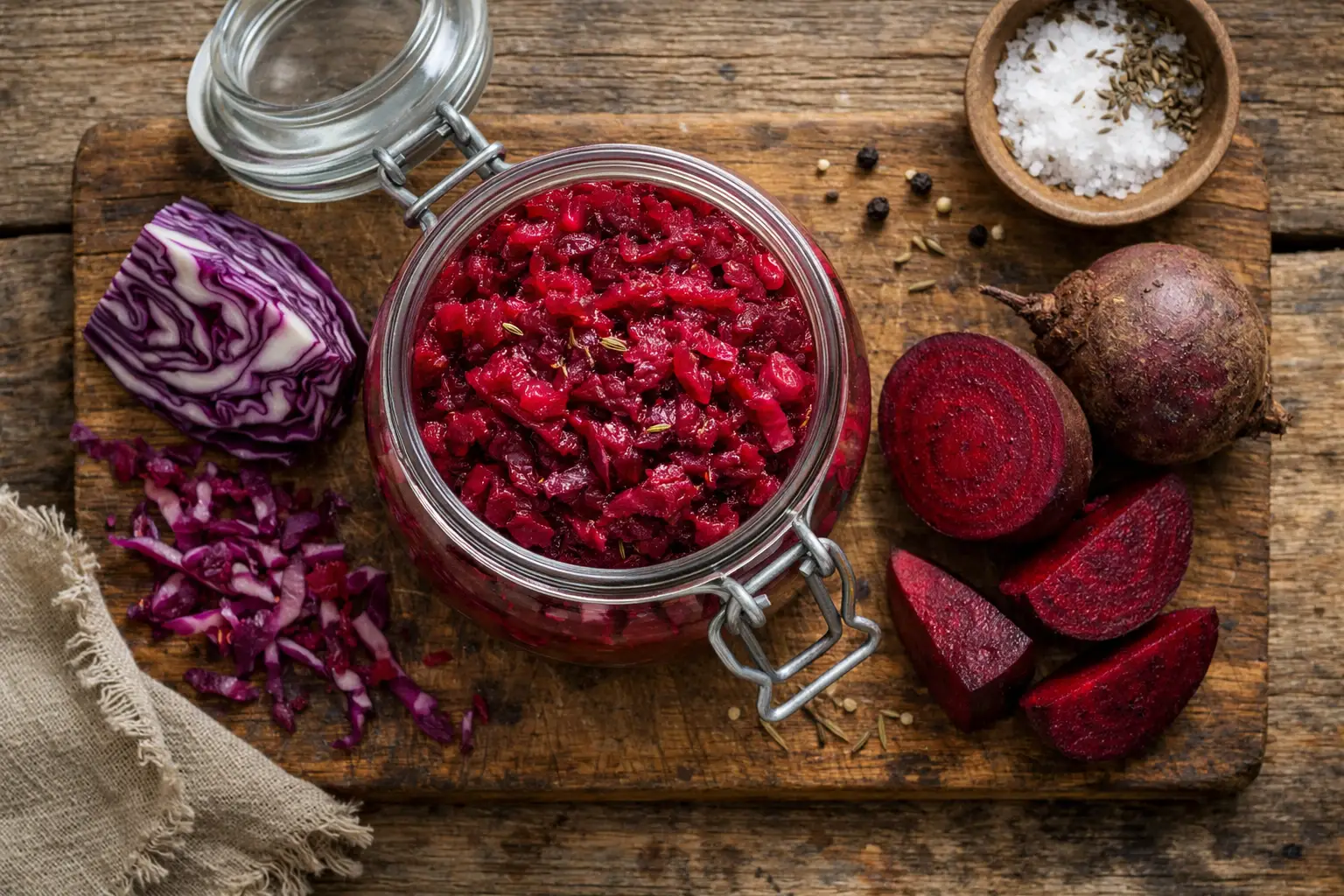
Wildbrine Red Beet Sauerkraut: Calories, Nutrition and Health Benefits
A probiotic-rich fermented blend of red cabbage and beetroot delivering gut-friendly bacteria, betalain antioxidants, and vibrant color in just 10 calories per serving.
Quick Nutrition Facts
Per 2 Tablespoons (30g)
| Nutrient | Amount |
|---|---|
| Calories | 10 kcal |
| Protein | 0g |
| Carbohydrates | 2g |
| Fiber | 1g |
| Sugars | 1g |
| Fat | 0g |
| Sodium | 250mg |
| Calcium | 10mg |
| Iron | 0.2mg |
| Vitamin C | 5mg |
Macronutrient Breakdown
 ChatGPT
  Claude
  AI Mode
  Perplexity
NUTRITIONIST INSIGHT
Wildbrine Red Beet Sauerkraut combines two fermentation powerhouses: cabbage probiotics and beetroot betalains. The live lactic acid bacteria survive stomach acid to colonize your gut, while the natural nitrates from beets support blood pressure regulation. At just 10 calories per serving, it is one of the most nutrient-dense condiments you can add to any meal.
Myth Busters
MYTH #1: Sauerkraut Is Just a Condiment with No Real Nutrition
TRUTH: Raw fermented sauerkraut is a probiotic powerhouse. Lactic acid bacteria in sauerkraut improve gut microbiome balance and modulate inflammatory and immune responses. It also provides vitamins A, B, C, and K with virtually zero calories.
MYTH #2: All Sauerkraut Contains Probiotics
TRUTH: Only raw, unpasteurized sauerkraut contains live probiotics. Heat processing kills beneficial bacteria, so shelf-stable canned sauerkraut has no probiotic benefit. Wildbrine is raw and refrigerated, preserving live cultures.
MYTH #3: Fermented Foods Are Too High in Sodium
TRUTH: While sauerkraut does contain sodium (250mg per 2 tbsp), this is only 11% of daily value. The probiotics and short-chain fatty acids from fermentation may actually help regulate blood pressure, partially offsetting sodium concerns.
MYTH #4: Beet Sauerkraut Has Too Much Sugar from Beets
TRUTH: Fermentation consumes most of the natural sugars. The final product has only 1g sugar per serving. Fermenting beets reduces sugar content while increasing beneficial enzymes and gut microbes.
MYTH #5: You Need Probiotic Supplements Instead of Fermented Foods
TRUTH: Harvard research shows fermented foods are a better source of probiotics than supplements, which are not FDA-regulated and may not contain promised strains. Whole foods also provide fiber, vitamins, and minerals that supplements lack.
NutriScore by Health Goals
| Health Goal | NutriScore | Why This Score? |
|---|---|---|
| Weight Loss |  | Only 10 calories per serving with 1g fiber. Probiotics support metabolic health and appetite regulation. |
| Muscle Gain |  | Minimal protein and calories. Best used as a side dish to add gut health benefits and micronutrients to protein-rich meals. |
| Diabetes Management | | Very low GI, only 2g carbs. Sauerkraut-derived LAB strains show potential for modulating carbohydrate digestion and antidiabetic activity. |
| PCOS Management | | Ultra-low calorie, anti-inflammatory probiotics. Beetroot betalains reduce oxidative stress linked to PCOS. |
| Pregnancy Nutrition |  | Probiotics support maternal gut health. Mayo Clinic notes mothers taking probiotics during pregnancy may reduce infant eczema risk. Watch sodium intake. |
| Viral/Flu Recovery | | Probiotics boost immune function, vitamin C supports recovery. Easy to digest when appetite is low. |
PERSONALIZED NUTRITION
Track your meals with NutriScan for personalized NutriScores based on your specific health goals!
Blood Sugar Response to Red Beet Sauerkraut
Fermented vegetables have minimal impact on blood glucose, making them ideal for blood sugar management.
Typical Glucose Response Curve
This chart shows typical blood glucose response for general healthy individuals. Individual responses may vary. Not medical advice.
How to Flatten the Spike
Fermented foods paired with meals reduce overall glycemic response by slowing carbohydrate absorption:
- 🍞 On whole grain toast - Probiotics aid digestion of complex carbs
- 🥗 Mixed into salads - Fiber and fermented acids slow glucose uptake
- 🥚 Alongside eggs or grilled protein - Adds gut-healthy bacteria to protein meals
- 🥣 Stirred into grain bowls - Offsets glycemic impact of rice or quinoa
This combination supports steady blood sugar while providing ongoing probiotic benefits throughout the day.
Cultural Significance
Sauerkraut has a fermentation history spanning over 2,000 years, originating in ancient China before spreading to Europe.
In Europe:
- German and Eastern European staple since the Middle Ages
- Captain James Cook carried sauerkraut on voyages to prevent scurvy
- Traditional Alsatian choucroute garnie pairs sauerkraut with sausages and pork
- Each region developed unique fermentation styles and flavor additions
In India and Asia:
- Fermented vegetables are central to Indian cuisine (achaar, kanji)
- Korean kimchi shares the same lactic acid fermentation process
- Japanese tsukemono and Chinese suan cai represent parallel traditions
- Growing popularity of Western-style sauerkraut in urban Indian health stores
Modern Revival:
- Gut health awareness has driven a fermented foods renaissance globally
- Artisanal brands like Wildbrine blend traditional methods with modern food safety
- Beet sauerkraut adds the superfood appeal of beetroot to classic fermentation
Compare & Substitute
Red Beet Sauerkraut vs Similar Fermented Foods (Per 100g)
| Nutrient | 🥬 Red Beet Sauerkraut | 🥬 Plain Sauerkraut | 🌶️ Kimchi | 🫒 Pickles (Dill) |
|---|---|---|---|---|
| Calories | 33 kcal | 19 kcal | 15 kcal | 11 kcal |
| Carbs | 7g | 4g | 2.4g | 2.3g |
| Fiber | 3g | 2.9g | 1.6g | 1.2g |
| Protein | 0g | 0.9g | 1.1g | 0.3g |
| Fat | 0g | 0.1g | 0.5g | 0.2g |
| Sodium | 833mg | 661mg | 498mg | 1208mg |
| Vitamin C | 17mg | 14.7mg | 0mg | 1mg |
| Best For | Gut health + antioxidants | Classic probiotic | Spicy kick + probiotics | Low-calorie crunch |
Frequently Asked Questions
How many calories are in Wildbrine Red Beet Sauerkraut?
10 calories per 2 tablespoon (30g) serving. Per 100g, that is approximately 33 calories. This makes it one of the lowest-calorie probiotic foods available, ideal for adding flavor and nutrition without significant calorie impact.
Is Wildbrine Red Beet Sauerkraut good for gut health?
Yes. Wildbrine sauerkraut is raw and unpasteurized, containing live lactic acid bacteria that support gut microbiome diversity. Regular consumption of fermented foods has been linked to improved digestive health, reduced inflammation, and stronger immune response.
Best practices: Start with 1 tablespoon daily and increase to 2-4 tablespoons as your gut adjusts.
Can diabetics eat red beet sauerkraut?
Red beet sauerkraut is excellent for diabetics. It has only 2g of carbs per serving with a very low glycemic index. Research shows sauerkraut-derived probiotic strains may help modulate carbohydrate digestion.
Tips for diabetics:
- Eat 2-4 tablespoons daily as a side dish
- Pair with protein-rich meals for best blood sugar control
- Choose raw, unpasteurized varieties for live probiotic benefits
- Monitor sodium intake if you have hypertension
Is sauerkraut safe during pregnancy?
Sauerkraut is generally considered safe during pregnancy and may provide beneficial probiotics. Mayo Clinic notes that mothers who take probiotics during pregnancy may lower their babies' eczema risk.
Considerations: Watch sodium intake (250mg per serving). Choose refrigerated, raw varieties. Always consult your healthcare provider about dietary changes during pregnancy.
What makes red beet sauerkraut different from regular sauerkraut?
Red beet sauerkraut adds beetroot to the traditional cabbage ferment, providing extra betalain antioxidants that reduce oxidative stress and support cardiovascular health. Beets also contain natural nitrates that convert to nitric oxide, supporting blood pressure regulation. The calorie and probiotic content is similar to regular sauerkraut.
How much sauerkraut should I eat daily?
General Guidelines:
- 2-4 tablespoons daily - Optimal for probiotic benefits (20-40 calories)
- 1 tablespoon daily - If new to fermented foods, start here
- Up to 1/2 cup daily - Athletes or those seeking maximum gut support
Watch for: Sodium intake adds up (250mg per 2 tbsp). If eating large portions, balance with low-sodium foods throughout the day.
Track your fermented food intake with NutriScan app to monitor sodium and probiotic variety in your diet.


Similar Nutritious Foods
4505 Chicharrones Classic Chili Salt
7 Eleven Japan Crispy Corn Cheese
Explore More Nutrition Tools & Resources
AI Calorie Counter App - Snap a Photo, Get Macros
AI Nutritionist App That Reads Your Logged Meals
Best Protein Supplements for Women
Bulking Meal Plan App That Sets Your Surplus
ChatGPT Calorie Counter Alternative That Keeps the Total
ChatGPT Diet Plan Alternative That Tracks What You Eat
ChatGPT Weight Loss Coach Alternative With a Food Log
Fast Food Calorie Counter App That Reads the Tray
Free Calorie Tracker App with AI Photo Scans | NutriScan
Indian Diet Plan App With Veg and Non Veg Meals
Indian Food Calorie Calculator - Get Instant Nutrition Facts for Desi Meals — 2026
Intermittent Fasting for Women, Timer and Meal Log App
Intermittent Fasting Tracker App - Free Fasting Timer
Macro Tracker App That Fills the Numbers From a Photo
Mediterranean Diet Meal Plan App That Counts the Oil
Micronutrient Tracker App for Vitamins and Minerals
MyFitnessPal Alternative That Stays Free | NutriScan
NutriScore App: A Free Grade on Every Meal | NutriScan
Nutrition Label Scanner App for the Amount You Ate
Second Trimester Protein Guide
Vegetarian Meal Plan App With a Protein Target
Voice Calorie Counter - Speak to Track Meals Hands-Free
Water and Calorie Tracker App - Free Water Log