Winter Vegetable Salad: Calories, Nutrition and Health Benefits
Seasonal nourishment at its peak with vibrant winter greens, roasted roots, and citrus delivering maximum nutrients when fresh produce thrives.
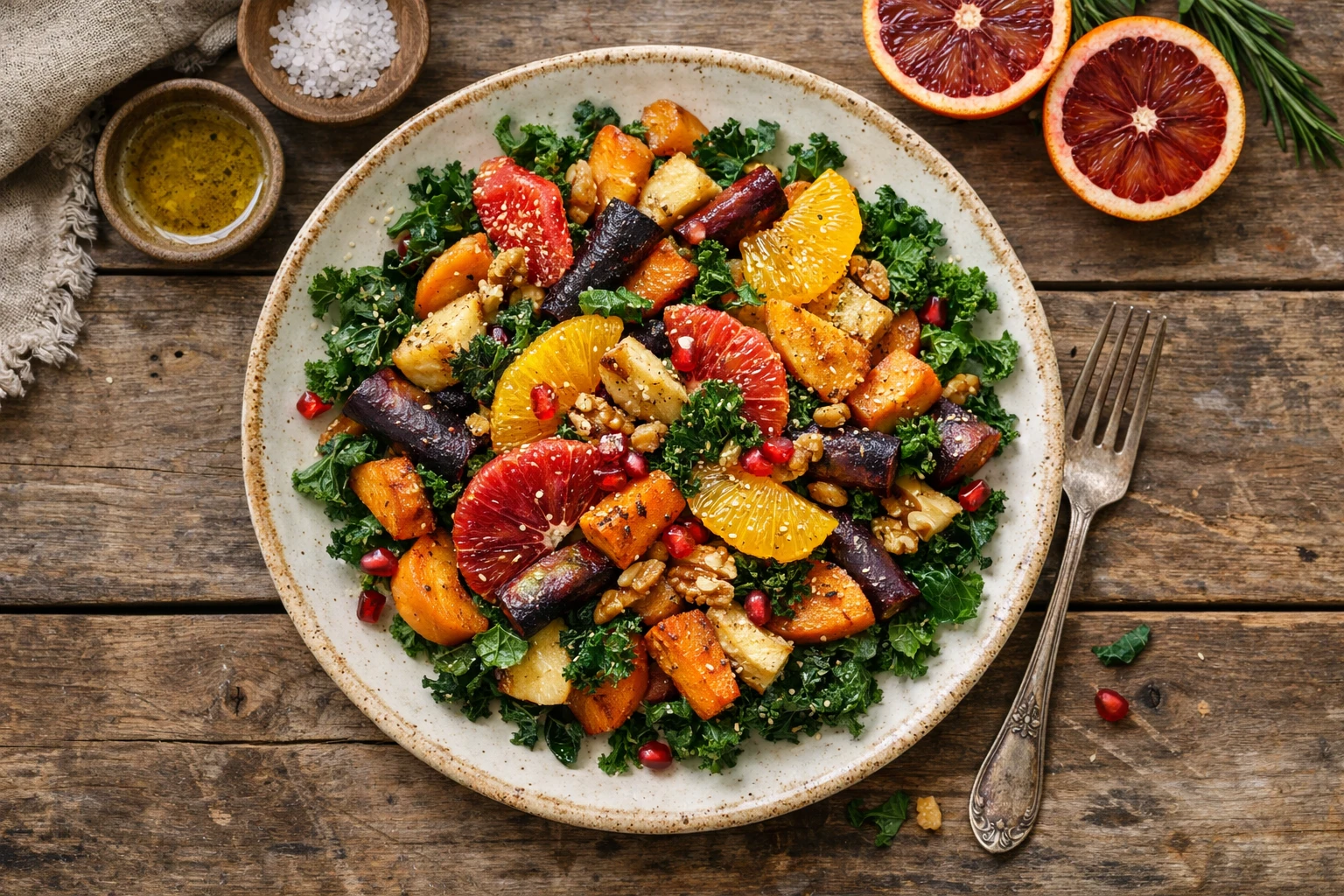
Quick Nutrition Facts
Per 1 Serving (250g)
| Nutrient | Amount |
|---|---|
| Calories | 150-200 kcal |
| Protein | 7g |
| Carbohydrates | 25g |
| Fiber | 8g |
| Sugars | 10g |
| Fat | 8g |
| Vitamin C | 128mg |
| Folate | 85mcg |
| Vitamin A | 450mcg |
| Potassium | 620mg |
Macronutrient Breakdown
 ChatGPT
  Claude
  AI Mode
  Perplexity
NUTRITIONIST INSIGHT
Winter vegetable salads provide 128mg vitamin C per serving (exceeding daily needs) while delivering 8g fiber for digestive health. Seasonal produce in December offers peak freshness and nutrient density.
Myth Busters
MYTH #1: Winter Vegetables Are Less Nutritious Than Summer Produce
TRUTH: Winter vegetables reach peak nutrient density December-March when in season. Fresh produce sales increased 3.5% YoY in December, reflecting consumer recognition of seasonal nutrition benefits. Winter greens like kale contain 41-123mg vitamin C per 100g, rivaling citrus fruits.
MYTH #2: Roasting Destroys All Vitamins in Vegetables
TRUTH: Roasting preserves nutrients better than boiling or steaming. While vitamin C decreases slightly, roasting increases bioavailability of carotenoids like beta-carotene. Microwaving retains 90%+ vitamin C; roasting is second-best for overall nutrient retention.
MYTH #3: Salads Don't Provide Enough Protein
TRUTH: Winter vegetable salads with roasted chickpeas, nuts, or quinoa provide 7-11g protein per serving. Add grilled chicken or tofu for 20-30g additional protein. The fiber (8g) enhances satiety comparable to higher-protein meals.
MYTH #4: Raw Vegetables Are Always Healthier
TRUTH: Cooking increases bioavailability of certain nutrients including beta-carotene and lycopene. Combining raw greens with roasted roots optimizes both vitamin C from raw vegetables and enhanced carotenoid absorption from cooked vegetables.
MYTH #5: Winter Salads Are Too Cold for Winter
TRUTH: Warm roasted vegetable salads provide comfort food satisfaction with nutrient density. Roasted roots at 200°C (400°F) retain heat when tossed with raw greens, creating temperature contrast that enhances palatability during cold months.
MYTH #6: Salad Dressings Ruin the Health Benefits
TRUTH: Healthy fats in olive oil-based dressings actually enhance absorption of fat-soluble vitamins A, D, E, K. A tablespoon of extra virgin olive oil adds 120 calories but increases carotenoid absorption by 200-300%. Balance is key.
NutriScore by Health Goals
| Health Goal | NutriScore | Why This Score? |
|---|---|---|
| Weight Loss |  | Low calorie density (60-80 kcal/100g), high fiber (8g) promotes fullness, high volume satisfies appetite with minimal calories. |
| Muscle Gain |  | Moderate protein (7g) unless supplemented with animal protein; excellent micronutrients support recovery but needs protein boost. |
| Diabetes Management | | Non-starchy greens have GI 0-15, roasted roots GI 30-61; high fiber slows glucose absorption significantly. |
| PCOS Management | | Low glycemic load, high fiber regulates insulin; antioxidants reduce inflammation; nutrient-dense with minimal processed ingredients. |
| Pregnancy Nutrition | | Kale provides 39-48mcg folate per 100g, vitamin C supports iron absorption, fiber prevents constipation common in pregnancy. |
| Viral/Flu Recovery | | Vitamin C (128mg per serving) supports immune function, easy to digest, hydrating from vegetable water content, antioxidants fight oxidative stress. |
PERSONALIZED NUTRITION
Track your meals with NutriScan for personalized NutriScores based on your specific health goals!
Blood Sugar Response to Winter Vegetable Salad
Winter vegetable salads demonstrate minimal blood glucose impact due to low glycemic index and high fiber content.
Typical Glucose Response Curve
This chart shows typical blood glucose response for healthy individuals. Individual responses vary. Not medical advice.
How to Optimize Blood Sugar Control
High fiber content naturally moderates glucose absorption; enhance further with:
- 🥑 Add avocado or nuts - Healthy fats slow carbohydrate digestion and improve satiety
- 🍋 Lemon vinaigrette - Acetic acid in vinegar improves insulin sensitivity by 19-34%
- 🫘 Include legumes (chickpeas, lentils) - Additional fiber and protein create sustained energy release
- 🧀 Top with feta or goat cheese - Protein and fat combination blunts glucose spike from roasted roots
Cultural Significance
Winter vegetable salads represent seasonal eating traditions practiced across cultures for millennia, celebrating harvest abundance during cold months.
In Global Traditions:
- European root cellaring preserved vegetables through winter; salads featured stored roots and hardy greens
- Mediterranean radicchio and fennel became winter staples in Italian cuisine
- Asian traditions fermented winter vegetables for preservation and probiotic benefits
- Modern farm-to-table movement revived seasonal eating appreciation
Seasonal Nutrition Wisdom:
- December-March produce reaches peak freshness when naturally available
- Cold-hardy vegetables develop sweeter flavor through frost exposure
- Reduced transport time means higher nutrient retention in local winter produce
- Sustainable eating pattern aligned with agricultural cycles
Compare & Substitute
Winter Vegetable Salad vs Similar Options (Per 100g)
| Nutrient | 🥗 Winter Veg Salad | 🥗 Caesar Salad | 🥗 Greek Salad | 🥬 Kale Salad |
|---|---|---|---|---|
| Calories | 60-80 kcal | 190 kcal | 110 kcal | 95 kcal |
| Carbs | 10g | 6g | 8g | 11g |
| Fiber | 3g | 2g | 2g | 3g |
| Protein | 3g | 8g | 5g | 4g |
| Fat | 3g | 16g | 8g | 6g |
| Vitamin C | 50mg | 8mg | 15mg | 41-123mg |
| Folate | 35mcg | 20mcg | 25mcg | 39-48mcg |
| Sugar | 4g | 2g | 5g | 3g |
| Best For | Weight loss, diabetes | Protein boost | Mediterranean diet | Vitamin C, folate |
Frequently Asked Questions
Are winter vegetable salads good for weight loss?
Yes, winter vegetable salads are excellent for weight loss at 60-80 calories per 100g with 8g fiber per serving. High volume provides satiety with minimal calories; the combination of roasted roots and raw greens creates satisfying texture while supporting calorie deficit.
Best practices: Use 1-2 tablespoons olive oil dressing (120-240 calories) rather than creamy dressings; add lean protein (grilled chicken, tofu) for sustained fullness; make it your main meal at lunch; portion control on roasted roots if strictly limiting carbs.
Can diabetics eat winter vegetable salads?
Winter vegetable salads are ideal for diabetics with non-starchy greens having GI 0-15 and roasted root vegetables at moderate GI 30-61. Fiber content (8g per serving) slows glucose absorption and improves blood sugar control significantly.
Tips for diabetics:
- Emphasize leafy greens over roasted roots (2:1 ratio); add vinegar-based dressing to improve insulin sensitivity; include protein source to further moderate blood sugar; monitor portions of higher-GI vegetables (beets, sweet potato); eat as part of balanced meal rather than alone.
How much vitamin C is in winter vegetable salads?
A typical serving provides 128mg vitamin C (exceeding 140% daily needs). Kale contributes 41-123mg per 100g, citrus segments add 50mg, arugula provides 15mg, and other winter greens contribute additional vitamin C for immune support.
Winter vegetables are at peak vitamin C content December-March when freshly harvested. Cooking reduces vitamin C by 10-30% in roasted vegetables but combination with raw greens maintains high total content.
What are the main health benefits of winter vegetables?
Key Benefits:
- Immune Support: Vitamin C (128mg per serving) enhances immune cell function and collagen synthesis
- Digestive Health: Fiber (8g) promotes regular bowel movements and feeds beneficial gut bacteria
- Antioxidant Protection: Beta-carotene from roots, polyphenols from greens combat oxidative stress
- Blood Sugar Control: Low glycemic impact with high fiber prevents glucose spikes
- Weight Management: High volume, low calories (60-80 per 100g) support satiety
- Prenatal Nutrition: Folate (85mcg per serving) supports fetal neural tube development
When is the best time to eat winter vegetable salad?
Depends on your goal:
- Weight Loss: Lunch as main meal (high volume creates fullness for afternoon); dinner paired with lean protein.
- Diabetes: Any meal to add fiber and nutrients; particularly effective at lunch when insulin sensitivity peaks.
- Immune Support: Daily during cold/flu season (December-March) for vitamin C intake.
- Seasonal Eating: December-March when winter vegetables reach peak freshness and nutrient density.
IMPORTANT NOTE
Winter vegetables are at optimal quality when locally sourced and in season. Off-season imports may have reduced nutrient content.
Are roasted vegetables as nutritious as raw?
Roasting preserves most nutrients better than boiling. While vitamin C decreases 10-30% during roasting, the process increases bioavailability of carotenoids like beta-carotene by 200-300%.
Nutrient Retention by Cooking Method:
- Microwaving: 90%+ vitamin C retention (best overall)
- Roasting: 70-90% vitamin C; increased carotenoid bioavailability
- Steaming: 57-89% vitamin C retention
- Boiling: 0-74% vitamin C (worst due to leaching)
Optimization strategy: Combine raw greens (maximum vitamin C) with roasted roots (enhanced beta-carotene) for complementary nutrient profiles.
How can I add more protein to winter vegetable salad?
Winter vegetable salads provide 7g protein per serving; boost to 20-30g total with:
Plant-based options: Roasted chickpeas (+7g per 1/2 cup), quinoa (+8g per cup), hemp seeds (+10g per 3 tablespoons), edamame (+17g per cup), tempeh crumbles (+15g per 3 oz).
Animal-based options: Grilled chicken breast (+31g per 100g), hard-boiled eggs (+13g per 2 eggs), salmon (+25g per 100g), feta cheese (+14g per 100g).
Combining plant and animal proteins creates complete amino acid profile while maintaining salad's nutrient density.


Similar Nutritious Foods
4505 Chicharrones Classic Chili Salt
7 Eleven Japan Crispy Corn Cheese
Explore More Nutrition Tools & Resources
AI Calorie Counter App - Snap a Photo, Get Macros
AI Nutritionist App That Reads Your Logged Meals
Best Protein Supplements for Women
Bulking Meal Plan App That Sets Your Surplus
ChatGPT Calorie Counter Alternative That Keeps the Total
ChatGPT Diet Plan Alternative That Tracks What You Eat
ChatGPT Weight Loss Coach Alternative With a Food Log
Fast Food Calorie Counter App That Reads the Tray
Free Calorie Tracker App with AI Photo Scans | NutriScan
Indian Diet Plan App With Veg and Non Veg Meals
Indian Food Calorie Calculator - Get Instant Nutrition Facts for Desi Meals — 2026
Intermittent Fasting for Women, Timer and Meal Log App
Intermittent Fasting Tracker App - Free Fasting Timer
Macro Tracker App That Fills the Numbers From a Photo
Mediterranean Diet Meal Plan App That Counts the Oil
Micronutrient Tracker App for Vitamins and Minerals
MyFitnessPal Alternative That Stays Free | NutriScan
NutriScore App: A Free Grade on Every Meal | NutriScan
Nutrition Label Scanner App for the Amount You Ate
Second Trimester Protein Guide
Vegetarian Meal Plan App With a Protein Target
Voice Calorie Counter - Speak to Track Meals Hands-Free
Water and Calorie Tracker App - Free Water Log