Calories Burned Walking 10,000 Steps, by Body Weight
 ChatGPT
  Claude
  AI Mode
  Perplexity
TL;DR - calories burned walking 10,000 steps
• Key number: a 70 kg adult burns about 465 calories per 10,000 steps at a moderate pace. • By weight: about 332 at 50 kg, 598 at 90 kg, 665 at 100 kg. • Your own figure: weigh yourself ➡️ pick the MET value ➡️ count the minutes ➡️ run the formula. • Accuracy: wrist devices missed measured walking burn by about 20% in a 2022 lab comparison.
The number to start from is 465, the calories a 70 kg adult burns walking 10,000 steps at a moderate pace, from the 3.8 MET value the 2024 Adult Compendium of Physical Activities assigns to level walking at 3.0 to 3.4 mph (Herrmann et al., 2024). That figure belongs to one body weight, one pace and one surface, and changing any of the three moves it by a hundred calories or more. NutriScan publishes this post and makes a calorie tracking app.
So here is the whole grid: 10,000 steps by body weight, walking by the minute and the kilometer, treadmill totals with and without incline, cycling against walking, and resting burn.
Short answer: roughly 0.047 calories per step per 10 kg of body weight at a normal pace. A 70 kg walker burns about 465 calories per 10,000 steps, a 90 kg walker about 598, a 50 kg walker about 332.
IMPORTANT
Your walking calorie map at a glance.
A quick roadmap so you can find your own number fast.
⏱️ Progress 0/4 • ~0 minutes in • Keep going
⏳ Step 1: The MET formula and the by-weight table
⏳ Step 2: Minutes, kilometers, treadmills and incline
⏳ Step 3: Machines, cycling, resting burn and your own estimate
🔍 Why your watch and your treadmill never agree (revealed near the end)
How the Arithmetic Actually Works 📐
Every estimate here runs on one formula. A MET, or metabolic equivalent of task, is a multiple of your resting energy use. One MET is 3.5 milliliters of oxygen per kilogram per minute, which converts to a handy rule: one MET burns roughly one calorie per kilogram per hour.
That gives the working equation:
Calories = MET × 3.5 × body weight in kg ÷ 200 × minutes
The MET values are not invented. The 2024 Adult Compendium screened 32,173 abstracts and 1,507 full-text papers for 2,356 energy expenditure values, and lists 1,114 activities, 912 of them measured by indirect calorimetry (Herrmann et al., 2024). Level walking at 2.5 mph sits at 3.0 METs, 2.8 to 3.4 mph at 3.8, 3.5 to 3.9 mph at 4.8, and 4.0 to 4.4 mph at 5.5 (2024 Adult Compendium, walking).
One limit before the tables. The 1 MET convention was calibrated on a 70 kg, 40-year-old man, so it overstates resting burn for smaller adults and for most women. For a personal baseline, run your numbers through the TDEE calculator.

A steady 3 mph walk, the pace behind almost every number in this post.
Two Worked Examples, Same 10,000 Steps 👟
Take a 58 kg woman who walks her 10,000 steps across two commutes and a lunch loop at an unhurried 2.5 mph. Her MET value is 3.0 and the steps take about 120 minutes: 3.0 × 3.5 × 58 ÷ 200 × 120, about 366 calories.
Take a 92 kg man who walks the same 10,000 steps as one 85-minute session at 3.6 mph. His MET value is 4.8, so his burn is about 657 calories, nearly double her total for the same step count.
IMPORTANT
Checkpoint: here's where you are right now.
Quick status update so you always know the next best move.
⏱️ Progress 1/4 • ~1 minute in • Keep going
✅ Step 1: The MET formula (done)
👉 Step 2: Minutes, kilometers, treadmills and incline (you're here)
⏳ Step 3: Machines, cycling, resting burn and your own estimate
🧩 Why your watch and your treadmill never agree (coming soon)
Calories Burned Walking 10,000 Steps, by Body Weight 📊
Moderate pace here is 3.0 to 3.4 mph at 3.8 METs over about 100 minutes, slow is 2.0 to 2.4 mph at 2.8 METs over about 125 minutes, and brisk is 3.5 to 3.9 mph at 4.8 METs over about 85 minutes.
| Body weight | Slow | Moderate | Brisk |
|---|---|---|---|
| 50 kg (110 lb) | 306 | 332 | 357 |
| 60 kg (132 lb) | 367 | 399 | 428 |
| 70 kg (154 lb) | 429 | 465 | 500 |
| 80 kg (176 lb) | 490 | 532 | 571 |
| 90 kg (198 lb) | 551 | 598 | 643 |
| 91 kg (200 lb) | 557 | 603 | 650 |
| 100 kg (220 lb) | 612 | 665 | 714 |
| 110 kg (243 lb) | 674 | 731 | 785 |
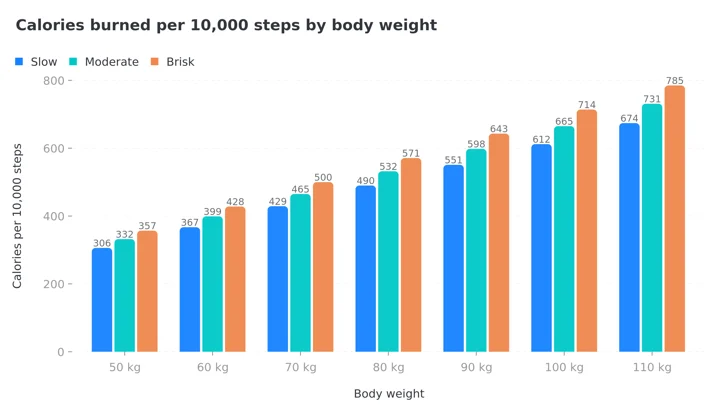
Figure 1: the three pace bars barely separate, while the columns more than double from 50 kg to 110 kg. Body weight, not speed, decides a fixed step count.
Read the columns before the rows. Across the whole pace range the totals move by about 15%, while doubling body weight doubles the answer, because walking slowly takes longer and you spend the extra minutes burning. These are gross figures, so they include the 74 or so calories per hour your body would have spent lying still anyway.
The same shoes, the same route, a different answer for every person wearing them.

Calories Burned Walking by Time and by Distance ⏱️
If you count minutes rather than steps, work from this table. All figures use 3.8 METs, a normal 3.0 to 3.4 mph pace on level ground.
| Duration | 60 kg | 70 kg | 90 kg |
|---|---|---|---|
| 20 minutes | 80 | 93 | 120 |
| 30 minutes | 120 | 140 | 180 |
| 45 minutes | 180 | 209 | 269 |
| 1 hour | 239 | 279 | 359 |
| 2 hours | 479 | 559 | 718 |
| 4 hours | 958 | 1,117 | 1,436 |
The same hour at different speeds tells the other half of the story. At 70 kg, an hour at 2.5 mph is about 220 calories, at 3.0 to 3.4 mph about 279, and at 4.0 to 4.4 mph about 404.
By distance the arithmetic collapses into one rule worth memorizing: walking costs roughly 0.8 calories per kilogram of body weight per kilometer. At 70 kg that is about 56 calories per km and 279 for a 5 km walk. At 90 kg it is 72 per km, at 60 kg 48.
IMPORTANT
Checkpoint: midway progress update.
You're halfway, and the decisions get easier from here.
⏱️ Progress 2/4 • ~2 minutes in • Keep going
✅ Step 1: The MET formula (done)
✅ Step 2: Minutes, kilometers and distance (done)
👉 Step 3: Machines, cycling and resting burn (current)
⏳ Why your watch and your treadmill never agree (next)
Treadmill Calories: Minutes, Incline, and Whether the Console Lies 🏃
Treadmill walking at 3.0 to 3.4 mph on a flat belt carries the same 3.8 MET value as the same speed outdoors (2024 Adult Compendium, walking). Outdoors usually wins on the day through wind, camber and small gradients you never notice.
| Treadmill session, flat, 3.0 to 3.4 mph | 70 kg | 90 kg |
|---|---|---|
| 10 minutes | 47 | 60 |
| 15 minutes | 70 | 90 |
| 30 minutes | 140 | 180 |
| 60 minutes | 279 | 359 |
| 60 minutes at 1 to 5% incline | 390 | 501 |
| 60 minutes at 6 to 10% incline | 514 | 662 |
| 60 minutes at 11 to 20% incline | 647 | 832 |
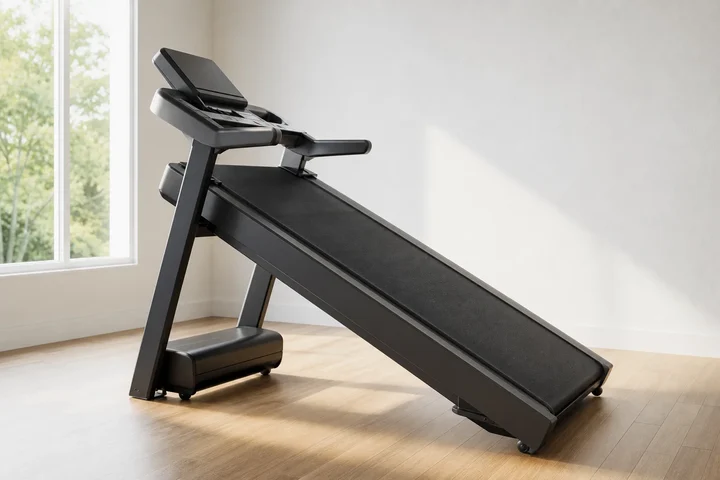
Raising the deck costs nothing and no extra minutes, which is why it beats every other treadmill setting.
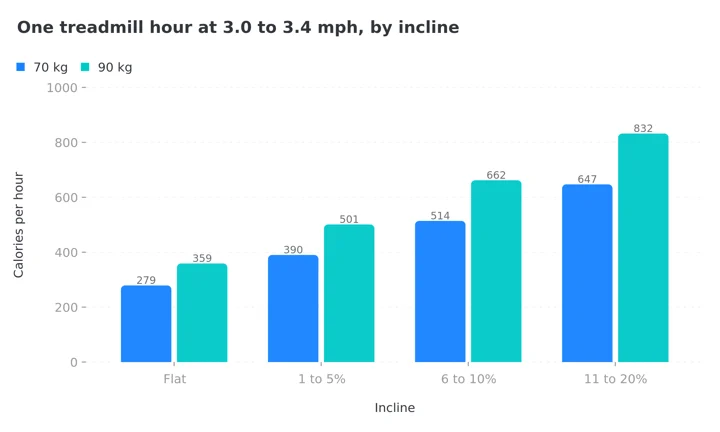
Figure 2: at 70 kg a flat hour is 279 calories and an 11 to 20% grade is 647, so the slope more than doubles the same hour.
A common 8% setting sits inside the 6 to 10% band, which is why a modest slope nearly doubles a flat hour. Those values come from the Compendium's hill-climbing entries, and incline is the largest single lever on any treadmill.
On accuracy, the console is right about the physics and wrong about you. It calculates from speed, incline and the weight you type in, so if you skipped the weight prompt every user gets the same figure. It also reports gross calories, so subtract about 74 per hour at 70 kg for the true cost of the session.
TIP
Two consoles, two answers, same walk? Check the weight setting on both before you blame the machine. It is the only input most treadmills let you get wrong.
Treadmill vs Elliptical, StairMaster, and the Stationary Bike 🏋️
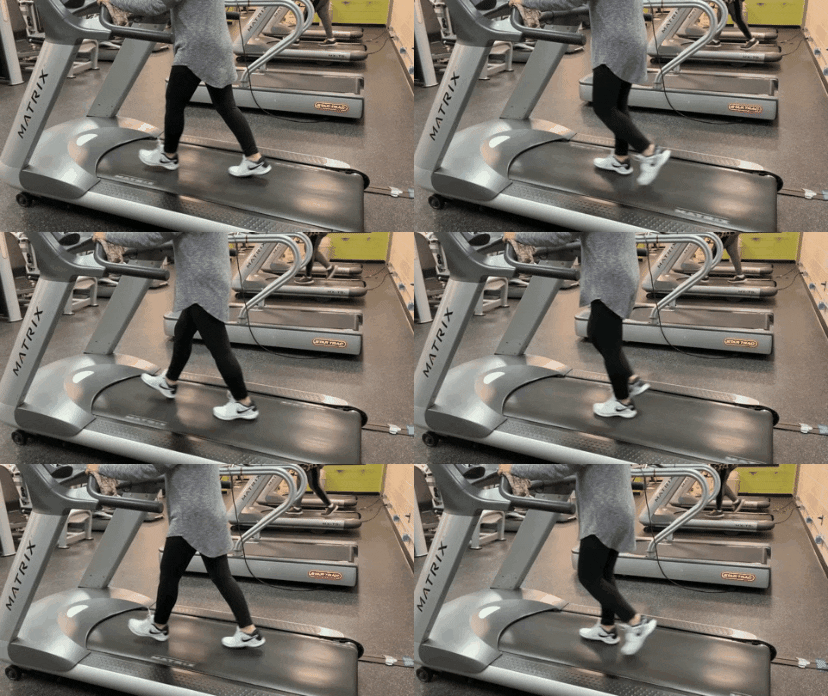
Side-on footage of a real treadmill walk at an easy pace, the 3.8 MET row in the table above.
Machine choice changes the number more than anything but incline. One-hour totals at the Compendium's values (2024 Adult Compendium, conditioning exercise):
| Machine, one hour | METs | 70 kg | 90 kg |
|---|---|---|---|
| Treadmill walk, 3.0 to 3.4 mph | 3.8 | 279 | 359 |
| Treadmill walk, 3.5 to 3.9 mph | 4.8 | 353 | 454 |
| Elliptical, moderate effort | 5.0 | 368 | 472 |
| Stationary bike, 90 to 100 watts | 6.0 | 441 | 567 |
| Stationary bike, general | 6.8 | 500 | 643 |
| Elliptical, vigorous effort | 9.0 | 662 | 850 |
| Stair treadmill ergometer | 9.3 | 684 | 879 |
A StairMaster beats a flat treadmill walk by roughly 2.5 times per hour, and vigorous elliptical work sits just behind it. Moderate elliptical work is barely different from brisk treadmill walking, so effort level matters more than the machine.
Cycling vs Walking: Same Distance, Same Hour, Different Winners 🚴
Both answers are true, depending on what you hold constant.
Hold distance constant and walking wins by roughly double. At 70 kg, a kilometer of moderate walking costs about 56 calories. A kilometer of cycling at 12 to 14 mph, an 8.0 MET effort, takes under three minutes and costs about 28. Easy leisure cycling under 10 mph, at 4.0 METs, costs about 20 per kilometer (2024 Adult Compendium, bicycling).
Hold time constant and cycling wins comfortably: about 588 calories in an hour at 12 to 14 mph against 279 walking normally. The bike sustains a higher intensity without the impact loading, so the hour contains more work.
So: fixed hour to train, ride. Fixed route, walk. Our guide on tracking calories versus overall nutrition covers why the intake side moves faster than the burn side.
Sleeping, Sitting, and Doing Nothing at All 😴
Your body spends most of its daily energy on nothing in particular. The Compendium lists sleeping, sitting quietly, lying awake and meditating all at 1.0 MET, standing quietly at 1.3, sitting while fidgeting at 1.5 (2024 Adult Compendium, inactivity). At one calorie per kilogram per hour, that gives:
| Body weight | 1 hour | 6 hours | 8 hours | Full 24 hours |
|---|---|---|---|---|
| 50 kg | 52 | 315 | 420 | 1,260 |
| 60 kg | 63 | 378 | 504 | 1,512 |
| 70 kg | 74 | 441 | 588 | 1,764 |
| 80 kg | 84 | 504 | 672 | 2,016 |
| 90 kg | 94 | 567 | 756 | 2,268 |
| 100 kg | 105 | 630 | 840 | 2,520 |
Read the last column carefully, because it is where the MET shortcut fails. A 70 kg, 35-year-old woman has a predicted basal rate near 1,395 calories a day and a 70 kg man near 1,624, both below the 1,764 the 1 MET rule gives.
Sleep and quiet sitting come out identical at 1.0 MET, which surprises people who expect sleep to be cheaper. If sleep quality is why you are here, our post on eating for better sleep is the more useful read.
Weighted Vests, Ankle Weights, and Long Hikes 🎒
Load carriage is the most underrated variable in walking. The Compendium lists treadmill walking at 2.5 mph with a 40 lb load at 4.8 METs against 3.5 unloaded, about 37% more. A US Army study measured 20 adults walking with vest loads from 0 to 66% of body mass across eleven speeds and built a validated model of the cost (Looney et al., 2024).
As a starting point, a vest at 10% of body weight adds roughly 10 to 15% to a level walk, and more on hills. Ankle weights are a poorer trade: the loads people use are 1 to 2 lb, the gain is a few percent, and the added torque at the knee is where people get hurt. At the long end, backpacking runs 7.0 METs and hiking with a daypack 7.8, roughly 4,900 calories over an eight-hour day at 75 kg.
WARNING
Added load raises joint and spine stress along with the calorie cost. Start under 10% of body weight, keep it on your torso rather than your ankles, and skip vests if you have knee, hip or back pain or are new to walking. Ask a clinician first if you are pregnant or managing a joint condition.
Six Ways to Get a Number You Can Trust 💡
- Enter your real body weight everywhere. Watch, treadmill, app. Weight is the largest input, and a stale figure biases every session.
- Decide whether you want gross or net. Gross includes the calories you would have burned sitting still; net subtracts them. A one-hour walk at 70 kg is 279 gross and about 205 net.
- Use distance for walking, time for cycling. Walking cost tracks distance almost linearly at 0.8 calories per kg per km. Cycling cost tracks intensity and time instead.
- Do not add your exercise burn back into your food target twice. If your target already assumes an active lifestyle, logging the walk on top double-counts it. The weight loss calculator sets one target that includes activity.
- Treat wearable numbers as a trend. Compare this week to last week on the same device, never your watch to a friend's.
- Change incline before you change duration. Adding 6% of grade to a treadmill hour beats adding 30 minutes of flat walking, and costs no extra time.
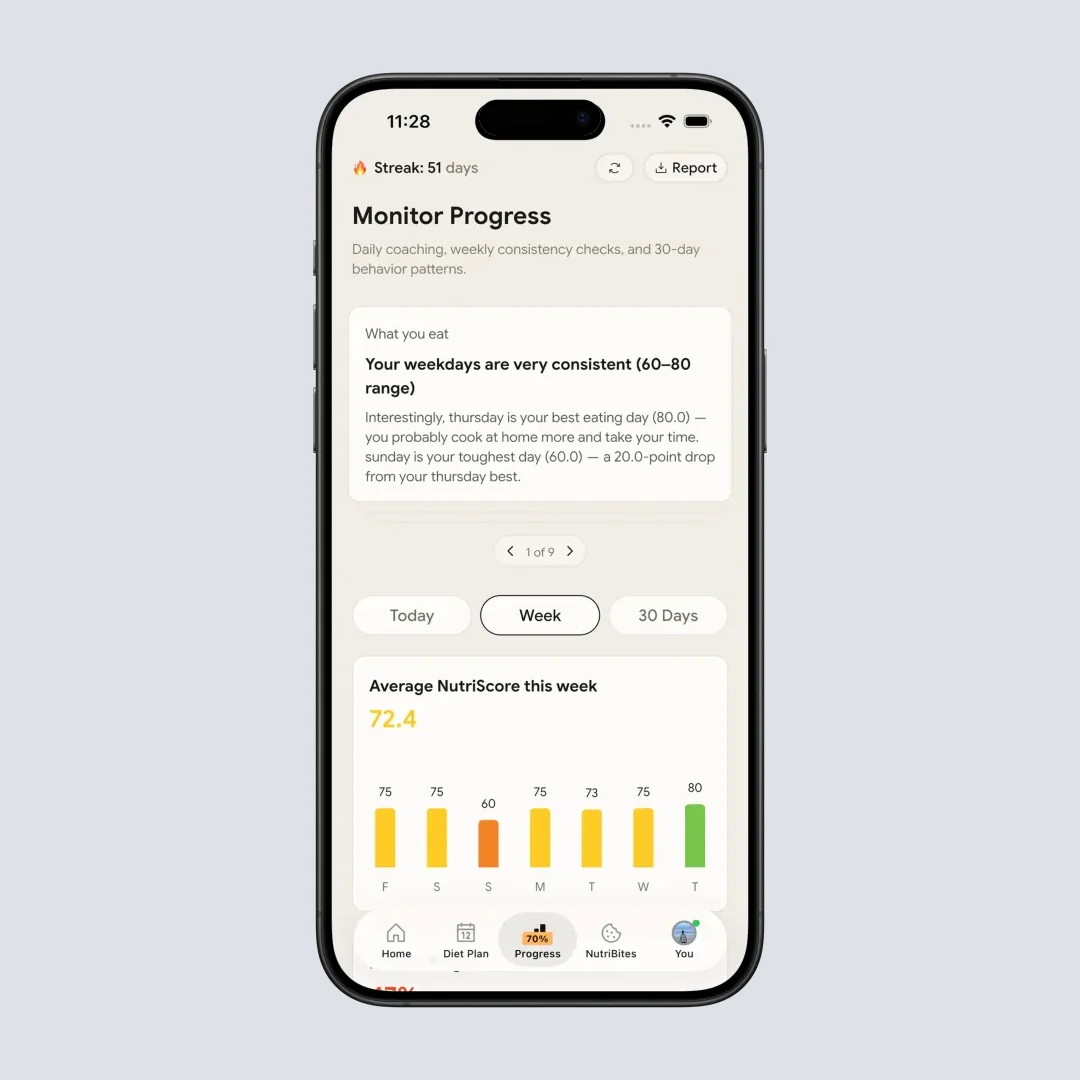
A week of totals side by side is the comparison that holds still, unlike one day against another.

Estimate Your Own Burn in Five Steps 🧮
- Get your body weight in kilograms. Divide pounds by 2.205. A 165 lb person is 74.8 kg.
- Pick the MET value that matches what you did. Level walking at a normal pace is 3.8, brisk 4.8, a 6 to 10% incline 7.0, sleeping and sitting 1.0. The full list is on the 2024 Adult Compendium walking page.
- Measure the minutes, not the steps. With only a step count, divide by 100 steps per minute for a normal pace or 80 for a slow one, so 10,000 steps is about 100 minutes.
- Run the formula. Calories = MET × 3.5 × kg ÷ 200 × minutes. For 74.8 kg walking 45 minutes at 3.8 METs that is 224 calories.
- Subtract your resting burn for the net figure. Roughly 1 calorie per kg per hour, so 56 calories here, leaving 168. Or use the calories burned calculator, which runs the same arithmetic.
IMPORTANT
Checkpoint: final stretch before the reveal.
One last nudge, the reveal is next.
⏱️ Progress 3/4 • ~3 minutes in • Keep going
✅ Step 1: The MET formula
✅ Step 2: Minutes, kilometers, treadmills and incline
✅ Step 3: Machines, cycling, resting burn and your own estimate
✨ Why your watch and your treadmill never agree (about to reveal)
Why Your Watch and Your Treadmill Never Agree 🎯
Here is the answer promised at the top, and it has a measured size. Twenty adults walked and ran outdoors on a 400 m track wearing three smartwatches at once, with energy expenditure measured at the same time by portable indirect calorimetry. For walking, the Apple Watch Series 6 showed a mean absolute percentage error of 19.8% and read significantly higher than the reference instrument; the Garmin FENIX 6 was worse at 32.0%, and the Huawei Watch GT 2e best at 9.9% (Le et al., 2022).
That 19.8% on a 465-calorie walk is 93 calories either way, wider than the whole gap between a slow and a brisk 10,000 steps in the table above. The two devices solve different problems. The console applies a published MET value to the speed and grade it controls, then multiplies by the weight you typed in. The watch infers intensity from wrist motion and heart rate, and it never knows your grade.
So pick one device, keep its weight setting current, and compare it only to itself. Our Apple Watch calorie tracker guide covers how to make that data more useful.
What the Research Says About the 10,000 Target 🔬
The 10,000 figure came from a 1960s Japanese pedometer name rather than from research. A meta-analysis of 15 international cohorts pooled 47,471 adults with 3,013 deaths over a median 7.1 years of follow-up. Against the least active quartile, median 3,553 steps a day, all-cause mortality risk was 40% lower in the second quartile and 53% lower in the fourth, median 10,901 steps. The curve flattened at 6,000 to 8,000 steps for adults aged 60 and over, and at 8,000 to 10,000 for adults under 60 (Paluch et al., 2022). The health return does not require 10,000, so pick a target you will hit every day.
Guideline bodies frame the same thing in minutes: 150 to 300 minutes of moderate activity a week, which a daily 45-minute walk clears (Physical Activity Guidelines for Americans). For desk-bound weeks, our post on eating around a sedentary job is the better lever.
Walk the Distance, Then Check the Plate 🚀
The honest summary: walking burns about 0.8 calories per kilogram per kilometer, your body weight decides most of the answer, incline is the cheapest upgrade available, and no wrist device knows your burn to better than about 20%. Use the tables with your own weight, and stop expecting two machines to agree.
Where the numbers pay off is the comparison with what you eat. A 465-calorie walk is undone by a muffin you did not think about, and that side of the ledger is easier to measure. If logging meals is the part you keep skipping, NutriScan lets you photograph a plate instead of typing it, free for 5 scans a week, unlimited on Premium at about $59 a year.
IMPORTANT
Recap: everything you covered this round.
You finished the run, so save this page for the next time a console and a watch disagree.
⏱️ Progress 4/4 • ~4 minutes in • Nicely done
✅ Step 1: The MET formula, 465 calories at 70 kg
✅ Step 2: Minutes, kilometers, treadmills and incline
✅ Step 3: Machines, cycling, resting burn and your own estimate
✅ Why your watch and your treadmill never agree (revealed)
Frequently Asked Questions ❓
How many calories does 10,000 steps burn for a 70 kg person?
About 465 calories at a moderate 3.0 mph pace, from the 3.8 MET value the 2024 Adult Compendium gives level walking at that speed over roughly 100 minutes (2024 Adult Compendium, walking). Slowly it drops to about 430, briskly it rises to about 500.
How many calories does 10,000 steps burn at 100 kg or 200 lb?
About 665 calories at 100 kg and about 605 at 200 lb, which is 90.7 kg, both at a moderate pace. Cost scales almost directly with body weight, and women and men of the same weight get the same figure.
How many calories do you burn sleeping for 8 hours?
Sleep is listed at 1.0 MET, roughly 588 calories over 8 hours at 70 kg, 504 at 60 kg and 756 at 90 kg. That is about 74 calories an hour at 70 kg, so 6 hours is 441 and 12 hours 882.
What are the calories burned doing nothing called?
Basal metabolic rate, or BMR, measured after an overnight fast at rest. Measured under ordinary resting conditions it is resting metabolic rate, or RMR. At 1.0 MET a full day of nothing is about 1,764 calories at 70 kg, though prediction equations usually land lower.
What burns more calories, walking or biking the same distance?
Walking, by roughly double. At 70 kg a kilometer of moderate walking costs about 56 calories against about 28 cycling at 12 to 14 mph (2024 Adult Compendium, bicycling). Cycling wins per hour instead, 588 against 279.