How to Count Calories Without Weighing Food
 ChatGPT
 Claude
 AI Mode
 Perplexity
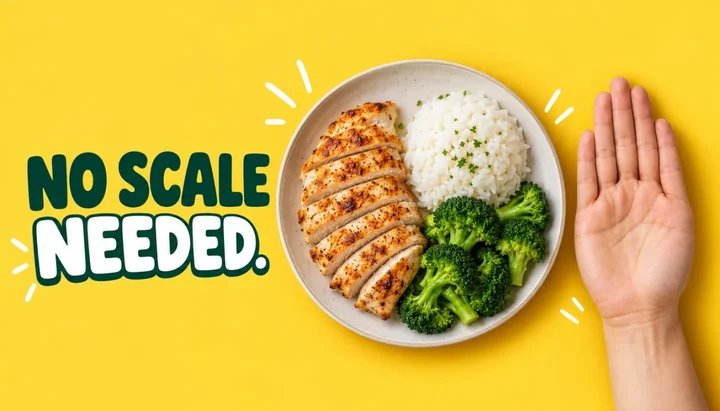
You can count calories without a scale by using your hand as the measure, reading the serving size on packaged food, and photographing meals instead of typing them. A palm of cooked chicken is about 3 to 4 oz (85 to 113 g) and 140 to 187 kcal, a fist of cooked rice is about 1 cup (158 g) and 205 kcal, and a thumb of oil is about 1 tablespoon and 120 kcal. A 2025 study of 1,081 adults found that hand counts tracked weighed portions closely on average, though any single meal can be off by a wide margin.
This guide covers the three methods, how accurate each one is, how to fit logging into about 15 minutes a day or less, and the easiest setup for an older person who does not get on with phones.
TL;DR - Counting calories without weighing
• The method: palm for protein, fist for rice, pasta or fruit, cupped hand for nuts, thumb for oil and spreads, open handfuls for vegetables.
• The accuracy: good enough to follow a trend, wrong on single meals, and worst on oil, nuts, and spreads.
• The time: people who logged successfully in one trial spent about 15 minutes a day by month 6, and logged more often rather than for longer.
• The older-adult setup: one photo per meal on the phone camera, plus a paper tick sheet on the fridge.
IMPORTANT
What you will get from this guide.
⏱️ Progress 0/5 • ~0 minutes in • Keep going
⏳ Step 1: The hand method, with a full day worked out
⏳ Step 2: Packaged food labels without the math traps
⏳ Step 3: Photo logging and how far to trust it
⏳ Step 4: Logging fast and an older-adult setup
🔍 The two foods where eyeballing costs you the most (revealed in the middle)
Why You Can Skip the Scale (Most of the Time)
A scale gives you the most exact number for one food at one moment. Most of what changes your weight over weeks is the pattern of your meals, and a pattern survives small errors. If you guess your rice 20 percent high on Monday and 20 percent low on Tuesday, the week comes out close.
The trouble starts when the error always leans the same way. In a 2026 experiment, 128 adults estimated portion sizes from photographs of 51 foods and 8 drinks without any aid, and their average error was 79 percent of the true weight. People given a visual food atlas cut that to about 45 percent (Nurmanova et al., 2026). So the aim is a method with a fixed reference, such as your own hand, that makes the guess repeatable.
Everyday cooking needs no scale: judge the plate by palms, fists and thumbs instead.
Method 1: The Hand Portion Method
Your hand scales with your body, so bigger people get bigger portions automatically. You carry it to every meal, and it takes no setup. The standard mapping uses a fist for grains and fruit, a palm for protein foods, and a handful for vegetables, which is exactly what a University of Tokyo team tested in 2025 across 12,148 meals (Shinozaki et al., 2025).
| Hand measure | Rough size | Food example | Calories | Protein |
|---|---|---|---|---|
| Palm (flat, no fingers) | 3 to 4 oz (85 to 113 g) cooked | Chicken breast | 140 to 187 kcal | 26 to 35 g |
| Palm | 3 oz (85 g) cooked | Salmon | 206 kcal | 22 g |
| Fist | About 1 cup (158 g) cooked | Cooked rice | 205 kcal | 4.3 g |
| Fist | 1 medium fruit | Apple | 95 kcal | 0.5 g |
| Fist | 1 medium fruit | Banana | 105 kcal | 1.3 g |
| Cupped handful | About 1 oz (28 g) | Almonds | 164 kcal | 6 g |
| Thumb (tip to base) | About 1 tbsp (14 g) | Olive oil | 120 kcal | 0 g |
| Thumb | About 1 tbsp | Peanut butter | 94 kcal | 3.5 g |
| Two open handfuls | About 2 cups chopped (180 g) | Broccoli | 62 kcal | 5 g |
Chicken, rice, apple, banana, almond, oil, and broccoli figures come from our own food pages; the rice row multiplies the 130 kcal and 2.7 g protein per 100 g by 158 g. Peanut butter is half of the 188 kcal listed for 2 tablespoons, with protein at half of the 7 g listed for 2 tablespoons.
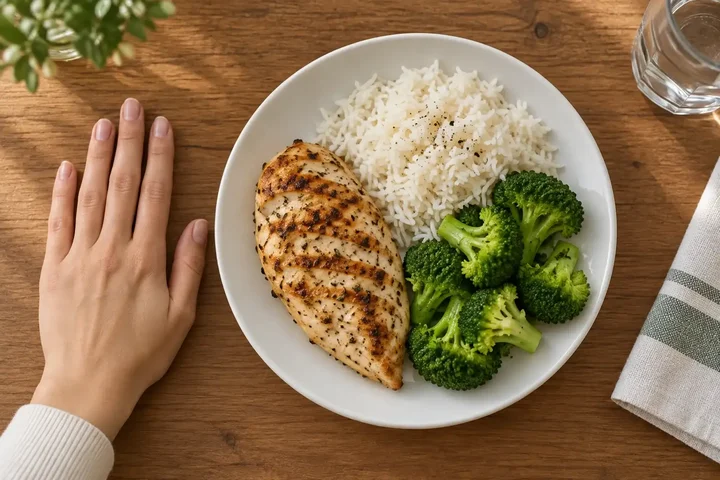
A palm of chicken, a fist of rice and a couple of handfuls of broccoli, with the hand as the ruler.
A full day with no scale
This day uses only the measures above and adds up to about 1,590 kcal and 97 g of protein, a plausible day for many adults who want a modest deficit. It is an example, not a prescription.
| Meal | Food (hand measure) | Calories | Protein |
|---|---|---|---|
| Breakfast | 2 eggs (70 kcal, 6 g each), 1 slice whole wheat toast, 1 banana | 314 kcal | 16.9 g |
| Lunch | Chicken, 1 palm of 4 oz (113 g); rice, 1 fist; broccoli, 2 handfuls; olive oil, 1 thumb | 574 kcal | 44.4 g |
| Snack | 1 apple, 1 cupped handful of almonds | 259 kcal | 6.5 g |
| Dinner | Salmon, 1 palm of 3 oz; rice, 1 fist; broccoli, 1 handful | 442 kcal | 28.9 g |
| Total | 1,589 kcal | 96.7 g |
Toast is the 69 kcal, 3.6 g whole wheat slice on our bread calories chart, and the broccoli at dinner is about 1 cup (91 g) at 31 kcal and 2.6 g. To plan your own target first, the online calorie calculator takes age, weight, height, and activity.
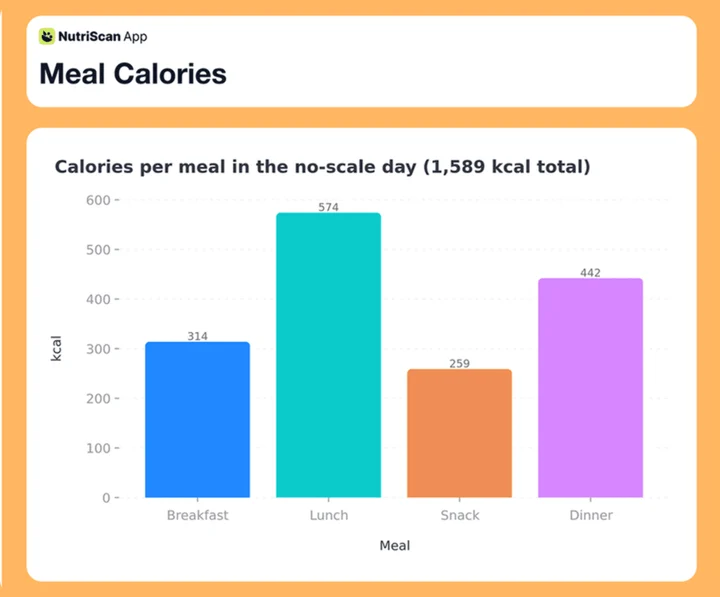
Figure 1: Lunch carries the most calories at 574 kcal, and the four meals add up to 1,589 kcal.
How accurate is the hand method?
In the Tokyo study, people who wrote down their weighed meals for 4 days also recorded how many fists, palms, and handfuls they used. The link between hands and grams was strong for fruit (correlation 0.85), vegetables (0.76), and protein foods (0.72), and weaker for grains (0.59). The authors report that estimates matched actual intake closely on average, with wide limits of agreement, so an individual meal can still be well off (Shinozaki et al., 2025). Treat the result as a good weekly average and a rough single meal.
IMPORTANT
Checkpoint: here's where you are right now.
⏱️ Progress 1/5 • ~3 minutes in • Keep going
✅ Step 1: The hand method and a full day (done)
👉 Step 2: Packaged food labels (you're here)
⏳ Step 3: Photo logging
⏳ Step 4: Fast logging and the older-adult setup
🧩 The two foods where eyeballing costs you the most (coming soon)

Method 2: Read the Label, Count the Servings
For anything in a package, the label does the weighing for you. The one trap is the serving. The FDA tells shoppers to start with the serving size and servings per container, and notes that the number of servings you eat determines the calories you take in (FDA).
A bag that says 150 calories per serving and 2.5 servings per container is 375 calories if you finish it. Three habits cover most of the error:
- Look at servings per container before calories. A drink bottle or a small bag often holds more than one.
- Count what you ate in servings. Half the bag is 1.25 servings, so 188 calories in the example above.
- Log the brand, not the category. "Granola" spans a wide range; the pack in your hand has one number.
Our guide on reading a nutrition label and the calories versus kcal question walks through each line of the panel, and the nutrition label scanner page covers scanning the panel with a phone camera so you do not type the numbers.
Labels have two limits. They list the product as sold, so oil you add in the pan or sauce you pour on is extra. And a rounded per-serving number is only as exact as your serving, which brings the problem back to portion size for anything you pour, such as cereal, granola, or pasta.
The Two Places Eyeballing Costs You the Most
The mystery item from the checklist: the two places are cooking fat and nuts or nut spreads, because they pack the most calories into the smallest volume.
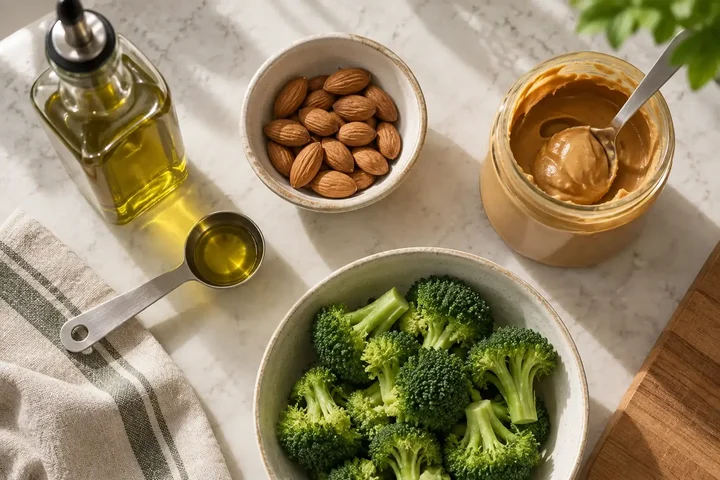
The small-volume, high-calorie foods: oil, nuts and spreads sit next to the broccoli that costs almost nothing.
- Olive oil: 120 kcal in 1 tablespoon (14 g). A thumb of oil is about 1 tablespoon, but a generous glug from the bottle is easily 2, which adds 120 kcal to a meal without changing how the plate looks.
- Almonds: 164 kcal in 1 ounce (28 g), or about 23 nuts. Eating from the bag instead of from your cupped hand can double that without noticing.
- Peanut butter: 188 kcal in 2 tablespoons and 76 percent fat, so a heaped spoon beats a level one by a visible margin.
Compare that with broccoli at 34 kcal per 100 g. Guessing a vegetable portion 50 percent high costs about 30 kcal, while guessing oil 50 percent high costs 60 kcal and a tablespoon is a much smaller volume to misjudge. So spend your care where the calories live: measure oil with a spoon once, count nuts in a handful, and eyeball everything watery and leafy.
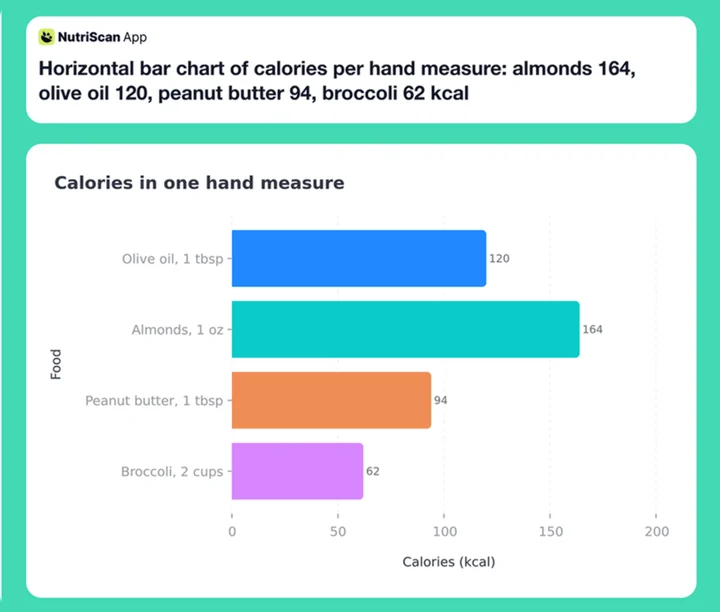
Figure 2: One tablespoon of oil (120 kcal) outweighs two cups of broccoli (62 kcal) by almost double.
The weigh-once trick
Weigh once, then log from memory
If you want precision for a week, weigh or measure your usual servings once: your regular bowl of rice, your usual cereal scoop, your cooking spoon of oil. Then log those same containers from memory. One careful afternoon replaces hundreds of future weigh-ins.
Method 3: Photo Logging
With photo logging you snap the plate before eating, and software or a person estimates what is on it. It is the fastest method because it removes typing and searching for foods.

Photo logging starts with one picture of the plate before the first bite.
Research on the idea is older than the current wave of AI apps. The Remote Food Photography Method, where people photograph meals with a phone and the images are analyzed, was compared against doubly labeled water, the reference method for measuring energy intake in daily life, in 50 free-living adults over 6 days. It differed by -152 kcal a day on average with a spread of 694 kcal, not a significant gap, while lab meals matched weighed intake (Martin et al., 2012). The average was close, and single days varied widely.
A 2026 study tested modern AI models on 15 standardized hospital meals against dietitians and a weighed ground truth. For calories and carbohydrates, the better models and the dietitians reached high agreement (r above 0.8, often within 10 percent), while protein and fat were less accurate, and every model overestimated fat by more than 20 percent on average (Isobe et al., 2026). Mixed dishes with hidden oil and sauces are where photo estimates drift most, so add a correction when you know there is oil in the pan.
NutriScan does photo logging in the app: Free includes 5 photo scans a week, and Premium is about $59 a year with unlimited scans. NutriScan reports 95 percent accuracy on calories, which is the company's own figure and not an independent study. Our comparison of AI photo calorie counter apps covers how the main apps differ.
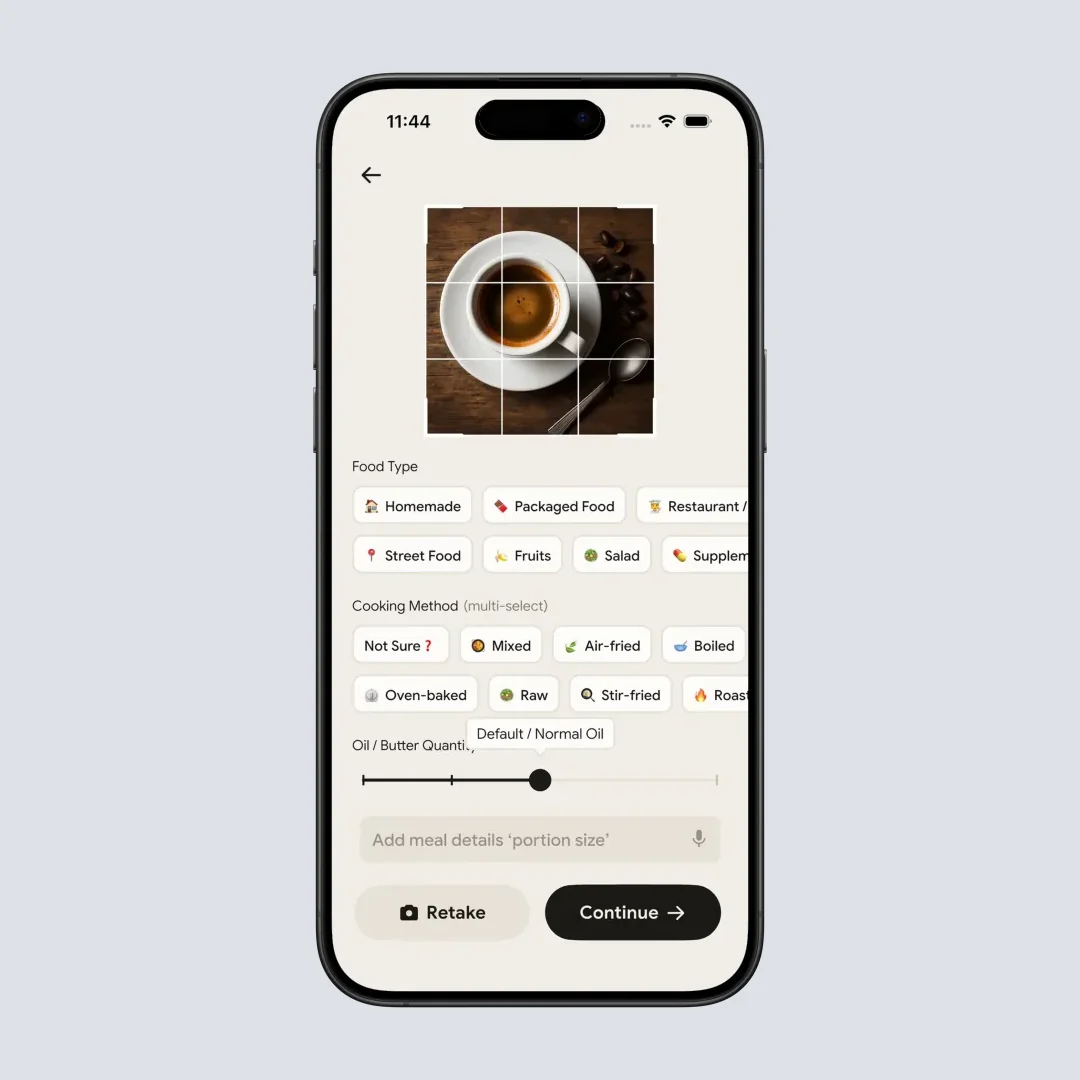
Before you log a scan, you can set the cooking method and the oil level, the two places where eyeballing costs the most.
How the three methods compare
| Method | Evidence | Strength | Weak spot | Time per meal |
|---|---|---|---|---|
| Hand portions | 12,148 meals; strong link to weighed grams, wide per-meal spread | Free, always with you | Oil, nuts, spreads, mixed dishes | 20 to 30 seconds |
| Package labels | Printed per serving; FDA says servings eaten set the calories | Exact for the serving | Servings per container, added oil | 10 to 20 seconds |
| Photo logging | 50 adults, -152 kcal/day average; AI near 10 percent on standard meals | Fastest, no typing | Hidden fat, small portions, sauces | 5 to 10 seconds |
Time per meal is an estimate for a practiced user, not a measured figure.
How to Keep Track Every Day Without It Taking Forever
Daily logging that takes too long gets dropped, and the dropped streak is what ruins the data. In a 24-week online program with 142 adults, people spent an average of 23.2 minutes a day logging in month 1 and 14.6 minutes in month 6. The ones who lost 5 percent or more of their weight did not log for longer; they opened their journal more times a day, 2.4 against 1.6 (Harvey et al., 2019). Many short entries beat one long evening session.
Five habits keep it near 10 to 15 minutes a day:
- Log right after the meal, not at night. Memory is sharpest in the first few minutes, and the entry takes seconds.
- Eat repeat meals on purpose. If you have the same breakfast five days, you log it once and copy it.
- Log the anchors, skip the garnish. Protein, starch, fat, and sauces carry the calories. A leaf of parsley does not.
- Use a photo as a placeholder. If you cannot log now, take a picture and fill it in later in one batch.
- Check once a week, not daily. Compare your average intake to your weight trend over 2 to 3 weeks. If weight is not moving the way your log predicts, adjust portions by about 10 percent and test again.
A calorie target helps the rest fall into place, and the macro calculator turns it into protein, carb, and fat numbers. If you would rather speak than type, see our guide to voice food logging apps.
IMPORTANT
Checkpoint: nearly there.
⏱️ Progress 4/5 • ~7 minutes in • Keep going
✅ Steps 1 to 3: Hands, labels, photos (done)
✅ The two foods where eyeballing costs you the most: oil and nuts (revealed)
👉 Step 4: Easiest setup for an older person (you're here)
The Easiest Way to Log Food for an Older Person Who Is Not Good With Phones
For many older adults the goal of tracking is different. The question is often "am I eating enough?" rather than "am I eating less?" The NHS lists unintentional weight loss of 5 to 10 percent of body weight within 3 to 6 months, reduced appetite, and loss of interest in food as signs of malnutrition, and advises seeing a GP if they appear (NHS). Protein matters too: the PROT-AGE expert group recommends at least 1.0 to 1.2 g per kg of body weight per day for healthy older people, and more for those who are ill or exercise (Bauer et al., 2013). For a 70 kg person that is 70 to 84 g a day, which is about two palms of chicken or fish plus eggs and dairy.
Medical caution
If a medical condition is involved, such as diabetes, kidney disease, or swallowing difficulty, talk to your doctor or a registered dietitian before setting any calorie or protein target.
Here is a setup that needs no app skills, in order of effort:
- The paper tick sheet. Print a weekly grid with a row per day and boxes for breakfast, lunch, dinner, and two snacks. Under each, a few tick boxes: "palm of protein," "fist of starch," "2 handfuls of vegetables," "fruit," "drink." Hang it on the fridge with a pen on a string. No numbers, no screens, and a family member can add up a week in 2 minutes.
- One photo per meal, no app. Use the phone's own camera. A photo of the plate before eating is a log. In a 2024 Peking University study, 121 older adults and 76 students found a photo-based dietary record easy to carry out, and its food weight estimates agreed more closely with weighed intake than a 24-hour recall did (Fan et al., 2024).
- A helper reviews, the person just eats. A daughter, son, neighbor, or carer looks at the week's photos and the tick sheet on a call or visit and does the counting. This takes the phone out of the older person's hands.
- Speech instead of typing. Dictating a meal into a phone is easier than navigating menus. See our voice food logging guide for apps that accept spoken entries.
- Meals that repeat. A stable rotation of 5 or 6 meals makes the tick sheet fast and the review easy.
Two cautions. A hand portion for someone with arthritic or smaller hands will run smaller, so use the person's own hand consistently and judge trends, not single days. And if the person is losing weight without trying, the answer is a GP visit, not a better log.
What Else Do You Need to Know?
Eating out and takeout
Restaurant portions run large. A restaurant chicken breast is often 8 to 10 oz (227 to 283 g) cooked, which is 375 kcal or more, two to three times the palm portion above. For a takeout meal, photograph it, estimate the protein as palms, the starch as fists, and add 1 thumb of oil for anything that looks glossy. NutriScan's photo scan can check a meal like this, using the Free plan's 5 scans a week.
Do hand sizes differ too much to use this?
Hands vary, but so do bodies, and the Tokyo study tested adults from age 20 to 69 with their own hands. Where precision matters, such as for oil, use a real spoon.
Should you ever weigh food?
Weigh for a week if you are stuck, if your weight is not responding to your log, or if you take a medicine or follow a plan where grams matter. Then go back to hands.
Frequently Asked Questions
How do I count calories without weighing every single thing I eat?
Use your hand for cooked foods (palm for protein, fist for rice or fruit, thumb for oil), read the serving size on packaged foods, and photograph mixed meals. Weigh or measure oil, nuts, and spreads once, then reuse the same spoon or handful.
How do I keep track of what I eat every day without it taking forever?
Log right after each meal, copy repeat meals, and record the anchors (protein, starch, fat, sauces) rather than every garnish. In one 24-week trial, people logging about 15 minutes a day by month 6 kept going, and those who logged more often, not longer, lost the most.
What is the easiest way to log food for an older person who is not good with phones?
A paper tick sheet on the fridge, plus one photo of each meal taken with the phone's camera and reviewed by a family member or carer once a week. Ask a doctor first if there is a condition like diabetes or kidney disease.
Is the hand method accurate enough to lose weight?
It tracks weighed portions well on average and poorly on single meals, so it suits weekly trends. Check your weight over 2 to 3 weeks and adjust portions by about 10 percent if it does not move as expected.
Are calorie counts from photos reliable?
For standardized meals the best AI models landed within about 10 percent for calories, but they overestimated fat by more than 20 percent. Add the oil you know is there, and treat photo counts as an estimate.
Are the numbers on packaged food labels exact?
They are exact for the stated serving. Most mistakes come from eating more servings than the label counts, so check servings per container.
Your Next Step
Pick one meal tomorrow and use the hand method on it. Write down palms, fists, and thumbs, look up the numbers in the table above, and see how close it feels. If you want the photo route, try the NutriScan app with the Free plan's 5 weekly scans on your two biggest meals. Either way, the habit you are building is the same: a quick, repeatable look at the plate that you can keep up for months.