Online Food Scanner App
Upload a photo of a meal or describe it in a line. The scanner names the dish, breaks it into ingredients, and returns calories, protein, carbs and fat for the portion in front of you.
Upload a photo of your food
Upload a JPEG or PNG image file, maximum 5MB
Upload a photo or enter food name to see nutrition analysis
How the scanner reads a meal
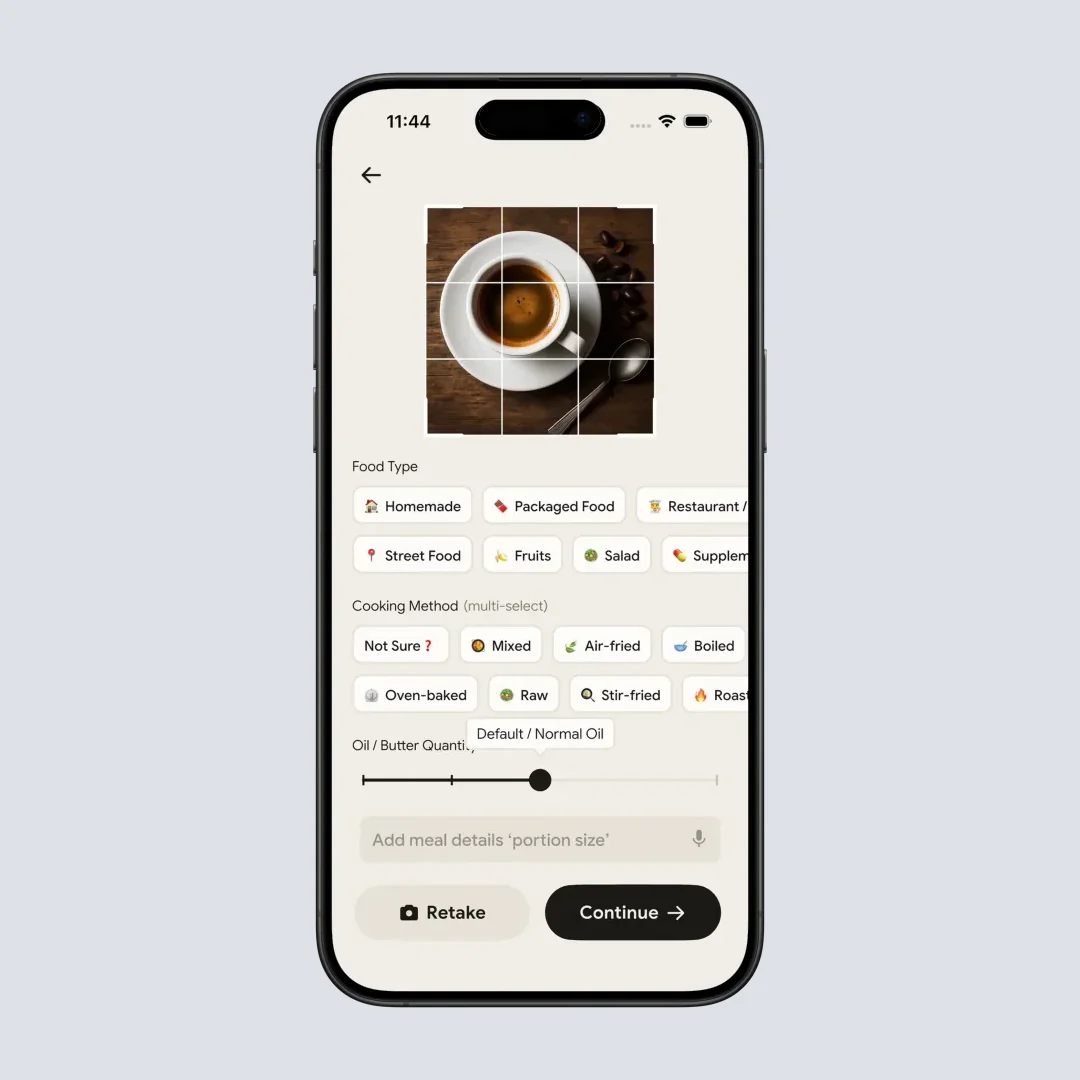
The image goes to a vision model that identifies the dish and the components on the plate. A thali is read as separate items, not one blob, so the dal, the roti, the sabzi and the spoon of ghee each get their own line. The same applies to a burrito bowl or a bento box.
Portion comes next, estimated from the size of the food against reference objects in the frame such as the plate rim or a fork. That estimate is the weakest link in any photo based count, which is why every quantity on the result stays editable.
Packaged food skips all of it. Scan the barcode and the manufacturer's own numbers come back from the food database. NutriScan puts identification accuracy at 95 percent, its own measurement rather than a published study.
Who uses a food scanner
People who stopped logging because typing every ingredient took too long. A photo takes three seconds and covers a meal that would have needed eight separate database searches.
It also helps anyone eating food that has no label. Street food, a canteen lunch, a home cooked curry, a plate at someone else's house. None of those come with a nutrition panel, and all of them are countable from an image.
Scanning home cooked and regional dishes
Mixed dishes are the hard case for any calorie tool, because the same name covers very different recipes. Biryani, pho, paella and shakshuka all vary by household. The scanner returns a sensible average, and you adjust the parts you know are different, usually the oil and the rice.
Once a dish is corrected, save it. The next time you cook it, log it in one tap instead of rebuilding the ingredient list. Regional presets are available for people who want them, alongside every other cuisine in the database.
Scanning packaged food with a barcode
Barcode scanning is the accurate end of the tool. The pack has declared values per 100 g, so the only judgement left is how much you ate, and the pack usually tells you the serving size too.
This is where people find the surprises. A snack bar that reads as a light option often carries the calories of a small meal, and seeing that at the shelf rather than after eating changes the decision.
Track it in NutriScan
Scanning one meal is useful. Scanning every meal for a week is what actually shows you where the calories are coming from. NutriScan keeps the running daily total against your targets, with photo, voice, barcode and text logging in the same place.
The free plan includes 5 photo scans a week, unlimited manual logging, water tracking and the fasting timer. Premium removes the scan cap and costs about $59 a year. NutriScan has passed 150k downloads and holds a 4.6 star rating across the app stores.


Frequently asked questions
How accurate is a food scanner app?
NutriScan puts identification at 95 percent by its own testing. Identification is the reliable half. Portion size is the part that drifts, because a photo cannot weigh food, so check the grams on the result and correct them when the serving is larger or smaller than average.
Can it scan food with no nutrition label?
Yes. That is the main reason to use one. Home cooked meals, restaurant plates and street food all get read from the image, with the dish broken into its ingredients.
Does it work without a barcode?
Yes. The barcode route is for packaged food and is the most exact. For everything else the scanner works from a photo or from a typed or spoken description of the meal.
How many free scans do I get?
Five photo scans a week on the free plan, plus unlimited manual logging, water tracking and the fasting timer. Premium removes the scan cap for about $59 a year.
Can I fix a wrong result?
Every item on a result can be edited, removed or added to. Change a quantity, delete an ingredient that was not there, or add the oil the camera could not see, and the totals recalculate.
Related calculators
- Calorie calculator for a typed or photographed meal
- Macro calculator for daily protein, carb and fat targets
- TDEE calculator for maintenance calories
- Domino's calorie calculator for pizza by crust, size and slice
- Food scanner app for how scanning works inside the app