Is Fay Free? Fay Nutrition Cost, Insurance and Fees
 ChatGPT
 Claude
 AI Mode
 Perplexity
Fay sessions cost as little as $0 with insurance, but without an accepted plan a 60-minute session costs $160, according to the Fay help center. Fay's billing page gives a different cash price of $150, and its pricing FAQ says "most people get their sessions for free" because a registered dietitian bills their health insurance. One more number matters: $75 is the fee for a missed session or a cancellation inside 24 hours, and insurance never pays it.
I work on the NutriScan team, which makes a food tracking app, so treat this as an outsider's reading of public documents. Every price and rule below comes from Fay's website, its help center, its financial policy, the app store listings and customer reviews. Each one is linked so you can check it.
Prices and policies checked on October 31, 2026. Fay operates in the United States and accepts commercial insurance only.
What this guide checks, in order:
- □ What a session costs with and without insurance
- □ The charge that can reach your card months later
- □ The $75 fee and how to avoid it
- □ Who Fay turns away
- □ One clause in Fay's financial policy that most patients never read
IMPORTANT
Fay pricing at a glance
- Fay is a telehealth dietitian service. It bills each session to your health insurance.
- Fay says sessions cost "as low as $0" with insurance. Copays, coinsurance and deductibles still apply if your plan has them.
- Without accepted insurance, a session costs $150 or $160, depending on which Fay page you read.
- If Fay takes your plan but the claim is denied, Fay says you may owe up to $90 per 60-minute session.
- A no-show, a cancellation less than 24 hours ahead, or joining more than halfway through costs $75. Insurance does not cover it.
- Fay does not accept Medicare, Medicaid or TRICARE.
- A credit card on file is required, even if insurance covers you in full.
- The Fay app is a free download.
Is Fay free? The quick answer
It depends on your insurance. Fay does not sell a subscription. It sells sessions with a registered dietitian and sends the claim to your insurer. If your plan pays the full claim, you pay nothing. If it does not, you pay a copay, a share of the cost, or a cash rate.
Fay's cost article puts it this way: "With insurance, you can pay as little as $0 per session, though some plans may include a co-pay, coinsurance, or deductible." The same article says the cost of a session "depends on your location, age, and insurance coverage".
So the short answer has four parts:
- Insured, in network, plan covers nutrition counseling: probably $0, sometimes a copay or coinsurance.
- Insured with a deductible you have not met: you may pay per session until you meet it.
- Fay takes your plan, but the claim is denied: up to $90 per 60-minute session.
- No insurance, or a plan Fay does not take: $160 per 60-minute session in the help center, $150 on the billing page.
What Fay is and who runs it
The website belongs to Fay Health, Inc., according to the site terms. The sessions themselves are billed by Fay Nutrition, LLC or its affiliates, called "the Practice", which is the name used in Fay's financial policy.
The service works like this:
- You enter your insurance and get an estimate. The price tool says your cost "may vary based on your location, age, and insurance coverage".
- You pick a dietitian. Each dietitian has a profile page where you can check your price before you book, per the billing page.
- You meet on video. Sessions are telehealth, and your dietitian has to be licensed in the state you are physically in on the day.
- You use the app between sessions. You can message your dietitian, log meals and set daily goals.
Fay says every provider is a registered dietitian (RD) or registered dietitian nutritionist (RDN). Its pricing FAQ explains why that matters for cost: "Nutrition services are only covered by insurance if the nutritionist is a Registered Dietitian (RD) or Registered Dietitian Nutritionist (RDN)." A coach inside a typical weight loss app is usually not a licensed clinician, and that difference is why a Fay session can be billed to insurance at all.
Fay lists eating disorders, diabetes, PCOS, IBS, pregnancy, kidney disease and weight loss among its specialties, and runs separate eating disorder programs for anorexia, bulimia, binge eating disorder and ARFID.
Fay cost with insurance
With insurance, your cost is whatever your plan leaves for you to pay. Fay's cost sharing article defines the four parts:
| Term | What it means at Fay |
|---|---|
| Copay | A fixed amount per visit. Fay's example is $30. |
| Deductible | What you pay before your plan starts to cover visits. |
| Coinsurance | A percentage you pay after the deductible. Fay's example is 20%. |
| Out-of-pocket maximum | The most you pay in a plan year. After it, eligible visits are usually covered in full. |
Fay's pricing FAQ says it accepts "over 700+ insurance plans" and names Blue Cross Blue Shield, United Healthcare, Cigna, Aetna, Anthem and Humana. The insurance directory on the site also lists Optum, Oxford, Highmark, Horizon, Florida Blue, Carefirst, Empire, Golden Rule and UMR.
Two people with the same insurer can still pay different amounts. Fay's article on this gives five reasons: different plans from the same employer, where each person is in their deductible, the diagnoses on the claim, a yearly visit limit, and age or other plan rules.
The diagnosis point matters more than it sounds. Some plans cover nutrition counseling as preventive care, but only for certain conditions. Fay's Aetna article lists the conditions Aetna accepts for preventive nutrition counseling: diabetes, high cholesterol, high blood pressure, obesity with a BMI of 30 or higher, and some pregnancy-related conditions. If you have one of these, Fay asks for a doctor's note or referral so it can bill with the right diagnosis code. If you qualify, Fay says you "can expect to pay $0 out of pocket within standard plan visit limits".
Fay cost without insurance: $150 or $160 a session
This is the part where Fay's own pages disagree.
| Fay page | What it says |
|---|---|
| Billing page | "Without insurance, a session with a dietitian can cost $150." |
| Pricing FAQ | "Without coverage, you could pay closer to $150 per session." |
| Cost article | Cash pay "is $160/hour". |
| Government plan article | "$160 per 60-minute session". |
| Refund article | Cash pay rate "of $160/hour". |
By my reading, $160 is the current number. Three help center articles use it, and two of them were updated in the last few weeks, while the $150 figures sit on marketing pages. Plan on $160 and treat $150 as a possible older price.
The financial policy adds one more rule for out-of-network care: "you will be charged the provider's standard self-pay rate." Fay will give you an invoice to send to your insurer yourself, but the policy also says "We do not resubmit claims."

What a denied claim costs: up to $90
A denied claim and an unaccepted plan are two different things at Fay, and they have different prices.
The refund article says that if Fay takes your plan and the insurer denies the claim, for example because of a plan exclusion, a missing pre-authorization or a session limit, "you may be responsible for up to $90 per 60-minute session". If Fay does not take your plan at all, you pay the $160 cash rate.
So a denied claim on an accepted plan costs at most $70 less per hour than a plan Fay does not take.
The most common denial reasons Fay names are worth checking before your first session:
- Session limits. Fay's example is a plan that covers 10 sessions a year. Session 11 is then yours to pay.
- HMO referrals. Many HMO plans need a referral from your primary care doctor. Fay's HMO article says a referral gives your claims "the best chance of being covered".
- Missing diagnosis. If the claim does not show a qualifying condition, your plan may process it under your medical benefit, where your deductible applies.
What self-pay Fay costs over time
Fay does not publish a fixed program length, so the schedule is up to you and your dietitian. Here is what the $160 cash rate adds up to:
| Schedule | Sessions | Cost at $160 |
|---|---|---|
| One session to try it | 1 | $160 |
| Every two weeks for 3 months | 6 | $960 |
| Weekly for 3 months | 12 | $1,920 |
| Every two weeks for a year | 26 | $4,160 |
| Weekly for a year | 52 | $8,320 |
Add $75 for each missed session or late cancellation. One missed session a month on a weekly schedule adds $900 a year.
At the $90 denied-claim rate, the same weekly year is $4,680.
When Fay charges your card
Fay does not charge you on the day of the session. The cost article says you are charged after your insurance claim is processed, and not right after the appointment. You get an email when a charge is applied, and your history sits in the Billing section of your account.
Three more rules from the same article and the financial policy:
- A card is required even with full coverage. Fay says it is needed "to cover any applicable co-pays, coinsurance, or late cancellation fees."
- You may see a $1 hold before each session. Fay says it checks that your card works and "is reversed immediately."
- You owe what insurance does not pay, even later. The policy says you must pay "all charges not covered or paid by your insurance, even if this is not known at the time of service."
That last line explains the most common billing complaint about Fay. Claims can take weeks or months to settle, and insurers sometimes reprocess old claims. A charge can land long after the session. One App Store reviewer wrote in July 2026 that they had been "back charged for appointments from January 2026". Another described "charges out the blue" for "appointments that happened 5-6 months ago". These are individual reports I could not verify, but they fit the policy as written.
The Fay Guarantee: what it covers
Fay offers a promise against surprise costs, called the Fay Guarantee. The guarantee article says that if you are "charged more than our price estimate tool quoted you before your initial consultation, you can request a refund for the difference".
The important limit is time. The guarantee applies only "until we receive the first claim adjudication (response) back from your insurance company." After that, Fay contacts you about future cost sharing, and later sessions are billed at whatever your plan sets.
Fay's outreach article adds a useful detail: sessions before that email stay protected, "even if the charge comes through later". So if a charge for an early session arrives months on, you can still contest it.
How to claim it, per the refund article:
- Open the Fay app, then Profile, then Billing. On the web, go to Settings and the Billing tab.
- Tap Contest next to each session you think was overcharged.
- Wait 5 to 10 business days for the refund.
If your insurer applied cost sharing by mistake, Fay's billing team can ask for the claim to be reprocessed, which Fay says typically takes 10 to 15 business days.
The guarantee does not cover the $75 fee, a plan Fay does not accept, or sessions after Fay tells you about your real cost.
The $75 late cancel and no-show fee
The financial policy sets three triggers for the fee:
- Cancelling or rescheduling less than 24 hours before the session.
- Not showing up.
- "Arriving more than halfway through your scheduled appointment".
Each one is billed at $75. Fay's missed appointment article says plainly: "Please note this fee is not covered by insurance."
The policy goes further: "Repeated failure to adhere to these guidelines for two consecutive appointments may lead to discharge from your provider's care." Two missed sessions in a row can end the relationship with your dietitian.
How to cancel without the fee, per the cancel article:
- More than 24 hours ahead: open the Home tab in the app, tap the session and choose Cancel. On the web, use the three dots next to the session. You can cancel one session or the whole series.
- Inside 24 hours: message your dietitian through Fay Chat. The app does not let you cancel it yourself, and the fee may apply.
If you think you were charged the fee in error, for example after cancelling more than 24 hours ahead, use Request refund in the Billing tab.
Does Fay take Medicare, Medicaid or TRICARE?
No. Fay's government plan article says "Fay currently accepts commercial plans only." It lists the plans it does not take, even when a company Fay works with runs them:
- Medicare, Medicare Advantage and Medicare Supplement plans
- Medicaid, including Medicaid plans managed by a commercial insurer
- TRICARE
The same article says a doctor's referral does not change this, and that Fay is "not able to bill secondary insurance at this time." If you are on one of these plans, you pay the $160 cash rate.
That is a real gap for older adults. Medicare Part B covers medical nutrition therapy for people with diabetes or kidney disease, so a Medicare patient with diabetes may be able to see a dietitian elsewhere at a lower cost than Fay's cash rate.
A clause in Fay's policy worth reading
Fay's financial policy includes a section called "Our Commitment to Affordable Care from a Registered Dietitian". It says that if payers or governments take steps that threaten affordable access, "Fay guarantees your continued access to care at $0 out-of-pocket cost for services provided through Fay."
The section then asks for something in return. You "authorize Fay to advocate on your behalf" to insurers, officials and others, which "might involve creating, editing, or delivering communications reflecting your experiences and perspectives." You also agree to "indemnify and hold Fay harmless" from claims arising from that advocacy.
By my reading, agreeing to the practice policies gives Fay permission to create content in your name about your care, in exchange for a $0 promise that only applies in that specific situation. The policy does not define when the promise kicks in. If that matters to you, read the whole section before you sign up.
Is the Fay app free?
Yes. The App Store listing shows Fay Nutrition Dietitians as free, with no in-app purchases listed, and a 4.9 rating from about 7,100 ratings. The Google Play listing shows 4.7 stars from about 1,950 reviews and 10,000+ downloads.
Fay also runs two reward programs:
- Virtual Items. You earn them for attending sessions or logging meals and trade them for prizes. The policy says they "have no monetary or cash value".
- Referrals. Fay's referral article offers a $15 food gift card when a friend completes a first session, for up to 5 referrals a calendar year.
What users say about Fay
I read the 100 most recent App Store reviews, posted between June 23 and October 13, 2026. Ninety were five stars and five were one star. Most praise named dietitians, and several say insurance covered every session.
Eight of the 100 used a billing word such as charge, billing, paid or insurance (counted on whole words). Four of those were five-star reviews, and three of them mention insurance in passing. The other four were complaints. Three describe charges arriving months after the session for visits the reviewer believed were covered, and one says the website changed their insurance details and they could not reach a person to fix it. One reviewer said they were "out $300". Other low ratings were about app bugs, such as chat history disappearing after an update.
Fay's own outcomes page says people rated their experience "4.96 out of 5 stars, across 34,000+ reviews" and that 85% "reached or maintained their target weight." The page does not explain how these numbers were measured, so treat them as company claims. Written reviews are also self-selected, so neither picture is a survey of all patients.

What the research says about dietitian care
Dietitian care has been tested in many randomized trials. These four papers are a fair sample, plus one on telehealth billing.
Weight. A systematic review of 62 randomized trials found that weight management led by a dietitian produced 4.01 percentage points more weight loss than usual care or no treatment (Morgan-Bathke et al., 2023).
Prediabetes. A meta-analysis of 13 trials found that nutrition therapy from a dietitian lowered HbA1c by 0.30 percentage points and fasting glucose by 4.97 mg/dL compared with standard care (Dudzik et al., 2023).
Type 2 diabetes. A meta-analysis of 14 trials with 3,338 participants compared dietitians with other health professionals giving diet advice. HbA1c was 0.47 percentage points lower and weight 1.49 kg lower with a dietitian (Siopis et al., 2021).
Cost. A scoping review found only four studies on cost, covering 22,765 adults with type 2 diabetes, and found dietitian care cost-effective for diabetes-related health costs (Siopis et al., 2021).
Telehealth billing. A 2020 survey of 2,016 US dietitians found that about half sometimes or always billed for telehealth, and of those, 61% were sometimes or always reimbursed (Rozga et al., 2021). Billing insurance for video visits is still uneven, which is the problem Fay's business is built around.
I found no published study by Fay on its own patients. These studies support the service Fay sells. They do not show that Fay works better than a local dietitian your plan also covers.
Who Fay is worth paying for
Fay may suit you if:
- You have commercial insurance and the price tool shows $0 or a small copay.
- You have a condition a dietitian treats, such as diabetes, PCOS, an eating disorder or a digestive disorder.
- You want video sessions with a licensed clinician and not an app coach.
- You keep appointments reliably, so the $75 fee is unlikely to apply.
Fay may not suit you if:
- You are on Medicare, Medicaid or TRICARE, which Fay does not accept.
- You would pay $160 a session yourself and want weekly support. A year costs $8,320.
- You cannot absorb a charge that arrives months after a session.
- You mainly want a food log. The app is built around the dietitian visits.
If you are comparing paid programs, these guides cover similar questions: the best Noom alternatives, Foodvisor vs Noom on dietitian coaching and Nutrisense pricing, which pairs a dietitian with a glucose sensor.
Six tips before you book Fay
- Run the price tool and save a screenshot. The Fay Guarantee is measured against that estimate.
- Call your insurer once. Fay suggests asking whether nutrition counseling is covered as preventive or medical, and which conditions qualify. Have Fay's NPI ready: 1104334465, from its preventive coverage article.
- Ask about a visit limit. If your plan covers 10 sessions a year, plan your schedule around it.
- Upload a doctor's note if you have a qualifying condition. Fay's referral article says it will rebill eligible past sessions.
- Set a 48-hour reminder for every session. That leaves a full day to cancel in the app at no cost.
- Check the Billing tab monthly. Late charges are common, and the guarantee only helps if you contest them.
How to see a Fay dietitian without a surprise bill: 5 steps
- Get your Fay estimate. Enter your insurance in the Fay price tool and save a screenshot. The Fay Guarantee caps early charges at that estimate.
- Call your insurer. Ask whether nutrition counseling is covered as preventive or medical, which conditions qualify, whether there is a visit limit, and how much of your deductible is left. Give them Fay's NPI, 1104334465.
- Send your paperwork before the first session. If you have a qualifying condition or an HMO plan, upload a doctor's referral to Docs and Forms in the Fay app so the first claim carries the right diagnosis.
- Set a 48-hour reminder. A cancellation inside 24 hours, a no-show, or joining more than halfway through costs $75. A two-day alert leaves time to cancel in the app at no cost.
- Contest any charge above the estimate. When a charge arrives, compare it with your screenshot. For sessions before Fay's cost-sharing email, tap Contest in the Billing tab and expect the refund in 5 to 10 business days.
Tracking food between dietitian visits
A dietitian sees you for an hour. The food log covers the rest of the week, and that log is what your dietitian works from at the next session.
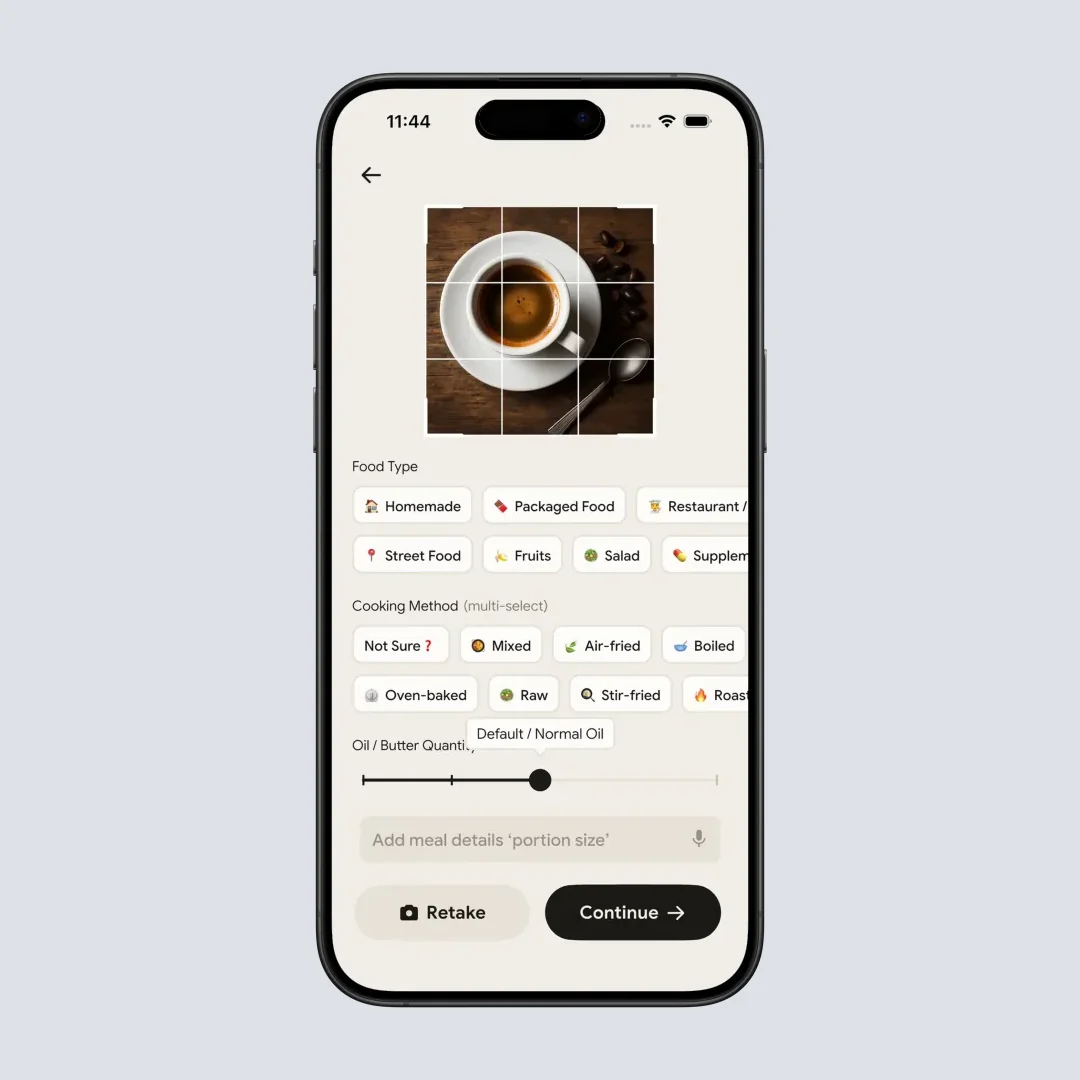
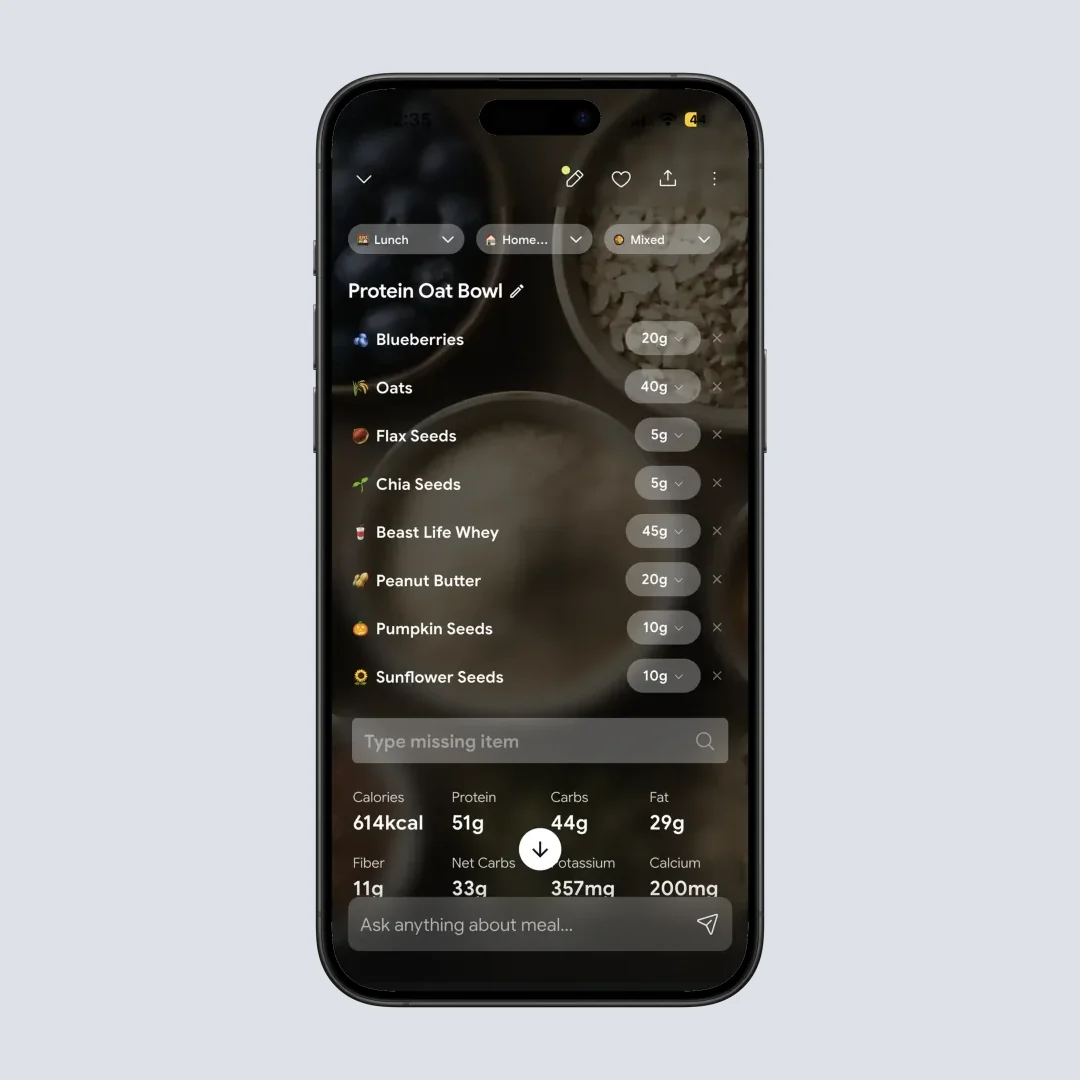
You do not have to use the Fay app to log meals. NutriScan, the app my team makes, estimates calories and macros from a photo. It has a Free plan with 5 AI food scans a week and a Premium plan at about $59 a year, and the plans are listed in our pricing breakdown. NutriScan has no dietitians and cannot bill insurance, so it does not replace Fay. It can give you a meal record to show your dietitian.
Fay pricing FAQ
Is Fay free?
Not for everyone. Fay bills each dietitian session to your health insurance and says sessions cost as low as $0 with insurance. You still owe any copay, coinsurance or deductible your plan sets. Without accepted insurance a session costs $160 according to the Fay help center, or $150 on its billing page.
How much does Fay cost without insurance?
The Fay help center lists cash pay at $160 per 60-minute session, while the billing page says $150. Six sessions at $160 cost $960 and 12 weekly sessions cost $1,920. If Fay accepts your plan but the claim is denied, Fay says you may owe up to $90 per 60-minute session.
What is the $75 charge from Fay?
It is the late cancel and no-show fee. Fay charges $75 if you cancel less than 24 hours before a session, do not show up, or arrive more than halfway through it. Fay says insurance does not cover this fee.
Does Fay take Medicare or Medicaid?
No. Fay accepts commercial insurance only. It does not take Medicare, Medicare Advantage, Medicare Supplement, Medicaid, Medicaid plans run by commercial insurers, or TRICARE, and it cannot bill secondary insurance. Patients on those plans pay the $160 cash rate.
Why did Fay charge me months after my session?
Fay charges your card after your insurance claim is processed, not on the day of the session, and its policy makes you responsible for charges not paid by insurance even if they are not known at the time of service. If the charge is above your original estimate and the session took place before Fay emailed you about cost sharing, you can contest it under the Fay Guarantee in the Billing tab.