1,500 Calorie Meal Plan for a Week: Low Carb and Cheap
 ChatGPT
 Claude
 AI Mode
 Perplexity
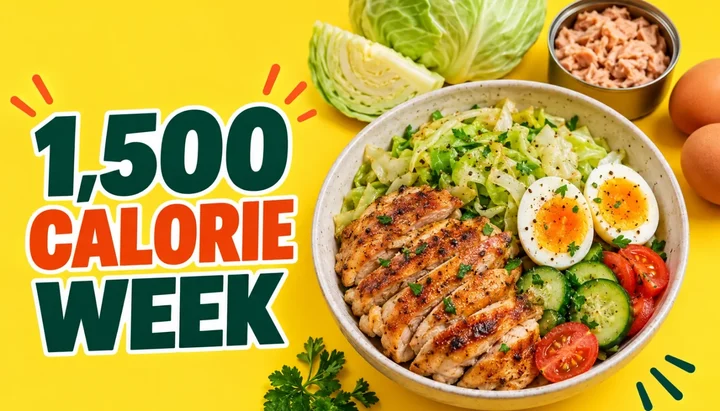
A 1,500 calorie week on cheap groceries is four small meals a day of eggs, canned tuna, chicken thighs, ground beef, cabbage, broccoli, cottage cheese and Greek yogurt. The plan below lands every day between 1,487 and 1,509 kcal with 115 to 131 g of protein and 29 to 57 g of total carbohydrate, and it needs one trip to a regular supermarket. Every day has its own table.
TL;DR
- 1,487 to 1,509 kcal a day, 115 to 131 g of protein, 29 to 57 g of total carbohydrate.
- 7-day average: 1,500 kcal, 124 g of protein, about 42 g of carbohydrate.
- One regular supermarket trip covers the week.
Not sure 1,500 is the right number for you? Put your age, height, weight and activity into the calculator first. It shows your maintenance calories and what a deficit looks like at your size.
Eat this much a day
2,006calories a day
5.0 kg to lose at about 0.5 kg a week. On this pace you reach 65.0 kg around Dec 30, 2026.
Week by week projection
- Safe pace, 0.25% to 1% of body weight a week
- Your plan
- Week 468.0 kgNov 18, 2026
- Week 766.5 kgDec 9, 2026
- Week 1065.0 kgDec 30, 2026
An estimate for healthy adults, not medical advice. Talk to a doctor before a deep deficit, and always if you are pregnant, breastfeeding, under 18 or managing a health condition.
Here is what is in this post:
- The 7-day plan with calories and protein per meal
- A grocery list that uses ordinary supermarket staples
- A low carb version with exact swaps
- A Sunday prep routine that takes about 90 minutes
- The ingredient that pushes most 1,500 calorie plans to 1,700 or more (revealed near the end)
Who a 1,500 Calorie Week Fits
The NHS gives 2,000 kcal a day as a rough guide for the average woman and 2,500 for the average man, and notes that your own figure shifts with age, height, weight and activity (NHS: understanding calories). Against those averages, 1,500 kcal is a deficit of about 500 kcal for a woman and 1,000 for a man. That suits many smaller or less active adults and is too low for tall, very active or muscular people.
The NIDDK Body Weight Planner is a free government tool that estimates the calories you need to reach a goal weight by a chosen date, and it accounts for your needs dropping as you lose weight (NIDDK Body Weight Planner). Use it or the weight loss calculator before you commit to 1,500. At a maintenance of 1,800, a 1,500 plan is a gentle cut; at 2,600, aim higher.
WARNING
Anyone pregnant or breastfeeding, under 18, on diabetes medication, or with a history of disordered eating should talk to a doctor or registered dietitian before following a fixed 1,500 calorie plan. This post is general information, not medical advice.

Eggs make up six of the seven breakfasts.
The 7-Day Plan at a Glance
Each day has breakfast, lunch, dinner and one snack. If you prefer three bigger meals, add the snack to lunch or dinner.
Carbohydrate figures are total carbs, not net carbs, and are estimates from the food values listed later in this post.
| Day | kcal | Protein (g) | Carbs (g, estimated) |
|---|---|---|---|
| Monday | 1,503 | 126 | 29 |
| Tuesday | 1,490 | 130 | 43 |
| Wednesday | 1,505 | 116 | 34 |
| Thursday | 1,499 | 121 | 45 |
| Friday | 1,509 | 115 | 35 |
| Saturday | 1,487 | 131 | 54 |
| Sunday | 1,505 | 131 | 57 |
| 7-day average | 1,500 | 124 | 42 |
The average is 1,500 kcal and 124 g of protein a day, with about 42 g of carbohydrate. Saturday and Sunday are the highest-carb days because of the half banana and the half cup of brown rice. Both are easy to drop; the low carb section explains how.
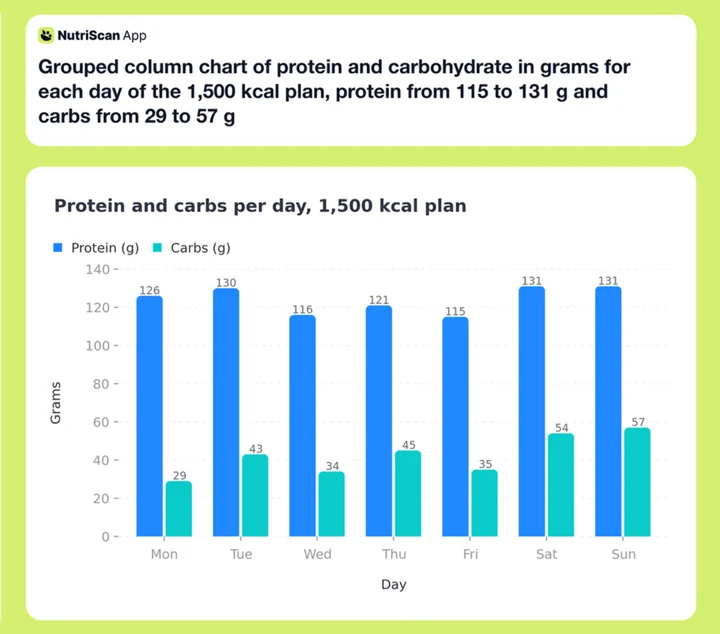
Figure 1: Protein holds at 115 to 131 g a day while carbs run from 29 to 57 g.
The Full 7-Day Meal Plan
Every table lists meal, food, calories and protein. Meat weights are cooked for chicken and raw for ground beef, because that is how the numbers were calculated. Mixing them up is the most common way a plan drifts by 100 kcal or more. Quantities use US units with metric in brackets.
Monday: 1,503 kcal, 126 g protein
| Meal | Food | kcal | Protein (g) |
|---|---|---|---|
| Breakfast | 3 eggs scrambled in 1 tsp olive oil with 1 cup (30 g) raw spinach and 1 oz (28 g) cheddar | 378 | 27 |
| Lunch | Tuna slaw: 1 can tuna in water (5 oz can, about 4 oz or 113 g drained), 1 tbsp olive oil, 1 1/2 cups (150 g) shredded cabbage, vinegar, 1 oz (28 g) cheddar | 402 | 38 |
| Dinner | 5 oz (142 g) cooked chicken breast, 1 1/2 cups (150 g) zucchini, 1 cup (100 g) cauliflower, 1 1/2 tbsp olive oil for roasting | 463 | 48 |
| Snack | 2 tbsp (32 g) peanut butter and 1 hard-boiled egg | 260 | 13 |
| Day total | 1,503 | 126 |
Tuesday: 1,490 kcal, 130 g protein
| Meal | Food | kcal | Protein (g) |
|---|---|---|---|
| Breakfast | 3 eggs scrambled in 1 tsp olive oil, 1/2 cup (113 g) cottage cheese on the side | 366 | 31 |
| Lunch | 4 oz (113 g) cooked chicken thigh, about 2 cups (200 g) broccoli florets roasted in 1 tbsp olive oil, 1/2 oz (14 g) almonds | 472 | 37 |
| Dinner | Tuna cakes: 1 can tuna, 2 eggs, pan-fried in 1 tbsp olive oil, with 1 1/2 cups (150 g) steamed broccoli | 444 | 46 |
| Snack | 1/2 cup (113 g) cottage cheese, 1 cup (100 g) cucumber slices, 1/2 oz (14 g) almonds | 208 | 16 |
| Day total | 1,490 | 130 |
Wednesday: 1,505 kcal, 116 g protein
| Meal | Food | kcal | Protein (g) |
|---|---|---|---|
| Breakfast | 3 eggs scrambled in 1 tsp olive oil with 1 cup (30 g) raw spinach and 1 oz (28 g) cheddar | 378 | 27 |
| Lunch | 4 oz (113 g) cooked chicken thigh, about 2 cups (200 g) broccoli florets roasted in 1 tbsp olive oil, 1/2 oz (14 g) almonds | 472 | 37 |
| Dinner | Beef and egg skillet: 4 oz (113 g) raw 90% lean ground beef, 2 eggs, 3.5 oz (100 g) spinach, 2 tsp olive oil | 447 | 36 |
| Snack | 1/2 cup (113 g) cottage cheese, 1 cup (100 g) cucumber slices, 1/2 oz (14 g) almonds | 208 | 16 |
| Day total | 1,505 | 116 |
Thursday: 1,499 kcal, 121 g protein
| Meal | Food | kcal | Protein (g) |
|---|---|---|---|
| Breakfast | 3 eggs scrambled in 1 tsp olive oil, 1/2 cup (113 g) cottage cheese on the side | 366 | 31 |
| Lunch | Tuna slaw: 1 can tuna in water (5 oz can, about 4 oz or 113 g drained), 1 tbsp olive oil, 1 1/2 cups (150 g) shredded cabbage, vinegar, 1 oz (28 g) cheddar | 402 | 38 |
| Dinner | Beef and cabbage skillet: 5 oz (140 g) raw 90% lean ground beef, 2 cups (200 g) shredded cabbage, 1/2 cup chopped onion, 1 tbsp olive oil, 1 fried egg on top | 523 | 36 |
| Snack | 1/2 cup (113 g) cottage cheese, 1 cup (100 g) cucumber slices, 1/2 oz (14 g) almonds | 208 | 16 |
| Day total | 1,499 | 121 |
Friday: 1,509 kcal, 115 g protein
| Meal | Food | kcal | Protein (g) |
|---|---|---|---|
| Breakfast | 3 eggs scrambled in 1 tsp olive oil with 1 cup (30 g) raw spinach and 1 oz (28 g) cheddar | 378 | 27 |
| Lunch | 4 oz (113 g) cooked chicken thigh, about 2 cups (200 g) broccoli florets roasted in 1 tbsp olive oil, 1/2 oz (14 g) almonds | 472 | 37 |
| Dinner | 5 oz (140 g) cooked chicken thigh, 2 cups (200 g) roasted cauliflower, 1 tbsp olive oil | 422 | 39 |
| Snack | 1 oz (28 g) almonds and 1 hard-boiled egg | 237 | 12 |
| Day total | 1,509 | 115 |
Saturday: 1,487 kcal, 131 g protein
| Meal | Food | kcal | Protein (g) |
|---|---|---|---|
| Breakfast | 1 cup (245 g) plain nonfat Greek yogurt, 1 oz (28 g) almonds, half a banana | 362 | 32 |
| Lunch | Tuna slaw: 1 can tuna in water (5 oz can, about 4 oz or 113 g drained), 1 tbsp olive oil, 1 1/2 cups (150 g) shredded cabbage, vinegar, 1 oz (28 g) cheddar | 402 | 38 |
| Dinner | 5 oz (142 g) cooked chicken breast, 1 1/2 cups (150 g) zucchini, 1 cup (100 g) cauliflower, 1 1/2 tbsp olive oil for roasting | 463 | 48 |
| Snack | 2 tbsp (32 g) peanut butter and 1 hard-boiled egg | 260 | 13 |
| Day total | 1,487 | 131 |
Sunday: 1,505 kcal, 131 g protein
| Meal | Food | kcal | Protein (g) |
|---|---|---|---|
| Breakfast | 3 eggs scrambled in 1 tsp olive oil, 1/2 cup (113 g) cottage cheese on the side | 366 | 31 |
| Lunch | Tuna slaw: 1 can tuna in water (5 oz can, about 4 oz or 113 g drained), 1 tbsp olive oil, 1 1/2 cups (150 g) shredded cabbage, vinegar, 1 oz (28 g) cheddar | 402 | 38 |
| Dinner | 6 oz (170 g) cooked chicken thigh, 1/2 cup (98 g) cooked brown rice, 1 1/2 cups (150 g) steamed broccoli | 477 | 49 |
| Snack | 2 tbsp (32 g) peanut butter and 1 hard-boiled egg | 260 | 13 |
| Day total | 1,505 | 131 |

The Weekly Grocery List
This is the whole week for one person, built from items that sit in the same aisles of any large supermarket. Compare unit prices on the shelf tag and buy store brands where you can.
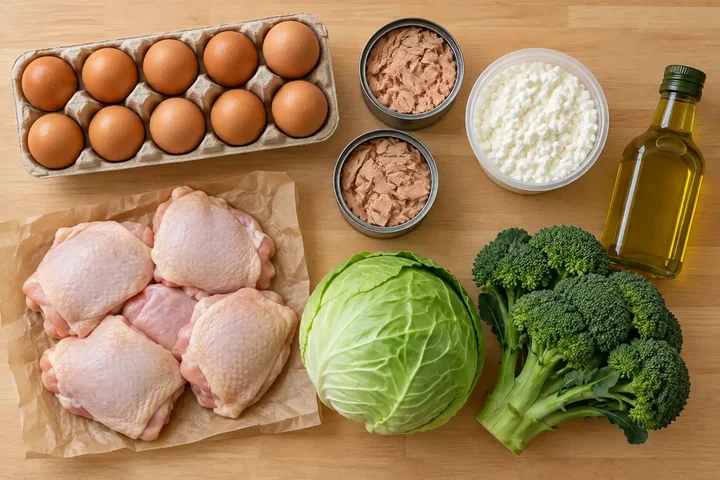
| Item | Amount for the week | Used in |
|---|---|---|
| Eggs | 30 (2.5 dozen) | Breakfasts, tuna cakes, skillets, snacks |
| Canned tuna in water | 5 cans (5 oz each) | Lunch slaw, tuna cakes |
| Chicken thighs, boneless, skinless | about 2 lb (900 g) raw, cooked in one batch | Lunches and dinners |
| Chicken breast | about 14 oz (400 g) raw | Monday and Saturday dinners |
| Ground beef, 90% lean | 1 lb (454 g) pack, about 7 oz (200 g) is left over | Thursday and Wednesday dinners |
| Green cabbage | 1 small head, about 1.8 lb (800 g) | Slaw and skillet |
| Broccoli, fresh or frozen | 2 lb (900 g) | Lunches and dinners |
| Cauliflower | 1 lb (450 g) fresh or frozen | Dinners |
| Zucchini | 2 medium | Monday and Saturday dinners |
| Spinach | 1 bag, 8 oz (225 g) | Breakfast eggs, Wednesday dinner |
| Cheddar | 1 block, 8 oz (225 g) | Breakfasts and lunches |
| Cottage cheese | 1 tub, 24 oz (680 g) | Breakfasts and snacks |
| Plain nonfat Greek yogurt | 1 tub, 17.6 oz (500 g) | Saturday breakfast |
| Almonds | 1 bag, 6 oz (170 g) | Snacks and lunches |
| Peanut butter | 1 jar | Three snacks |
| Olive oil | 1 bottle, 500 ml | Cooking and dressing |
| Onion, cucumber, banana | 1 onion, 2 cucumbers, 1 banana | Skillet, snack, breakfast |
| Brown rice | 1 small bag | One half-cup serving on Sunday |
| Pantry | Vinegar, salt, pepper, garlic powder, paprika | Flavor with no calories to count |
This list has no dollar amounts, because prices vary by state and store. Eggs, canned tuna, cabbage, frozen broccoli and store-brand cottage cheese are usually the lower-cost choices, and chicken thighs often cost less per pound than breasts. If something is pricey this week, swap it for a similar item: tuna for chicken, cabbage for cauliflower, cottage cheese for yogurt.
Progress check: the plan, the grocery list and the low carb version are covered below. Still ahead are the Sunday prep routine and the oil trap that decides whether you really eat 1,500.
Where the Numbers Come From
Calories and protein come from our own food pages where one exists and from USDA FoodData Central for everything else. Per-day totals are the sum of the rounded meal values in each table.
| Food | Serving used | kcal | Protein (g) | Source |
|---|---|---|---|---|
| Egg | 1 large, 50 g | 72 | 6.3 | NutriScan food page, USDA |
| Chicken breast, cooked | 100 g | 165 | 31 | NutriScan food page |
| Chicken thigh, meat only, roasted | 100 g | 179 | 24.8 | USDA FoodData Central |
| Tuna, light, canned in water, drained | 4 oz (113 g) | 130 | 28.8 | USDA FoodData Central |
| Ground beef, 90% lean, raw | 4 oz (113 g) | 200 | 21 | USDA FoodData Central |
| Cottage cheese | 100 g | 98 | 11 | NutriScan food page |
| Greek yogurt, nonfat | 100 g | 59 | 10.2 | NutriScan food page |
| Peanut butter | 2 tbsp | 188 | 7 | NutriScan food page |
| Almonds | 1 oz (28 g) | 165 | 6 | USDA, NutriScan food page |
| Olive oil | 1 tbsp | 119 | 0 | USDA FoodData Central |
| Broccoli, raw | 100 g | 34 | 2.8 | NutriScan food page |
| Spinach, raw | 100 g | 23 | 2.9 | NutriScan food page |
| Cabbage, raw | 100 g | 25 | 1.3 | USDA FoodData Central |
| Cauliflower, raw | 100 g | 25 | 1.9 | USDA FoodData Central |
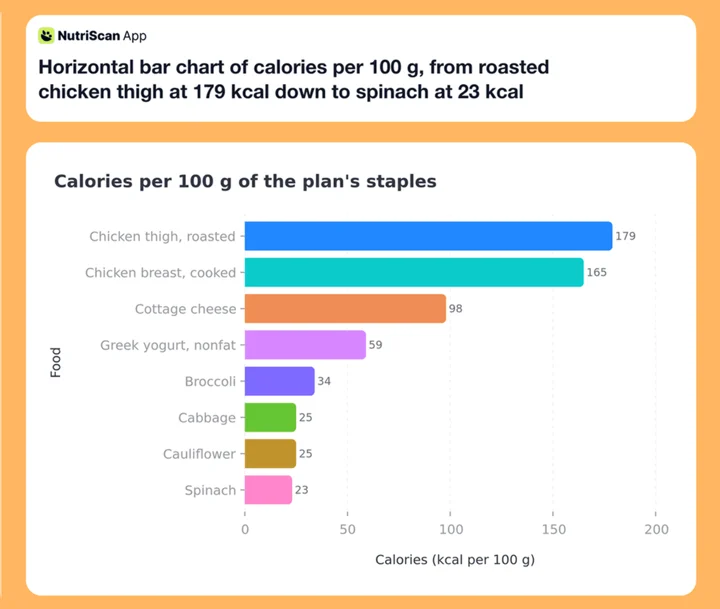
Figure 2: Chicken carries 165 to 179 kcal per 100 g, the vegetables 23 to 34.
Tuna varies by brand and packing liquid. USDA lists light tuna in water at about 115 kcal per 100 g drained, while our tuna page shows 132 kcal per 100 g for generic canned tuna. Read your can.
Why Protein Sits at 115 to 131 g
At 1,500 kcal you have little room, so protein is the macro most worth protecting. A review in the American Journal of Clinical Nutrition of shorter-term, tightly controlled feeding trials found greater weight loss, greater fat mass loss and better preservation of lean mass on higher-protein, energy-restricted diets than on lower-protein ones (Leidy et al., 2015).
The plan averages 124 g a day, which is about 33% of calories. If you weigh much less or more than the average adult, check your target with the protein intake calculator. Anyone with kidney disease should confirm a protein target with their doctor first.
How to Make This Plan Lower Carb
The plan as written is low carb but above ketogenic levels. Days run 29 to 57 g of total carbohydrate, and most of that comes from vegetables, with the banana, the brown rice and the peanut butter as the extra sources.
For a stricter version, keep every day under 50 g of total carbohydrate with two swaps:
- Saturday: leave out the half banana (about 52 kcal and 13 g carbs) and add 1 tsp olive oil to the dinner roast. That makes the day about 1,475 kcal and about 40 g carbs.
- Sunday: replace the 1/2 cup of brown rice with 1 1/2 cups (150 g) of cauliflower and add 2 tsp olive oil. That makes the day about 1,500 kcal and about 38 g carbs, with protein unchanged near 131 g.
Every other day is already under 50 g. A meta-analysis of 13 randomized trials lasting a year or longer compared diets of 50 g carbohydrate a day or less with low-fat diets. People on the very low carb diets lost about 0.9 kg (2 lb) more over the long run, but LDL cholesterol rose slightly in that group (Bueno et al., 2013). The gap is small, so pick the carbohydrate level you can stick to. Low carb eating can change dosing needs for blood pressure or diabetes medication, so check with your doctor first.
A Sunday Prep Routine in About 90 Minutes
Cooking every meal fresh is what makes cheap plans fail by Wednesday. This routine covers most of the week:
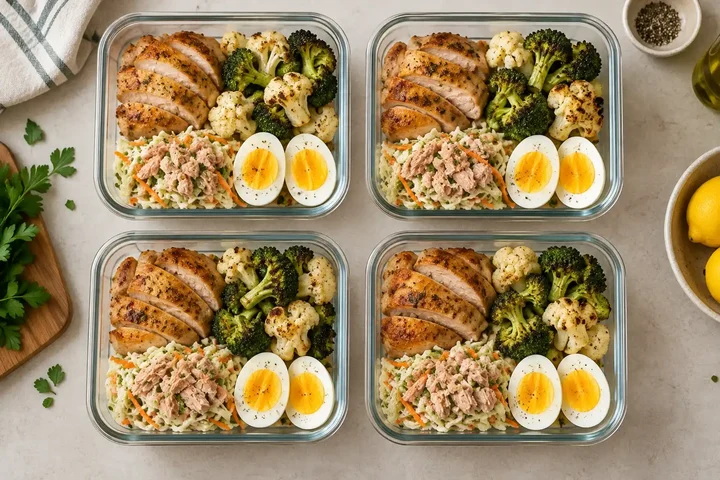
- Roast the thighs. Put about 2 lb (900 g) of boneless thighs on a sheet pan with salt, pepper, garlic powder and paprika. Roast at 425 F (220 C) for 25 to 30 minutes until they reach 165 F (74 C) inside. Slice and divide.
- Roast the vegetables. Cut the broccoli and cauliflower, toss with measured oil (see the next section) and roast on a second tray beside the chicken.
- Boil 4 eggs. Eight to ten minutes in boiling water, then cold water. They cover the snacks on Monday, Friday, Saturday and Sunday.
- Shred the cabbage. One small head gives you the slaw base for Monday, Thursday, Saturday and Sunday lunches and the skillet on Thursday.
- Portion the cottage cheese and almonds into small containers so the snack is already measured.
Cooked chicken and roasted vegetables keep three to four days in the fridge, so freeze the portions for Friday through Sunday.
The Calories That Creep In
Here is the reveal. The ingredient that quietly turns a 1,500 calorie week into a 1,700 calorie week is cooking oil.
This plan uses about 13 tbsp plus 8 tsp of olive oil across the week. At 119 kcal a tablespoon (USDA FoodData Central), that is about 1,870 kcal, or roughly 18% of the 10,500 kcal for the whole week. Oil has no protein and no volume, so it is the easiest ingredient to over-pour, and a free pour can easily double a tablespoon. If every oil measure doubled, you would add about 1,870 kcal over the week, roughly 270 kcal a day, and your 1,500 calorie plan would become a 1,770 calorie plan.
The fix is free. Measure oil with a tablespoon for the first week, use a spray bottle or a nonstick pan for the pan-fried foods, and keep nuts and cheese portioned in advance. Almonds run just as high: one ounce (28 g) is about 23 almonds and 165 kcal, and a loose handful is often well above that.
TIP
Measure the oil with a tablespoon for the first week.

Oil is the easiest calories to miss, so measure it by the spoon.

Eating Out and Weighing Less
A kitchen scale and a measuring spoon are the most accurate tools for the first two weeks. After that, a faster check helps, especially for takeout.
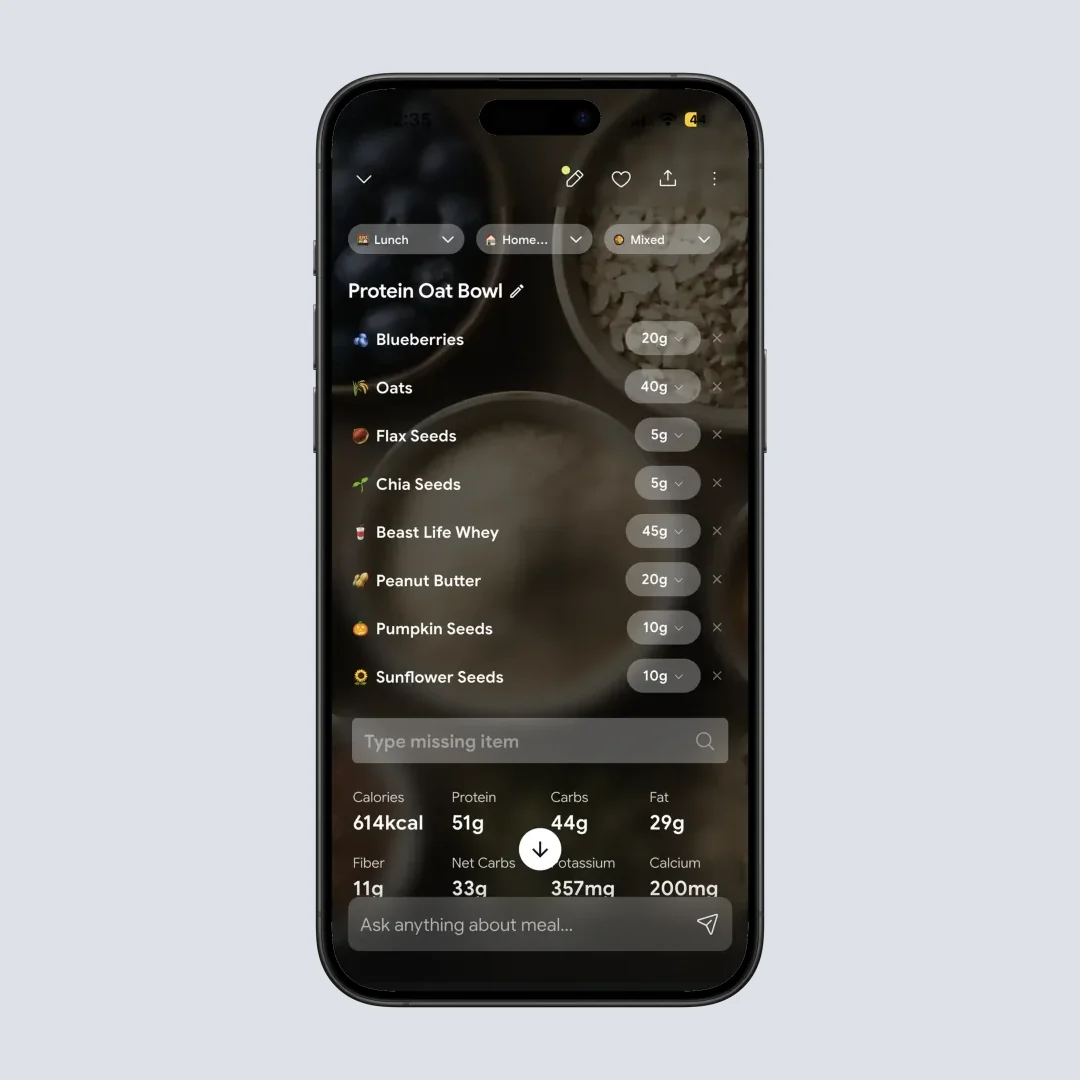
NutriScan estimates a plate from a photo, which helps for meals you do not weigh and for a lunch out. Free accounts get 5 photo scans a week, enough for a couple of restaurant meals. Premium costs about $59 a year and has unlimited scans. Scan results are estimates, so use them as a check and keep measuring oil at home. To see your own target first, the online calorie calculator gives a daily figure with no sign-up.
When 1,500 Calories Is Not Working
If the scale has not moved after two to three weeks, check cooked versus raw meat weights, measure the oil and make sure the weekend matches the weekdays. The article on why a calorie deficit sometimes does not show on the scale covers the usual causes, including water retention and under-logging.
Stop and see a doctor if you feel dizzy, faint, unusually cold, or if your period stops. Constant hunger after the first week is a signal to raise the target by 100 to 200 kcal rather than push harder. For a lower-effort week, the no-cook meal plan sizes 1,500 kcal days without a stove, and the cheap high protein meals guide has more budget ideas. For more savings, see healthy eating on a budget.
Frequently Asked Questions
Is 1,500 calories a day enough?
It depends on your size and activity. The NHS gives 2,000 kcal a day as a guide for the average woman and 2,500 for the average man, so 1,500 is a deficit for most adults. Smaller, less active women may find it close to maintenance, while tall or active people may find it too low. Use a calculator, and talk to your doctor first if you take medication, have diabetes, are pregnant or breastfeeding, or have a history of disordered eating.
How much protein is in a 1,500 calorie meal plan?
This plan gives 115 to 131 g of protein a day, with a weekly average of 124 g. Most of it comes from eggs, tuna, chicken, ground beef, cottage cheese and Greek yogurt.
Can a 1,500 calorie meal plan be low carb?
Yes. The plan above runs 29 to 57 g of total carbohydrate a day. To get under 50 g every day, drop the half banana on Saturday and the brown rice on Sunday and use the swaps in the low carb section.
What is the cheapest way to eat 1,500 calories a day?
Build the week around eggs, canned tuna, chicken thighs, ground beef, cabbage, frozen broccoli, cottage cheese and a store-brand olive oil. Buy by unit price, cook two proteins in bulk on Sunday, and reuse the same vegetables across several meals.
Do I need to weigh my food on a 1,500 calorie plan?
Weighing for the first two weeks is the quickest way to learn what a portion looks like. After that, a photo log such as NutriScan can estimate a plate for you. Free accounts get 5 photo scans a week and Premium (about $59 a year) has unlimited scans.
Can I eat the same meals every day?
You can. Several meals repeat in this plan on purpose to keep the shopping list short. If you want more variety, swap meals of similar calories and protein, for example one tuna meal for one chicken meal.
What to Do This Week
Pick a start day, shop from the list, cook the Sunday batch and follow the tables for seven days. After a week, adjust by 100 to 200 kcal if you need to. Before you start, confirm your target with the calculator at the top of this page or the NIDDK Body Weight Planner, and talk to your doctor if a health condition is involved.
Check a meal without weighing it
NutriScan estimates calories and protein from a photo. The free plan includes 5 scans a week, and Premium (about $59 a year) has unlimited scans. Download it from the App Store or Google Play.