High Protein Meal Plan: 120 to 150 g a Day, No Shakes
 ChatGPT
 Claude
 AI Mode
 Perplexity
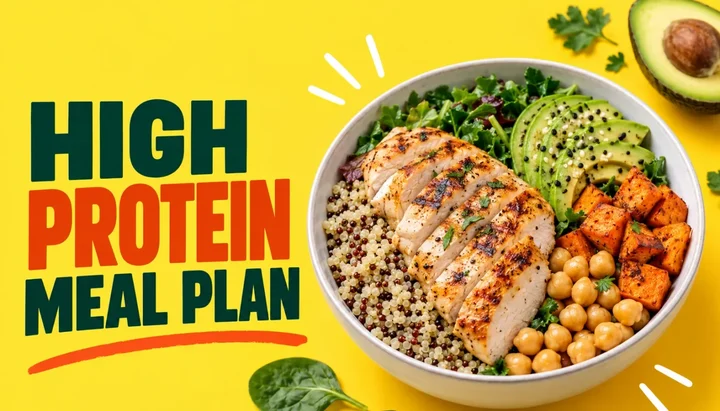
A 2,000 calorie day with 120 g of protein puts 480 calories into protein, about 24 percent of the total. Spread it as 30 to 40 g at breakfast, lunch and dinner and 15 to 20 g in a snack, using chicken, tuna, eggs, Greek yogurt, cottage cheese, tofu, tempeh and lentils. This post gives you a full 7-day plan at 120 g, a 150 g day, and a vegan 130 g day for 1,669 calories, with calories and protein for every meal.
Your daily protein
112-154g protein a day
Build muscle: 1.6 to 2.2 g per kg of body weight.
Where your range sits on the protein scale
Split across 4 meals
- Meal 128-39g protein
- Meal 228-39g protein
- Meal 328-39g protein
- Meal 428-39g protein
154 g of protein carries 616 calories, about 24% of your 2,556 calorie maintenance.
Muscle gains from extra protein flatten out near 1.6 g per kg (Morton et al. 2018, British Journal of Sports Medicine). More than 2.5 g per kg adds nothing on top.
An estimate from body weight and goal. Spread it across the day and adjust from how you train and recover.
TL;DR - High protein meal plan
- The 120 g week: seven days averaging 1,997 calories and 123 g of protein, built from 14 repeatable meals.
- The 150 g day: 1,965 calories and 153 g, using tuna, eggs, chicken, lentils and dairy.
- The vegan cut: 132 g of protein for 1,669 calories, with no powder.
- The no-shakes rule: pick foods with 15 or more grams of protein per 100 calories first, and fill in with beans and grains.
IMPORTANT
Your plan at a glance.
Five parts, in the order they work.
Step 1: Check that 120 or 150 g fits your body weight
Step 2: Copy the 7-day plan at 120 g
Step 3: See the 150 g day and the vegan 130 g day
Step 4: Learn which foods give the most protein per calorie (revealed in the middle)
Step 5: Make the numbers hold in a real kitchen
Does 120 g or 150 g of Protein Fit Your Body Weight?
Protein targets scale with body weight, so the first check is whether 120 g or 150 g is a sensible number for you. The International Society of Sports Nutrition puts the range for exercising people at 1.4 to 2.0 g per kg of body weight per day (Jäger et al., 2017). A meta-analysis of 49 trials found that protein supplementation stopped adding fat-free mass at about 1.6 g per kg (Morton et al., 2018).
| Body weight | 1.6 g per kg | 2.0 g per kg |
|---|---|---|
| 132 lb (60 kg) | 96 g | 120 g |
| 154 lb (70 kg) | 112 g | 140 g |
| 165 lb (75 kg) | 120 g | 150 g |
| 176 lb (80 kg) | 128 g | 160 g |
| 198 lb (90 kg) | 144 g | 180 g |
| 220 lb (100 kg) | 160 g | 200 g |
A 165 lb (75 kg) person lands on 120 g at 1.6 g per kg and on 150 g at 2.0 g per kg. If you weigh much less than that, 150 g is more than you need. If you weigh 200 lb (90 kg) or more, 120 g sits below the common range. The calculator above works from your weight and goal, the protein intake calculator page has more detail, and the guide on how much protein you need per day explains the ranges in more detail.
One more number matters when calories are fixed. Protein has 4 calories per gram, so 120 g uses 480 calories and 150 g uses 600. On a 2,000 calorie budget that leaves 1,520 or 1,400 calories for everything else, which is why food choice counts more than it does at 80 g.
A 7-Day Meal Plan: 2,000 Calories and 120 g of Protein
The plan below repeats 14 meals, so you can cook once and eat twice. Every number uses per-100 g values from our food pages or the USDA FoodData Central database, scaled to the portion shown. Brands differ, so read your labels.

Cook once, eat twice.
The meal menu
Each code stands for one meal. Calories and protein are for the full plate.
| Code | What is on the plate | Calories | Protein (g) |
|---|---|---|---|
| B2 | 1/2 cup plus 2 tbsp (50 g) dry rolled oats cooked in water, 6 oz (170 g) nonfat Greek yogurt stirred in, 1 oz (28 g) almonds | 459 | 31.8 |
| B3 | 2/3 cup (150 g) cottage cheese, 1 boiled egg, 2 slices whole wheat toast, 1 banana | 468 | 31.3 |
| B5 | 50 g dry oats cooked in 1 cup skim milk, 2 boiled eggs, 1 banana | 542 | 30.4 |
| L1 | 4 oz (113 g) cooked chicken breast, 150 g cooked brown rice, 150 g broccoli, 1 tbsp olive oil | 525 | 42.7 |
| L2 | 3.5 oz (100 g) canned tuna, 1 cup cooked chickpeas, 1 cup raw spinach, 1 tbsp olive oil | 527 | 44.9 |
| L3 | 4 oz (113 g) raw 93/7 ground beef, 150 g cooked lentils, 100 g cooked brown rice, 100 g broccoli, 1 tsp oil | 532 | 42.2 |
| L4 | 4 oz cooked chicken breast, 1 cup cooked quinoa, 100 g broccoli, 1 tsp oil | 483 | 45.9 |
| S1 | 1 oz almonds, 1 cup skim milk | 250 | 14 |
| S4 | 2/3 cup (150 g) cottage cheese, 1 slice whole wheat toast | 216 | 20.1 |
| S5 | 2 tbsp peanut butter on 1 slice whole wheat toast, 1 cup skim milk | 343 | 18.6 |
| D1 | 3.5 oz (100 g) tempeh, 1 cup cooked quinoa, 100 g broccoli, 1 tbsp olive oil | 568 | 29.9 |
| D2 | 4 oz (113 g) raw 93/7 ground beef, 150 g cooked brown rice, 150 g broccoli, 1 tbsp olive oil | 510 | 31.3 |
| D3 | 5 oz (150 g) firm tofu, 1 cup shelled edamame, 100 g cooked brown rice, 1 tsp oil | 454 | 32.3 |
| D5 | 3.5 oz (100 g) seitan, 1 cup cooked quinoa, 150 g broccoli, 1 tbsp olive oil | 512 | 33.3 |
| E1 | 1 apple | 95 | 0.5 |
| E2 | 1 apple, 1/2 oz almonds | 177 | 3.5 |
| E3 | 1 oz dark chocolate | 170 | 2.2 |
| E4 | 1 oz dark chocolate, 1 apple | 265 | 2.7 |
| E5 | 1 extra tbsp olive oil at dinner | 119 | 0 |
The week at a glance
Each cell shows the meal code, then calories and grams of protein.
| Day | Breakfast | Lunch | Snack | Dinner | Extra | Calories | Protein (g) |
|---|---|---|---|---|---|---|---|
| Mon | B3: 468 / 31.3 | L3: 532 / 42.2 | S1: 250 / 14 | D1: 568 / 29.9 | E2: 177 / 3.5 | 1995 | 121 |
| Tue | B5: 542 / 30.4 | L1: 525 / 42.7 | S5: 343 / 18.6 | D2: 510 / 31.3 | E1: 95 / 0.5 | 2015 | 123 |
| Wed | B2: 459 / 31.8 | L2: 527 / 44.9 | S1: 250 / 14 | D1: 568 / 29.9 | E3: 170 / 2.2 | 1974 | 123 |
| Thu | B5: 542 / 30.4 | L4: 483 / 45.9 | S1: 250 / 14 | D3: 454 / 32.3 | E4: 265 / 2.7 | 1994 | 125 |
| Fri | B2: 459 / 31.8 | L1: 525 / 42.7 | S1: 250 / 14 | D5: 512 / 33.3 | E4: 265 / 2.7 | 2011 | 124 |
| Sat | B2: 459 / 31.8 | L2: 527 / 44.9 | S1: 250 / 14 | D2: 510 / 31.3 | E4: 265 / 2.7 | 2011 | 125 |
| Sun | B5: 542 / 30.4 | L3: 532 / 42.2 | S4: 216 / 20.1 | D1: 568 / 29.9 | E5: 119 / 0 | 1977 | 123 |
The seven days average 1,997 calories and 123 g of protein. Every day lands between 1,974 and 2,015 calories and between 121 and 125 g, so you can swap any lunch for another lunch without leaving the target.
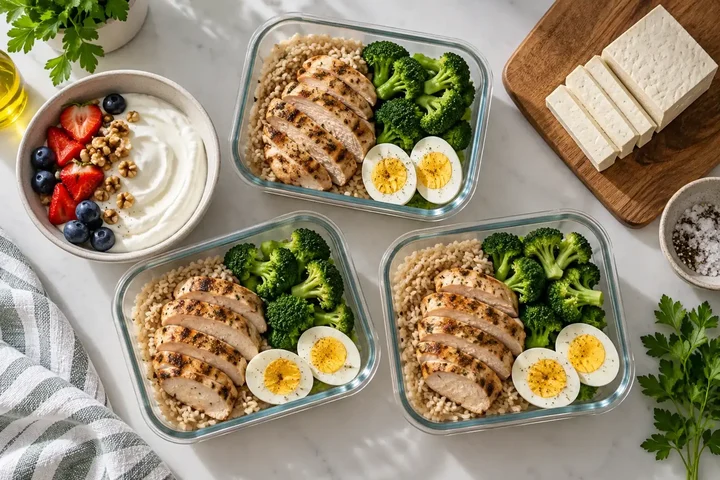
Monday in full
This is the sample day at 120 g with every food listed.
| Meal | Food | Calories | Protein (g) |
|---|---|---|---|
| Breakfast | Cottage cheese, 2/3 cup (150 g) | 147 | 16.5 |
| Boiled egg, 1 large | 78 | 6.3 | |
| Whole wheat toast, 2 slices | 138 | 7.2 | |
| Banana, 1 medium | 105 | 1.3 | |
| Lunch | Lean ground beef (93/7), 4 oz (113 g) raw | 172 | 23.6 |
| Cooked lentils, 150 g (about 3/4 cup) | 174 | 13.5 | |
| Cooked brown rice, 100 g | 112 | 2.3 | |
| Broccoli, 100 g | 34 | 2.8 | |
| Olive oil, 1 tsp | 40 | 0 | |
| Snack | Almonds, 1 oz (28 g) | 164 | 6 |
| Skim milk, 1 cup | 86 | 8 | |
| Dinner | Tempeh, 3.5 oz (100 g) | 193 | 19 |
| Cooked quinoa, 1 cup | 222 | 8.1 | |
| Broccoli, 100 g | 34 | 2.8 | |
| Olive oil, 1 tbsp | 119 | 0 | |
| Evening | Apple, 1 medium | 95 | 0.5 |
| Almonds, 1/2 oz (14 g) | 82 | 3 | |
| Day total | 1995 | 120.9 |
A Sample Day at 150 g of Protein
A 150 g day needs about 600 calories from protein, so the carbohydrate and fat foods shrink. The day below uses eggs and egg whites, tuna, chickpeas, chicken and lentils and reaches 1,965 calories and 152.9 g.
| Meal | Food | Calories | Protein (g) |
|---|---|---|---|
| Breakfast | Boiled or scrambled eggs, 2 large | 156 | 12.6 |
| Egg whites, 3 large | 51 | 10.8 | |
| Whole wheat toast, 2 slices | 138 | 7.2 | |
| Olive oil for the pan, 1 tsp | 40 | 0 | |
| Skim milk, 1 cup | 86 | 8 | |
| Lunch | Canned tuna, 3.5 oz (100 g) | 132 | 29 |
| Cooked chickpeas, 1 cup | 269 | 15 | |
| Raw spinach, 1 cup | 7 | 0.9 | |
| Olive oil, 1 tbsp | 119 | 0 | |
| Snack | Almonds, 1 oz (28 g) | 164 | 6 |
| Skim milk, 1 cup | 86 | 8 | |
| Dinner | Cooked chicken breast, 4 oz (113 g) | 187 | 35 |
| Cooked lentils, 150 g | 174 | 13.5 | |
| Broccoli, 150 g | 51 | 4.2 | |
| Olive oil, 1 tsp | 40 | 0 | |
| Evening | Dark chocolate, 1 oz (28 g) | 170 | 2.2 |
| Apple, 1 medium | 95 | 0.5 | |
| Day total | 1965 | 152.9 |
Dinner carries 53 g because 4 oz of chicken and 150 g of lentils stack well. That is above the 20 to 40 g per serving the ISSN position stand suggests, so if a 53 g dinner feels heavy, move the lentils to the evening snack. A review of per-meal protein concluded that about 0.4 g per kg per meal across at least four meals reaches 1.6 g per kg per day, and that up to about 0.55 g per kg per meal suits the 2.2 g per kg end (Schoenfeld and Aragon, 2018). For a 165 lb (75 kg) person that is roughly 30 to 41 g per meal.
TIP
If a 53 g dinner feels heavy, move the lentils to the evening snack.
If you are eating under 2,000 calories, keep the same structure and drop the dark chocolate, the apple and the lunch oil first. Those three items cost about 385 calories and add under 3 g of protein.
IMPORTANT
Checkpoint: halfway there.
Step 1: Body weight check (done)
Step 2: 7-day plan at 120 g (done)
Step 3: 150 g day (done), vegan 130 g day (next)
Step 4: The foods with the most protein per calorie (coming soon)
A Vegan Day: 130 g of Protein Under 1,800 Calories
Fitting 130 g into fewer than 1,800 calories means at least 29 percent of calories from protein, which rules out beans and grains as the main source. Seitan, soya chunks, tofu, tempeh and edamame carry the day, with lentils filling in. The result is 1,669 calories and 132.4 g with no powder.
| Meal | Food | Calories | Protein (g) |
|---|---|---|---|
| Breakfast | Tofu scramble: firm tofu, 5 oz (150 g) | 114 | 12 |
| Whole wheat toast, 1 slice | 69 | 3.6 | |
| Raw spinach, 1 cup | 7 | 0.9 | |
| Olive oil for the pan, 1 tsp | 40 | 0 | |
| Soy milk, 1 cup (unsweetened) | 80 | 7 | |
| Lunch | Seitan, 3.5 oz (100 g) | 120 | 21 |
| Shelled edamame, 1 cup | 188 | 18 | |
| Cooked brown rice, 100 g | 112 | 2.3 | |
| Broccoli, 100 g | 34 | 2.8 | |
| Snack | Soya chunks, 40 g dry (rehydrated and pan-fried) | 138 | 20.8 |
| Olive oil, 1 tsp | 40 | 0 | |
| Dinner | Tempeh, 3.5 oz (100 g) | 193 | 19 |
| Cooked lentils, 150 g | 174 | 13.5 | |
| Broccoli, 150 g | 51 | 4.2 | |
| Olive oil, 1 tsp | 40 | 0 | |
| Evening | Almonds, 1 oz (28 g) | 164 | 6 |
| Banana, 1 medium | 105 | 1.3 | |
| Day total | 1669 | 132.4 |
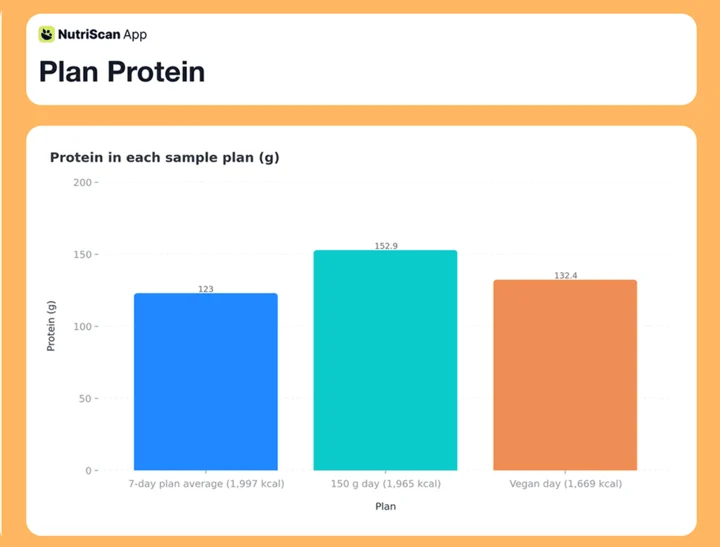
Figure 2: Daily protein in the three plans.
Three things make this day work. Soya chunks are 52 g of protein per 100 g dry, so 40 g is 21 g of protein for 138 calories (soya chunks nutrition). Seitan is about 21 g per 100 g prepared (seitan nutrition). Tofu varies a lot by brand, from about 8 g per 100 g for softer blocks to 15 g or more for extra firm, so check the label and adjust.
Does plant protein build muscle as well as animal protein? In a 12-week trial, 19 habitual vegans and 19 omnivores trained twice a week, both matched to 1.6 g per kg of protein a day. Both groups gained 1.2 kg of leg lean mass with no difference between them (Hevia-Larraín et al., 2021). The vegans used whole foods plus a soy protein supplement, and the participants were untrained young men, so the finding supports plant protein as adequate when the total is met, not that powder is required.
Vegans also need a reliable vitamin B12 source. The NHS notes that B12 is not found naturally in fruit, vegetables and grains, so vegans may not get enough from food alone (NHS vitamin B12 guidance). A fortified food or a supplement can cover it, and your doctor can tell you which and how much. A cut at 1,800 calories is not right for everyone, so talk to your doctor or a dietitian if you take medication, are pregnant, or have a history of disordered eating.
The No-Shakes Protein Food List, Ranked by Protein per Calorie
This is the part of the plan that answers the question about hitting 150 g without shakes. Powder is convenient, but ordinary food gets there too, and the foods differ a lot in how many calories each gram of protein costs. The table is sorted by grams of protein per 100 calories.
| Food | Portion | Calories | Protein (g) | Protein per 100 kcal (g) |
|---|---|---|---|---|
| Canned tuna | 3.5 oz (100 g) | 132 | 29 | 22 |
| Egg whites | 3 large | 51 | 10.8 | 21 |
| Chicken breast, cooked | 4 oz (113 g) | 187 | 35 | 19 |
| Seitan | 3.5 oz (100 g) | 120 | 21 | 18 |
| Nonfat Greek yogurt | 6 oz (170 g) | 100 | 17.3 | 17 |
| Soya chunks, dry | 1.4 oz (40 g) | 138 | 20.8 | 15 |
| Lean ground beef 93/7, raw | 4 oz (113 g) | 172 | 23.6 | 14 |
| Cottage cheese | 2/3 cup (150 g) | 147 | 16.5 | 11 |
| Tofu, firm | 5 oz (150 g) | 114 | 12 | 11 |
| Tempeh | 3.5 oz (100 g) | 193 | 19 | 10 |
| Edamame, shelled | 1 cup | 188 | 18 | 10 |
| Skim milk | 1 cup | 86 | 8 | 9 |
| Boiled eggs | 2 large | 156 | 12.6 | 8 |
| Lentils, cooked | 1 cup (198 g) | 230 | 17.8 | 8 |
| Chickpeas, cooked | 1 cup | 269 | 15 | 6 |
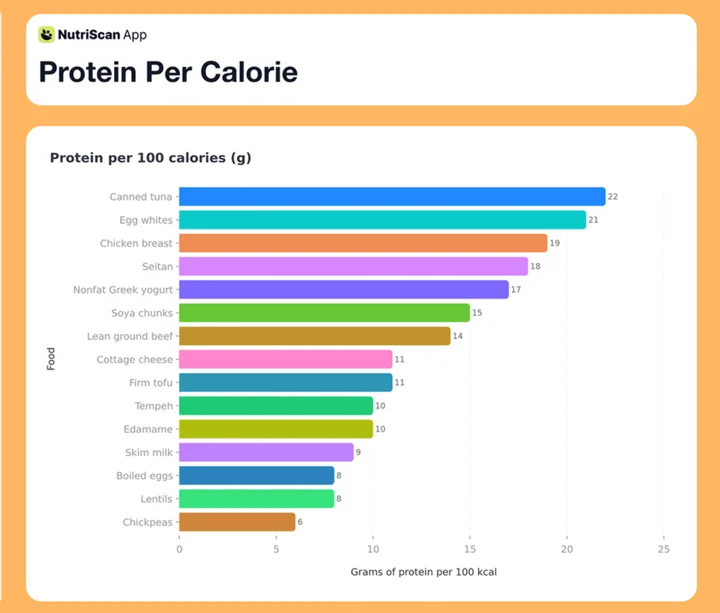
Figure 1: Protein per 100 calories, all 15 foods.
The top four rows, tuna, egg whites, chicken breast and seitan, return 18 to 22 g of protein per 100 calories. That is the answer to the mystery in the checklist: when calories are fixed, those four foods plus nonfat Greek yogurt give the most protein for each calorie. Beans, lentils and whole eggs sit at 6 to 8 g per 100 calories, so they are good foods that need a protein partner.
A higher-protein diet also helps while cutting. A review of higher-protein diets found that pooled results from tightly controlled feeding studies showed more weight loss, more fat mass loss and better lean mass preservation than lower-protein diets at the same calories (Leidy et al., 2015). The same review found only a modest effect on fullness, so do not count on protein to control appetite on its own.
The Easiest Way to Reach 150 g Without Shakes
Most people who miss 150 g miss it at breakfast and in the snack slots. A four-step routine closes the gap without any powder.
- Anchor every meal on one protein food of 30 to 50 g. That means 4 to 6 oz of chicken, a can of tuna with a cup of chickpeas, 3 eggs with 3 whites, or 5 oz of tofu with a cup of edamame.
- Never skip the snack. A 6 oz tub of nonfat Greek yogurt is 17 g for 100 calories, and 2/3 cup of cottage cheese is 16.5 g for 147 calories.
- Fix breakfast first. Two slices of whole wheat toast give 7 g. Eggs, Greek yogurt, cottage cheese, or a tofu scramble put 25 to 35 g on the plate before 9 a.m.
- Count the carbs that carry protein. Rice, quinoa, bread and oats add 15 to 20 g across a day in the plans above, so count them instead of treating them as empty carbs.

Breakfast is where 150 g usually slips.
For more snack ideas that stay under 200 calories, see the high-protein snacks guide. For stretching the same grams over a budget, see the cheap high-protein meals guide.
Weigh It Once, Then Eyeball It
Protein targets fail on portion guesses more than on food choices. Dry oats, lentils and rice change weight when cooked. The guide on protein per 100 g, dry versus cooked shows the conversion.
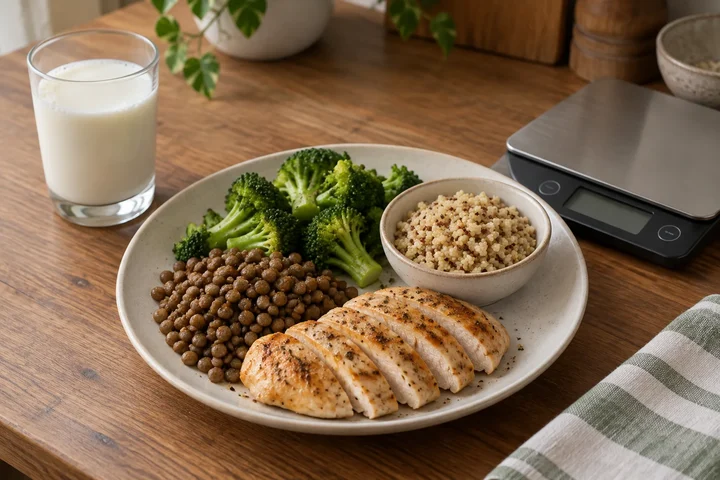
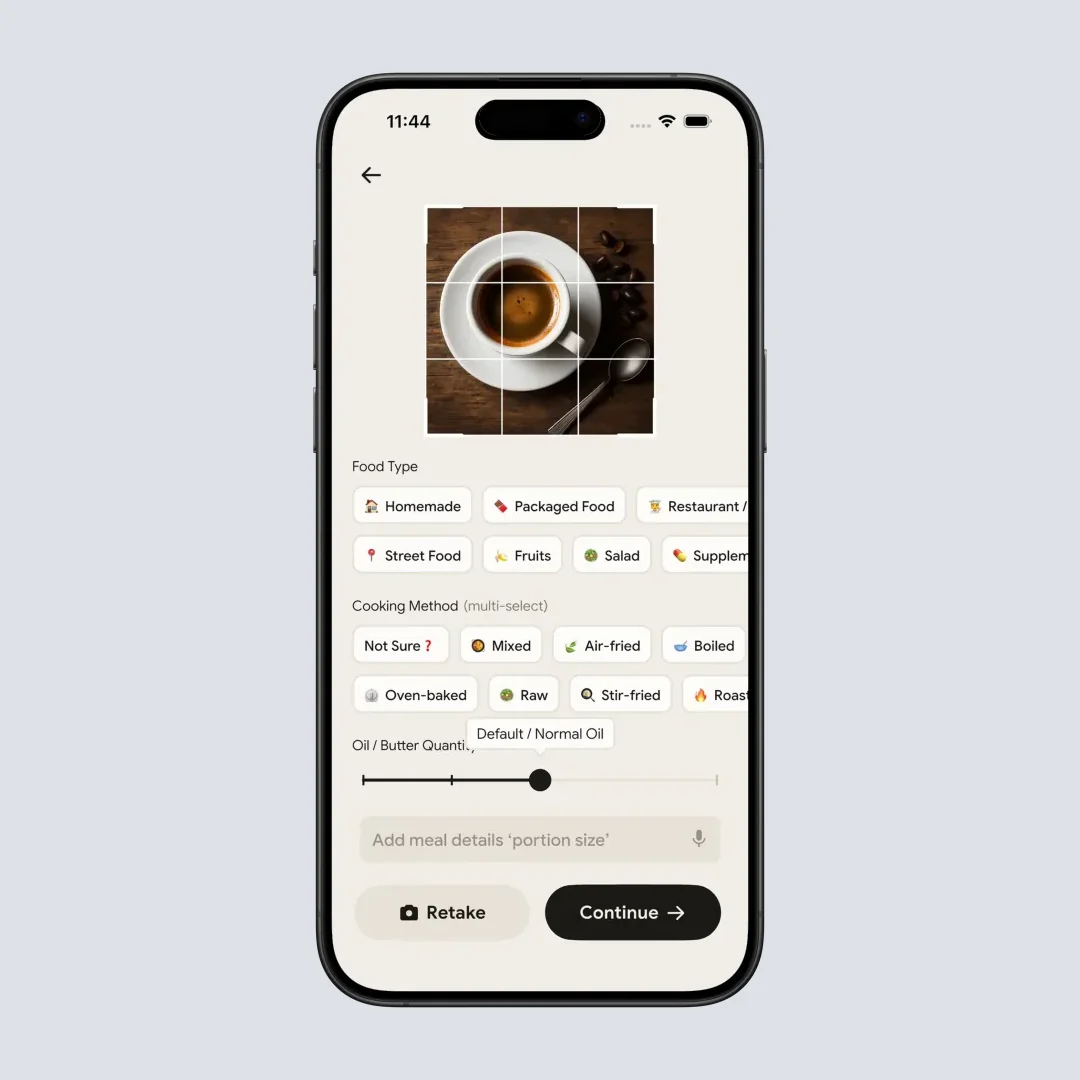
Weigh your staples for one week and you will know what 4 oz of chicken looks like. If weighing every meal gets old, NutriScan can log a meal from a photo. The Free plan includes 5 photo scans a week, and Premium is about $59 a year with unlimited scans. That is useful for the meals you cannot weigh, such as a restaurant plate or a takeout bowl.
Who Should Adjust This Plan
WARNING
These plans are general guidance, not medical advice. Talk to your doctor before raising protein if you have kidney disease, liver disease or diabetes, or if you take medication that affects your kidneys or blood sugar. The same applies if you are pregnant, breastfeeding, under 18, or recovering from an eating disorder. Calorie targets also vary, and 2,000 is a reference point, not a rule.
IMPORTANT
Recap: everything you covered in this guide.
Step 1: 120 g suits about 165 lb (75 kg) at 1.6 g per kg; 150 g suits that weight at 2.0 g per kg
Step 2: A 7-day plan averaging 1,997 calories and 123 g of protein
Step 3: A 150 g day (1,965 calories) and a vegan day (1,669 calories, 132.4 g)
Step 4: Tuna, egg whites, chicken, seitan and Greek yogurt give the most protein per calorie (revealed)
Step 5: Weigh dry foods once, log a normal week, and check the gap
Frequently Asked Questions
How do I eat 120 g of protein a day on 2,000 calories?
Set aside 480 of your 2,000 calories for protein, which is 24 percent. Put 30 to 40 g in each of three meals and 15 to 20 g in a snack, using foods like chicken, tuna, Greek yogurt, eggs, tofu and lentils. The weekly plan above averages about 1,997 calories and 123 g.
Can a vegan hit 130 g of protein under 1,800 calories?
Yes. The vegan day above gives 132 g for 1,669 calories using tofu, seitan, edamame, tempeh, lentils, soya chunks and soy milk. Seitan, soya chunks and tofu carry the most protein per calorie. Vegans also need a vitamin B12 source, and the NHS notes that B12 is not found naturally in plant foods.
What is the easiest way to get 150 g of protein without shakes?
Anchor each meal on one protein food of 30 to 50 g, add a 20 g snack of Greek yogurt or cottage cheese, and choose foods with 15 or more grams of protein per 100 calories when calories are tight. The 150 g day above uses eggs, tuna, chicken and lentils and reaches 153 g for 1,965 calories.
Is 150 g of protein a day too much?
For a healthy adult it falls inside the 1.4 to 2.0 g per kg range the International Society of Sports Nutrition gives for people who exercise, at roughly 75 to 107 kg of body weight. People with kidney disease, and anyone on a medically prescribed diet, should talk to their doctor before raising protein.
Is 120 g of protein enough to build muscle?
For a person around 165 lb (75 kg), 120 g is 1.6 g per kg, the point where extra protein stopped adding muscle in a meta-analysis of 49 trials. Heavier people need more, and the calculator above gives your own number.
For a version built around long workdays and age-related muscle loss, read weight loss after 45.