Soya Chunks: Calories, Nutrition and Health Benefits
Plant-based protein powerhouse with 26g protein per serving—perfect meat alternative for muscle gain, weight loss, and heart health.
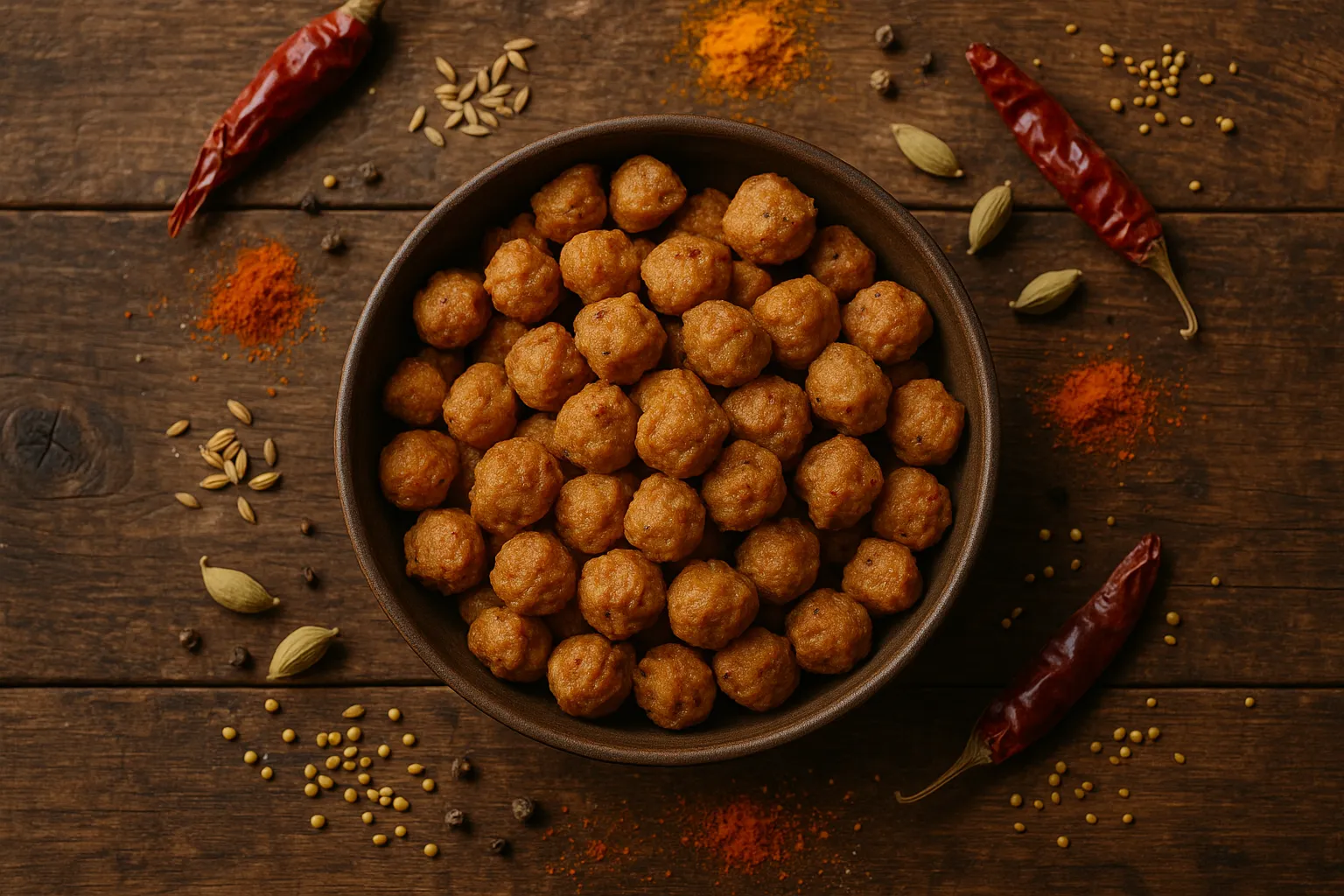
Quick Nutrition Facts
Per 150g Cooked (50g Dry)
| Nutrient | Amount |
|---|---|
| Calories | 172 kcal |
| Protein | 26g |
| Carbohydrates | 16.5g |
| Fiber | 6g |
| Sugars | 3.3g |
| Fat | 0.75g |
| Calcium | 175mg |
| Iron | 5.2mg |
| Magnesium | 140mg |
| Potassium | 615mg |
Macronutrient Breakdown
 ChatGPT
  Claude
  AI Mode
  Perplexity
NUTRITIONIST INSIGHT
Soya chunks provide complete plant protein with all 9 essential amino acids. With 26g protein per serving, they rival chicken breast while offering cholesterol-free nutrition and heart-protective isoflavones.
Soya Chunks Protein Per 100 g, 50 g and 25 g
Soya chunks protein is the highest of any everyday vegetarian staple: 52 g per 100 g of dry chunks, which is more than paneer, tofu, or chicken breast at the same weight. Every figure below is dry weight, before soaking.
| Nutrient | Per 100 g dry | Per 50 g dry (about 1 cup) | Per 25 g dry |
|---|---|---|---|
| Calories | 345 kcal | 172 kcal | 86 kcal |
| Protein | 52 g | 26 g | 13 g |
| Carbohydrates | 33 g | 16.5 g | 8.3 g |
| Sugars | 6.6 g | 3.3 g | 1.7 g |
| Fiber | 12 g | 6 g | 3 g |
| Fat | 1.5 g | 0.75 g | 0.4 g |
| Calcium | 350 mg | 175 mg | 88 mg |
| Iron | 10.4 mg | 5.2 mg | 2.6 mg |
| Magnesium | 280 mg | 140 mg | 70 mg |
| Potassium | 1,230 mg | 615 mg | 308 mg |
Dry weight is where most of the confusion comes from. Chunks soak up roughly three times their weight in water, so 25 g of dry chunks becomes about 100 g on the plate and carries 13 g of protein, not 52 g. Weigh the packet, not the bowl.
The protein is this concentrated because soya chunks are textured soy protein: the oil has already been pressed out of defatted soy flour, which is also why the fat number sits near 1.5 g per 100 g.
Soya chunks vs two close vegetarian proteins, per 100 g
| Per 100 g | Soya chunks (dry) | Paneer | Tofu |
|---|---|---|---|
| Protein | 52 g | 18 g | 8 g |
| Calories | 345 kcal | 296 kcal | 80 kcal |
| Calories per 10 g protein | 66 kcal | 164 kcal | 100 kcal |
Per gram of protein, soya chunks cost less than half the calories of paneer. Source for the 100 g dry basis: NFNA and Niva Bupa soya chunks nutrition tables.
Myth Busters
MYTH #1: Soya Chunks Increase Estrogen in Men
TRUTH: Research shows moderate soy consumption (25-50g protein) does not affect testosterone levels or masculinity. Phytoestrogens in soy are plant compounds structurally different from human estrogen and don't cause hormonal imbalance.
MYTH #2: Soya Is Inferior to Animal Protein
TRUTH: Soya chunks are a complete protein containing all essential amino acids. Studies confirm soy protein supports muscle growth comparable to whey protein when consumed in adequate amounts.
MYTH #3: Soya Chunks Cause Thyroid Problems
TRUTH: Soya doesn't cause thyroid issues in people with normal thyroid function. Only those with iodine deficiency or existing thyroid conditions should monitor intake. Ensure adequate iodine from iodized salt.
MYTH #4: Soya Is Genetically Modified and Unsafe
TRUTH: In India, most soya chunks come from non-GMO soybeans. Look for organic or non-GMO certified brands. Soy has been consumed safely in Asia for thousands of years.
MYTH #5: Soya Chunks Are Processed Junk Food
TRUTH: Soya chunks are made from defatted soy flour through extrusion—minimal processing compared to most packaged foods. They contain no preservatives or artificial additives when purchased plain.
MYTH #6: You Need to Eat Meat for Complete Protein
TRUTH: Soya chunks provide all 9 essential amino acids making them a complete protein. Combined with balanced diet, they fully meet protein needs without animal products.
NutriScore by Health Goals
| Health Goal | NutriScore | Why This Score? |
|---|---|---|
| Weight Loss |  | Only 172 calories with 26g protein—highest protein-to-calorie ratio. Fiber promotes fullness and reduces cravings. |
| Muscle Gain | | Complete protein with all essential amino acids for muscle synthesis. Leucine content supports muscle protein synthesis comparable to animal sources. |
| Diabetes Management | | Low glycemic index, high protein and fiber stabilize blood sugar. Isoflavones may improve insulin sensitivity. |
| PCOS Management | | High protein aids weight management critical for PCOS. Low fat content and phytoestrogens may help balance hormones. |
| Pregnancy Nutrition |  | Excellent protein and iron source. Moderate intake (1-2 servings daily) provides nutrients without excessive isoflavones. Consult healthcare provider. |
| Viral/Flu Recovery | | High protein supports immune function and tissue repair. Iron and zinc aid recovery. Easy to digest when cooked soft. Pair with vitamin C-rich foods for better iron absorption. |
PERSONALIZED NUTRITION
Track your meals with NutriScan for personalized NutriScores based on your specific health goals!
Blood Sugar Response to Soya Chunks
Understanding how soya chunks affect your blood glucose helps with meal planning and portion control.
Typical Glucose Response Curve
This chart shows typical blood glucose response for general healthy individuals. Individual responses may vary. Not medical advice.
Why Minimal Spike?
Soya chunks have exceptionally stable blood sugar response due to:
- High protein (26g) - Slows gastric emptying and glucose absorption
- Low glycemic index - Minimal impact on blood sugar
- High fiber (6g) - Further reduces glucose spike
- Minimal carbs - Only 16.5g per serving
Best Pairings for Balanced Meals
- 🥗 Mixed vegetables - Adds micronutrients and more fiber
- 🍚 Whole grain rice or roti - Provides complex carbs for sustained energy
- 🍅 Tomato-based curry - Adds lycopene and vitamin C for iron absorption
- 🥬 Green leafy vegetables - Calcium, iron, and vitamins complement soya nutrition
Cultural Significance
Soya chunks (also called textured vegetable protein or TVP) originated in the United States in the 1960s as a meat alternative.
In India:
- Became popular in the 1980s-90s as affordable protein source
- Widely adopted by vegetarian communities across India
- Known by various names: soya chunks, meal maker, nutri nuggets
- Used in traditional Indian gravies, biryanis, and dry preparations
- Staple protein in North Indian cuisine, particularly Punjab
Global Impact:
- Popular in vegetarian and vegan diets worldwide
- Used extensively in Asian cuisines (China, Indonesia, Philippines)
- Sustainable protein alternative reducing environmental impact
- Requires 95% less water than beef production
- Key ingredient in plant-based meat alternatives
Compare & Substitute
Soya Chunks vs Other Protein Sources (Per 100g)
| Nutrient | 🥡 Soya Chunks (Cooked) | 🍗 Chicken Breast | 🧀 Paneer | 🍛 Chickpeas (Cooked) |
|---|---|---|---|---|
| Calories | 115 kcal | 165 kcal | 265 kcal | 164 kcal |
| Protein | 17.3g | 31g | 14g | 8.9g |
| Carbs | 11g | 0g | 3.6g | 27g |
| Fiber | 4g | 0g | 0g | 7.6g |
| Fat | 0.5g | 3.6g | 20.8g | 2.6g |
| Iron | 3.5mg | 0.7mg | 0.2mg | 2.9mg |
| Calcium | 117mg | 15mg | 208mg | 49mg |
| Cholesterol | 0mg | 85mg | 56mg | 0mg |
| Best For | Weight loss, muscle gain, plant-based diet | Muscle gain, low-carb | High-fat needs, keto | Fiber, vegan protein |
Frequently Asked Questions
Are soya chunks good for weight loss?
Yes, soya chunks are excellent for weight loss. With only 172 calories and 26g protein per serving, they provide one of the best protein-to-calorie ratios available.
Weight loss benefits: High protein increases satiety and metabolism; 6g fiber promotes fullness; low fat reduces overall calories; helps preserve muscle mass during calorie deficit.
Best practices: Consume 1-2 servings daily, use minimal oil in cooking, pair with vegetables for volume, avoid deep frying.
Can diabetics eat soya chunks?
Yes, soya chunks are highly beneficial for diabetics due to low glycemic index and high protein content that stabilizes blood sugar.
Tips for diabetics: Pair with non-starchy vegetables; use tomato-based gravies instead of cream; monitor portion sizes (150g cooked per meal); combine with complex carbs like brown rice.
How much protein is in soya chunks?
Soya chunks contain approximately 26g protein per 150g cooked serving (50g dry). This is comparable to chicken breast and makes them one of the richest plant-based protein sources available.
For muscle gain, consume 2-3 servings daily spread across meals to maximize protein synthesis.
What are the main health benefits of soya chunks?
Key Benefits:
- Complete Protein: All 9 essential amino acids for muscle growth and repair
- Heart Health: Zero cholesterol, isoflavones reduce LDL cholesterol
- Bone Strength: 175mg calcium per serving, isoflavones support bone density
- Weight Management: High satiety, low calories, preserves lean muscle
- Iron Source: 5.2mg iron per serving (29% daily value), important for vegetarians
- Hormone Balance: Phytoestrogens may support menopausal health
Can men eat soya chunks daily?
Yes, men can safely eat soya chunks daily. Moderate consumption (25-50g protein from soy daily) does not affect testosterone levels, fertility, or masculinity.
Research shows: No hormonal changes in men consuming up to 50g soy protein daily; athletes and bodybuilders use soya regularly; Asian populations consume soy for generations without hormonal issues.
Recommended intake: 1-2 servings (50-100g dry) daily as part of varied protein sources.
Are soya chunks better than chicken?
Both are excellent proteins with different nutritional profiles:
Soya Chunks Advantages: Zero cholesterol; more fiber (6g vs 0g); higher calcium and magnesium; more sustainable and affordable; suitable for vegetarian/vegan diets.
Chicken Advantages: Higher protein per 100g (31g vs 17g); contains vitamin B12; more bioavailable iron (heme iron); complete amino acid profile more readily absorbed.
Recommendation: Both can be part of healthy diet. Vegetarians should rely on soya; omnivores can alternate for variety. Ensure adequate B12 supplementation on plant-based diets.
How to prepare soya chunks to reduce gas?
Proper preparation minimizes digestive discomfort:
- Boil in water for 5-7 minutes to rehydrate
- Squeeze out excess water thoroughly—this removes anti-nutrients
- Soak in warm water with pinch of salt for 10-15 minutes
- Boil again in fresh water for 2-3 minutes
- Season and cook with ginger, garlic, cumin—aids digestion
Adding asafoetida (hing) and cumin to recipes further reduces gas formation.
How much soya chunks protein is in one serving?
A 25 g dry serving, which swells to about 100 g cooked, gives 13 g of protein for 86 calories. A 50 g dry serving, roughly one cup of chunks, gives 26 g of protein for 172 calories. The 52 g figure you see quoted everywhere is for 100 g of dry chunks, which is a large portion once it has soaked.


Similar Nutritious Foods
4505 Chicharrones Classic Chili Salt
7 Eleven Japan Crispy Corn Cheese
Explore More Nutrition Tools & Resources
AI Calorie Counter App - Snap a Photo, Get Macros
AI Nutritionist App That Reads Your Logged Meals
Best Protein Supplements for Women
Bulking Meal Plan App That Sets Your Surplus
ChatGPT Calorie Counter Alternative That Keeps the Total
ChatGPT Diet Plan Alternative That Tracks What You Eat
ChatGPT Weight Loss Coach Alternative With a Food Log
Fast Food Calorie Counter App That Reads the Tray
Free Calorie Tracker App with AI Photo Scans | NutriScan
Indian Diet Plan App With Veg and Non Veg Meals
Indian Food Calorie Calculator - Get Instant Nutrition Facts for Desi Meals — 2026
Intermittent Fasting for Women, Timer and Meal Log App
Intermittent Fasting Tracker App - Free Fasting Timer
Macro Tracker App That Fills the Numbers From a Photo
Mediterranean Diet Meal Plan App That Counts the Oil
Micronutrient Tracker App for Vitamins and Minerals
MyFitnessPal Alternative That Stays Free | NutriScan
NutriScore App: A Free Grade on Every Meal | NutriScan
Nutrition Label Scanner App for the Amount You Ate
Second Trimester Protein Guide
Vegetarian Meal Plan App With a Protein Target
Voice Calorie Counter - Speak to Track Meals Hands-Free
Water and Calorie Tracker App - Free Water Log