How Much Caffeine Is Too Much? 24 Drinks and Foods Compared
 ChatGPT
 Claude
 AI Mode
 Perplexity
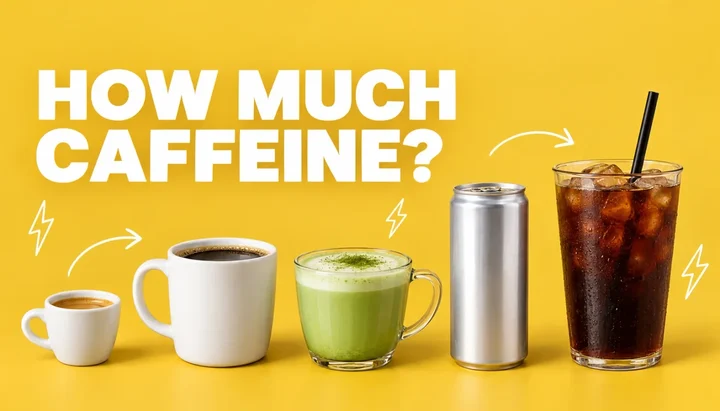
For most healthy adults, the FDA cites 400 mg of caffeine a day as an amount not generally associated with negative effects. One grande Starbucks Cold Brew is 205 mg, about half of that. A serve of Milo has under 5 mg, and Olipop Classic Root Beer has none.
Caffeine figures checked on October 11, 2026 against each maker's own page (Starbucks, Nestle Milo, Olipop, Red Bull, Coca-Cola, Yerba Madre, Wendy's) and the European Food Safety Authority's reference table. Starbucks marks its caffeine values as approximate.
Summary
- Adults: 400 mg a day is the figure both the FDA and the European Food Safety Authority (EFSA) use for healthy adults.
- Pregnancy: ACOG describes moderate intake as less than 200 mg a day. EFSA uses 200 mg a day from all sources.
- Biggest single servings: a grande Starbucks Pike Place Roast is listed at 315 to 390 mg. A grande Caffè Americano is 225 mg and a grande Cold Brew is 205 mg.
- Smallest: Milo powder has 2.2 to 4.8 mg per 20 g serve. Olipop Classic Root Beer is caffeine-free.
How much caffeine is too much in a day?
For most adults, 400 mg a day is the reference point. The FDA says it has cited 400 mg a day, "about two to three 12-fluid-ounce cups of coffee", as an amount not generally associated with negative effects. EFSA's 2015 scientific opinion reached the same daily figure for healthy adults, except pregnant women.
| Group | Published figure | Source |
|---|---|---|
| Healthy adults, per day | 400 mg | FDA, EFSA |
| Healthy adults, single dose | 200 mg | EFSA |
| Pregnancy, per day | Less than 200 mg | ACOG |
| Pregnancy and breastfeeding, per day | 200 mg | EFSA |
| Children and adolescents, per day | 3 mg per kg of body weight | EFSA |
| Children under 2 | Avoid caffeinated drinks | Dietary Guidelines for Americans, cited by the FDA |
The FDA writes that "too much" varies with body weight, medications, medical conditions and individual sensitivity. It lists the signs of excess as a faster heart rate, palpitations, high blood pressure, insomnia, anxiety, jitters, upset stomach, nausea and headache.
The FDA also estimates that toxic effects such as seizures can be observed with rapid consumption of around 1,200 mg.

How much caffeine is in common drinks?
The table lists the drinks and foods people search for most, ordered from most caffeine to least. Each figure comes from the page linked in the last column. The share of 400 mg is our own arithmetic.
| Drink or food | Serving | Caffeine (mg) | Share of 400 mg | Source |
|---|---|---|---|---|
| Starbucks Pike Place Roast, brewed | Grande, 16 fl oz | 315 to 390 | 79 to 98% | Starbucks |
| Starbucks Caffè Americano | Grande, 16 fl oz | 225 | 56% | Starbucks |
| Starbucks Cold Brew | Grande, 16 fl oz | 205 | 51% | Starbucks |
| Starbucks Iced Coffee | Grande, 16 fl oz | 185 | 46% | Starbucks |
| Starbucks Caramel Macchiato | Grande, 16 fl oz | 150 | 38% | Starbucks |
| Starbucks White Chocolate Mocha | Grande, 16 fl oz | 150 | 38% | Starbucks |
| Starbucks Cappuccino | Grande, 16 fl oz | 150 | 38% | Starbucks |
| Yerba Madre Unsweetened Original | 1 can, 15.5 fl oz | 150 | 38% | Yerba Madre |
| Wendy's Sparkling Energy | 1 drink, size not stated | 80 to 120 | 20 to 30% | Wendy's |
| Filter coffee | 1 cup, 200 ml | 90 | 23% | EFSA |
| Red Bull Energy Drink | 1 can, 8.4 fl oz | 80 | 20% | Red Bull |
| Espresso | 1 shot, 60 ml | 80 | 20% | EFSA |
| Starbucks Matcha Latte | Grande, 16 fl oz | 65 | 16% | Starbucks |
| Olipop Citrus Rush | 1 can | 60 | 15% | Olipop |
| Olipop Vintage Cola | 1 can | 50 | 13% | Olipop |
| Starbucks Strawberry Açaí Refresher | Grande, 16 fl oz | 50 | 13% | Starbucks |
| Starbucks Mango Dragonfruit Refresher | Grande, 16 fl oz | 50 | 13% | Starbucks |
| Black tea | 1 cup, 220 ml | 50 | 13% | EFSA |
| Diet Coke | 1 can, 12 fl oz | 46 | 12% | Coca-Cola |
| Coca-Cola | 1 can, 12 fl oz | 34 | 9% | Coca-Cola |
| Plain (dark) chocolate | 1 bar, 50 g | 25 | 6% | EFSA |
| Milk chocolate | 1 bar, 50 g | 10 | 3% | EFSA |
| Milo powder | 1 serve, 20 g | 2.2 to 4.8 | about 1% | Nestle Milo |
| Olipop Classic Root Beer | 1 can | 0 | 0% | Olipop |
| Matcha ice cream | Not published (Häagen-Dazs) |
Generic rows (filter coffee, espresso, black tea, chocolate) use EFSA's reference amounts, which EFSA calls approximate. An empty cell means the maker publishes no caffeine figure that we could find. Linked names go to the NutriScan food page for calories and sugar.
In this table, plain brewed coffee carries more caffeine than any espresso drink of the same size, and one grande Pike Place Roast can reach 98% of the adult daily figure.
Does Milo have caffeine?
Yes, a small amount. Nestle's Milo Australia FAQ says caffeine occurs naturally in cocoa and that Milo powder contains 0.011 to 0.024 g of caffeine per 100 g, which is 2.2 to 4.8 mg per 20 g serve. Nestle lists a cup of instant coffee at around 70 mg.
The number changes when coffee goes into the cup. An iced Milo latte made with a shot of espresso carries the espresso's caffeine as well, and EFSA's reference amount for one 60 ml espresso is 80 mg.
Does Olipop Root Beer have caffeine?
No. Olipop states that four of its flavors contain caffeine from green tea extract. Vintage Cola, Cherry Cola and Doctor Goodwin have 50 mg per can and Citrus Rush has 60 mg per can. "The rest of our flavors are caffeine-free", which covers Classic Root Beer.
For comparison, Coca-Cola lists 34 mg in a 12 fl oz can of Coke and 46 mg in Diet Coke. An Olipop Vintage Cola has more caffeine than either.
Which Starbucks drinks have the most and least caffeine?
Plain coffee has the most and the Refreshers have the least. For a grande (16 fl oz), Starbucks lists 315 to 390 mg for Pike Place Roast, 225 mg for a Caffè Americano, 65 mg for a Matcha Latte and 50 mg for a Strawberry Açaí Refresher.
The Refresher's caffeine comes from the green coffee extract blend in Starbucks' ingredient list. The same page says the drink can be ordered with no caffeine, or as an Energy Refresher at 125 mg per grande. Starbucks marks every caffeine value as approximate.
Does matcha ice cream or chocolate have caffeine?
Yes, in small and usually unlabeled amounts. The FDA says caffeine must appear in the ingredient list only when it is added on its own. When it arrives inside an ingredient such as chocolate or tea, only that ingredient is listed.
For chocolate, EFSA's reference amounts are 25 mg for a 50 g bar of plain chocolate and 10 mg for a 50 g bar of milk chocolate. The Häagen-Dazs product page we checked for its matcha green tea ice cream lists no caffeine amount, so the matcha ice cream cell in the table stays empty.
Decaf is not zero either. The FDA says decaf coffee typically has 2 to 15 mg in an 8 fl oz cup.
How much caffeine is safe during pregnancy?
Both published figures are 200 mg a day. ACOG's Committee Opinion 462, reaffirmed in 2026, says moderate caffeine consumption of less than 200 mg per day "does not appear to be a major contributing factor in miscarriage or preterm birth". ACOG's patient page describes that as the amount in one 12-ounce cup of coffee. EFSA says intakes up to 200 mg a day from all sources raise no safety concern for the fetus.
Against that figure, one grande Cold Brew (205 mg) or Caffè Americano (225 mg) is already over.
If you are pregnant or breastfeeding
This article reports what ACOG and EFSA publish. It is not medical advice, and your own limit is a question for your doctor or midwife. Our pregnancy diet plan guide and pregnancy calorie calculator cover the food side.

How much caffeine is OK for children and teens?
EFSA proposes 3 mg per kg of body weight a day for habitual intake by children and adolescents. For a 30 kg child that works out to 90 mg. One 8.4 fl oz Red Bull at 80 mg is nearly all of it.
The FDA cites the American Academy of Pediatrics, whose experts advise against energy drinks for children and teens, and the Dietary Guidelines for Americans, which say children under 2 should avoid caffeinated drinks. Talk with your child's doctor about their intake.
How do you add up your own day?
Write down each caffeinated item with its size, look up the maker's number and add. Here is one ordinary day using the table:
- Morning: grande Caffè Americano, 225 mg.
- Lunch: one can of Coca-Cola, 34 mg.
- Afternoon: grande Matcha Latte, 65 mg.
- Evening: 50 g of plain chocolate, 25 mg.
That totals 349 mg, under the 400 mg adult figure and well over the 200 mg pregnancy figure. Timing counts too. EFSA notes that a single 100 mg dose close to bedtime may affect sleep in some adults. Related reading: food and sleep and does coffee break a fast. If you work nights, our night shift diet plan sets a caffeine cutoff around a 7 pm to 7 am schedule.
What does NutriScan track in these drinks?
NutriScan does not total caffeine, so the sum above is one you do by hand. What the app logs is the rest of the cup. Starbucks lists a grande Cappuccino at 140 calories and a grande White Chocolate Mocha at 390 calories, with the same 150 mg of caffeine in each. Scan the drink or type its name and the calories and sugar go into your day.
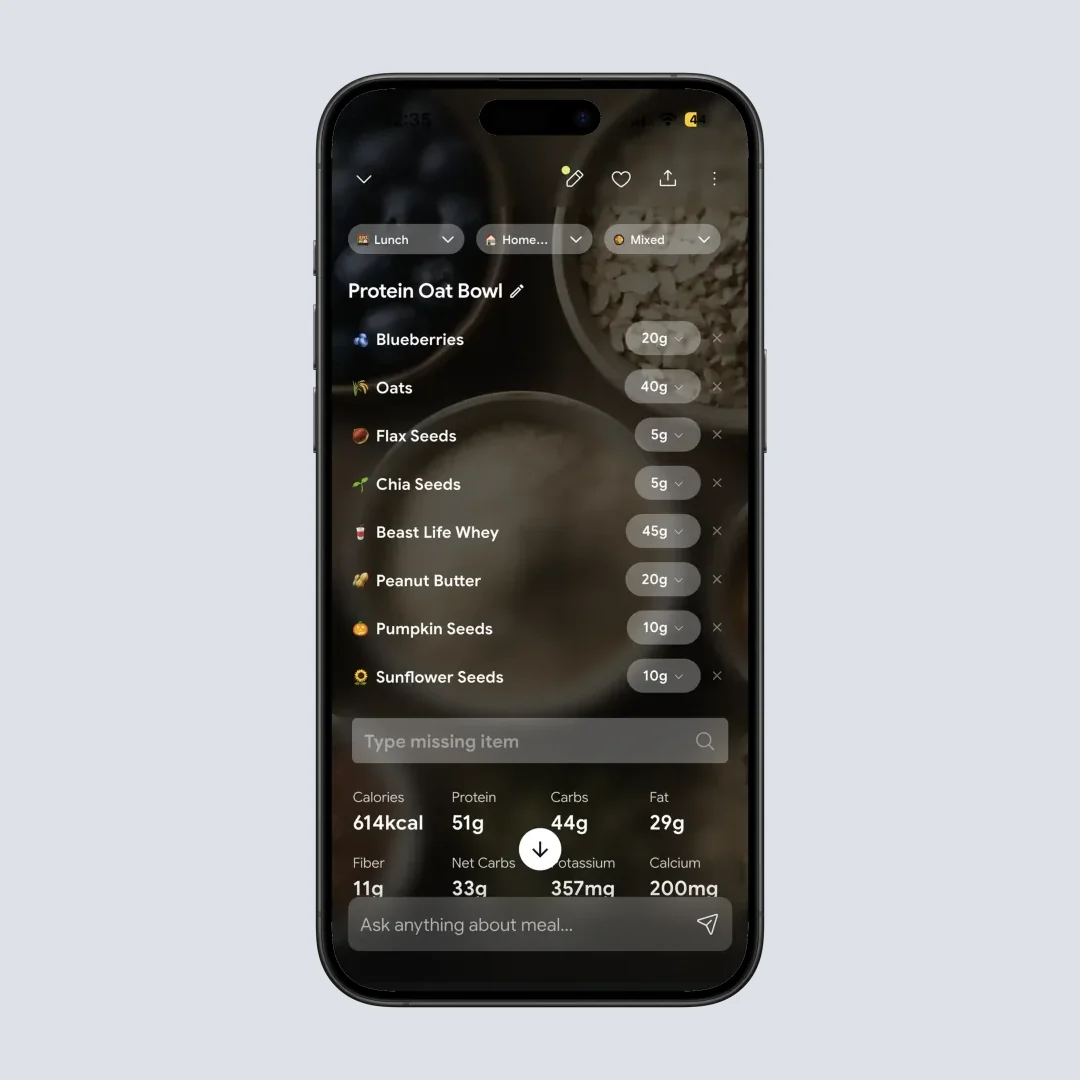
Nutrition Details for a logged meal. You can pin Sugar to Today's Count on the home screen to watch sweetened coffee drinks add up.
The free plan includes 5 scans a week. The meal scan guide shows how a scan works.
What else do people ask about caffeine?
How much caffeine is too much in a day?
For most healthy adults, the FDA cites 400 mg a day as an amount not generally associated with negative effects, and the European Food Safety Authority reached the same figure in 2015. Sensitivity varies from person to person. The FDA estimates that toxic effects such as seizures can appear with rapid consumption of around 1,200 mg.
Does Milo have caffeine?
Yes, a small amount that comes from the cocoa. Nestle's Milo Australia FAQ says Milo powder contains 2.2 to 4.8 mg of caffeine per 20 g serve. A Milo made with coffee, such as an iced Milo latte, also carries the caffeine of the coffee.
Does Olipop Root Beer have caffeine?
No. Olipop says four of its flavors contain caffeine from green tea extract: Vintage Cola, Cherry Cola and Doctor Goodwin at 50 mg per can, and Citrus Rush at 60 mg per can. It states that the rest of its flavors, which includes Classic Root Beer, are caffeine-free.
Does the Strawberry Acai Refresher have caffeine?
Yes. Starbucks lists about 50 mg of caffeine in a grande (16 fl oz) Strawberry Acai Refresher, and the same for the Mango Dragonfruit Refresher. The caffeine comes from the green coffee extract blend in the ingredient list.
How much caffeine is in a Starbucks matcha latte?
Starbucks lists about 65 mg of caffeine in a grande (16 fl oz) Matcha Latte. That is less than half of the 150 mg it lists for a grande Cappuccino or Caramel Macchiato.
How much caffeine is safe during pregnancy?
The American College of Obstetricians and Gynecologists says moderate caffeine consumption, less than 200 mg a day, does not appear to be a major contributing factor in miscarriage or preterm birth. The European Food Safety Authority also uses 200 mg a day from all sources. Your own limit is a question for your doctor or midwife.
Does matcha ice cream have caffeine?
Matcha is powdered green tea, so matcha ice cream contains some caffeine. The Häagen-Dazs product page we checked for its matcha green tea ice cream lists no caffeine amount.