Night Shift Diet: Eating Plan for a 7 pm to 7 am Schedule
 ChatGPT
 Claude
 AI Mode
 Perplexity
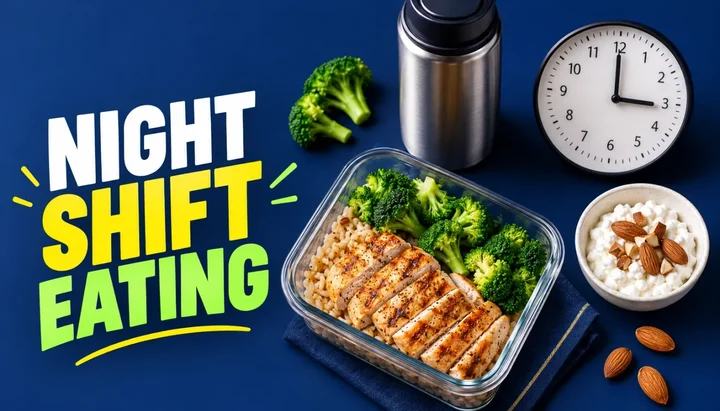
TL;DR - Night Shift Eating Plan, 7 pm to 7 am
The schedule: Eat at 4:00 pm, 6:30 pm, 11:30 pm, 3:00 am and 7:45 am. That is 633, 652, 175, 193 and 366 kcal, about 2,020 kcal and 153 g protein for the day.
What changes at night: Almost two thirds of the calories land before the shift starts. After 11 pm you eat only small snacks of 175 to 193 kcal, because a 30 percent meal at 12:30 am left lab participants sleepier and worse at a driving simulator at 4:00 am than a 10 percent snack did.
Caffeine: Last cup by 1:00 am, and never later than 2:30 am if you go to bed at 8:30 am.
A night shift diet for a 7 pm to 7 am schedule works best as five planned eating times: two real meals before you clock in (about 1,285 kcal together), a small snack near 11:30 pm (175 kcal), another near 3:00 am (193 kcal), and a lighter meal at 7:45 am before you sleep (366 kcal). That adds up to about 2,020 kcal and 153 g of protein, and you scale it up or down with your own number from the calculator below. Caffeine stops about 6 hours before you go to bed.
Your maintenance calories
2,556calories a day
Eat around this to hold your current weight.
Your TDEE at every activity level
| Activity level | Multiplier | calories a day |
|---|---|---|
| Sedentary | 1.2 | 1,979 |
| Lightly active | 1.375 | 2,267 |
| Moderately active | 1.55 | 2,556 |
| Very active | 1.725 | 2,844 |
| Extra active | 1.9 | 3,133 |
An estimate from the Mifflin-St Jeor equation. Track for two weeks and adjust from what the scale actually does.
Enter your age, height, weight and activity level above to get your daily calorie target. Then use the scaling table further down to size the plan to it. The calculator works the same for night workers as for anyone else, because the number it gives you is a daily total, not a clock-time rule.
What this plan covers
- The schedule at a glance, hour by hour
- Every meal with calories and protein, adding up to the day
- What to eat at 3 am, and what to skip
- The research behind eating less at night
- The mystery item: the one caffeine habit that costs you the most sleep (revealed in the caffeine section)
Your 7 pm to 7 am eating schedule at a glance
This plan assumes you wake at about 3:30 pm after a day sleep of roughly 7 hours, work 7 pm to 7 am with a short commute each way, and are back in bed by 8:30 am. If your sleep or commute is different, shift every time by the same amount and keep the gaps between them.
| Time | What | kcal | Protein |
|---|---|---|---|
| 4:00 pm | Wake-up meal | 633 | 46.9 g |
| 6:30 pm | Pre-shift dinner (portable) | 652 | 61.3 g |
| 7:00 pm | Shift starts | ||
| 11:30 pm | Break snack | 175 | 6.5 g |
| 1:00 am | Last caffeine | ||
| 3:00 am | Small snack | 193 | 15.5 g |
| 7:00 am | Shift ends | ||
| 7:45 am | Wind-down meal at home | 366 | 22.6 g |
| 8:30 am | Bed | ||
| Day total | 2,019 | 152.8 g |
Only 368 kcal, or 18 percent of the day, is eaten between 11:30 pm and 3:00 am. About 64 percent comes before you start work, and 18 percent comes in the morning. The next sections give the food behind each row.
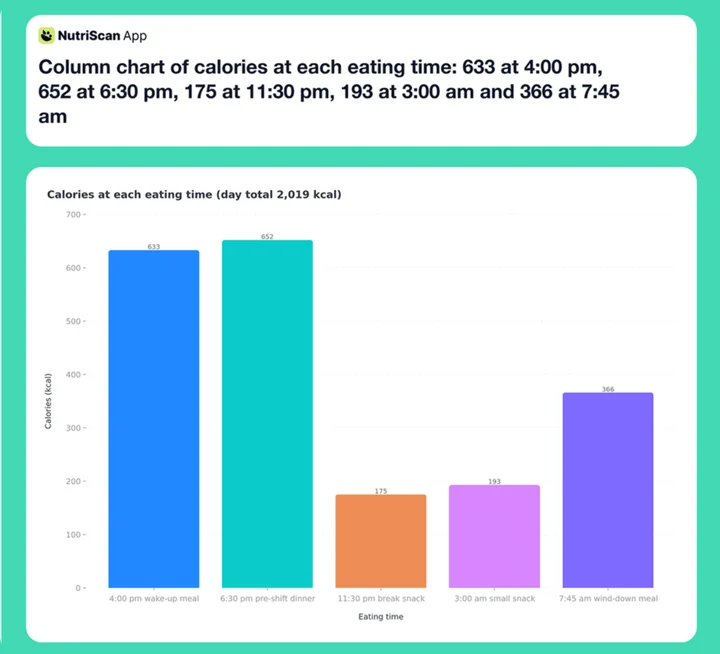
Figure 1: The two meals before the shift carry 633 and 652 kcal, while the two night snacks stay at 175 and 193.
The full day, meal by meal
Calories and protein below come from per-serving values on our own food pages: boiled egg, Greek yogurt, oats, chicken breast, brown rice, cottage cheese, almonds and hummus. Brands and cooking methods move the numbers a little, so treat each line as an estimate within about 10 percent.

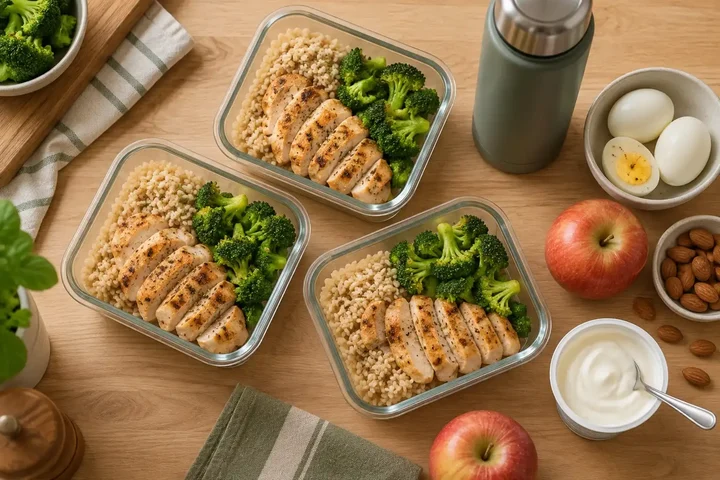
Prep on a day off, and the 6:30 pm container is ready to grab on the way out.
4:00 pm: the wake-up meal (633 kcal)
You are about 30 minutes out of bed and 3 hours from your shift. Eat a proper breakfast with protein, because this is your first meal of the biological day.
| Food | Portion | kcal | Protein |
|---|---|---|---|
| Rolled oats, dry | 40 g (about 1/2 cup) | 156 | 6.8 g |
| Plain nonfat Greek yogurt | 1 cup (227 g) | 134 | 23.2 g |
| Banana | 1 medium | 105 | 1.3 g |
| Hard-boiled eggs | 2 large | 156 | 12.6 g |
| Almonds | 1/2 oz (14 g, about 11 nuts) | 82 | 3.0 g |
| Meal total | 633 | 46.9 g |
Cook the oats in water or stir them into the yogurt cold. Boil the eggs for the week on your day off.
6:30 pm: the pre-shift dinner (652 kcal)
This is your biggest protein meal and the last full meal before the night. Pack it in a container, so it works at home or in the parking lot.
| Food | Portion | kcal | Protein |
|---|---|---|---|
| Cooked chicken breast | 6 oz (170 g) | 280 | 54.0 g |
| Cooked brown rice | 1 cup (195 g) | 218 | 4.5 g |
| Broccoli | 100 g (about 1 cup chopped) | 34 | 2.8 g |
| Olive oil | 1 tablespoon | 120 | 0 g |
| Meal total | 652 | 61.3 g |
If you cannot cook, use a rotisserie chicken breast with microwave rice and a bag of frozen broccoli. The numbers stay close.
11:30 pm: the break snack (175 kcal)
Four and a half hours in, most night workers hit a first dip. Keep this one light and easy to eat at a desk or in a break room.
| Food | Portion | kcal | Protein |
|---|---|---|---|
| String cheese | 1 stick (28 g) | 80 | 6.0 g |
| Apple | 1 medium | 95 | 0.5 g |
| Snack total | 175 | 6.5 g |
3:00 am: the small snack (193 kcal)
The next section covers this one in detail. In the base plan it is a half cup of cottage cheese with a half ounce of almonds.
| Food | Portion | kcal | Protein |
|---|---|---|---|
| Cottage cheese | 1/2 cup (113 g) | 111 | 12.5 g |
| Almonds | 1/2 oz (14 g) | 82 | 3.0 g |
| Snack total | 193 | 15.5 g |
7:45 am: the wind-down meal (366 kcal)
Eat this after you get home, not on the drive. Keep it moderate in fat and size so you fall asleep without a heavy stomach.
| Food | Portion | kcal | Protein |
|---|---|---|---|
| Whole wheat toast | 2 slices | 138 | 7.2 g |
| Hard-boiled eggs | 2 large | 156 | 12.6 g |
| Hummus | 2 tablespoons | 47 | 2.2 g |
| Carrot | 1 medium | 25 | 0.6 g |
| Meal total | 366 | 22.6 g |
To check the day: 633 + 652 + 175 + 193 + 366 = 2,019 kcal, and 46.9 + 61.3 + 6.5 + 15.5 + 22.6 = 152.8 g protein. That is a high-protein day by design, about 30 percent of calories. If you have kidney disease, talk to your doctor before eating this much protein. To set a protein target for your own body weight, use the protein intake calculator.
Checklist update: schedule done, meals done. Still ahead are the 3 am options, the research, and the caffeine habit that costs the most sleep.

What to eat at 3 am on a night shift
The 3 am snack is the one people get wrong, usually by skipping it and then raiding a vending machine at 5 am, or by eating a full meal. A controlled study of 39 adults in a 7-day simulated night shift tested exactly this. At 12:30 am, one group ate a meal worth 30 percent of their daily energy, one ate a snack worth 10 percent, and one ate nothing. At 4:00 am the snack group spent more time in the safe zone of a driving simulator and had fewer attention lapses and faster reaction times than both other groups. The meal group reported the most sleepiness (Gupta et al., Chronobiology International, 2019).
The same research group asked about hunger. The group that ate nothing was hungriest, the meal group the least hungry, and the snack group sat in between without feeling sleepier or having more stomach upset (Gupta et al., Nutrients, 2019). The authors concluded a snack could ease hunger without adding fullness or sleepiness.
On a 2,020 kcal plan, 10 percent is about 200 kcal, so a snack of 180 to 220 kcal with some protein is the target. Here are five that fit, all built from foods on our pages.
| Option | Food | kcal | Protein |
|---|---|---|---|
| 1 (base plan) | 1/2 cup cottage cheese + 1/2 oz almonds | 193 | 15.5 g |
| 2 | 2 hard-boiled eggs + 1 medium carrot | 181 | 13.2 g |
| 3 | 6 oz (170 g) plain nonfat Greek yogurt + 1 medium apple | 195 | 17.8 g |
| 4 | 4 tablespoons hummus + 2 medium carrots + 1 string cheese | 224 | 11.6 g |
| 5 | 1 medium banana + 1 tablespoon peanut butter | 199 | 4.8 g |
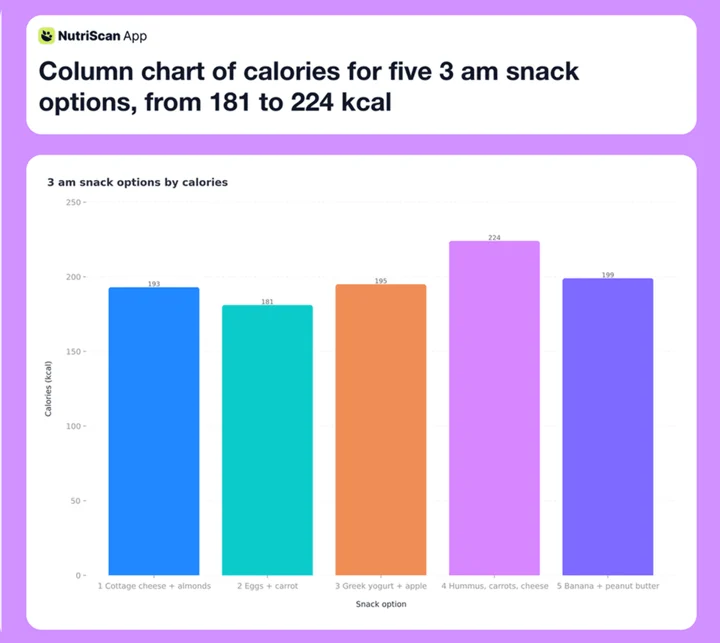
Figure 2: All five 3 am options sit between 181 and 224 kcal. The protein column in the table above shows how they differ.
Option 5 has the least protein, so use it only on a night when you have eaten plenty of protein earlier. Most options travel in a lunch bag with an ice pack.
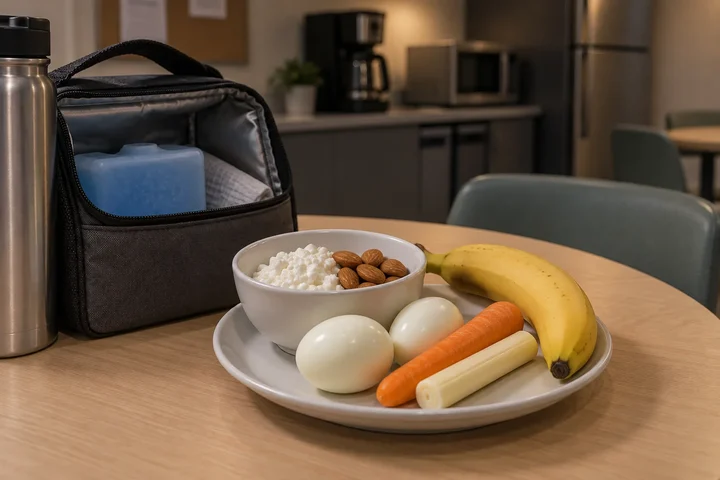
What to skip at 3 am: a burger and fries, a large sandwich, or a pastry plus a sugary coffee. Any one of these can run 600 to 1,000 kcal, which is a full meal at the hour the study linked to the worst performance. If the only food open is a gas station or vending machine, pick the closest thing to the table above: a string cheese or boiled eggs, a banana, plain nuts or a yogurt cup.
The study used healthy adults in their mid-20s in a lab, so treat it as a likely guide. A different lab pilot found that night workers who kept a 1:00 to 6:00 am overnight fast, by shifting their intake to other times of day, stuck with it 95 percent of the time (Leung et al., Nutrition, Metabolism and Cardiovascular Diseases, 2021). That trial had 19 people and found no difference in triglyceride or glucose response, so it neither proves nor rules out a benefit. If you stay alert and not hungry without the 3 am snack, you can skip it and move its calories to the 7:45 am meal.
Why most of your calories go before the shift
Your body expects food by day and sleep at night, even when your schedule says the opposite. When researchers ran a 14-day simulated night work protocol, nighttime eating led to a mismatch between the central body clock and the rhythm of glucose, and to worse glucose tolerance. Restricting meals to daytime prevented both (Chellappa et al., Science Advances, 2021). The researchers described it as a behavioral approach to protect shift workers from glucose intolerance.
That is why this plan front-loads. The two big meals happen at 4:00 and 6:30 pm, which is when your body is most ready to handle them, and the night itself gets two small snacks. A broad review of shift work and eating adds that some of the metabolic problems seen in shift workers may be linked to diet quality and irregular eating times, alongside stress, disrupted rhythms, sleep debt and low activity, and it closes with dietary guidelines (Lowden et al., Scandinavian Journal of Work, Environment and Health, 2010).
A caveat on window length: this plan runs from 4:00 pm to 7:45 am, almost 16 hours. A randomized trial of 137 firefighters on 24-hour shifts found that a 10-hour eating window was feasible (they averaged 11.1 hours, down from 14.1), caused no adverse effects, and improved HbA1c and diastolic blood pressure in people with higher baseline risk (Manoogian et al., Cell Metabolism, 2022). A 12-hour night shift makes a 10-hour window much harder. If you want to try a tighter window, ask your doctor or a dietitian first.
These studies test meal timing. Calories still count at every hour.
Scaling the plan to your own calories
Run your numbers through the calculator near the top, then pick the closest column. The night snacks barely move, because their job is to keep you alert, not to feed you.
| Slot | 1,800 kcal | 2,020 kcal (base) | 2,500 kcal |
|---|---|---|---|
| 4:00 pm wake-up meal | 550 | 633 | 760 |
| 6:30 pm pre-shift dinner | 570 | 652 | 800 |
| 11:30 pm break snack | 150 | 175 | 200 |
| 3:00 am small snack | 170 | 193 | 220 |
| 7:45 am wind-down meal | 360 | 366 | 520 |
| Total | 1,800 | 2,019 | 2,500 |
To move up or down inside a slot, change one food at a time. Use these per-serving values: half an ounce of almonds is 82 kcal, a tablespoon of olive oil is 120 kcal, a cup of cooked brown rice is 218 kcal, a banana is 105 kcal, and a tablespoon of peanut butter is about 94 kcal.
If your goal is weight loss, a common starting point is 300 to 500 kcal below your TDEE. A 2025 randomized trial of 250 Australian night shift workers with overweight or obesity compared two modified fasting patterns with continuous calorie restriction for 24 weeks. Neither fasting pattern beat continuous restriction on body weight or insulin resistance, and only 68 percent finished the trial (Bonham et al., eBioMedicine, 2025). The workers who stayed in the trial improved either way, so choose the pattern you can keep up. If you take diabetes medication or have another condition, talk to your doctor before cutting calories.
The caffeine cutoff for a 7 pm to 7 am shift
Mystery item revealed: the habit that costs the most sleep is the 4:00 am coffee that feels harmless because you are nearly home. It sits only 4.5 hours before an 8:30 am bed, the same gap as a day worker drinking coffee at 5:30 pm before a 10 pm bedtime.
In a home sleep study, 400 mg of caffeine taken 0, 3 or 6 hours before habitual bedtime each disrupted sleep compared with placebo. The researchers concluded that caffeine taken 6 hours before bed has important disruptive effects and supported avoiding substantial caffeine for at least 6 hours before bedtime (Drake et al., Journal of Clinical Sleep Medicine, 2013).

One more cup at 4:00 am feels harmless, yet it lands 4.5 hours before an 8:30 am bed.
With bed at 8:30 am, 6 hours before is 2:30 am. A practical schedule, which is our suggestion rather than a tested protocol:
- 6:30 pm: first coffee or tea with dinner, so it kicks in as the shift starts.
- 10:30 to 11:30 pm: second cup with the break snack.
- By 1:00 am: last caffeine, which leaves a 7.5 hour buffer.
- 2:30 am: the latest cutoff if you need it. Switch to water or decaf.
- After 3:00 am: no energy drinks, cola or pre-workout, which also count.
The FDA cites 400 mg a day as an amount not generally associated with negative effects for most healthy adults. Our caffeine guide lists what that looks like in coffee, tea and energy drinks. Keep the total under that, and cut earlier if you are pregnant, take medication, or have a heart condition, after talking to your doctor.
If you struggle to sleep after the shift anyway, what you eat before bed matters too, and the 7:45 am meal above follows that logic: moderate size, protein, little fat.
Your days off
The research above tests eating times during night work, not what to do on days off, so this section is practical rather than proven. The goal is to keep calories the same and avoid a full flip back to a day schedule in 24 hours.
A common approach for the first day after your last shift is a split sleep: eat the 7:45 am meal, sleep until about 12:30 pm, then get outside in daylight and keep the rest of the day on a normal clock.
| Time | What | kcal |
|---|---|---|
| 7:45 am | Same wind-down meal as a work night | 366 |
| 8:30 am to 12:30 pm | Sleep | |
| 1:00 pm | Lunch: chicken, rice and vegetables, like the pre-shift dinner with a bigger rice portion | 700 |
| 4:30 pm | Snack: Greek yogurt, fruit and nuts | 250 |
| 7:00 pm | Dinner: fish or eggs, potato or rice, a double portion of vegetables | 740 |
| 10:30 pm | Bed | |
| Total | 2,056 |
If you work a run of three or four nights and are off for only 2 days, many people keep a late schedule between shifts instead of flipping fully. In that case, keep the same 4:00 pm and 6:30 pm meal times and just skip the 3 am snack, since you are sleeping at 3 am.
Restock day
Plan a restock day. If the meals in this plan are boiled eggs, cooked chicken, rice and chopped vegetables, you can cook them in about 90 minutes on a day off and eat from containers for the next 3 to 4 nights.

Common night shift problems and quick fixes
I get a craving at 5 am. Often it means the 3 am snack was too small or had too little protein. Raise it toward 220 kcal, or move it half an hour later. If the pull toward night snacking is strong in general, our guide to how to stop eating at night covers why it happens and how to plan one snack instead of grazing.
There is only takeout. Pick a grilled protein with a plain side, drink water, and keep the portion near 600 to 700 kcal, which is a meal-sized slot, not a night-snack slot. NutriScan can read a photo of a meal and return calories and macros, which helps when there is no label or scale. On the Free plan you get 5 photo scans a week, and Premium is about $59 a year with unlimited scans. NutriScan reports 95 percent accuracy on calories as its own figure, not an independent study. The AI calorie counter app page shows how it works.
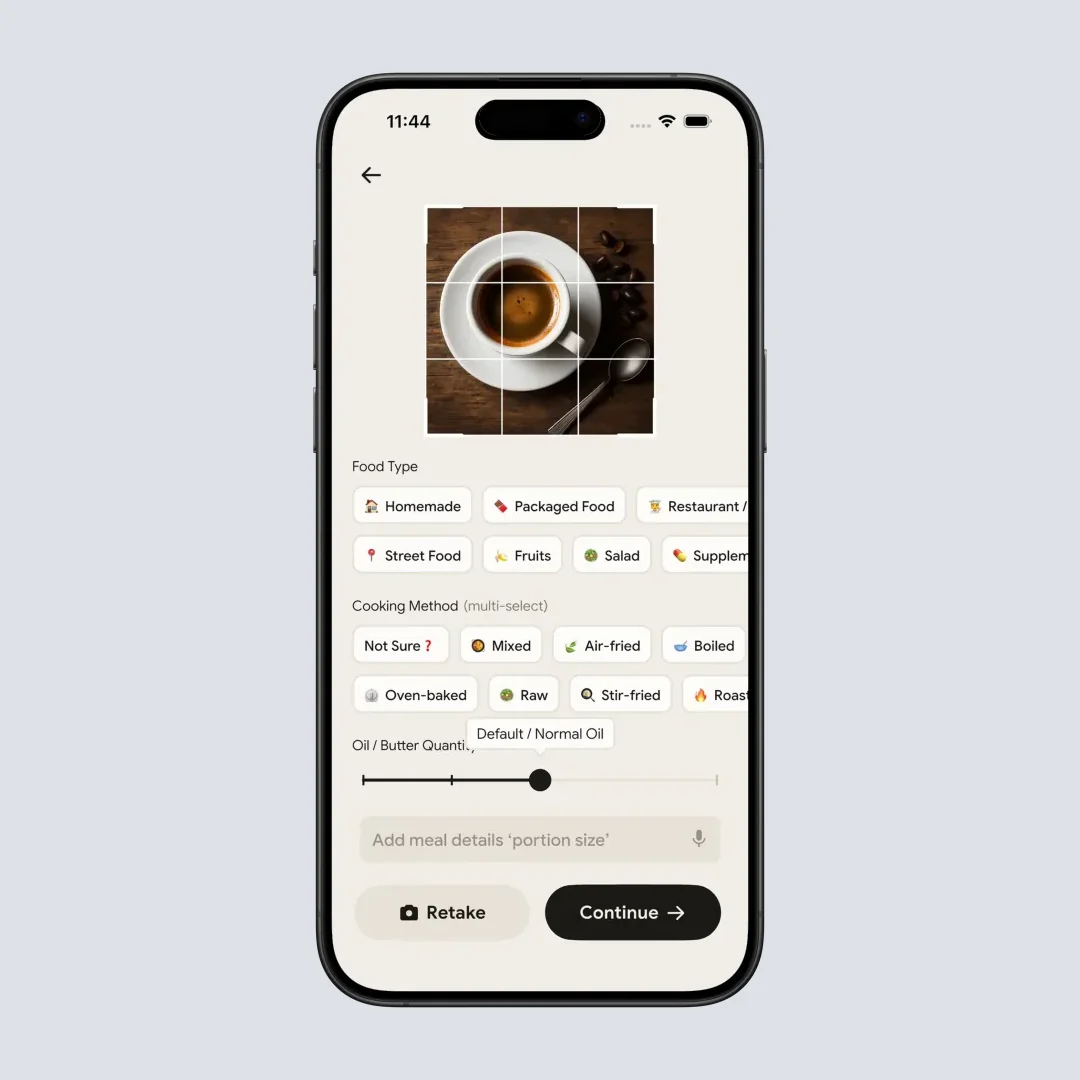
I do not want to weigh food. Use the portions in the tables as fixed templates and repeat them. A fixed menu of five to seven meals is easier to keep than logging every item. A photo log is a backup for the weeks when the menu changes.
I feel hungry right after waking. Move 100 kcal from the 7:45 am meal to the 4:00 pm meal, and add protein there.
When to talk to your doctor
Medical caution
Shift work is linked with a higher risk of metabolic problems, so a few situations call for professional advice before you change what you eat: diabetes or prediabetes, kidney disease, pregnancy or breastfeeding, a history of an eating disorder, heart conditions, and any medication where timing with food matters. Insulin and some diabetes medicines need dose timing that fits your sleep. Your doctor or pharmacist makes that call. This guide gives general information, not medical advice. For pregnancy, our calorie calculators are a starting point, but your doctor sets the target.
FAQ
What should I eat at 3 am on a night shift?
Aim for a snack of 180 to 220 kcal with some protein, such as 1/2 cup cottage cheese with 1/2 oz almonds (193 kcal) or two hard-boiled eggs with a carrot (181 kcal). In a lab study of simulated night shifts, a snack worth 10 percent of daily calories beat both a 30 percent meal and eating nothing on driving and reaction tests at 4:00 am.
What time should I stop caffeine on a night shift?
Stop at least 6 hours before you plan to sleep. If you go to bed at 8:30 am, that means the latest cutoff is 2:30 am, and 1:00 am is easier to stick to. A sleep study found that 400 mg of caffeine taken even 6 hours before bed disturbed sleep.
How many calories should I eat on a 7 pm to 7 am shift?
Use your daily total from the TDEE calculator, which depends on your age, size and activity, then divide it across five eating times. The sample plan in this post is 2,019 kcal, with 1,800 and 2,500 versions in the scaling table.
Should I eat during a night shift at all?
Some people do better with a small snack, and some do better holding an overnight gap. In lab studies, the snack group was less hungry than the group that ate nothing, and one pilot found night workers could keep a 1:00 to 6:00 am fast. Try one approach for a week, and keep your biggest meals before the shift.
Can I do intermittent fasting on night shifts?
A 24-week trial of 250 night shift workers found that two days a week at about 500 kcal (2,100 kJ) did not beat continuous calorie restriction for weight loss. Fasting is not safe for everyone, including people with diabetes or a history of disordered eating, so talk to your doctor first.
What is the best food to pack for a night shift?
Pick food that holds without reheating and has protein: boiled eggs, cottage cheese, Greek yogurt, string cheese, hummus with carrots, fruit and nuts. Keep sugary drinks and pastries out of the bag.
Sources
- Chellappa et al., Daytime eating prevents internal circadian misalignment and glucose intolerance in night work, Science Advances, 2021: PubMed 34860550
- Gupta et al., Altering meal timing to improve cognitive performance during simulated nightshifts, Chronobiology International, 2019: PubMed 31599661
- Gupta et al., Subjective hunger, gastric upset, and sleepiness in response to altered meal timing during simulated shiftwork, Nutrients, 2019: PubMed 31208092
- Leung et al., Does rearranging meal times at night improve cardiovascular risk factors, Nutrition, Metabolism and Cardiovascular Diseases, 2021: PubMed 33994064
- Manoogian et al., Healthy Heroes randomized control trial, Cell Metabolism, 2022: PubMed 36198291
- Bonham et al., Intermittent fasting for weight loss in night shift workers, eBioMedicine, 2025: PubMed 40554393
- Lowden et al., Eating and shift work, Scandinavian Journal of Work, Environment and Health, 2010: PubMed 20143038
- Drake et al., Caffeine effects on sleep taken 0, 3, or 6 hours before going to bed, Journal of Clinical Sleep Medicine, 2013: PubMed 24235903