Best Calorie Tracker App to Pay For in 2026 (By Budget)
 ChatGPT
  Claude
  AI Mode
  Perplexity
Most calorie tracker comparisons start with features. That is the wrong starting point. The actual question on the screen, the second a free trial banner appears, is "how much per month, and what happens to my wallet if I forget to cancel?" Budget comes first. Features come second. The app that fits a real budget is the app you will still be using in October, and the one you will not is the one you uninstall the day the first $79.99 charge clears.
IMPORTANT
Your calorie tracker budget plan at a glance.
A quick roadmap so you can act fast.
⏱️ Progress 0/4 • ~0 minutes in • Keep going
⏳ Sub-$5 a month: budget champion picks
⏳ $5-$10 a month: the sweet spot of the category
⏳ Above $10 a month: when premium earns its price
🔍 The pricing trap that costs most people $150 a year without realizing it (revealed near the end)
As a NutriScan nutritionist, I have watched users move through five, six, sometimes seven trackers in a single year, almost always because the app they picked on day one cost more than they expected by month three. Fortune's 2026 calorie counter roundup priced six trackers, from YAZIO at $23.90 a year up to Noom at $209 a year (Fortune, updated 4 August 2026). That is nearly a nine-fold spread for apps that all do the same core job. Price is the variable you feel every month, so we start with price.
TL;DR - Best Calorie Tracker by Budget
- Under $5/month: YAZIO PRO ($23.90 to $47.90/yr) or FatSecret Premium (annual SKUs at $38.99 and $59.99) - plain trackers, promo-variable pricing
- $5-$10/month: NutriScan Premium (photo logging), Cronometer Gold (up to 95 micronutrients), MyFitnessPal Premium (20M-food DB), Lose It! Premium (now $79.99/yr after the 2026 rise)
- Above $10/month: Only worth it for human coach, CGM, or adaptive macro engine
- Free option: Cronometer free (up to 84 nutrients, barcode scanner included, ads on) or FatSecret free
- Key rule: Annual billing cuts the per-month rate by half to two thirds depending on the app - never pay month-to-month
Prices below are standard US prices as of mid 2026 and change by region.
The three real budget tiers in 2026
Calorie trackers in 2026 sit in three clear bands once you do the math on annual plans. Anything under $5 a month on an annual is a sub-$60 a year purchase, which most people can justify without a household conversation. Anything between $5 and $10 a month is the "comfortable monthly" zone, which is where the bulk of the category lives. Anything above $10 a month is premium, usually because the price includes a human coach, a CGM, or a heavy AI photo pipeline. A 2026 Garage Gym Reviews roundup, written with input from registered dietitians, priced seven trackers in this category (Garage Gym Reviews, updated 5 August 2026). The three-band split below is our framing, not theirs.
The trick is that monthly billing distorts the comparison. MyFitnessPal Premium is $19.99 a month and $79.99 a year. If you pay monthly for a full year, you spend $239.88. If you pay annually, you spend $79.99. That is a 67 percent difference for the same product, and MyFitnessPal publishes that figure itself (MyFitnessPal Premium). It is also the widest gap in the set: Cronometer's annual saves 54 percent and MacroFactor's saves 50 percent. Most app comparisons quietly use monthly numbers, which makes premium apps look unaffordable and free apps look like the only option. Run the annual numbers, and the field collapses into three honest budget brackets.
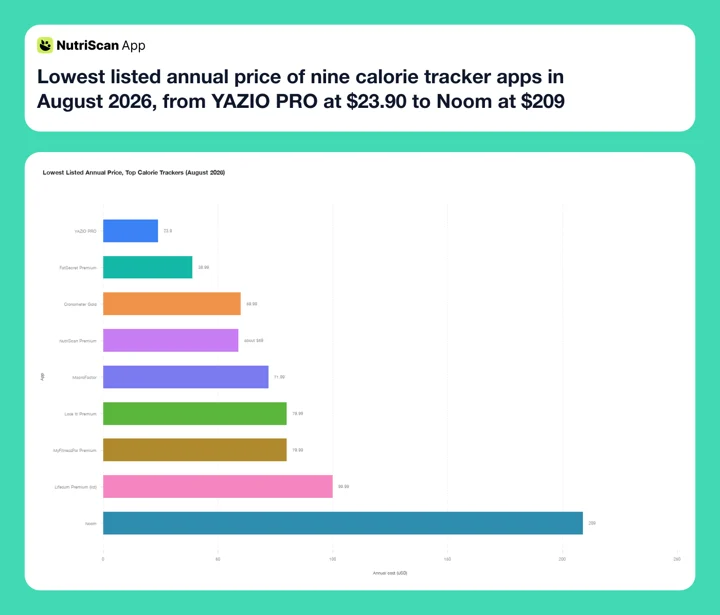 Figure 1: The lowest annual SKU each app had listed in August 2026. FatSecret, YAZIO and Lifesum all run several prices at once, so Lifesum is plotted at its own list anchor of $99.99 rather than a promo SKU
 Consistent daily food logging is 10x easier when your app cost does not trigger monthly regret
Sub-$5 a month: budget champions 💰
IMPORTANT
Checkpoint: here's where you are right now.
Quick status update so you always know the next best move.
⏱️ Progress 1/4 • ~1 minute in • Keep going
✅ The three real budget tiers (done)
👉 Sub-$5 a month picks (you're here)
⏳ $5-$10 a month
🧩 The pricing trap (coming soon)
The sub-$5 zone has two real contenders in 2026: FatSecret Premium and YAZIO PRO. Both are paid calorie counters with large food databases, and both run several price points at once, so what you pay depends on the offer your store shows you. Neither tops $60 a year on any annual SKU currently listed.
FatSecret Premium has no single price. Nine in-app purchase SKUs run concurrently on the US listing: annual Premium at $38.99 and $59.99, monthly at $10.49 to $14.99, quarterly at $19.99 to $28.99, checked 7 August 2026 (App Store listing). FatSecret itself says only that pricing "varies by region and currency" (FatSecret Premium). The cheaper annual works out at $3.25 a month, the dearer one at exactly $5.00. Premium gates eight features behind the paywall, including the Smart Food Scan AI photo logger, the Smart Assistant voice logger, the meal planner and dietitian-designed meal plans. Food entries themselves are not gated: the barcode scanner and macro tracking are checked on both Free and Premium. FatSecret publishes over 1.9 million verified foods (foods.fatsecret.com), and the community feed is small but kind. The catch is that the interface looks like it was designed in 2016 and has not changed much. If the offer you land on is the $38.99 annual, it is a fair price for a tracker that logs food and stays out of the way.
Related: FatSecret Premium pricing in 2026 and is FatSecret Premium worth it.
YAZIO PRO annual plans run $23.90 to $47.90 a year depending on the offer, roughly $2 to $4 a month (Fortune, updated 4 August 2026, matching the ten IAP SKUs on the App Store listing). What you get is more polished than FatSecret. The base app already ships 2,900+ recipes, a fasting tracker and meal planning tools, so those are not what PRO buys you. It syncs with Fitbit, Garmin, Polar and Samsung Health. The food database is 4 million-plus searchable items against MyFitnessPal's 20 million, so it is the smaller library. If you want a paid app that does not look free, YAZIO PRO is the value pick.
Related: how to cancel YAZIO PRO if the offer price jumps at renewal.
Best Sub-$5 Pick
YAZIO PRO's $23.90 annual is the lowest fixed annual price in this guide, about $2 a month. FatSecret Premium's $38.99 annual is the runner-up at $3.25 a month. Both apps run several price points at the same time, so check what your own store shows before you commit.
Both apps share one quiet strength: neither puts a human coach or a weekly check-in between you and the log screen. You open them, you log, you close them. For someone whose budget is genuinely tight and who just wants honest tracking, that is the right shape.

$5 to $10 a month: the sweet spot of the category 🎯
This is where most serious calorie trackers live. There are five real contenders, and they split by what you actually want from the extra few dollars.
Cronometer Gold is $10.99 a month, or $4.99 a month billed annually at $59.99 (Cronometer Gold Pricing, 2026). It is the only app on this list built around micronutrients rather than just calories and macros. Gold tracks up to 95 nutrients, including vitamins, minerals, and amino acids, plus custom biometrics, custom charts, Oracle Nutrient Search and the recipe importer. It also carries Photo Log, Voice Log, a fasting timer, and the Crono Coach AI, so the micronutrient focus no longer costs you the convenience features. Fortune named Cronometer its Best Free Calorie Counter App and singled out its vitamin and mineral tracking (Fortune, updated 4 August 2026). If you want to know your iron, B12, or potassium, this is the paid app to buy.
Related: Cronometer pricing: Basic vs Gold vs Pro and is Cronometer Gold worth it.
Lose It! Premium is $79.99 a year after the 2026 price rise, which works out to $6.67 a month, and there is no monthly Premium plan at all (Lose It Membership Tiers and Pricing, 2026). A lifetime licence runs $299.99, or $229.99 if you are already an active Premium member. Premium includes barcode scanning, snap-it photo logging, a meal planner, water tracking, and pattern reports. A 2026 community thread of 1,700 active trackers had Lose It! tied with MyFitnessPal as the most-recommended paid tracker for beginners (Reddit r/CICO, 2026). It now costs exactly what MyFitnessPal Premium costs, so buy it for the speed of the logging flow, not to save money.
MyFitnessPal Premium is $19.99 a month or $79.99 a year, which is $6.67 a month on the annual. The headline value is the food database, where reviewed entries carry a green checkmark, the barcode scanner, and integrations with more than 35 apps and fitness devices including Apple Watch, Fitbit, Garmin, Samsung Health and Health Connect. The downside is that the free version is genuinely thin: the ad-free experience, custom macros and barcode scanning all sit behind the paywall (MyFitnessPal Premium). If you want the deepest food database, over 20 million foods, which MyFitnessPal calls one of the largest food databases in the world (MyFitnessPal blog, updated 6 August 2026), plus device sync, MyFitnessPal Premium at the annual rate is the right pick. If you would pay monthly, walk away.
Lifesum Premium runs promo-variable pricing, with annual SKUs live anywhere from about $22 to $120 as of mid 2026, and lifesum.com anchoring its own price at "From 8.33 $/month" (Lifesum Premium). What you get is nutritionist-developed meal plans with shopping lists, thousands of recipes, and detailed daily statistics. It is the prettiest app in the category, and the meal plans are real plans, not affiliate filler. Lifesum is the pick for someone who needs the app to look inviting enough to open every day, as long as you wait for a low SKU.
NutriScan Premium is about $59 a year (NutriScan subscription guide). Inside that price: AI photo scanning, restaurant meal detection, a global food database, the 28-day personalized diet plan, weekly meal-plan suggestions and a goal-based grocery list. NutriBites, the chat over your meal timeline, sits on both plans, as do NutriScore, micronutrients and the fasting timer. The free tier gives you 5 meal scans and 4 Monika voice calls a week, which is enough to test the scanner on the meals a food database usually gets wrong before you decide. If photo logging matters more than micronutrient depth, NutriScan is the pick at this price.
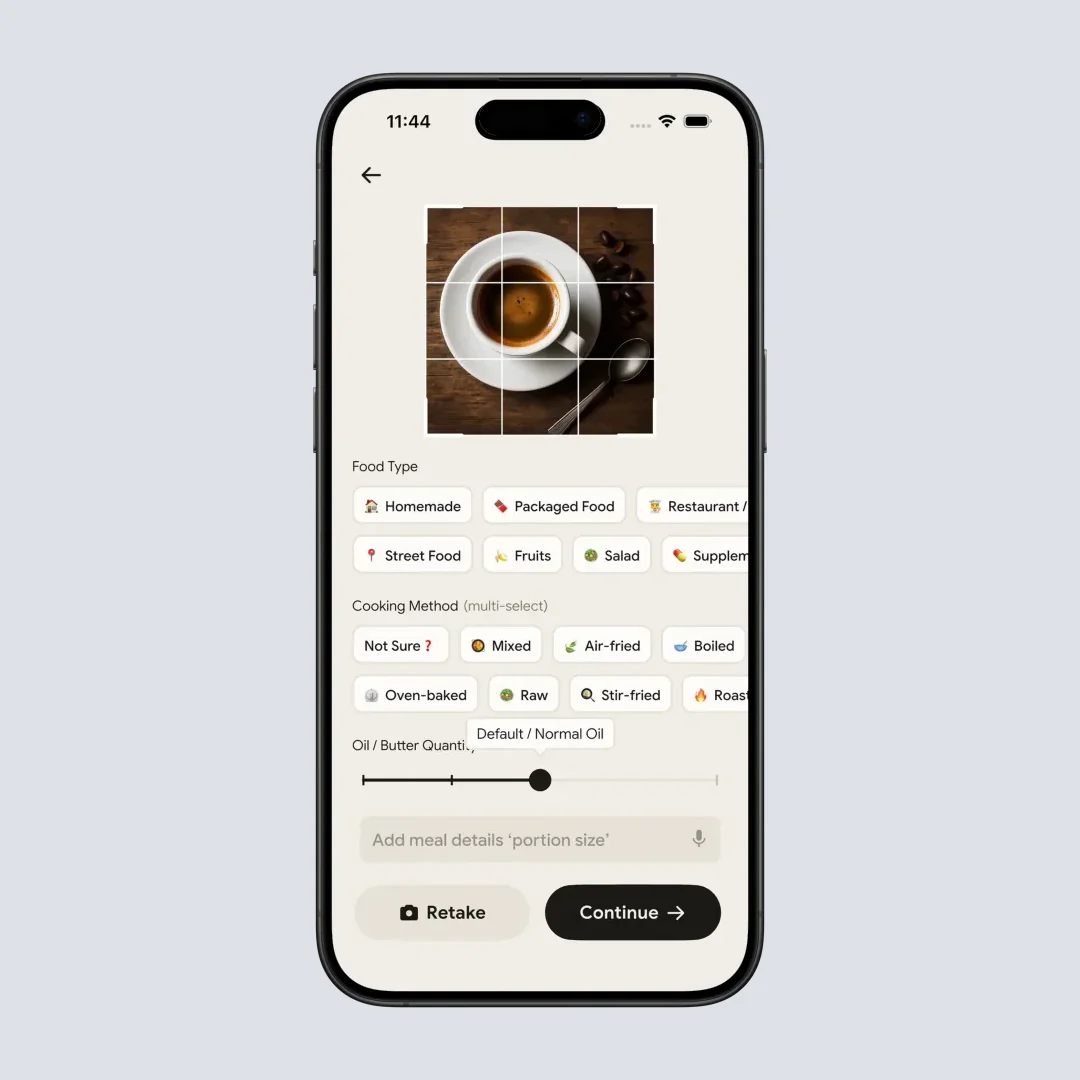
NutriScan Premium: AI photo scan detects the meal, portions, and macros instantly - no manual search needed (Home > Camera Icon > Click Picture)
$5-$10 Monthly Budget Summary
| App | Annual Cost | Per Month | Best For |
|---|---|---|---|
| Lifesum Premium | ~$22 to $120/yr, promo-variable | ~$1.83 to $10.00 | Visual meal plans |
| Cronometer Gold | $59.99/yr | $4.99 | Up to 95 micronutrients |
| NutriScan Premium | about $59/yr | annual only | AI photo logging |
| Lose It! Premium | $79.99/yr | $6.67 | Fast beginner logging |
| MyFitnessPal Premium | $79.99/yr | $6.67 | 20M+ food database |
Prices are standard US prices as of mid 2026 and change by region. Lifesum runs several annual SKUs at once, so its row is a range rather than a price.
IMPORTANT
Checkpoint: midway progress update.
You're halfway - decisions get easier here.
⏱️ Progress 2/4 • ~2 minutes in • Keep going
✅ Sub-$5 picks (done)
✅ $5-$10 picks (done)
👉 Above $10 a month (current)
⏳ The pricing trap (next)
Above $10 a month: when premium earns its price 🏆
Most calorie tracking does not need to live in this bracket. The apps above $10 a month are paying for one of three things: a real human coach, a connected continuous glucose monitor, or a heavy macro-recalibration engine. If you do not need one of those three things, you do not need this tier.
MacroFactor sits at $11.99 a month or $71.99 a year, which is $5.99 a month on the annual (MacroFactor). The price buys an expenditure algorithm that adjusts your calorie target every week based on the previous week's average weight change. There is no human coach. The math is the product. For someone running a serious cut or bulk, the per-week target updates are the only thing on this list that actually replaces hiring a coach for macro programming.
Noom is $209 a year, roughly $17.42 a month, the most expensive non-medical pick in the category (Noom, updated 27 July 2026). What you pay for is CBT-based daily lessons, Noom's green, yellow and red food color system, and weekly check-ins with a Noom coach. The 2026 Forbes Health review gave Noom 5 stars and called it the best program for busy people who learn by reflecting (Forbes Health, 2026). If you have failed at calorie tracking twice and you know the problem is your relationship with food, Noom is worth the money. If the problem is just that you do not log meals consistently, Noom is not worth it.
HealthifyMe sells AI plans, human-coach plans and CGM bundles in India. The one figure its own storefront currently publishes is the Smart CGM bundle: Rs 5,649 for the device plus Rs 851 for the AI plan, Rs 6,500 in total (HealthifyMe store). HealthifyMe's public plans page is 404ing as of 7 August 2026, so treat any coach-plan figure quoted anywhere, including in our own older posts, as unconfirmed until that page comes back. For users tracking ghar ka khaana, regional dishes and combination plates, HealthifyMe's database is built for exactly that, and the CGM tier pairs food logging with a glucose sensor.
When to skip the premium tier
If you do not have a specific need for a coach, a CGM, or algorithmic macro-adjustment, apps above $10 a month do not improve your results. Paying more does not make you log more often. What makes you log is a price you stop noticing.
Free tier reality check
Some apps still offer real free tiers in 2026, but the line between "free trial" and "free forever" matters. Cronometer's free version covers up to 84 nutrients, the barcode scanner and basic logging forever, with a 7-day reporting window; Gold raises the nutrient count to 95 and adds custom biometrics, the recipe importer, Oracle Nutrient Search and the ad-free experience, which means free Cronometer does carry ads (Cronometer Gold). FatSecret's free tier covers food logging, the barcode scanner, macro tracking and the community feed, and its 1.9 million verified foods is a larger library than Cronometer free's 1 million (foods.fatsecret.com). MyFitnessPal still offers a free tier, but it moved barcode scanning behind Premium on 1 October 2022, alongside the ad-free experience and custom macros (MyFitnessPal support), and the free tier still does not include it in 2026.
For a beginner who is not sure they will stick with tracking, starting on Cronometer free or FatSecret free for 30 days is the smartest first move. Pay only when you know the habit is real.
 Annual billing cuts the per-month rate by roughly half to two thirds: 67% at MyFitnessPal, 54% at Cronometer, 50% at MacroFactor
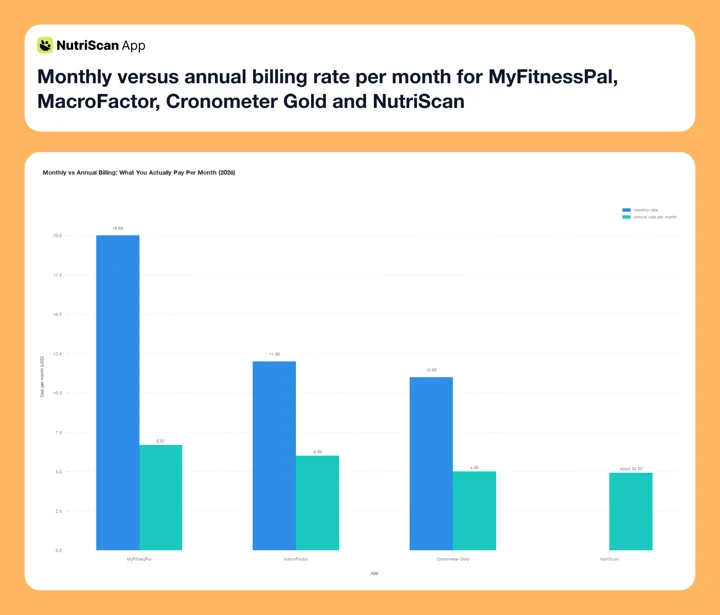 Figure 2: Monthly rate against annual rate per month. MyFitnessPal is the ceiling at 3x; MacroFactor and Cronometer sit at 2x
IMPORTANT
Checkpoint: final stretch before the reveal.
One last nudge - the reveal is next.
⏱️ Progress 3/4 • ~3 minutes in • Keep going
✅ Sub-$5 picks
✅ $5-$10 picks
✅ Above $10 picks
✨ The pricing trap that costs most people $150 a year (about to reveal)
The pricing trap that costs most people $150 a year 🔍
Here it is.
The trap is not picking the wrong app. The trap is paying for two apps at the same time.
It sounds obvious until you check your subscriptions. The most common pattern: someone starts with MyFitnessPal free in January, upgrades to Premium in February when they hit the barcode wall, then downloads NutriScan or Cal AI in April when they start logging restaurant meals, and either forgets to cancel MyFitnessPal or keeps both "just in case." By June, they are paying $79.99 plus about $59 a year - around $140 total - for apps that do 80 percent of the same thing.
Nobody decides to pay $139.98 a year for one job. It happens because cancelling is a separate action from switching, and only one of the two ever feels urgent. In this category, double-subscription is the largest avoidable cost I see.
The fix is a 5-minute audit:
- Open Settings ➡️ Apple ID or Google Account ➡️ Subscriptions
- Filter for any app with "calorie," "macro," "nutrition," "diet," or "health" in the name
- Cancel every one you have not opened in the last 14 days
- Pick one keeper that matches your hardest meal type and your real budget
- Set a renewal reminder 51 weeks from today
People who run this audit before picking a new app save an average of $140 a year by cleaning up forgotten subscriptions first.
The $150/year trap in three sentences
You are more likely to have a forgotten calorie tracker subscription draining money than to be paying too much for your active one. Do the 5-minute audit above before buying anything new. Cancel first. Upgrade after.
 Three clear tiers, three types of users - picking the wrong tier is expensive, but not as expensive as paying for two at once
Seven budget rules that save more money than the wrong app costs 📋
- Always buy the annual plan, never the monthly. Annual billing cuts the per-month rate by roughly half to two thirds: 67 percent at MyFitnessPal, 54 percent at Cronometer, 50 percent at MacroFactor. If you cannot afford the annual upfront, you cannot afford the monthly either over a full year.
- Use the free trial as a real trial. Set a calendar reminder on day 5 of a 7-day trial. Most cancellations in this category happen the day after the first charge, which is too late.
- Do not pay for a coach unless you have already failed at tracking alone. Coaches are useful for people who know they need accountability. They are wasted on people whose problem is just inconsistent logging.
- Match the app to your hardest meal, not your easiest. If your hardest meal is restaurant takeout, pick photo logging (NutriScan). If it is South Asian home food, pick HealthifyMe. If it is grocery brands, pick MyFitnessPal Premium.
- Skip the bundle plans. Most apps now offer "weight loss plus fasting plus workouts" bundles. The bundle saves a few dollars but ties you to features you will not use. Pay for the core plan only.
- Buy in January or August. New Year and back-to-school sales drop 20 to 30 percent off annual plans in this category every year, and the discount is real (NutriScan Annual Plan Deal, 2026).
- Stop after one app. The most common money trap in calorie tracking is paying for two apps "to compare" or "for backup." Pick one. Use it for 90 days. Switch only if it actively fails.

How to choose in 5 steps
- Write your real monthly budget. If $5 a month is the ceiling, anything above is off the list, no matter how good the reviews are.
- Identify your hardest meal. Restaurant, home-cooked, packaged, or regional. Your hardest meal decides the database type you need.
- Pick free or paid based on history. If you have stuck with any habit app for 90 days in the past, buy paid. If you have not, start free.
- Buy the annual plan with a cancel reminder. Set a 51-week reminder so you decide consciously before auto-renewal.
- Log for 30 days before you judge. Every app feels wrong in week 1. The verdict comes from whether you still open it in week 5.
What paying actually changes 🔬
This guide used to quote two studies here on price and retention. Neither citation survived a recheck in August 2026, so both are gone and there is no number in this section.
What paying does reliably is turn a recurring decision into a settled one. The people I see still logging in month three are rarely the ones who found the best feature set; they are the ones whose app stopped being a monthly question. That is also why the annual plan beats the monthly plan for reasons that have nothing to do with the discount.
The same logic applies to AI photo logging. It is faster than typing a search, which is why every app in this guide now sells it. Accuracy is the part nobody quantifies, so if the marketing page does not state a portion-estimation figure you can check, treat the photo feature as a convenience rather than a reason on its own to upgrade.
Use our macro calculator to set your daily targets before you even open a tracker, and read the meal scan guide to get the most out of AI photo logging.
IMPORTANT
Recap: everything you covered in this guide.
You finished the run - save this for next time.
⏱️ Progress 4/4 • ~4 minutes in • Nicely done
✅ Sub-$5 picks (YAZIO $2 to $4/mo, FatSecret $3.25 to $5/mo)
✅ $5-$10 picks (NutriScan, Cronometer, MFP, Lose It!, Lifesum)
✅ Above $10 picks (MacroFactor, Noom, HealthifyMe)
✅ The pricing trap (revealed - double subscriptions cost $140+ a year on average)
Conclusion: pick by budget, not by hype 📝
If your budget is under $5 a month, buy YAZIO PRO on its cheapest annual SKU, or FatSecret Premium if you prefer its database. If your budget is between $5 and $10, the right pick depends on what you log most: Cronometer Gold for micronutrients, NutriScan Premium for AI photo logging and the 28-day personalized diet plan, Lifesum Premium for visual meal plans, and at the top of the band MyFitnessPal Premium for its 20 million-food database or Lose It! Premium for fast manual logging, both now $79.99 a year. If your budget is above $10 a month, only pay if you genuinely need a coach, a CGM, or a macro-recalibration engine. Otherwise the money is wasted.
Run the 5-minute subscription audit before you buy anything new. The most expensive calorie tracker in your life is likely the one you forgot to cancel six months ago.
Track your calories on whichever pick fits your wallet and your hardest meal. The right calorie tracker is the cheapest one you will still be opening in October. If photo logging and personalized food suggestions are part of your daily routine, NutriScan keeps the price under $10 a month on the annual plan and handles restaurant plates, home meals, and packaged food in the same scan.

Frequently Asked Questions ❓
Q: What is the cheapest paid calorie tracker app in 2026?
A: YAZIO PRO and FatSecret Premium are the two cheapest, and neither has one price. YAZIO PRO annual plans run $23.90 to $47.90 a year depending on the offer (Fortune, updated 4 August 2026). FatSecret's US App Store listing carries annual Premium at $38.99 and $59.99, with monthly SKUs from $10.49 to $14.99 (App Store), and FatSecret itself says only that pricing varies by region and currency. Both keep barcode scanning and macro tracking on the free tier.
Q: Is MyFitnessPal Premium worth it in 2026?
A: MyFitnessPal Premium is worth $79.99 a year if you log mostly packaged food and use a connected fitness device. Free MyFitnessPal has not included barcode scanning since 1 October 2022 (MyFitnessPal support), and that is the feature most users miss the day they downgrade. Never pay the monthly rate, because MyFitnessPal's own annual plan saves 67 percent.
Q: Which calorie tracker has the best free tier in 2026?
A: Cronometer's free tier is the most complete in 2026, with up to 84 nutrients tracked, the barcode scanner, full logging and a 7-day reporting window. Gold pushes the nutrient count to 95 and adds the ad-free experience, so the free tier does carry ads (Cronometer Gold). FatSecret's free tier is close behind with the bigger food database, 1.9 million verified foods against Cronometer's 1 million. Lose It! free still supports barcode scanning, making it the fastest free option for grocery logging.
Q: Should I pay for a coach or just a tracker?
A: Pay for a coach only if you have already tracked consistently for 90 days and still are not seeing results, or if you know your problem is psychological rather than logistical. For most users, a $5 to $10 a month tracker covers the actual need. Noom, the coach-led pick in this guide, is $209 a year (Noom, updated 27 July 2026), which is rarely worth it for someone whose main issue is forgetting to log lunch.
Q: Can I cancel a calorie tracker subscription anytime?
A: Every major calorie tracker in 2026 allows cancellation from your App Store or Google Play subscription settings at any time, with no fee. The catch is that auto-renewal charges on day 1 of the new period. Set a reminder for day 351 of an annual plan to decide before it renews. Refunds for accidental renewal are case-by-case through Apple or Google support, not the app maker.
Q: Is paying for a calorie tracker actually worth it?
A: Often yes, though not because paid apps track better. Paying turns a recurring decision into a settled one, and that is most of what keeps a logging habit alive past week four. The practical sweet spot is $5 to $10 a month bought on an annual plan: enough that you committed, not so much that the renewal notice makes you quit. We do not have a defensible study to put a number on that, so treat it as a rule of thumb, not a finding.