Is It Good for Diabetics? How to Check Any Food
 ChatGPT
 Claude
 AI Mode
 Perplexity
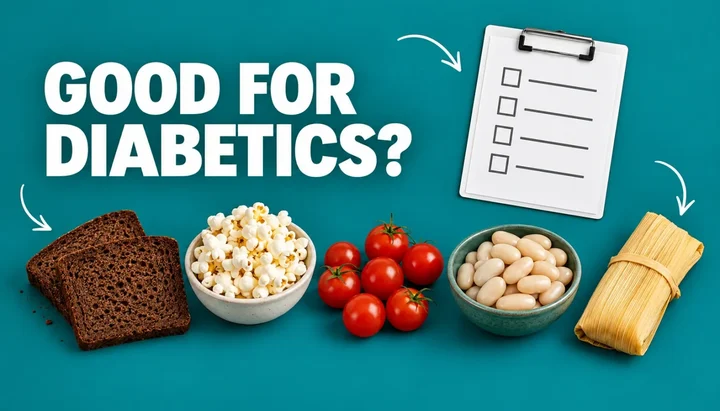
No food is good or bad for every person with diabetes. The answer for any food comes from four checks: how much carbohydrate your serving holds, how much of that is fiber, what its glycemic index is if anyone has tested it, and how large a portion you eat. A nutrition label covers three of the four.
Checked on October 11, 2026. Meal-planning statements come from American Diabetes Association (ADA) pages, linked where they are used. Glycemic index (GI) values come from the 2008 International Tables of Glycemic Index and Glycemic Load Values (Atkinson, Foster-Powell and Brand-Miller, Diabetes Care) and the University of Sydney GI database. Carbohydrate and fiber come from the linked NutriScan food pages, and glycemic load is our own arithmetic.
Summary
- Carbohydrate per serving comes first. The ADA's carb counting guide names serving size and grams of total carbohydrate as the two label lines to read.
- Fiber is the second line. The ADA's guide to carbs asks for at least 14 g of fiber per 1,000 calories, the Dietary Guidelines for Americans figure.
- GI only counts when someone has tested the food. Of the 15 foods below, 8 have a published test or a close match. The other 7 have none, and we give no number for them.
- Portion decides the result. One slice of pumpernickel has 12.4 g of carbohydrate. One cup of gnocchi has 35 g.
- Your own target comes from your care team. The ADA says of carbohydrate per meal that "there's no magic number".
How do you tell if a food is good for diabetics?
Run four checks in order: carbohydrate per serving, fiber, tested glycemic index, portion. The first two are on the label. The third needs a published lab test, and many foods have none. The fourth is the one you control.
- Carbohydrate per serving. Find the serving size, then the grams of total carbohydrate for that amount. The ADA's carb counting guide notes that total carbohydrate already includes sugar, starch and fiber, and that one "carbohydrate choice" is about 15 g.
- Fiber. The ADA says foods with at least 2.5 g of fiber per serving are often labeled a "good source", and that higher-fiber foods can help you manage blood glucose.
- Glycemic index, if a test exists. GI ranks how fast a food's carbohydrate raises blood glucose. The University of Sydney GI database classes 55 or less as low, 56 to 69 as medium and 70 or more as high. Our glycemic index vs glycemic load explainer covers the method and the formula.
- Portion. The ADA's Diabetes Plate starts with a nine-inch plate: half non-starchy vegetables, one quarter lean protein, one quarter quality carbohydrate such as whole grains, starchy vegetables, fruit or low-fat dairy.
How much carbohydrate belongs in your meals is a personal number. The ADA's advice is to work it out with a registered dietitian or a certified diabetes care and education specialist. If you want a starting figure to bring to that conversation, our diabetes macro calculator gives one.

How do the 15 most-asked foods score?
These are the foods people most often search for with "good for diabetics" before landing on our food pages. Carbohydrate and fiber are for the serving shown, read from each linked page. Glycemic load (GL) is GI x (carbohydrate minus fiber) / 100, rounded.
| Food | Serving | Carbs | Fiber | GI (published test) | GL |
|---|---|---|---|---|---|
| Pumpernickel bread | 1 slice (26 g) | 12.4 g | 1.6 g | 41 to 62 | 4 to 7 |
| SkinnyPop Sea Salt popcorn | 28 g | 15 g | 3 g | 65 (popcorn average) | 8 |
| Cherry tomatoes | 100 g | 3.9 g | 1.2 g | 23 (raw tomato) | under 1 |
| Sour cream | 2 tbsp (30 g) | 1.4 g | 0 g | not tested | n/a |
| Butter beans | 1 cup cooked (188 g) | 39 g | 13.2 g | 26 to 36 | 7 to 9 |
| Refried beans | 100 g | 15 g | 6 g | 38 | 3 |
| Magic Spoon cereal | 1 cup (37 g) | 14 g | 0 g | not tested | n/a |
| Catalina Crunch cereal | 1/2 cup (36 g) | 14 g | 9 g | not tested | n/a |
| Guinness 0.0 | 1 can (440 ml) | 17 g | 0 g | not tested | n/a |
| KFC coleslaw | 1 medium (142 g) | 14 g | 4 g | not tested | n/a |
| Calamansi juice | 1 glass (240 ml) | 14.4 g | 0.7 g | not tested | n/a |
| Milo ice latte | 1 glass (250 ml) | 32 g | 1 g | not tested | n/a |
| Rice pudding | 1/2 cup (128 g) | 27 g | 0.1 g | 41 to 54 | 11 to 15 |
| Tamales | 1 tamal (166 g) | 30 g | 5 g | 60 to 82 | 15 to 21 |
| Gnocchi | 1 cup (140 g) | 35 g | 2 g | 68 | 22 |
GI sources: popcorn 65 is the average in Table 1 of the 2008 International Tables. Every other value is from the University of Sydney GI database, searched on October 11, 2026: pumpernickel (8 entries), raw tomato (1), butter beans boiled or canned (5), refried pinto beans (1), milk rice pudding (10 flavors of one brand), tamales (4) and gnocchi (1). "Not tested" means the database has no entry for that food. Where our nutrition numbers come from is on the NutriScan data sources page.
For glycemic load, the Linus Pauling Institute at Oregon State University classes 10 or less as low, 11 to 19 as intermediate and 20 or more as high. On that scale a cup of gnocchi is high and a slice of pumpernickel is low.
Is pumpernickel bread good for diabetics?
Pumpernickel passes the checklist at one slice. A 26 g slice has 12.4 g of carbohydrate, under one 15 g carbohydrate choice, with 1.6 g of fiber. The eight pumpernickel entries in the University of Sydney database run from 41 to 62, so the bread sits in the low to medium bands depending on the loaf.
Six of the eight entries carry the database's flag for method deviations or wide variability, and the two without a flag tested at 47 and 49. A sandwich uses two slices, which is about 25 g of carbohydrate and a glycemic load of 9 to 13. Check your own loaf's label on our pumpernickel bread page, since slice weights vary.
Is SkinnyPop popcorn good for diabetics?
Nobody has published a GI test for SkinnyPop, so the answer rests on the label and on popcorn in general. A 28 g serving of SkinnyPop Sea Salt has 15 g of carbohydrate, 3 g of fiber and 0 g of sugar, which is one carbohydrate choice.
Popcorn averages 65 in the 2008 International Tables, in the medium band, and the seven popcorn entries in the University of Sydney database range from 51 to 89. At 65, one serving has a glycemic load of about 8. The risk is the bag. Eat three servings and you have eaten 45 g of carbohydrate.
Are cherry tomatoes and butter beans good for diabetics?
Both pass, for different reasons. Cherry tomatoes hold almost no carbohydrate. Butter beans hold a lot, but a third of it is fiber and their tested GI is low. The ADA puts tomatoes in the half of the plate reserved for non-starchy vegetables and puts beans in the carbohydrate quarter.
Cherry tomatoes. 100 g, about 6 to 8 tomatoes, has 3.9 g of carbohydrate and 1.2 g of fiber. The ADA's carbs overview lists tomatoes with the non-starchy vegetables to "eat the most of". Raw tomato tested at 23 in the University of Sydney database, in an entry the database flags for method deviations or wide variability.
Butter beans. One cooked cup (188 g) has 39 g of carbohydrate and 13.2 g of fiber. Five entries for plain boiled or canned butter beans range from 26 to 36. A full cup is more than two carbohydrate choices, and half a cup comes to about 19.5 g. Refried beans follow the same pattern: 15 g of carbohydrate and 6 g of fiber per 100 g, with one brand of refried pinto beans tested at 38.
Foods with almost no carbohydrate finish the checklist at step one. Two tablespoons of sour cream have 1.4 g. 100 g of skinless rotisserie chicken has 0 g. For these, the rest of the label (calories, fat, sodium) sets the portion.
Are keto cereals and alcohol-free beer OK for diabetics?
None of them has a published GI test, so judge them on the label. Magic Spoon has 14 g of total carbohydrate per cup, Catalina Crunch has 14 g per half cup with 9 g of fiber, and a can of Guinness 0.0 has 17 g with no fiber.
Front-of-pack claims need a second look. The ADA's guide to carbs warns that "sugar-free" and "no sugar added" foods "are not necessarily carbohydrate-free". It also says the term "net carbs" has no legal definition, and it recommends counting total carbohydrate and watching your glucose when a food is high in fiber or sugar alcohols.
For the beer, the closest tested drink is a non-alcoholic lager from Finland, which scored 80 in the University of Sydney database. That is a different beer, and we have not applied it to Guinness 0.0. A can holds slightly more than one carbohydrate choice, all of it liquid.
Which of these foods need a smaller portion?
Tamales, gnocchi, rice pudding and sweet drinks. Each carries 27 g of carbohydrate or more in one serving, or delivers its carbohydrate as sugar in a glass. Measure the portion for these.
- Tamales: 30 g of carbohydrate each. Four entries from one Mexican study range from 60 to 82, depending on how the corn was processed. Glycemic load per tamal: 15 to 21.
- Gnocchi: 35 g per cup, one test at 68, glycemic load 22.
- Rice pudding: 27 g per half cup, 12 g of it sugar. Ten flavors of one Australian brand tested between 41 and 54.
- Milo ice latte: 32 g of carbohydrate per 250 ml glass, 22 g of it sugar. The latte has no test. Milo powder dissolved in water tested at 52 and 55.
- Calamansi juice: 14.4 g per glass, 12 g of it sugar, no test.
The ADA's carbs overview puts sugary drinks, including juice, in the group to "try to eat less of". Sides count too. A medium KFC coleslaw has 14 g of carbohydrate, 10 g of it sugar.
How do you check a food against your own glucose?
Take a reading. The ADA suggests tracking what you eat and your blood glucose before and about 2 to 3 hours after meals for a few days, then reviewing the pattern with your diabetes care team. A table of averages cannot tell you how your body handles two slices of pumpernickel.
NutriScan has a Glucose page for this on the free plan. You log a reading from your meter by hand, or sync readings both ways with Apple Health or Health Connect. Tag a reading "After meal" and the app links it to the nearest meal you logged in the same slot within 3 hours. That meal's Nutrition Details page then shows a Glucose card with the readings tied to it. Readings from a continuous glucose monitor app are not imported yet.
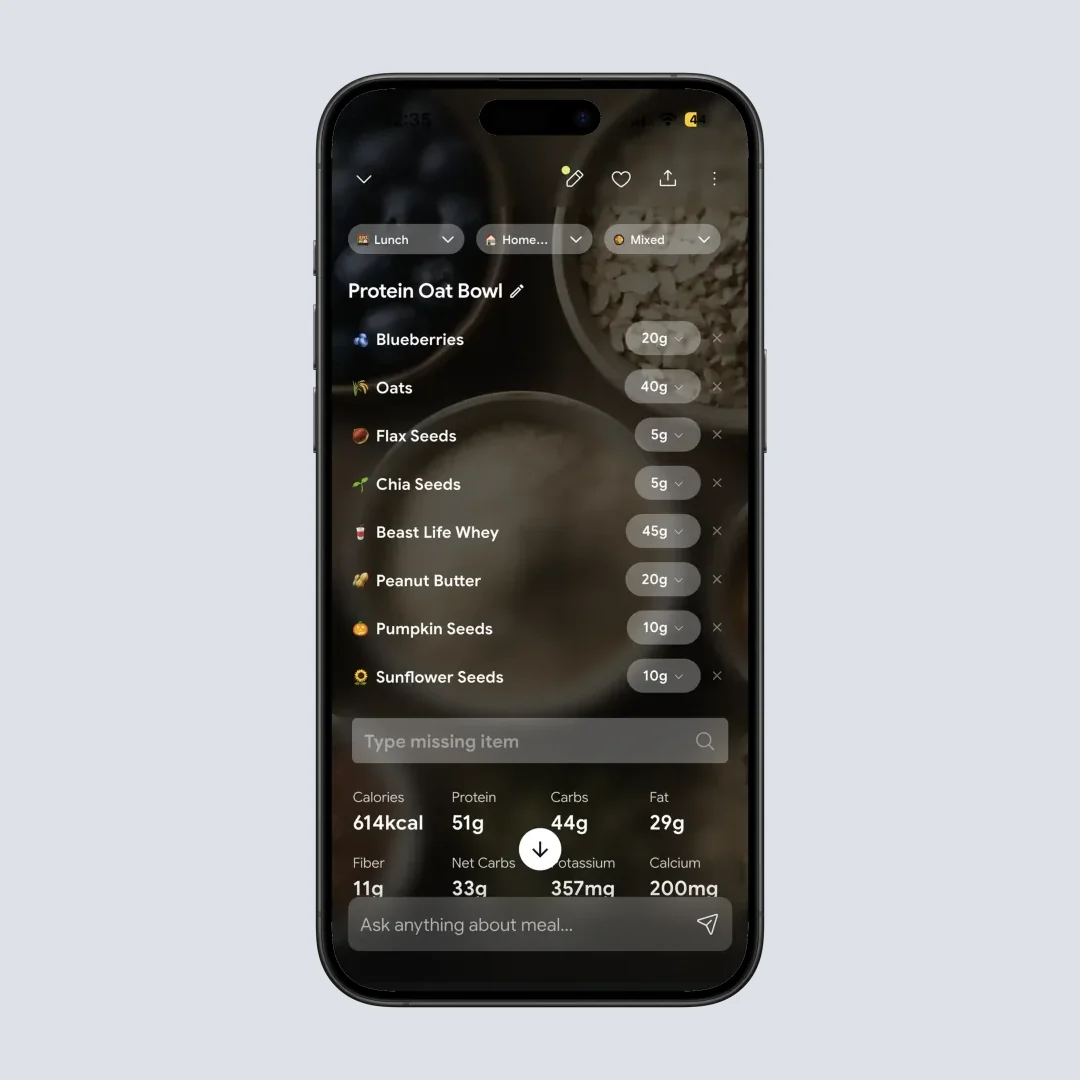
Nutrition Details for a logged meal. Carbohydrate and fiber for the portion you ate are the first two checks on the list.
The app's own wording applies here: the glucose feature is for your own tracking, and it is not a medical device or medical advice. The free plan includes 5 scans a week. Our NutriScan for diabetes page shows the rest of the app.
If you have diabetes
This article is general information. It does not replace carbohydrate counting, medication or the targets your care team has set. If you take insulin or other glucose-lowering medication, talk to your doctor or dietitian before you change what you eat.
What else do people ask about foods and diabetes?
Is pumpernickel bread good for diabetics?
One 26 g slice of pumpernickel has 12.4 g of carbohydrate and 1.6 g of fiber. Eight pumpernickel entries in the University of Sydney GI database range from 41 to 62, which is low to medium, and the glycemic load of one slice works out to between 4 and 7. Two slices double the carbohydrate to about 25 g.
Is SkinnyPop popcorn good for diabetics?
A 28 g serving of SkinnyPop Sea Salt has 15 g of carbohydrate, 3 g of fiber and 0 g of sugar. SkinnyPop itself has no published glycemic index test. Popcorn averages 65 in the 2008 International Tables of Glycemic Index, which puts the glycemic load of one serving at about 8. The bag holds several servings, so measure the portion.
Are cherry tomatoes good for diabetics?
Yes for most meal plans. 100 g of cherry tomatoes, about 6 to 8, has 3.9 g of carbohydrate and 1.2 g of fiber. The American Diabetes Association lists tomatoes among the non-starchy vegetables that should fill half the plate. Raw tomato tested at a glycemic index of 23 in the University of Sydney database.
Are keto cereals like Magic Spoon good for diabetics?
Magic Spoon and Catalina Crunch have no published glycemic index tests, so nobody can quote a tested number for them. Read the label instead. Our food pages list 14 g of total carbohydrate per serving for each, with 0 g of sugar. The American Diabetes Association notes that a sugar-free claim does not mean a food is carbohydrate-free.
Should people with diabetes count net carbs or total carbs?
The American Diabetes Association recommends counting total carbohydrate. It says the term net carbs has no legal definition and that some fiber and sugar alcohols are partly digested and still affect blood glucose. Glycemic load formulas use carbohydrate minus fiber, which is one reason to treat a glycemic load as an estimate.