What Makes a Food Good for Weight Loss? A 4-Step Test
 ChatGPT
 Claude
 AI Mode
 Perplexity
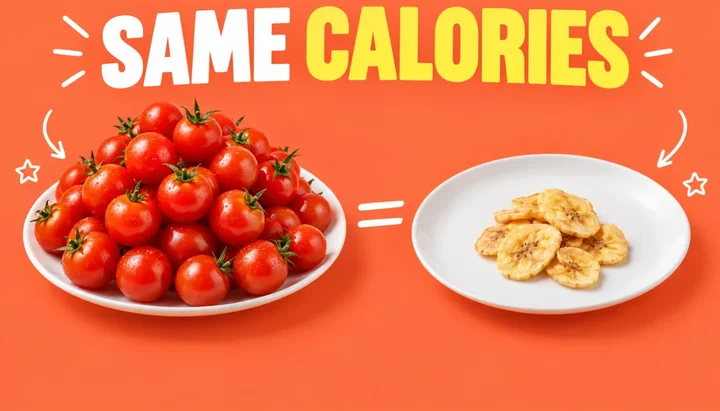
No food causes weight loss by itself. A food fits a lower-calorie diet more easily when it has few calories per gram, a good share of protein, some fiber and a portion you can keep to. You can read all four from a nutrition label in under a minute, and this post shows how.
Sources checked on October 11, 2026: a CDC research brief on energy density, a 2018 review by Smethers and Rolls of Penn State, a 2015 protein review by Leidy and colleagues, the FDA Daily Value page and an NIDDK page, each linked where it is cited. Food numbers come from the linked NutriScan food pages. Calories per gram and protein per 100 calories are our own arithmetic from those numbers.
Summary
- Calories per gram (energy density): divide calories by grams. Smethers and Rolls class under 0.6 as very low, 0.6 to 1.5 as low, 1.5 to 4.0 as medium and 4.0 to 9.0 as high.
- Protein per 100 calories: protein grams divided by calories, times 100. The 10 to 35% protein range in the same review works out to 2.5 to 8.75 g per 100 calories.
- Fiber: the FDA sets the Daily Value at 28 g. A serving with 5.6 g or more counts as high and 1.4 g or less as low.
- Portion: the score is for the serving on the label. Two servings double the calories.
- What it cannot do: the test compares foods. It does not predict what you will weigh.
What makes a food good for weight loss?
Weight loss comes from the whole diet. The NIDDK, part of the US National Institutes of Health, cites the Dietary Guidelines for Americans: adults who want to lose weight and keep it off should reduce the calories they take in from foods and beverages. A single food can make that easier or harder. It cannot do the job for you.
The reason some foods make it easier is in a CDC research brief on low-energy-dense foods (Research to Practice Series, No. 5; the link is a copy hosted by Kansas State University). It reports that "people eat a fairly consistent amount of food on a day-to-day basis", whether that amount holds many calories or few. So a food that fills the same plate with fewer calories lowers the day's total without a smaller plate.
That gives a test with four checks.
Step 1: how many calories per gram does it have?
Divide the calories in a serving by its weight in grams. The CDC brief works the sum for a 110 g cup of fat-free chocolate pudding with 100 calories: 100 / 110 = 0.9 calories per gram. A 45 g chocolate bar serving with 230 calories comes to 5.1.
The 2018 review by Smethers and Rolls in Medical Clinics of North America sorts the result into four bands:
| Band | Calories per gram | Typical foods | Their advice |
|---|---|---|---|
| Very low | 0.0 to 0.6 | Most fruits and vegetables, broth-based soups | Eat anytime |
| Low | 0.6 to 1.5 | Cooked grains, beans, low-fat meats | Eat reasonable portions |
| Medium | 1.5 to 4.0 | Meats, cheese, bread, popcorn | Manage portions |
| High | 4.0 to 9.0 | Crackers, chips, cookies, nuts, oils | Manage portions and frequency |
Water is what moves a food down the table. The same review lists water at 0 calories per gram, fiber at 2, carbohydrate and protein at 4, and fat at 9.
On a plate, cherry tomatoes have 0.18 calories per gram, so 100 calories is about 556 g. Banana chips have 5.19, so 100 calories is about 19 g.
The CDC brief describes a two-day feeding study by Rolls, Roe and Meengs in which a 25% cut in energy density led people to eat 24% fewer calories. It also describes a year-long trial by Ello-Martin and colleagues in which women advised to eat more water-rich foods and less fat lost 7.9 kg, against 6.4 kg for women advised only to eat less fat. The brief calls the trial evidence "limited", and results from a counseled trial do not transfer to one person changing one food.
Step 2: how much protein per 100 calories?
Divide protein grams by calories and multiply by 100. Protein has 4 calories per gram, so 5 g per 100 calories means 20% of the food's calories come from protein.
Smethers and Rolls give 10 to 35% of total calories as the protein range for a healthy eating pattern. That is 2.5 to 8.75 g per 100 calories. A food above the range pulls your day's protein up, and a food below it pulls it down.
How much protein helps is less settled than the energy density result. Leidy and colleagues, writing in the American Journal of Clinical Nutrition in 2015, concluded that the data suggest diets with 1.2 to 1.6 g of protein per kg of body weight a day, and possibly 25 to 30 g per meal, improve appetite, body weight management or cardiometabolic risk factors. Smethers and Rolls note that in lab studies where energy density was held equal, the amount of protein in a meal did not change fullness or the day's calorie intake. Treat this step as a tiebreaker after step 1. Our protein intake calculator gives a daily figure to work from.
Step 3: how much fiber is in a serving?
Read the fiber line and compare it with the FDA Daily Value of 28 g. The FDA's rule of thumb is that 20% of the Daily Value or more per serving is high and 5% or less is low. For fiber that is 5.6 g and 1.4 g.
Smethers and Rolls write that fiber "is thought to promote feelings of fullness by increasing chewing time, promoting stomach expansion, and decreasing absorption efficiency", and they suggest 20 to 35 g a day.
Step 4: how much of it do you eat?
The first three numbers describe the food. This one describes you. In the feeding study the CDC brief describes, a 25% smaller portion cut calorie intake by 10%, and smaller portions of lower-density foods together cut 1,625 calories over two days.
Portion also explains foods that look bad per gram and fine per serving. Puffed rice sits at 4.0 calories per gram, but a cup weighs 14 g and has 56 calories. The reverse happens too. Guacamole is 1.6 calories per gram, and half a cup is 192 calories before the chips.
Drinks need the same check. Smethers and Rolls report that people do not eat less food to make up for calories in beverages.
How do 22 common foods score on the test?
These are the foods people most often ask us about with the words "good for weight loss". Serving, calories, protein and fiber are from each linked NutriScan food page. The table is sorted from the fewest calories per gram to the most.
| Food | Serving | Calories | Calories per gram | Band | Protein per 100 calories | Fiber |
|---|---|---|---|---|---|---|
| Cherry tomatoes | 100 g | 18 | 0.18 | Very low | 5.0 g | 1.2 g |
| Khichdi | 1 cup (240 g) | 150 | 0.62 | Low | 4.3 g | 4.2 g |
| Mashed potato | 1/2 cup (100 g) | 105 | 1.05 | Low | 2.4 g | 1.6 g |
| Moroccan couscous | 1 cup cooked (157 g) | 180 | 1.15 | Low | 3.3 g | 2.2 g |
| Frozen yogurt | 100 g | 127 | 1.27 | Low | 2.8 g | 0 g |
| Tinned mackerel | 100 g drained | 156 | 1.56 | Medium | 14.7 g | 0 g |
| Guacamole | 1/2 cup (120 g) | 192 | 1.60 | Medium | 1.2 g | 8.4 g |
| Tandoori chicken | 100 g | 165 | 1.65 | Medium | 17.9 g | 0.8 g |
| Fufu | 1 cup (100 g) | 166 | 1.66 | Medium | 0.9 g | 3.1 g |
| Tamales | 1 tamal (166 g) | 280 | 1.69 | Medium | 3.6 g | 5 g |
| Fried rice | 1 cup (137 g) | 238 | 1.74 | Medium | 2.4 g | 1.5 g |
| Pumpernickel bread | 1 slice (26 g) | 65 | 2.50 | Medium | 3.5 g | 1.6 g |
| String cheese | 1 stick (28 g) | 80 | 2.86 | Medium | 7.5 g | 0 g |
| Besan chilla | 1 piece (60 g) | 180 | 3.00 | Medium | 4.7 g | 2.1 g |
| Quest bar, cookie dough | 1 bar (60 g) | 200 | 3.33 | Medium | 10.5 g | 14 g |
| Puffed rice | 1 cup (14 g) | 56 | 4.00 | High | 1.6 g | 0.2 g |
| Cheddar cheese slice | 1 slice (28 g) | 113 | 4.04 | High | 6.2 g | 0 g |
| Quest protein chips | 1 bag (32 g) | 130 | 4.06 | High | 17.7 g | 2 g |
| Haldiram's banana chips | 100 g | 519 | 5.19 | High | 0.4 g | 7.7 g |
| SkinnyPop popcorn | 1 serving (28 g) | 150 | 5.36 | High | 1.3 g | 3 g |
| Olipop prebiotic soda | 1 can (355 ml) | 35 | 0.10 per ml | Very low | 0.0 g | 9 g |
Bands follow Smethers and Rolls, 2018. Puffed rice is exactly 4.0, on the line between medium and high. Olipop is a drink, so its figure is per millilitre. Where our nutrition numbers come from is on the NutriScan data sources page.
Tandoori chicken and tinned mackerel have medium energy density and the most protein per 100 calories of any whole food here. Puffed rice is low on both protein and fiber. The two Quest products score high on protein while sitting at 3.3 and 4.1 calories per gram, which makes portion the number to watch.
Are Quest protein bars good for weight loss?
One 60 g Quest Chocolate Chip Cookie Dough bar has 200 calories, 21 g of protein and 14 g of fiber. That is 10.5 g of protein per 100 calories, or 42% of its calories from protein, and half of the 28 g fiber Daily Value.
It is also 3.3 calories per gram, near the top of the medium band. Count it as a 200 calorie snack. Our longer piece on protein bars and weight loss covers how to compare brands.
Is couscous good for weight loss?
One cup of cooked Moroccan couscous (157 g) has 180 calories. That is 1.15 calories per gram, inside the low band, because cooked grains hold a lot of water.
It has 3.3 g of protein per 100 calories and 2.2 g of fiber per cup, about 8% of the Daily Value. Couscous works as the base of a plate. The protein and most of the fiber have to come from what you put next to it.
Is puffed rice good for weight loss?
Puffed rice is the clearest case for step 4. By weight it matches the pretzel rods in the CDC brief, at 4.0 calories per gram. By the cup it is 56 calories, because a cup weighs 14 g.
It has 1.6 g of protein per 100 calories and 0.2 g of fiber per cup, so it adds volume and very little else. If blood glucose is your concern, see our explainer on glycemic index and glycemic load, which covers puffed rice.
How do you run the test on your own meals?
A label gives you all four numbers for packaged food. A home-cooked plate has no label, and its calories per gram depend on how much oil and water went in.
NutriScan estimates those numbers from a photo. The Nutrition Details page lists each food in the meal with its calories and macros, and tapping the portion pill on an item lets you change the quantity, unit or grams. The free plan includes 5 scans a week.
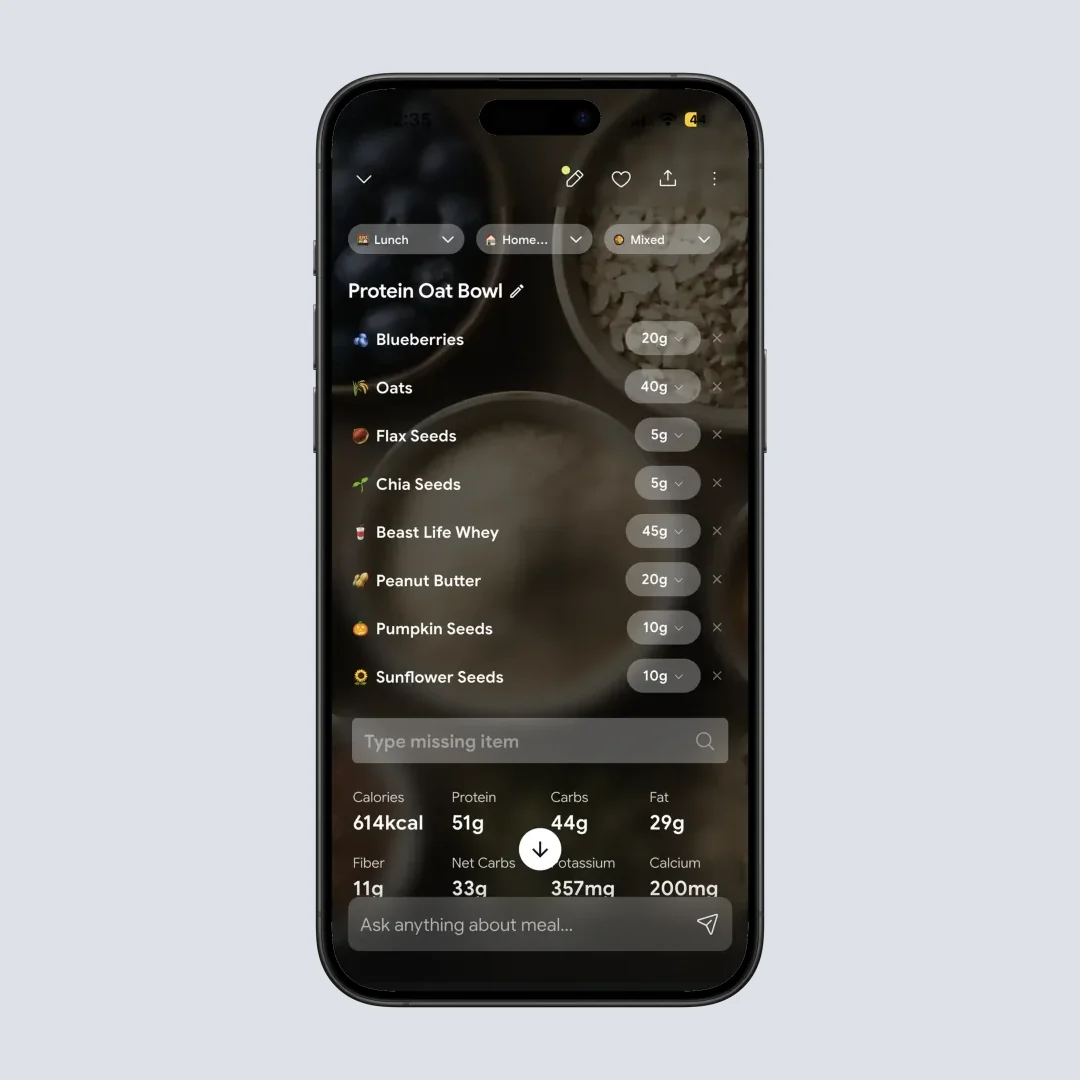
Nutrition Details for a logged meal. Calories and grams for each item are the two inputs for step 1.
Photo estimates have limits, and portion size is the hardest part. Our post on how accurate AI calorie counters are covers what published tests measured. For a daily calorie figure to compare your meals against, use the online calorie calculator.
A note on health
This article is general information. It does not promise weight loss. If you have diabetes, kidney disease, a history of disordered eating or another medical condition, your calorie, protein and fiber targets should come from your doctor or dietitian.
What else do people ask about foods and weight loss?
What makes a food good for weight loss?
No food causes weight loss by itself. A food fits a lower-calorie diet more easily when it has few calories per gram, a good share of protein, some fiber and a portion you can keep to. Check four numbers on the label: calories per gram, protein per 100 calories, fiber per serving and the calories in the amount you really eat.
Are Quest protein bars good for weight loss?
One 60 g Quest Chocolate Chip Cookie Dough bar has 200 calories, 21 g of protein and 14 g of fiber. That is 10.5 g of protein per 100 calories and half of the FDA's 28 g Daily Value for fiber, both strong results. It is still 3.3 calories per gram, so it works as one counted 200 calorie snack and adds up fast if you eat two.
Is couscous good for weight loss?
One cup of cooked Moroccan couscous (157 g) has 180 calories, which is 1.15 calories per gram and inside the low energy density band. It has 3.3 g of protein per 100 calories and 2.2 g of fiber per cup, so it is a filling base that needs a protein food and vegetables next to it.
Is puffed rice good for weight loss?
Puffed rice has 4.0 calories per gram, which is dense by weight, but one cup weighs only 14 g and has 56 calories. It has 1.6 g of protein per 100 calories and 0.2 g of fiber per cup. A cup or two is a low-calorie snack. It does little for protein or fiber, so pair it with a food that has both.
How do you calculate the energy density of a food?
Divide the calories in a serving by the weight of that serving in grams. A CDC research brief gives the example of a 110 g fat-free pudding with 100 calories, which comes to 0.9 calories per gram. Under 0.6 is very low, 0.6 to 1.5 is low, 1.5 to 4.0 is medium and 4.0 to 9.0 is high.