Lifesum vs YAZIO: Recipes, Diet Plans, and Fasting Tools Compared
 ChatGPT
  Claude
  AI Mode
  Perplexity
As a NutriScan nutritionist, the Lifesum vs YAZIO question lands in my inbox more than any other European tracker matchup. The short answer: YAZIO is the cheaper daily driver, Lifesum is the broader coach. YAZIO's 12-month tier lists at $23.90 or $47.90 and comes with 3,000+ browsable recipes and a free tier that still logs food. Lifesum's 1-year SKUs list at $99.99 and $119.99, and they buy 22+ diet Programs, AI text and photo logging, and the Life Score. Those are standard US list prices as of mid 2026 and change by region. Fasting presets and Apple Watch support are close to a tie, so price and program breadth decide it.
Both apps wrap recipes, structured diet programs and intermittent fasting tools around calorie counting. An 11-trial meta-analysis of smartphone-only weight-loss apps found a modest but statistically significant reduction in body weight and BMI at four to six months, with the effect fading past six months and a tendency to regain (Pujia et al., 2025). The authors blame apps that stop giving personal support, not users who stop trying.
TL;DR - Lifesum vs YAZIO at a Glance
Lifesum: 22+ diet programs, AI multimodal logging, Life Score, $99.99-$119.99/year at list. Best for: picking a specific eating philosophy.
YAZIO: 3,000+ browsable recipes, a leaner goal-first plan setup, $23.90-$47.90/year. Best for: goal-first tracking with a deep recipe pool at a much lower price.
Neither feels right? NutriScan gives you a photo-first third option, and the free plan keeps 5 scans a week after it ends.
IMPORTANT
Your Lifesum vs YAZIO comparison plan at a glance.
Five things to check before you pick - including one that most reviews completely skip.
⏱️ Progress 0/5 • ~0 minutes in • Keep going
⏳ Diet Plans: breadth vs structure
⏳ Recipe Libraries: browse vs program-bound
⏳ Fasting Tools: presets vs meal integration
⏳ Daily Logging: AI vs database reliability
🔍 The One Logging Factor Most Comparisons Skip (revealed near the end)
Lifesum vs YAZIO: Quick Comparison Table
| Feature | Lifesum | YAZIO |
|---|---|---|
| Annual price (US) | $99.99-$119.99/yr at list | $23.90-$47.90/yr |
| Shortest paid term | 3 months, from $21.99 | 3 months, $23.99. No monthly plan |
| Free tier | Classic tracking plus Life Score; AI logging is Premium | Database logging, barcode, fasting timer, with ads |
| Diet programs | 22+ (Keto, Mediterranean, 5:2, 16:8, Paleo, Climatarian, Hormonal Balance) | Custom meal plans by goal, with vegan, vegetarian and low-carb filters |
| Recipes | Thousands inside programs | 3,000+ freely browsable |
| Fasting timer | 12:12, 14:10, 16:8, custom (Premium) | 16:8, 5:2, 6:1, manual adjust |
| AI logging | Text, photo, voice, barcode. Premium only | AI photo + barcode + database |
| Habit metric | Life Score 0-150, scored weekly | Streaks + diamond chests |
| Apple Watch | Yes, watchOS 9.0+ | Yes, watchOS 9.0+ |
| App Store rating | 4.6/5, 150K ratings (App Store) | 4.7/5, 50K ratings (App Store) |
| HQ | Stockholm, Sweden | Erfurt, Germany |
| User base | 65M+ in 182 countries | 100M+ in 150+ countries |
Prices are standard US prices as of mid 2026 and change by region.
Both apps have real cracks that affect daily use, and the rows below are where they show up.
 Starting a new nutrition tracking journey - both apps want to help, but which one actually sticks?
How Diet Plans and Programs Compare 🗂️
Most people decide on this first. If you want a structured eating style, the question is which app has the plan you want, with recipes you will cook.
IMPORTANT
Checkpoint: here's where you are right now.
Quick status update so you always know the next best move.
⏱️ Progress 1/5 • ~1 minute in • Keep going
👉 Diet Plans (you're here)
⏳ Recipe Libraries
⏳ Fasting Tools
⏳ Daily Logging
🧩 The logging factor most comparisons skip (coming soon)
Lifesum: Programs Plus Meal Plans
Lifesum splits structured eating into two layers: Programs (the philosophy) and Meal Plans (the day-by-day schedule). Premium opens 22+ options across three goal tracks, Lose, Maintain or Gain Weight. The lineup includes Mediterranean, Scandinavian, Climatarian, Clean Eating, three Ketogenic intensities (Easy, Medium, Strict), High Protein, Vitality, 5:2, 6:1, Paleo, Sugar Detox, 3 Weeks Weight Loss, Hormonal Balance, Vegan for a Week, and 16:8 Morning or Evening fasting (Lifesum Helpdesk).
A Program adjusts your macro targets, food recommendations and recipe suggestions to fit a philosophy. A Meal Plan layers a finite calendar on top, often three to four weeks, with daily recipes already chosen. The Climatarian program, the Hormonal Balance plan and the three-tier Keto approach are uncommon in calorie trackers. The Life Score runs 0 to 150, not 0 to 100, and it is scored weekly across nutrition, water and exercise, with bands from Off Track (0-30) up to Optimal (120-150) (Lifesum Helpdesk). One dial to focus on instead of five macro graphs.
YAZIO: Goal-First Plans and Recipes
YAZIO leads with goals: lose weight, build muscle, eat healthy. Pro adds custom meal plans built around the goal you picked, with dietary preferences applied on top (YAZIO). YAZIO publishes no plan count and no named plan lineup, so any "14 structured plans" figure you see, including in earlier versions of this post, is invented.
YAZIO's recipe library is the headline: 3,000+ recipes that pull through the meal planner (YAZIO). Recipes lean European, grain bowls and fish-forward dinners. YAZIO's plans are thinner than Lifesum's, with no published catalog, but the recipe pool is deeper.
The Practical Difference
Lifesum is for users who choose the eating style first. YAZIO is for users who set a goal first and take the plan and recipes that follow from it. If you have a dietary philosophy in mind, Lifesum has more shelves. If you want a goal-driven plan with a strong recipe pool, YAZIO is easier to stick with. For help understanding your macro needs across any program, the NutriScan macro calculator gives you a precise target baseline. If Lifesum's program list is the reason you are leaning that way, our Lifesum Premium breakdown goes through what Premium actually unlocks.
How Recipes Work in Each App 🍽️
Recipes are the bridge between diet plan and dinner. The count matters less than how fast you find one you will cook.
YAZIO: 3,000+ Recipes With a Grocery List
YAZIO publishes filters for low-carb, vegetarian and vegan, a smart grocery list, and a step-by-step cooking mode (App Store listing). Each recipe shows calories, macros, and full ingredients, and recipes drop into the meal planner and the grocery list from inside the app. YAZIO documents no prep-time or difficulty filter, so do not plan on sorting by "under 30 minutes". The interface is consistently praised for its visual polish.
Lifesum: Recipes Tied to Programs
Lifesum's recipes are organized inside Programs and Meal Plans rather than as a single browsable library. Pick a Program (say, Mediterranean) and the recipes surface under that Program's tab. That is helpful once you have committed to an eating style, less so when you want to browse high-protein dinners across all of them. A general Recipes tab exists, but the strongest recipe experience sits inside an active plan.
Pro Tip: Grocery Lists
Both apps build a grocery list. YAZIO's sits next to a browsable recipe pool, so you can shop from anything you find. Lifesum's is bound to the Meal Plan you are running. If grocery planning drives your week, YAZIO is the freer of the two.
The Practical Difference
If you want to browse freely, YAZIO is better organized. If you want recipes to come to you because you committed to a Program, Lifesum's structure is tighter. For personalized diet plans built on health goals, see the NutriScan diet plan guide.

How Fasting Tools Work in Each App ⏱️
Both apps have intermittent fasting built in. The depth of the tools is where they split.
IMPORTANT
Checkpoint: midway progress update.
You're halfway - decisions get easier here.
⏱️ Progress 2/5 • ~2 minutes in • Keep going
✅ Diet Plans (done)
✅ Recipe Libraries (done)
👉 Fasting Tools (current)
⏳ Daily Logging
⏳ The logging factor most comparisons skip (next)
YAZIO: Fasting Tracker With Multiple Schedules
YAZIO ships a dedicated fasting tracker. The plans it actually publishes are 16:8, 5:2 and 6:1, plus manually adjustable fasting times from the Fasting tab (YAZIO Help Center, YAZIO). There is no published 18:6 or 20:4 preset. You activate, adjust, or cancel a fast at any time.
The convenience is that the timer, the recipe library and your macro targets live in one app, so you are not stitching a fasting app to a calorie app. If fasting is the main reason you are shopping, our intermittent fasting tracker app page covers the window presets side by side.
Lifesum: Fasting Programs With Recipes
Lifesum treats fasting as a Program and Meal Plan. Premium offers 16:8 Morning Fasting, 16:8 Evening Fasting, 5:2, and 6:1. The fasting timer supports 12:12, 14:10, and 16:8 presets, and the Custom interval is itself a Premium feature (Lifesum). Where Lifesum is stronger is the eating-window guidance. Each fasting Program carries its own recipes and calorie targets, so the schedule and the food line up instead of sitting in separate tabs.
Note on Fasting Schedule Precision
Neither app presets a window longer than 16:8. YAZIO publishes 16:8, 5:2 and 6:1 with manual time adjustment; Lifesum presets 12:12, 14:10 and 16:8 and puts its custom interval behind Premium. If you fast 18 or 20 hours you are setting the window yourself in both. If you are starting fasting and want recipes matched to your window, Lifesum's Program structure is the better hand-hold.
How Daily Logging Compares 📱
Plans and recipes only matter if the logging works. Both apps made big AI bets.
IMPORTANT
Checkpoint: final stretch before the reveal.
One last section - the reveal is next.
⏱️ Progress 3/5 • ~3 minutes in • Keep going
✅ Diet Plans
✅ Recipe Libraries
✅ Fasting Tools
👉 Daily Logging (current)
✨ The logging factor most comparisons skip (about to reveal)
Lifesum: AI Multimodal Logging
Lifesum's AI accepts text, photo, voice, or barcode input (Lifesum Helpdesk). Type "two scrambled eggs and a slice of sourdough" and it estimates calories and macros. Snap a photo and it identifies items. The pitch is speed, no database search, no scrolling. It is Premium only.
Two things get repeated about the AI pivot that are not true. The diary still shows Breakfast, Lunch, Dinner and Snacks by default, and Classic Food Tracking still runs alongside AI Tracking, switchable under Diary, Customise Diary, Track with AI. Corrections were not stripped out either: reopen the meal, tap Add more food, and edit in plain language ("replace rice with quinoa") or adjust the amount by hand. What is true is that the estimate needs checking. A 2024 scoping review put nutrient estimation errors between 10% and 15% across the input methods it examined, and named adapting to diverse food types as an open challenge (Zheng et al., 2024, PubMed 39608003). When the AI is right it is genuinely faster. When it is wrong you are doing a second pass.
YAZIO: Database Plus AI Photo Tracking
YAZIO's logging core is database search and barcode scanning, with AI photo tracking on top. Search for "Greek yogurt," confirm the serving, log it. Verifiable and fast for known foods. User reports flag two recurring data issues: nutrition values sometimes diverge from the package label, especially on regional products, and custom food entries occasionally trigger errors. Standard meal structure - breakfast, lunch, dinner, snacks - stays predictable.
The Practical Difference
YAZIO's flow is verifiable. You pick the database entry, you see the serving, you know what landed. Lifesum is faster on a good AI guess and its correction path is documented, but you are still accepting an estimate you did not choose. For users who want to see the source of every number, YAZIO. For users who want to type a sentence and move on, Lifesum.
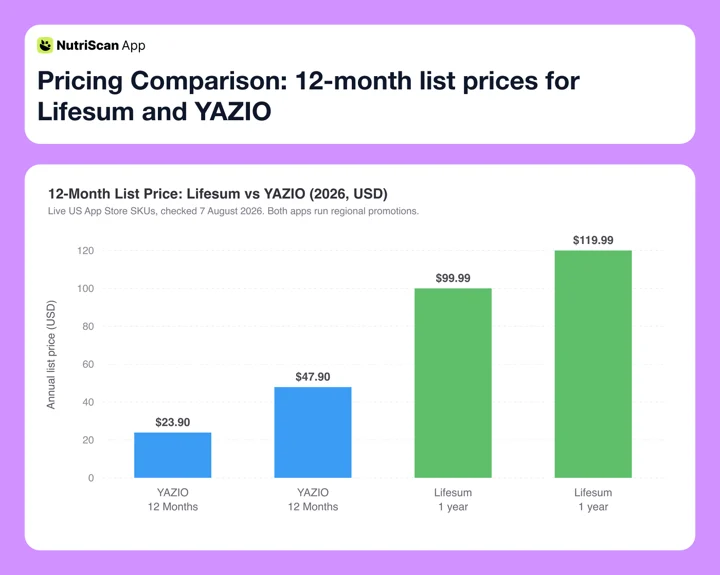 Figure 1: The live 12-month App Store SKUs. YAZIO's two annual tiers sit well under Lifesum's two.
Pricing and Free Tiers 💰
YAZIO is cheaper by a long way. It sells no monthly plan at all: you are charged the full amount for the period you pick (YAZIO Help Center). Its shortest listed US tier is 3 months at $23.99, and its 12-month tier lists at $23.90 or $47.90 depending on which offer is running (App Store).
Lifesum has no monthly SKU with a stated duration either. Its own anchor is "From 8.33 $/month", billed annually (Lifesum). The live 1-year listings are $99.99 and $119.99, with shorter tiers from $21.99 (App Store). Both run regional promotions, so check the figure in your own store. We break each one down separately in YAZIO pricing and Lifesum pricing.
Both have functional free tiers. YAZIO's free tier covers database logging, barcode scanning, and an optional fasting tracker, with ads. Lifesum's free tier gets Classic Food Tracking, database search and barcode, plus the Life Score. AI Tracking is Premium, and so are the Programs and Meal Plans.
On list annual pricing, YAZIO costs roughly a quarter to half of Lifesum. The extra Lifesum money buys program variety and Life Score, not better logging accuracy.
Apple Watch and Device Support ⌚
Both apps ship an Apple Watch companion. YAZIO lists iPhone, iPad and Apple Watch under supported devices and runs a help center section for connecting the watch (YAZIO Help Center). Lifesum lists Apple Watch too, alongside Apple Health, Google Fit, Samsung Health, Fitbit, Withings and Wear OS (Lifesum). Both require watchOS 9.0 or later.
So this row is a tie, not a YAZIO win. Any comparison telling you Lifesum has no watch app is out of date.
Reliability and Post-Update Stability
Both apps have post-update stability problems that surface in user reviews.
Lifesum's AI tracker has been reported to break after updates, with features reverting unexpectedly, and paying subscribers sometimes report logging failures. YAZIO's calendar has been reported to break after updates, and cross-device sync sometimes fails when switching phones. YAZIO's diamond chests are a real feature, unlocked by tracking meals regularly (YAZIO Help Center); how reliably they fire is not documented anywhere.
None of these reports comes with a dated review we can link, on either side, so read them as signals rather than findings. Neither app guarantees a stable experience across updates.
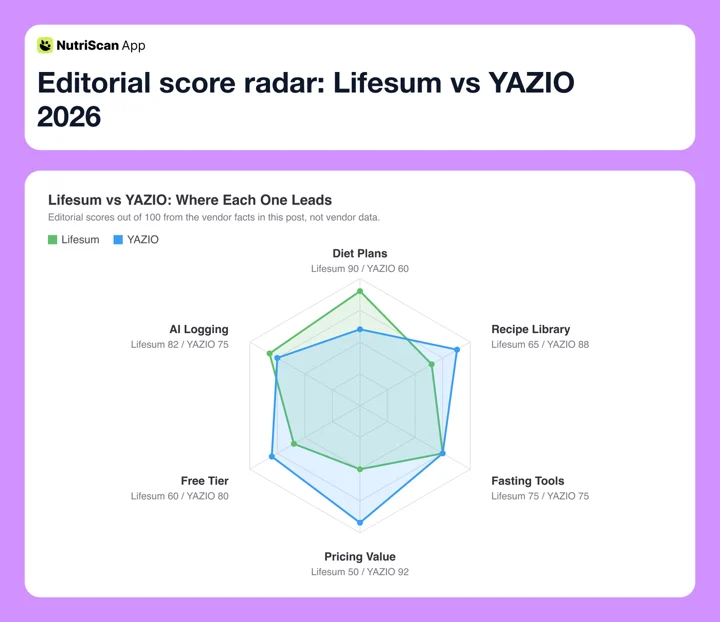 Figure 2: Our editorial scores, not vendor data. Lifesum leads on plan breadth and AI logging; YAZIO leads on the recipe library, the free tier and price. Fasting is close to a tie.
Who Should Choose Lifesum ✅
Choose Lifesum if:
- You want program variety - 22+ plans including Climatarian, Hormonal Balance, and three-tier Keto are wider than YAZIO's lineup.
- You want a Life Score - the 0-150 weekly score is a single dial that simplifies feedback.
- You want fasting tied to recipe plans - the 16:8 Morning and Evening Programs carry their own recipes and targets.
- You prefer text or voice logging speed over database verification.
- You are willing to pay $99.99 to $119.99 a year at list for the broader program library.

Who Should Choose YAZIO ✅
Choose YAZIO if:
- You want much cheaper pricing - $23.90 to $47.90 a year against Lifesum's $99.99 to $119.99.
- You want a deep browsable recipe library - 3,000+ recipes that feed a grocery list.
- You want a usable free tier - database logging, barcode and the fasting tracker cost nothing, where Lifesum gates AI logging behind Premium.
- You want database logging and barcode as your primary input, with AI photo as a backup.
- You want 6:1 fasting as a preset, which Lifesum also offers as a Program but not on the timer.
 Choosing between Lifesum and YAZIO feels exactly like this - but the answer comes down to one key factor
The One Logging Factor Most Comparisons Skip ✨
You have been patient. Here is the argument most comparison articles skip.
The 10-15% estimation error is not the real problem. The real problem is what happens the first time logging fails you. Every app has a failure mode. Lifesum's AI mislabels a mixed dish, YAZIO returns a database entry with wrong macros, a meal just does not log cleanly. Nobody has measured what that one moment costs in retention, so take this as an argument, not a finding. What the research does say is that app effects fade past six months and dropout runs high (Pujia et al., 2025).
Lifesum's failure mode: the AI logs something wrong. You can fix it, the edit path is documented and works in plain language, but you have to notice first, and a plausible-looking number rarely announces itself.
YAZIO's failure mode: the database returns a wrong macro value and you have no way to know unless you check the package. You stop trusting the log.
Both failure modes share a root cause: neither app puts the actual food, the portion, and the number in front of you before the entry lands on your daily total. That correction loop is the difference between an app that becomes a habit and one you abandon.
This is the gap NutriScan was built around. You snap the meal, see what was recognized, edit the portion with a slider that shows what 150g versus 250g looks like on a plate, and log in under 10 seconds. The NutriScan meal scan guide shows the full flow.
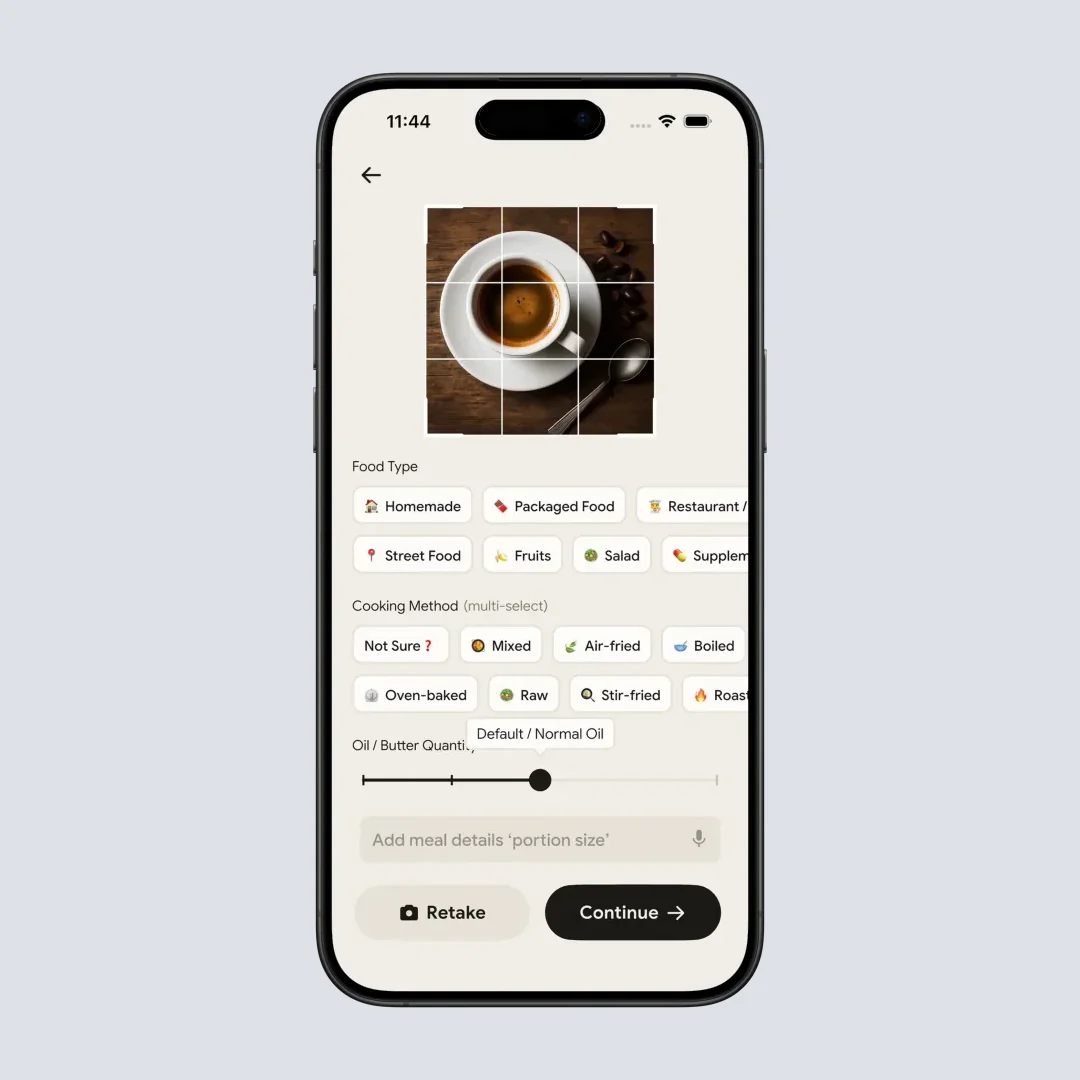
NutriScan: Home > Camera Icon > Crop Picture - snap your meal, adjust the portion, log with confidence (Home > Camera Icon > Crop Picture)
That correction step is the whole point. The fix happens before the number lands, not after you have stopped trusting the log.
IMPORTANT
Recap: everything you compared this round.
You finished the comparison - save this for next time.
⏱️ Progress 5/5 • ~5 minutes in • Nicely done
✅ Diet Plans: Lifesum has more variety; YAZIO is more goal-focused
✅ Recipe Libraries: YAZIO's 3,000+ is more browsable; Lifesum's are program-bound
✅ Fasting Tools: near tie on presets; Lifesum wins on meal integration
✅ Daily Logging: YAZIO more verifiable; Lifesum faster, but you have to spot the error
✅ The Correction Loop: how easily you fix a wrong entry matters more than the feature list (revealed)
Where NutriScan Fits
If both apps look like a compromise, Lifesum's Premium-gated AI and higher price against YAZIO's thinner program lineup, NutriScan is worth knowing about.
NutriScan is photo-first: snap the meal, edit the portion, log it in under 10 seconds, with the estimate in front of you before it lands on your day total. It is built for the mixed dishes and regional foods that AI loggers miss. The 7-day Premium trial covers full photo logging, "what to eat next" suggestions and macro targets. It starts through your app store; whether a card is collected depends on your platform and region.
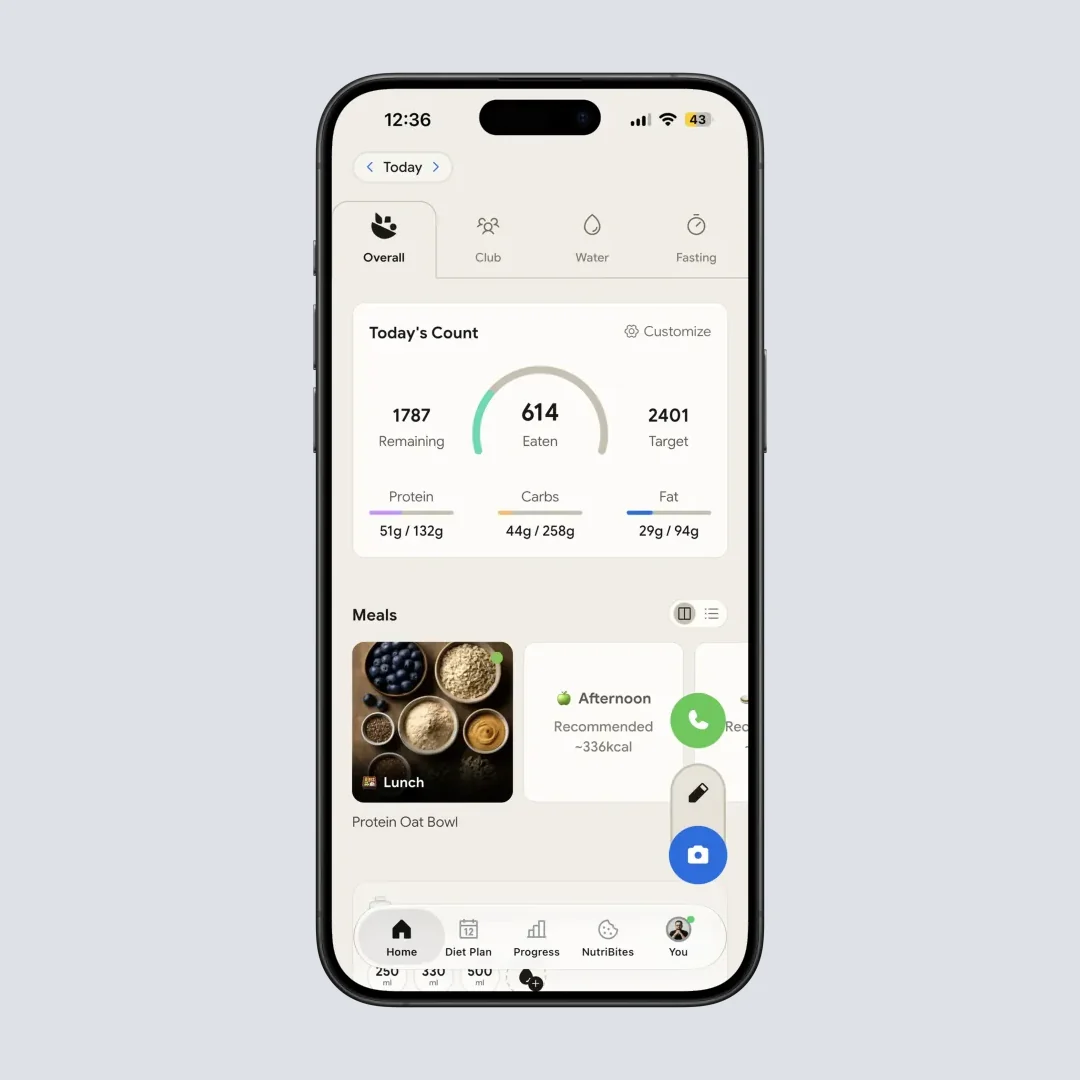
NutriScan Home: daily macro progress, meal cards, and insights - built to surface what actually matters
For users who tried Lifesum and bounced off the AI pivot, or tried YAZIO and got tired of checking macros against the package, NutriScan is worth a week. If you are still shopping around, see the wider lists of Lifesum alternatives and YAZIO alternatives.
Frequently Asked Questions ❓
Is Lifesum or YAZIO cheaper?
YAZIO, by a wide margin at list. YAZIO sells no monthly plan; its 12-month tier lists at $23.90 or $47.90 and its shortest tier is 3 months at $23.99. Lifesum's 1-year SKUs list at $99.99 and $119.99, with shorter tiers from $21.99. Both run regional promotions, so check your own store.
Which app has more recipes?
YAZIO has the larger browsable recipe library at 3,000+ recipes with a grocery list built in. Lifesum has thousands of recipes but they are organized inside Programs and Meal Plans rather than as a single freely browsable pool.
Which app has better fasting tools?
Closer than most comparisons claim. YAZIO publishes 16:8, 5:2 and 6:1 plus manually adjustable times. Lifesum presets 12:12, 14:10 and 16:8, gates its custom interval behind Premium, and runs 16:8 Morning, 16:8 Evening, 5:2 and 6:1 as full Programs with recipes. Neither presets 18:6 or 20:4.
Which app has more diet plans?
Lifesum, and it is the only one of the two that publishes a catalog: 22+ Programs and Meal Plans including Mediterranean, Climatarian, Hormonal Balance, three Keto tiers, Clean Eating and Paleo. YAZIO publishes no plan count, only custom meal plans built around your goal with dietary preferences applied.
Does Lifesum have an Apple Watch app?
Yes. Both do. Lifesum and YAZIO each list Apple Watch under supported devices on the App Store and each require watchOS 9.0 or later, so this is a tie.
Is Lifesum's AI logging accurate?
It is fast when it is right, and it needs checking. A 2024 scoping review (Zheng et al.) put nutrient estimation errors between 10% and 15% across the AI methods it examined. Lifesum documents a full correction path: reopen the meal, tap Add more food, and edit in plain language or adjust the amount by hand. AI Tracking is Premium only.
Which app is better for European users?
Both apps are European-built and both recipe pools lean European, though neither vendor publishes a regional breakdown of its database. The deciding factors are price (YAZIO much cheaper) and program variety (Lifesum wider). Fasting is close to a tie.
Which diet tracker is better for beginners?
YAZIO is generally easier for beginners due to goal-first setup, predictable meal slots, and cleaner database logging. Lifesum suits beginners who want a specific diet philosophy (like Mediterranean or Keto) with full program guidance from day one.
Can I use both Lifesum and YAZIO free without paying?
Yes, but know what you get. Lifesum's free tier is Classic Food Tracking, database search and barcode, plus the Life Score; AI Tracking is Premium. YAZIO's free tier covers database logging, barcode scanning and an optional fasting tracker, with ads. Diet plans and meal plans sit behind both paywalls.
Final Verdict
Lifesum is the lifestyle coach with program breadth and AI-first logging. YAZIO is the polished tracker with a deeper browsable recipe pool, a more usable free tier, and a list price a quarter to half of Lifesum's. Fasting is close to a tie and so is the Apple Watch. Both have post-update stability reports. Both have logging accuracy trade-offs. The question is which failure mode you can live with.
For users who want a structured eating philosophy and recipes inside that philosophy, Lifesum has more shelves. For users who want a goal, a plan, and a clean daily logging flow for a fraction of the money, YAZIO is the better daily driver. And if neither feels right after a week, NutriScan gives you a third reference point, with 5 free scans a week once the trial ends.