Non-Veg Diet Plan for Weight Loss India: 7-Day Chicken & Fish
 ChatGPT
  Claude
  AI Mode
  Perplexity
 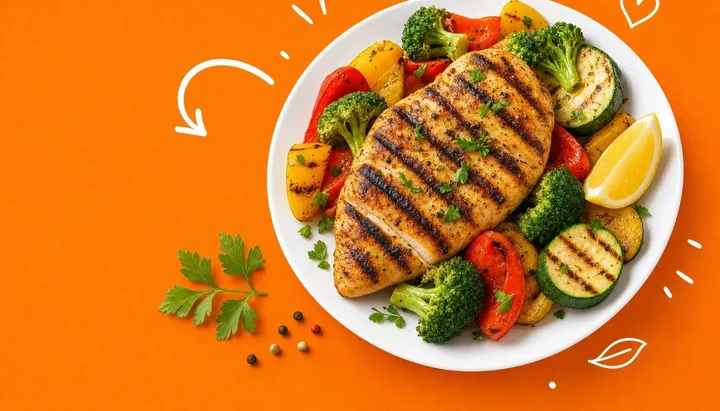 Photo by Uday Agastya on Unsplash
A non-veg diet plan for weight loss in India comes down to two numbers and one habit. Hit 1.6 to 2.0g of protein per kg of body weight, roughly 110 to 140g a day for a 70kg adult, hold the day near 1,600 kcal, and cook the chicken or fish dry before it ever meets a gravy. The 7-day plan below does all three on skinless chicken breast, rohu, pomfret, prawns and eggs, and averages 110 to 125g of protein a day. No protein powder, no imported ingredients, and no giving up the masala.
TL;DR - Non-Veg Weight Loss Diet Plan India
- Protein target: 1.6-2.0g per kg of body weight per day - about 110-140g for a 70kg adult
- Best sources: Skinless chicken breast, rohu, pomfret, surmai, prawns, eggs
- Core rule: Grill or bake first, add to a tomato-yogurt gravy after - never deep-fry as a daily habit
- 7-day plan: Averages 1,600 kcal, 110-125g protein, 130-150g carbs, 50-60g fat
- Tracking tip: Photo-log Indian dishes with NutriScan instead of hunting broken database entries
Most Indian non-vegetarians stall on weight loss because of what the chicken is sitting in. A 200g cooked portion of grilled tandoori breast lands at roughly 330 kcal with about 62g of protein (USDA FoodData Central 171477, 165 kcal and 31g protein per 100g cooked). The same chicken inside a butter masala gravy with two tablespoons of cream jumps past 600 kcal before the rice arrives. Fish has a similar story. A 150g rohu fillet pan-seared in a teaspoon of oil is about 180 kcal. The same fillet rolled in besan and shallow-fried is about 350 kcal. The protein is the same. The calories are not.
This guide is built for Indian readers who eat chicken, fish, and eggs and want a real plan that respects both the calorie deficit and the way Indian kitchens actually cook.
IMPORTANT
Your non-veg weight loss plan at a glance.
Five rules that separate Indian non-veg diets that work from ones that quietly stall.
⏱️ Progress 0/4 - ~0 minutes in - Keep going
⏳ Rule 1: Hit your protein number daily
⏳ Rule 2: Pick the right cuts (not just any non-veg)
⏳ Rule 3: Fix your cooking method, not your menu
⏳ Rule 4: Spread protein across 4 meals, not 1
🔍 Rule 5: The photo scan that ends Indian calorie guessing (revealed near the end)
Why Non-Vegetarians Have a Real Edge in a Calorie Deficit 💪
Protein is the macronutrient most often studied for protecting weight loss. Harvard Health cites a meta-analysis finding that a high-protein diet can lead to weight loss and prevent weight regain afterwards, while noting the evidence is still contested and that follow-up longer than one year is needed (Harvard Health). On the muscle side, Morton et al. 2018, a meta-analysis of 49 resistance-training studies in the British Journal of Sports Medicine, found that protein beyond 1.62g per kg per day added no further fat-free mass.
This is where Indian non-vegetarians have a quiet advantage. Animal protein is a complete protein, carrying all nine essential amino acids in roughly the proportions your body needs. A 100g cooked portion of chicken breast delivers around 31g of protein (USDA 171477); raw, the same breast is about 22.5g per 100g (USDA 171077). Indian fish run roughly 18 to 22g per 100g raw. A boiled egg adds 6g.
To reach the same protein from rajma or chana, you would have to eat two cups cooked, which usually drags rice or roti along with it. The non-veg plate hits the protein number with smaller volume and fewer carbohydrates, which is exactly the combination a fat-loss diet wants. If you cook for a mixed household, our vegetarian weight loss diet for Indian women runs the same math on paneer, dal and soya, and the top 25 low-calorie high-protein foods in India list covers both sides of the plate.
 Photo by Fabio Sasso on Unsplash
Red meat caveat
Zhong et al. 2020 in JAMA Internal Medicine, pooling six US cohorts, associated both processed and unprocessed red meat with incident cardiovascular disease and all-cause mortality, and found no such association for poultry or fish. Hidayat et al. 2022 in Nutrition Reviews, a meta-analysis of prospective studies, found that replacing red meat with poultry tracked with lower coronary heart disease risk and replacing it with fish tracked with lower all-cause mortality. Both are observational, so they show association rather than proof. For an Indian fat-loss plan the practical read is the same: build the week around chicken, fish, and eggs, treat mutton and other fatty red meat as occasional, and keep processed meats like sausages and salami for special occasions.
 Cooking lean: dry heat first, oil measured in teaspoons not tablespoons
IMPORTANT
Checkpoint: Rule 1 covered.
You now know why the non-veg advantage is real - and its limits.
⏱️ Progress 1/4 - ~1 minute in - Keep going
✅ Rule 1: Hit your protein number daily (done)
👉 Rule 2: Pick the right cuts (you're here)
⏳ Rule 3: Fix your cooking method
⏳ Rule 4: Spread protein across 4 meals
🧩 Rule 5: The scan trick (coming soon)
The Protein Number You Are Aiming For 🧮
Harvard reports the basic Recommended Dietary Allowance for protein at 0.8g per kilogram of body weight per day, or about 60g for a 75kg adult. That number keeps a sedentary adult from being deficient. It is not the number that protects muscle in a calorie deficit.
Around 1.6g per kilogram is where the evidence stops adding fat-free mass (Morton et al. 2018), so 1.6 to 2.0g per kg is a reasonable working band while you are in a deficit. The same Harvard page puts 2g per kg as the ceiling for anyone who is not a bodybuilder or elite athlete, and it asks people over 50 for at least 1g per kg simply to hold onto muscle. For a 70kg adult in a deficit, the band works out to roughly 110 to 140g of protein per day.
For an Indian reference point, ICMR-NIN's 2020 RDA for adults is 0.83g per kg a day, rising to 1g per kg on cereal-heavy diets with lower-quality protein. It publishes no separate target for people in a calorie deficit, so the higher band above is a training and weight-loss figure, not an Indian national recommendation.
Use our macro calculator to get your exact daily protein and calorie targets based on your height, weight, and activity level.
A practical protein split for a 70kg adult on 1,600 kcal:
| Meal | Target Protein | Example |
|---|---|---|
| Breakfast | 25-30g | 1 boiled egg + 3 whites + dahi + toast |
| Lunch | 40-45g | 150g raw chicken or fish + dal + curd |
| Snack | 10-15g | 1 boiled egg + roasted chana |
| Dinner | 30-35g | 150g raw fish or chicken + vegetable + small carb |
Every meat and fish weight in this post is the raw weight you buy, not the cooked weight on the plate. Chicken loses roughly a quarter of its weight to cooking and concentrates its protein as it does, so 150g raw breast is about 110g cooked and lands near 34g of protein. That structure puts you at 105-125g of daily protein without a shaker bottle.

The Best Chicken Cuts for Indian Fat Loss 🍗
Not all chicken is equal once you account for skin, fat layer, and bone. The leanest cuts you can buy at a typical Indian butcher or supermarket:
- Boneless chicken breast (skinless): 120 kcal and 22.5g protein per 100g raw (USDA 171077). Best base for grills, tikka, and shred-and-mix bowls.
- Chicken thigh (skinless, boneless): about 120 kcal and 19g protein per 100g raw. More forgiving, juicier, and a smarter pick for slow-cooked curries because it dries out less.
- Chicken keema (lean, fat-trimmed): about 145 kcal and 20g protein per 100g raw. Be cautious of supermarket keema that includes fat and skin. Ask for "lean keema, no skin" at the counter or grind a breast yourself.
Cooking concentrates all of these. The same breast roasted comes out at 165 kcal and 31g protein per 100g (USDA 171477), because water leaves and the protein does not.
Avoid these by default
Skin-on legs and wings deep-fried in batter, butter-chicken-style gravies as a daily default, and restaurant chicken biryani counted as a "weight loss lunch". A restaurant chicken biryani plate is easily 700 to 900 kcal depending on portion and ghee, against roughly 500 for a home version with brown rice and a lighter hand on the fat. Restaurant portions are not standardized and no food database carries a plated biryani, so treat those as rough guides rather than numbers to build a deficit on.
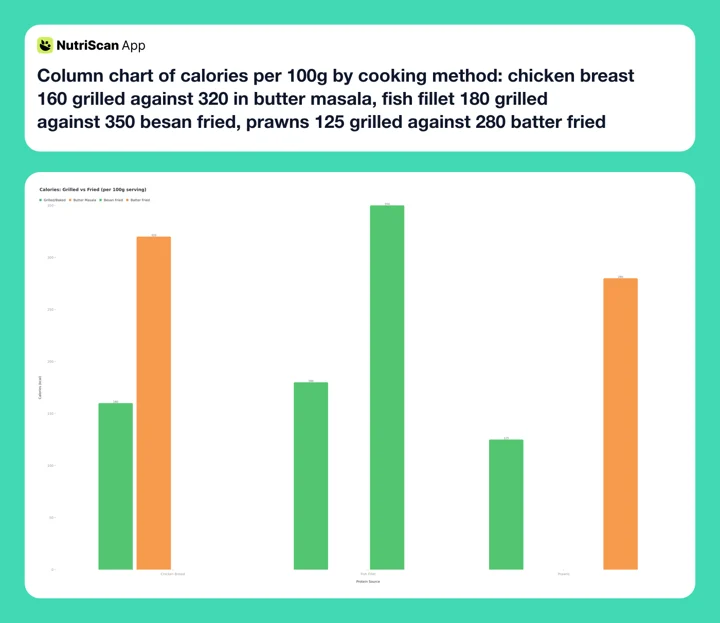 Figure 1: Cooking method alone can double the calories in an otherwise identical portion. Grilled vs fried across three common Indian protein sources, per 100g of finished dish. The grilled bars are the raw food plus a teaspoon of oil (chicken 120 + 40, prawns 85 + 40, and a mid-fat fish like bangda at 140 + 40, not lean rohu). The fried and gravy bars are estimates built from typical recipes, not measured values.
Cooking methods that preserve the calorie count: tandoor or oven roast, air-fry, stove-top grill, dry-pan sear with one teaspoon of oil, slow simmer in a tomato base without cream.
Cooking methods that quietly destroy it: shallow-frying in besan, deep-frying in batter, finishing in butter or cream, or any dish that "needs" two tablespoons of ghee for flavor.
Fish: The Cheapest Way to Hit Protein in India 🐟
Fish is undervalued as a fat-loss food in Indian diets. It cooks fast, holds spice well, and adds omega-3 fatty acids that support heart health alongside the protein. Harvard lists fish alongside poultry as a better animal-protein choice than red meat. The AHA puts it plainly: fish is a good source of protein and, unlike fatty meat products, it is not high in saturated fat.
Practical Indian fish for a weight loss plan. Figures are per 100g raw and approximate; the two with USDA records are linked, the rest are typical values for the Indian species.
| Fish | Kcal / 100g raw | Protein / 100g raw | Best Preparation |
|---|---|---|---|
| Rohu (rui) | ~95 (approx) | 16-18g (approx) | Baked or pan-seared |
| Pomfret | ~130 (approx) | ~20g (approx) | Grilled with mustard or curry leaves |
| Surmai (king fish) | 105 (USDA 175122) | 20g | Tikka |
| Indian mackerel (bangda) | ~140 (approx) | ~22g (approx) | Quick fry 1 tsp oil or steamed. The fattiest row here, so watch the portion |
| Tilapia | 96 (USDA 175176) | 20g | Mild, easy for beginners |
| Basa (pangasius) | ~90 (approx) | 13-15g (approx) | Mild, but noticeably lower in protein and higher in fat than tilapia despite the similar price |
Aim for two to three fish meals per week. The American Heart Association recommends two servings of fish a week, a serving being 3 ounces cooked, and says regular fish and seafood intake tracks with lower cardiovascular risk. That is about 85g cooked, well under the 140-180g portions the 7-day plan below uses, so the plan clears the AHA bar comfortably.
Cook it dry. A 150g rohu fillet baked at 200 C for 12 minutes with lemon, ajwain, and a teaspoon of mustard oil is about 180 kcal. The same fillet rolled in besan and shallow-fried is about 350 kcal. The protein is identical. The deficit is not.
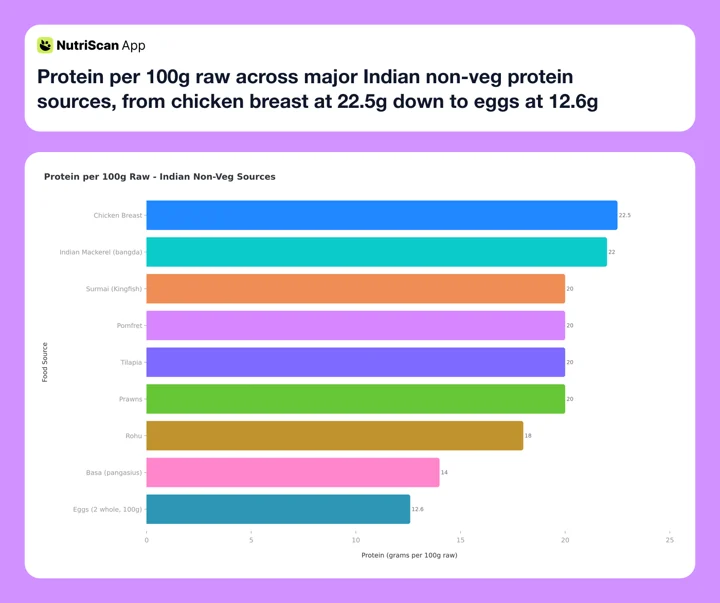 Figure 2: Protein per 100g raw, so every bar is on the same basis. Chicken breast (22.5g) and bangda (22g) lead, most Indian fish cluster near 20g, and basa is the outlier at 13-15g. Cooking concentrates all of these: the same chicken breast is 31g per 100g once roasted.
IMPORTANT
Checkpoint: midway progress update.
You've covered the protein logic, the cuts, and the fish - now the weekly plan.
⏱️ Progress 2/4 - ~3 minutes in - Keep going
✅ Rule 1: Hit your protein number daily (done)
✅ Rule 2: Pick the right cuts (done)
👉 Rule 3: Fix your cooking method (current)
⏳ Rule 4: Spread protein across 4 meals
⏳ Rule 5: The scan trick (next)
Eggs: The Third Pillar Most Plans Ignore 🥚
Eggs are the cheapest complete protein in India and the most flexible. One large egg gives you 72 kcal and 6g protein (USDA 171287, 143 kcal and 12.6g per 100g, and a large egg is 50g). One whole egg plus five whites gets you about 24g of protein for roughly 157 kcal, before any oil goes in the pan. A teaspoon adds 40.
The cholesterol fear around eggs has softened, but not as far as most food writing suggests. Mayo Clinic says most healthy adults can eat up to seven eggs a week, which is about one a day, without raising heart disease risk. It also notes that one large egg carries about 186mg of cholesterol against a suggested ceiling of 300mg a day, so two yolks clears that ceiling from eggs alone. Mayo flags diabetes specifically: some research links seven eggs a week to higher heart disease risk in people with diabetes. So the honest rule is about one whole egg a day, extra whites on top if you want more protein, and if you have diabetes or a diagnosed cholesterol disorder, ask your doctor for a personal number.
A practical Indian breakfast template for fat loss: One whole egg plus three whites scrambled with onion and tomato in a teaspoon of oil, one slice of multigrain toast, and a cup of dahi. That stack lands at roughly 300 kcal and 26g protein, which is what the protein-split table above asks of breakfast, and it spends only one of your seven weekly yolks. It travels well, costs under 30 rupees at mid-2026 prices, and beats almost any cafe breakfast on protein per rupee.
Protein source comparison
Use the radar chart below to see at a glance how chicken, Indian fish, and eggs compare across the five factors that actually matter for a weight loss diet: protein density, omega-3s, affordability, availability, and kitchen versatility.
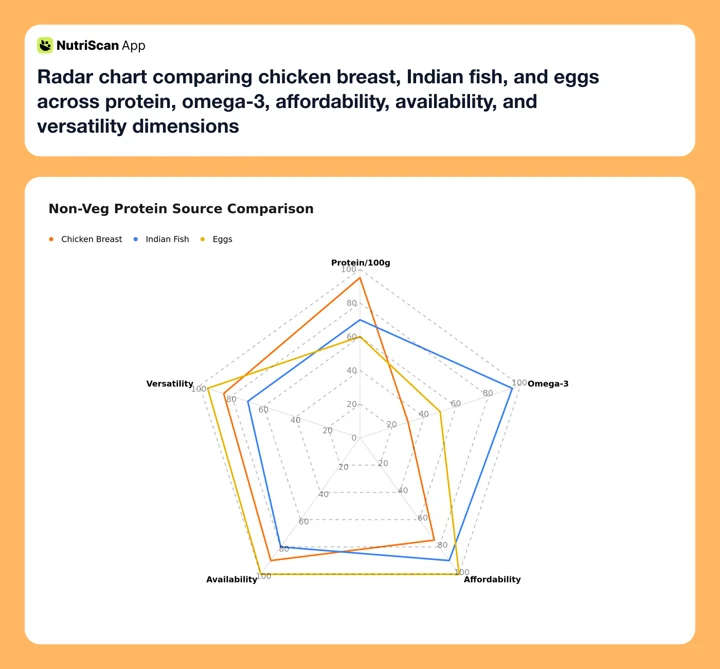 Figure 3: No single source wins on every dimension. Eggs lead on cost and versatility, fish on omega-3s, chicken breast on protein density. Use all three. The 0-100 scores are our editorial judgment, not measured values; only the protein axis tracks a published number.
 Small wins stack up. Every meal logged is data. Every data point brings you closer.
7-Day Non-Vegetarian Indian Meal Plan (1,500-1,700 kcal) 📅
This week of meals is built for an adult aiming to lose 0.4-0.6 kg a week, at the gentle end of the CDC's 1-to-2-pounds-a-week guidance. Adjust portions up by 10-15% if you are taller than 175 cm or train daily. Adjust down by 10% if you are below 60 kg and sedentary. Anyone with a medical condition, and anyone whose maintenance intake sits below about 1,900 kcal, should get a personal target from a doctor or dietitian rather than use the 1,600 kcal figure as it stands. All meat and fish weights below are raw. If you have not fixed your deficit yet, start from our calorie deficit diet chart for Indian beginners.
Day 1 (Monday)
- Breakfast: 1 boiled egg + 3 egg whites scrambled with onion-tomato, 1 multigrain toast, black coffee
- Lunch: 150g grilled chicken breast, 1 small bowl brown rice (30g uncooked), dal, salad
- Snack: 1 cup masala chana
- Dinner: Pan-seared rohu (180g), sauteed lauki, 1 multigrain roti
Day 2 (Tuesday)
- Breakfast: Chicken keema bhurji (80g lean keema, 1 tsp oil), 2 multigrain toast
- Lunch: Chicken curry without cream (150g), 2 small rotis, bhindi sabzi
- Snack: 1 boiled egg + 1 cup curd
- Dinner: Tandoori bangda (140g), green chutney, onion-cucumber-tomato salad
Day 3 (Wednesday)
- Breakfast: 3 egg-white omelette + 1 whole egg, sauteed spinach, 1 toast
- Lunch: Surmai tikka (140g), small pulao with brown rice, raita
- Snack: Roasted chana 30g
- Dinner: Chicken stew Kerala style (150g chicken, no coconut cream), 1 appam or 1 small roti, beans thoran
Day 4 (Thursday)
- Breakfast: Scrambled eggs (1 whole + 3 whites) with paneer cubes, 1 multigrain toast
- Lunch: Grilled chicken salad bowl (150g chicken, mixed greens, kidney beans, lemon-olive oil dressing)
- Snack: 1 cup buttermilk + 5 almonds
- Dinner: Rohu curry (180g, mustard-tomato base, 1 tsp oil), 1 small roti, lauki sabzi
Day 5 (Friday)
- Breakfast: Oats upma with 1 boiled egg sliced on top, 1 cup curd
- Lunch: Chicken tikka (160g), salad, 1 multigrain roti
- Snack: Protein dahi bowl (1 cup curd + cucumber + chana)
- Dinner: Pomfret tawa (150g, 1 tsp oil), sauteed cabbage, dal
Day 6 (Saturday - social meal)
- Breakfast: Anda paratha (1 paratha, 1 tsp oil, 1 egg in dough), 1 cup curd
- Lunch: Chicken biryani home-portion (small bowl, brown rice, more chicken than rice), raita, salad
- Snack: 1 cup buttermilk + green tea
- Dinner: Prawn curry (120g, light coconut, no cream), 1 small roti
Day 7 (Sunday - prep day)
- Breakfast: 3 egg-white omelette + 1 whole egg, mushroom-onion saute, 1 toast
- Lunch: Chicken keema with peas and 2 multigrain rotis (lean keema, 1 tsp oil)
- Snack: Roasted makhana (1 cup) + 1 cup buttermilk
- Dinner: Grilled fish (150g rohu or surmai), salad bowl, dal
This template averages 1,600 kcal, 110-125g protein, 130-150g carbs, and 50-60g fat per day, and spends seven whole yolks across the week, which is Mayo Clinic's ceiling. Egg whites are unlimited on that count. The daily figures are our own estimates built from the USDA values above and the gram weights in each day, not lab measurements.
Cooking Rules That Save the Calorie Deficit 🍳
Three habits separate a non-veg plan that works from one that quietly stalls. None of them require fancy equipment.
First, measure oil. The single biggest hidden source of calories in Indian kitchens is the oil that nobody measures. One tablespoon of any cooking oil is about 120 kcal, and a teaspoon is about 40 (USDA FoodData Central 171413, 884 kcal per 100g, 100% fat). Most home tadkas land at two tablespoons without noticing. Switch to a teaspoon measure and aim for one teaspoon per person per dish. Use mustard oil for fish, refined groundnut for stir-fry, ghee in tiny amounts only when the recipe truly needs it.
Second, dry heat first, gravy second. Tandoor, oven, air fryer, grill pan, and a hot skillet all cook chicken and fish without absorbing extra oil. If you want a curry, cook the protein dry first (tandoori chicken, grilled fish), and add it to a tomato-yogurt gravy at the end. You get the flavor without doubling the calories.
Third, skip the cream and besan coats. Cream-finished gravies run about 160 kcal per 100g more than the same protein grilled, so 240 to 320 kcal on a 150-200g portion that the eater never sees. A besan coat and shallow-frying add about 170 kcal to the same fish fillet. If you must, save these for one social meal a week.
Pro tip - the oil audit
Pour your usual cooking oil into a teaspoon before each dish for one week. Most people find they have been using 3 to 4 teaspoons (120 to 160 kcal) where they thought they were using one. Dropping back to one teaspoon saves 80 to 120 kcal per dish, and across three cooked dishes a day that is 240 to 360 kcal without touching the menu. For scale, ICMR-NIN caps visible fat at 20 to 50g, roughly 4 to 10 teaspoons, per person per day, so 3 to 4 teaspoons in a single dish is already most of a day's allowance.
IMPORTANT
Checkpoint: final stretch before the reveal.
Protein math, cuts, fish, eggs, 7-day plan, and cooking rules are all covered.
⏱️ Progress 3/4 - ~4 minutes in - Keep going
✅ Rule 1: Hit your protein number daily
✅ Rule 2: Pick the right cuts
✅ Rule 3: Fix your cooking method
✅ Rule 4: Spread protein across 4 meals
✨ Rule 5: The scan trick that ends Indian calorie guessing (about to reveal)
Common Mistakes That Quietly Stall the Plan ⚠️
A 2018 randomized controlled trial in north India (Bhardwaj et al., Heliyon) put 102 obese non-diabetic Asian Indians on either a high-protein, high-fat lacto-vegetarian PACER diet or a standard vegetarian diet for 8 weeks, after a 4-week run-in (Bhardwaj et al., 2017). The PACER arm lost more weight (6.1% against 2.9%) and did better on waist circumference, fasting glucose, total cholesterol, triglycerides and LDL. The trial ran no non-vegetarian arm, and its authors say directly that the vegetarian versus non-vegetarian comparison has not been made, so it tells you nothing about how a non-veg version would perform. What it does show is that raising protein and cutting carbohydrate inside an Indian diet pattern beat the standard version. Plans in that shape still fail when one of these patterns sneaks in:
- Protein once a day. Most Indian non-veg households eat chicken at dinner, dal at lunch, and tea-biscuits at breakfast. That structure delivers 60g of protein at best. Spread the protein across all four eating windows.
- Frying defaults. Chicken 65, fish fry, prawn batter fry, kebabs in oil. Each adds roughly 150 to 250 kcal per 100g versus the grilled version, as Figure 1 above shows. Reserve fried items for one cheat meal per week.
- Restaurant butter chicken counted as "lean". At roughly 320 kcal per 100g for a cream-finished gravy, a 200g restaurant serving is around 640 kcal before any rice or naan. Order tandoori or tikka instead, and ask for gravy on the side.
- Skipping fish entirely. Many North Indian households default to chicken-only. Fish is cheaper per gram of protein in coastal cities, and the omega-3 contribution matters. Add at least two fish meals per week.
- Drinking calories. A daily 250ml mango lassi is around 280 kcal for a typical sweetened recipe. Even a nimbu pani with two teaspoons of sugar is about 35 kcal a glass (USDA 169655, 387 kcal per 100g of sugar, so 8.4g is 32.5), and it climbs fast if you pour with a heavier hand. Replace sugary drinks with chaas, plain water, or unsweetened green tea.
- Under-eating vegetables. A non-veg plate without 200g of vegetables is missing fiber, micronutrients, and volume. Add a side salad and a sabzi to every main meal.

A Note on Mutton, Prawns, and Eggs Frequency 📝
Mutton, lamb, and goat meat are part of many Indian non-veg households, especially on weekends. Neither Harvard nor the AHA publishes a weekly frequency for red meat, so be wary of anyone who quotes one. Harvard's Nutrition Source puts red meat, mutton and goat included, in the "small amounts or only on special occasions" bracket, and flags that even two servings a week tracks with higher type 2 diabetes risk. The AHA sets no frequency at all; it asks for lean, unprocessed cuts and a 3-ounce cooked portion, about the size of a deck of cards.
For a fat-loss plan, that means treating mutton as an occasional item rather than a weekly default, choosing leg or shoulder trimmed of visible fat, and keeping the portion near the AHA's 3 ounces, about 85 to 100g cooked. Mutton biryani and mutton korma should be social occasions.
Prawns and other shellfish are excellent fat-loss proteins when cooked in light tomato or coconut bases: 85 kcal and 20g protein per 100g raw, 99 kcal and 24g cooked (USDA 175179). They cook in five minutes, hold spice well, and offer iodine and selenium.
About one whole egg a day, with extra whites on top when you need more protein, covers almost every Indian non-vegetarian's needs. A workable rotation is chicken three to four times a week, fish two to three times (the AHA asks for at least two), and red meat once a week or less. That is our own coaching position rather than a published guideline; only the fish leg has a body behind it.
Rule 5: The Photo Scan That Ends Indian Calorie Guessing 📱
You have been patient. This last rule changes everything about tracking on a non-veg Indian diet.
Here is the problem manual logging cannot solve. User-submitted database entries for a dish like chicken curry or dal tadka vary widely, because every uploader cooked it differently, and there is no canonical entry to pick. Your homemade fish sabzi, the dhaba chicken, the Sunday biryani: none of them have a barcode to fall back on. Manual logging breaks down within week one.
The solution is to photograph the plate before eating.
NutriScan is a global food-tracking app, and mixed plates are the case its photo scan is built for, whether that plate is a thali, a poke bowl or a Sunday roast. The scan estimates portion and macros from a picture, then lets you tap edits if the AI undercounts gravy or overcounts rice. You pick the cooking method from 11 options (Deep-fried, Grilled, Steamed and the rest) and the oil level from four, which is where a besan-fried fillet and a pan-seared one stop looking identical to the app. The scan path is: Home > Camera Icon > Take Picture > Crop if needed > Get breakdown. Photo is one of four input methods; you can also type a meal, speak it, or copy an earlier one.
Free accounts get 5 scans a week, which is enough to test the scanner on exactly the meals a food database cannot read, your curries, your dhaba plates, your mixed bowls, before deciding whether to pay. Every meal also comes back with a NutriScore band and full micronutrients, both free, and the app carries Monika, a voice AI nutritionist with 4 calls a week on the free plan, a fasting timer with 14:10 through 20:4 and custom windows, and 28-day personalized diet plans on Premium.
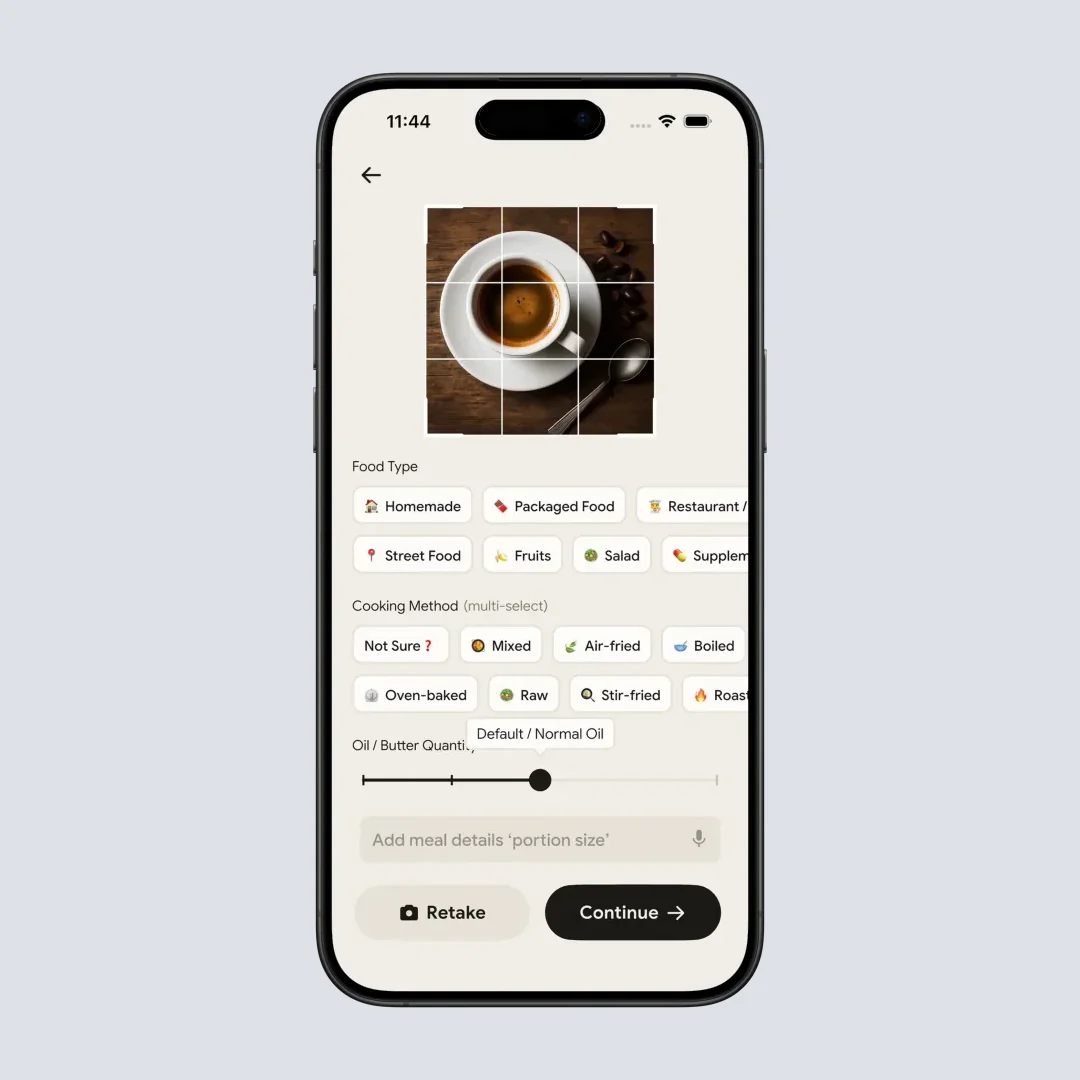
Home > Camera Icon > Take Picture > Crop if needed > Get breakdown. NutriScan reads the plate, identifies components, estimates portions, and returns macros.
For a non-vegetarian who eats home food, restaurant food, and the occasional dhaba lunch, that workflow saves the 90 seconds per meal that usually kills tracking habits inside week two. Most users need to log carefully for only the first two to three weeks - until your eye has calibrated to what 150g of chicken looks like, what a tablespoon of oil weighs, and what a "small bowl" of rice actually contains.
Whatever you use, log for two weeks before changing the plan. Use the NutriScan Insights dashboard to spot weekly patterns - days where calories spiked, meals that consistently hit the protein target, and days where you under-ate vegetables. If the scale has not moved after 14 days at a measured deficit, drop carbohydrates by one small bowl per day or add 30 minutes of brisk walking. Do not cut chicken or fish. The protein is the bedrock.
Why photo-logging beats manual search for Indian food
Indian home food is not in any barcode database. A photo scan that reads chicken curry with a tomato base, two rotis and dal as one plate is more actionable than hunting three separate database entries and guessing the portion on each. The NutriScan meal scan guide shows the full workflow for both home meals and restaurant plates. If you would rather count by hand, how to count calories in Indian food covers the katori-and-spoon method, and the Indian food calorie calculator handles the common dishes.
IMPORTANT
Recap: all five rules completed.
You have the full non-veg weight loss framework for an Indian kitchen.
⏱️ Progress 4/4 - ~5 minutes in - Nicely done
✅ Rule 1: Hit your protein number daily (1.6-2.0g per kg)
✅ Rule 2: Pick the right cuts (chicken breast, rohu, pomfret, eggs)
✅ Rule 3: Fix your cooking method (dry heat first, oil measured)
✅ Rule 4: Spread protein across 4 meals, not 1
✅ Rule 5: The photo scan that solves Indian calorie guessing (revealed)
Frequently Asked Questions ❓
Q: Which non-veg food is best for weight loss?
A: Skinless chicken breast and lean Indian fish such as rohu are the two best defaults, because both carry roughly 20g of protein per 100g raw at a low calorie cost. Eggs are the cheapest way to fill the gap on days you do not cook meat. Cooking method decides the outcome more than the cut does: a grilled breast and a besan-fried fillet carry the same protein and very different calories.
Q: Can I lose weight eating chicken every day?
A: Yes, if the cooking method is dry (grilled, baked, tikka, tandoori) and the portion is around 150g cooked per meal. Variety matters for nutrients, so rotate in fish twice a week and eggs daily.
Q: Is mutton bad for weight loss?
A: Not bad, but it is energy dense. Choose leg or shoulder trimmed of visible fat, and keep the portion near the AHA's 3-ounce cooked serving, about 85 to 100g. Harvard puts red meat, mutton and goat included, in the small amounts or special occasions bracket, so treat it as occasional rather than a weekly default.
Q: Are eggs safe to eat every day?
A: Mayo Clinic says most healthy adults can eat up to seven eggs a week, about one a day, without raising heart disease risk. One large egg carries about 186mg of cholesterol against a suggested ceiling of 300mg a day, so two yolks clears the ceiling from eggs alone. Add extra whites if you need more protein without the yolk calories. If you have diabetes or a diagnosed cholesterol disorder, ask your doctor for a personal target; Mayo notes some research links seven eggs a week to higher heart disease risk in people with diabetes.
Q: Can I eat chicken biryani during weight loss?
A: Yes, once a week as a planned social meal. Use brown rice if you cook at home, ask for a half-portion at restaurants, and pair with raita and salad rather than naan.
Q: How much protein do I need on this plan?
A: Around 1.6g per kilogram is where the evidence stops adding fat-free mass (Morton et al. 2018), so 1.6 to 2.0g per kg is a reasonable working band in a deficit, about 110-140g for a 70kg adult. Harvard treats 2g per kg as the ceiling for anyone who is not an athlete. Spread it across four meals, not one big dinner. Use our online macro calculator for a personalized target.
Q: Do I need protein powder?
A: Not if you eat chicken, fish, eggs, dal, and dahi consistently. A scoop of whey is a convenience, not a requirement. Use it on busy days when you cannot cook lunch.
Q: Is fish better than chicken for fat loss?
A: They are roughly equal on protein per calorie. Fish wins on omega-3 fatty acids and heart health; chicken wins on availability and price in many inland cities. Use both for the best results.
Q: Can I follow this plan during Navratri or other fasting periods?
A: Most non-veg fast windows are short (one to nine days). During those days, switch to paneer, dahi, eggs where allowed, and dal as your protein anchors - then return to the plan after the fast.
Conclusion 📝
A non-vegetarian Indian fat-loss diet runs on four swaps: grilled chicken instead of fried chicken, baked fish instead of besan-fried fish, eggs at breakfast instead of biscuits with chai, and a measured teaspoon of oil instead of a free-pour tadka. The protein math takes care of itself once those four habits land.
The calorie deficit shows up on the scale. But only if you can actually measure what you are eating - and that is where the photo-log closes the loop. The first two weeks of consistent tracking are the hardest. After that, your eye has calibrated enough that spot-checking is all you need.
Start this week. Pick one meal from the 7-day plan. Cook it dry. Log it with a photo. Watch the data. Adjust. That is the whole system.