Japanese Diet for Weight Loss and What It Actually Does
 ChatGPT
  Claude
  AI Mode
  Perplexity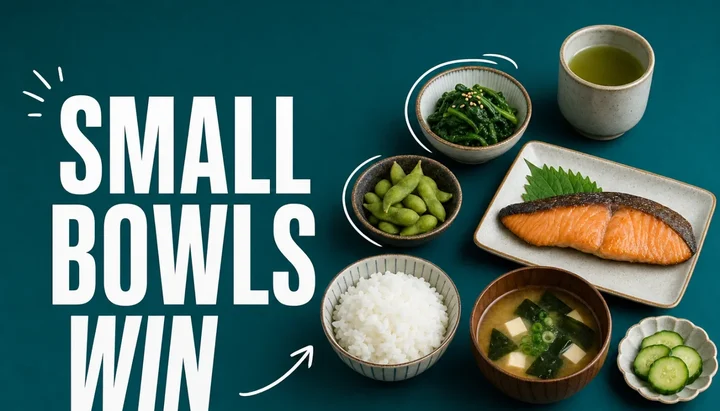
TL;DR - Japanese diet for weight loss
• What it does: lowers the calories in a full-looking meal through portion structure, not metabolism
• Key number: in 92,969 Japanese adults, the highest Japanese Diet Index scores carried a 14% lower all-cause mortality risk
• The template: one small grain bowl ➡️ one protein ➡️ two vegetable dishes ➡️ one soup or tea
• Watch out for: sodium from miso, soy sauce and pickles, plus deep-fried katsu and tempura
• Travels well: the same shape works with Indian, Mexican and Egyptian food
In a cohort of 92,969 Japanese adults followed for a median of 18.9 years, people scoring highest on an eight-item Japanese Diet Index had a 14% lower risk of death from any cause than people scoring lowest (Matsuyama et al., 2021). That is a mortality finding, not a weight finding, and the gap matters for anyone searching for a Japanese diet plan.
IMPORTANT
Your Japanese diet plan at a glance.
A quick roadmap so you can act fast.
⏱️ Progress 0/4 • ~0 minutes in • Keep going
⏳ Step 1: Learn the plate structure
⏳ Step 2: Cook the seven day plan
⏳ Step 3: Carry it into any cuisine
🔍 The habit that beats every food swap (revealed near the end)
Can You Lose Weight on a Japanese Diet? 🍱
It does not burn fat. No cuisine does. The Japanese pattern makes a smaller number of calories look and feel like a full meal, more reliably than most Western templates. This guide covers what the pattern is, what the research supports, a seven-day plan you can cook from a normal supermarket, and how it carries over to Indian, Mexican and Egyptian food.
Short verdict: the Japanese diet works for weight loss through portion architecture and calorie density, not metabolism. Copy the structure, keep the rice small, and the same plan works in any cuisine.

Tea poured at the table, not gulped standing up. The unhurried meal is doing more work here than any single ingredient.
What the Japanese Diet Actually Is 🍚
The traditional pattern, called washoku, is built around one small bowl of steamed rice, a bowl of miso soup, one protein dish, and two or three small vegetable dishes. Nothing is served in a large portion, and everything arrives at once in separate bowls, which makes the total volume visible before you start.
The eight components used in the Japan Public Health Center-based Prospective Study give a usable checklist. High intake of rice, miso soup, seaweed, pickles, green and yellow vegetables, fish and green tea; low intake of beef and pork (Matsuyama et al., 2021). A second analysis of the same cohort, following 87,572 adults for a mean of 19 years, scored adherence to Japan's official meal guideline and found a lower risk of all-cause mortality in the top group, hazard ratio 0.86 in men and 0.92 in women (Takano et al., 2026).
Three things follow. Rice is in it, so the pattern is not low-carbohydrate. Fish and soy carry the protein, so it is not high-protein by Western standards. And the salt load from miso, soy sauce and pickles is the pattern's main weakness.
IMPORTANT
Checkpoint: here's where you are right now.
Quick status update so you always know the next best move.
⏱️ Progress 1/4 • ~1 minute in • Keep going
✅ Step 1: Learn the plate structure (done)
👉 Step 2: Cook the seven day plan (you're here)
⏳ Step 3: Carry it into any cuisine
🧩 The habit that beats every food swap (coming soon)
Three Worked Examples of a Japanese Day 📊
Take a 70 kg woman with a desk job, maintenance around 1,950 calories. Her washoku day: breakfast of rice (120 g cooked), miso soup, grilled mackerel and pickled cucumber; lunch of a rice bowl with poached chicken, spinach and a soft egg; dinner of simmered tofu, sauteed greens, a small rice portion and green tea. That lands near 1,450 calories with roughly 95 g of protein, a deficit of about 500 a day.
Take a 90 kg man who trains three times a week, maintenance around 2,700. The same structure with larger rice portions (180 g cooked per meal), two eggs at breakfast, salmon rather than tofu at dinner, and an edamame snack lands near 2,150 calories. He loses weight without seeing a smaller plate, because the added volume comes from vegetables and soup.
Take a 60 kg woman who eats out four nights a week. This is where the pattern fails. Katsu curry, tempura sets and ramen with chashu run 900 to 1,300 calories per bowl. The method only delivers when the cooking stays close to steaming, simmering and grilling.

The Evidence on Japanese and Asian Eating Patterns 🔬
The direct weight-loss evidence for washoku is thin. In a randomized crossover study, 21 overweight or obese men without diabetes ate a Japanese-tradition meal pattern or a control meal for two weeks each. The Japanese pattern lowered postprandial GIP, a hormone tied to fat storage, and reduced visceral fat area, LDL cholesterol, triglycerides and HbA1c (Sakane et al., 2019). Twenty-one men over two weeks is a signal, not a promise.
Food processing is the second thread. In a controlled inpatient trial, 20 adults ate ad libitum on an ultra-processed diet and an unprocessed diet for two weeks each, matched for presented calories, energy density, macronutrients, sugar, sodium and fiber. On the ultra-processed diet they ate 508 more calories a day and gained 0.9 kg; on the unprocessed diet they lost 0.9 kg (Hall et al., 2019). Traditional washoku is close to an unprocessed diet by construction.
Japanese Diet Recipes and Foods Worth Building Around 🥢
These are the foods that carry the plan. Calorie figures below are per the serving named.
| Food | Serving | Calories | Why it earns a place |
|---|---|---|---|
| Edamame | 1 cup | 120 | 11 g protein and 8 g fiber, eaten slowly pod by pod |
| Tofu | 100 g | 80 | 8 g protein at a very low calorie cost |
| Salmon | 3 oz cooked | 206 | Protein plus omega-3 fats, grilled not battered |
| Natto | 100 g | 175 | Fermented soy, vitamin K2, high satiety per bowl |
| Brown rice | 100 g cooked | 112 | More fiber than white rice at the same weight |
| White rice | 100 g cooked | 130 | Traditional and fine, as long as the bowl is small |
| Green tea | 100 ml | 1 | A calorie-free drink that ends the meal |
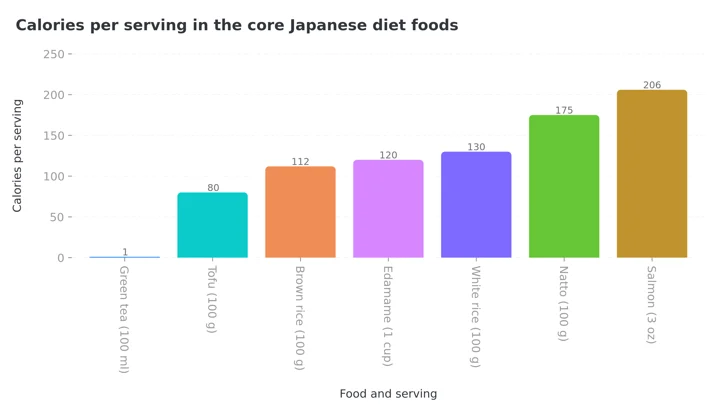
Figure 1: the whole staple list sits between 80 and 206 calories a serving, so the plate fills up long before the calories do.
Plotted side by side, salmon at 206 calories is the most expensive item on the list, and it is still a modest number.
Three recipes need no special equipment. Simmered greens: blanch spinach, squeeze dry, dress with soy sauce, dashi and sesame. Miso soup: dashi, one tablespoon miso whisked in off the heat, cubed tofu, wakame. Sunomono: cucumber sliced thin, salted, squeezed, dressed with rice vinegar.
A meta-analysis of 10 randomized trials found green tea added to exercise training gave a standardized mean difference of -0.30 for weight, which the authors called a minimal additive benefit (Gholami et al., 2024). Drink it because it replaces sweetened drinks.
IMPORTANT
Checkpoint: midway progress update.
You're halfway - decisions get easier here.
⏱️ Progress 2/4 • ~2 minutes in • Keep going
✅ Step 1: Learn the plate structure (done)
✅ Step 2: Cook the seven day plan (done)
👉 Step 3: Carry it into any cuisine (current)
⏳ The habit that beats every food swap (next)
Seven Tips That Make the Japanese Diet Work for Weight Loss 💡
- Weigh the rice once. Cook it, weigh 120 g or 180 g into a bowl, and photograph the bowl. Rice is where this plan quietly gains 300 calories.
- Serve in five small bowls, not one plate. Separate dishes stretch the meal out, and your pace matters more than the tableware suggests.
- Practice hara hachi bu. Stop at roughly 80 percent full. Put the chopsticks down between bites and give the meal 20 minutes.
- Make soup the first thing you eat. A hot low-calorie broth before the rice takes up stomach volume and slows the meal.
- Cap the salt. Use low-sodium soy sauce, one tablespoon of miso per bowl, and treat pickles as a garnish. This is the pattern's real health cost.
- Grill, steam or simmer. Tempura, katsu and gyoza are Japanese too, and they are where the calories hide. Keep them to once a week.
- Get protein at every meal. Fish, egg, tofu or natto in each sitting protects muscle in a deficit. Check your target with the protein intake calculator.
Buy one 500 g pack of frozen edamame
It is the cheapest way to add protein and fiber to a thin-looking meal, it needs five minutes in boiling water, and the pods force you to eat slowly.
A 7-Day Japanese Diet Meal Plan, Step by Step 🗓️
Step 1: find your maintenance number. Before you pick any food, run your TDEE calculator figure and set a target 400 to 500 calories below it. The weight loss calculator will turn that into a weekly rate so you know what a normal week looks like.
Step 2: build the repeating template. Every meal, all seven days: one small grain bowl, one protein, two vegetable dishes, one soup or tea. You are choosing ingredients, never structure.
Step 3: shop once. Rice, miso paste, dashi, soy sauce, rice vinegar, sesame, wakame, tofu, eggs, two fish fillets, frozen edamame, spinach, cabbage, cucumber, carrots, mushrooms, green tea.
Step 4: prep on Sunday. Cook a batch of rice and portion it into 120 g or 180 g containers. Blanch and dress the greens. Make a jar of sunomono. Mix a dashi base.
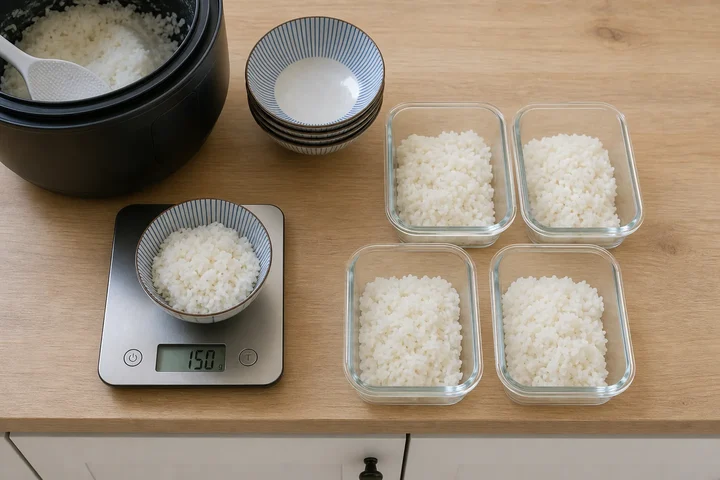
Portion the week of rice in one sitting, and the daily decision disappears.
Step 5: run the week. Days 1, 3 and 5 use fish at dinner. Days 2, 4 and 6 use tofu or natto. Day 7 is your restaurant day, and the plan holds if you order sashimi, a grilled fish set or soba. Lunch is a rice bowl with whatever protein and vegetable are already cooked.
Step 6: weigh weekly, not daily. Miso, soy sauce and pickles carry sodium, and water retention can mask real fat loss for two or three weeks. Same day, same time, same clothes.
Step 7: adjust once, after 14 days. If the scale has not moved and your logging is honest, cut 150 calories, usually one rice portion, and hold that for another two weeks.
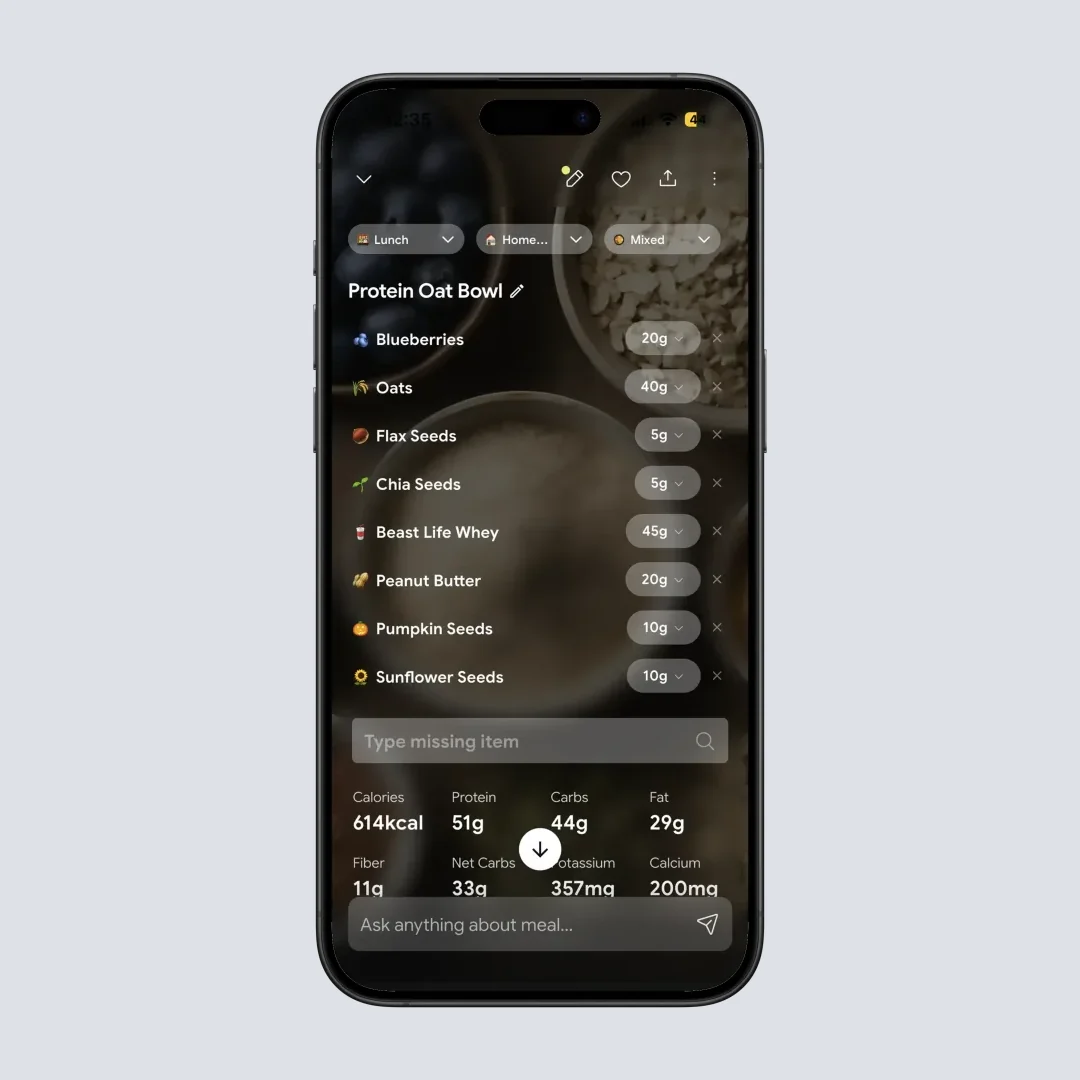
A washoku meal logs as five small entries, which is what makes the rice portion visible.
Asian Diet Plans Beyond Japan: Indian, South Asian, and Keto Versions 🌏
The template travels. A South Asian diet plan keeps the same shape and swaps the parts: rice or two rotis for the grain, dal or paneer or chicken for the protein, one dry sabzi and one salad, buttermilk or plain tea alongside. Cooking fat decides the outcome, because a tempering of ghee adds 100 to 120 calories per tablespoon and is almost never logged. Our guide on how to count calories in Indian food covers that, and there is a beginner calorie deficit diet chart for Indian food too.
On keto: a strict Asian keto plan removes rice, roti, dal, noodles and root vegetables, which is most of the fiber and most of the fullness. A middle version has better evidence. In a six-month randomized trial in Japanese adults with poorly controlled type 2 diabetes, a 130 grams per day carbohydrate diet lowered HbA1c and BMI more than standard calorie restriction (Sato et al., 2017). That is a moderate carbohydrate target, not ketogenic, and it keeps the grain bowl in the meal.
If you want to track any of this, the deciding factor is whether the food database holds real regional dishes. Our comparison of apps for tracking Indian food tests exactly that.
The Healthiest Mexican and Egyptian Plates 🌮
Mexican food has a reputation problem it did not earn. The traditional pattern is corn, beans, squash, chilies, tomato and herbs, with meat used sparingly. The calorie problem lives in the restaurant version: the fried shell, the cheese blanket, the lard, and the free chips.
Beans are the strongest single reason to eat this cuisine while losing weight. A meta-analysis of 21 randomized trials in 940 participants found that a median intake of 132 g of pulses a day, about one serving, produced a mean weight reduction of 0.34 kg over a median six weeks, and the effect held in both calorie-restricted and weight-maintaining diets (Kim et al., 2016). Half a cup of black beans is about 118 calories with roughly 8 g of protein and 7 g of fiber.
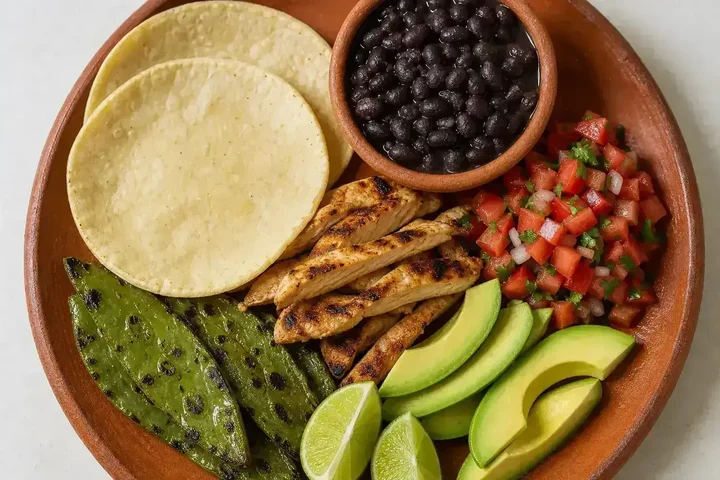
The same architecture as a washoku set: a measured grain, one protein, and vegetables taking most of the plate.
| Order this | Skip this | Why |
|---|---|---|
| Two corn tortillas | One large flour tortilla | Corn tortillas are smaller and lower in fat |
| Whole black or pinto beans | Refried beans made with lard | Same bean, very different fat load |
| Grilled chicken or fish tacos | Crispy fried shell tacos | Frying is the single biggest swing |
| Salsa fresca, pico de gallo | Queso, sour cream | Volume and flavor at almost no calorie cost |
| Guacamole, 2 tablespoons | Guacamole by the bowl | 160 calories per 100 g, good fat but dense |
| Nopales, grilled vegetables | Chips before the meal | Chips routinely add 400 calories before you order |
A cup of restaurant-style Mexican rice runs about 210 calories, more than plain steamed rice because it is toasted in oil first. Measure it once, then eyeball it.
Ancient Egyptian eating followed the same logic: emmer bread, fava beans and lentils, onions, leeks, cucumbers, dates and figs, with Nile fish as the everyday protein and red meat kept for feasts. The living version is ful medames, fava beans stewed with olive oil, lemon, cumin and parsley, still the standard Egyptian breakfast. The two decisions that matter are how much bread goes alongside and how heavy the olive oil pour is.
IMPORTANT
Checkpoint: final stretch before the reveal.
One last nudge - the reveal is next.
⏱️ Progress 3/4 • ~3 minutes in • Keep going
✅ Step 1: Learn the plate structure
✅ Step 2: Cook the seven day plan
✅ Step 3: Carry it into any cuisine
✨ The habit that beats every food swap (about to reveal)
The Habit That Beats Every Food Swap 🕰️
Nothing on the food lists above has as much human data behind it as your eating speed.
Panel data on 59,717 Japanese adults with type 2 diabetes found that slow eaters had an odds ratio for obesity of 0.58 compared with fast eaters, and normal-speed eaters 0.71, with fixed-effects models showing lower BMI and waist circumference as eating speed dropped (Hurst and Fukuda, 2018). A separate nationwide cohort of 197,825 adults followed for three years found fast eating was the only eating habit that independently predicted new-onset diabetes, ahead of snacking and skipping breakfast (Kudo et al., 2019).
Put those beside the food effects and the ranking is uncomfortable. Green tea moved weight by a standardized mean difference of -0.30, pulses by 0.34 kg. Eating speed splits nearly 60,000 people almost in half on obesity odds. Five small bowls and chopsticks are a speed intervention disguised as tableware, and that is the part of washoku you can copy tonight.

This is the pace the odds ratio is about. Chopsticks, five bowls and a 20-minute clock all exist to prevent it.
Where the Research Is Still Thin ⚖️
Three honest limits. The mortality cohorts are observational, and people who score high on a Japanese Diet Index also smoke less and move more, so residual confounding is real. The weight trials are small and short: 21 men for two weeks is the strongest washoku-specific result, and it measured visceral fat area rather than scale weight. And the salt problem is unresolved, because the same pattern that scores well on mortality carries a sodium load that Japan's own public health guidance targets.
Check with your doctor first if you have high blood pressure
Miso soup, soy sauce and pickles at every meal push sodium well past a typical daily target. Build the plan with low-sodium soy sauce and fewer pickles from day one, and do not make daily miso soup a habit without medical advice.
None of that argues against the pattern. It argues against treating it as magic.
Making Any of These Plans Work 🚀
Pick the cuisine you already like. The structure is identical across all four traditions here: a measured grain portion, a protein at every meal, vegetables taking most of the plate volume, and a pace slow enough that fullness arrives before the food runs out.
NutriScan publishes this post and makes a calorie tracking app. What decides whether any of it works is knowing what you actually ate. If logging by hand has stopped you before, NutriScan lets you photograph a plate instead of typing it, with 5 scans a week on the free plan and unlimited scans on Premium at about $59 a year. Either way, get honest numbers for two weeks before you change anything.
IMPORTANT
Recap: everything you completed this round.
You finished the run - save this for next time.
⏱️ Progress 4/4 • ~4 minutes in • Nicely done
✅ Step 1: Learn the plate structure
✅ Step 2: Cook the seven day plan
✅ Step 3: Carry it into any cuisine
✅ The habit that beats every food swap (revealed)
Frequently Asked Questions ❓
Can you lose weight on a Japanese diet?
Yes, if it puts you in a calorie deficit. Nothing in Japanese cooking burns fat on its own. The pattern lowers the calorie density of a full plate: broth, vegetables, fish and soy fill the meal, and the rice portion is small and measured. Most people eat less without counting.
Is the Japanese diet good for weight loss for women?
The pattern works the same way, but restaurant sets are portioned for a larger appetite. A woman with maintenance near 1,900 calories usually needs about 120 g of cooked rice per meal rather than 180, plus protein at every meal to protect muscle during a deficit. Run your own maintenance number first.
Is there a Japanese diet plan for weight loss in Hindi or Tamil?
The plan translates without losing anything, because the method is structural rather than cultural: one small bowl of grain, one protein, two vegetable dishes, one soup, and stop before you feel full. The Japanese phrase for that last step is hara hachi bu, eating to about 80 percent. Swap rice for the grain you already eat and the plan still works.
What is the healthiest Mexican food for weight loss?
Whole black or pinto beans, grilled protein, salsa fresca, cactus paddles, corn tortillas rather than flour, and guacamole in a measured portion. A meta-analysis of 21 trials found that about one serving of pulses a day produced modest weight loss even without a calorie target (Kim et al., 2016). The fried shell, the cheese and the free chips are the problem, not the cuisine.
Can you do keto on an Asian diet plan?
You can, but you lose most of what makes the pattern work. Rice, noodles, beans and root vegetables carry the fiber and the fullness. A lower-carbohydrate version that keeps a small grain portion is closer to the traditional pattern and easier to sustain, and the 130 g per day target tested in Japanese adults with type 2 diabetes is a reasonable middle ground.
What was the Egyptian diet?
Emmer wheat bread and beer, fava beans and lentils, onions, garlic, leeks, cucumbers, dates and figs, with Nile fish as the everyday protein and meat reserved for feasts. The modern descendant is ful medames, still eaten at breakfast across Egypt.
How much weight can I expect to lose on this pattern?
Plan for 0.5 to 1 percent of body weight a week and treat anything faster as water and glycogen. A 70 kg person eating roughly 500 calories below maintenance should average about 0.5 kg a week, with flat weeks in between. Sodium from miso and pickles can hide real loss behind water retention, so weigh weekly.