Is Berry Street Free? Dietitian Cost, Insurance and Fees
 ChatGPT
 Claude
 AI Mode
 Perplexity

Berry Street says 96% of its patients pay $0 out of pocket on its homepage and 95% on its FAQ page, but the only cash rate it states for a dietitian visit is $100 an hour, tucked into the FAQ on its insurer pages. A late change or no-show costs $75 on the card you leave on file, according to its policy page. Two Berry Street pages also disagree about what happens when your insurer denies a claim.
I work on the NutriScan team, which makes a food tracking app, so treat this as an outsider's reading of Berry Street's public pages, app listings and reviews. Each source is linked.
Prices and policies checked on November 1, 2026. Berry Street serves patients in the United States. Its policy page says it was last modified on September 11, 2026.
IMPORTANT
Berry Street pricing at a glance
- Berry Street is a telehealth dietitian service. It bills each visit to your health insurance.
- Its homepage says 96% of patients pay $0 out of pocket and its FAQ page says 95%. Copays, coinsurance and deductibles still apply if your plan has them.
- The only cash rate I found is $100 per hour, stated for visits after you decline to pay a deductible.
- A cancellation with less than 24 hours notice costs $75, and so does a missed visit. Arriving 15 minutes late counts as a no-show.
- One page promises no charge for past visits if your insurer denies a claim. The policy page says you owe the full balance. Get the answer in writing.
- Medicare is listed for diabetes, kidney disease and post-transplant care. The Medicaid page says "coming soon".
- The Berry Street app is a free download with no in-app purchases.
Four stops, and the last one keeps a denied claim from turning into a bill.
⏱️ Progress 0/4 • ~0 minutes in • Keep going
⏳ Step 1: What you pay with insurance
⏳ Step 2: The $100 cash rate and the $75 fee
⏳ Step 3: Denied claims, Medicare and Medicaid
🔍 One email that settles the denied-claim question before you book (revealed near the end)
Is Berry Street free? The quick answer
It depends on your insurance. Berry Street does not sell a membership for dietitian visits. It sells visits with a registered dietitian and sends the claim to your insurer, the way a doctor's office does. If your plan pays the full claim, you pay nothing. If it does not, you pay a copay, coinsurance, a deductible or a cash rate.
The company's own pages are confident about the first case. The homepage says "Covered by insurance. Most patients pay $0." The FAQ page adds: "In rare cases, there may be some out-of-pocket costs."
So the short answer has four parts:
- Insured, in network, plan covers nutrition counseling: usually $0, sometimes a copay or coinsurance.
- Insured, deductible not met: Berry Street offers two options, covered below. Declining to pay the deductible sets future visits at $100 an hour.
- Insurer denies the claim: the FAQ says you are not charged for past visits. The policy page says you owe the full balance.
- No insurance, or a plan Berry Street does not take: the stated rate is $100 per hour.
I found no standalone pricing page. The /pricing and /insurance paths return a 404 and the sitemap lists no pricing page, so the numbers sit in FAQ answers and the policy text.
What Berry Street is and who runs it
The iOS app comes from Berry Street Health, Inc., according to the App Store listing. The site's terms, last updated September 11, 2026, describe the company this way: "Berry Street acts solely as a technology platform to provide you with the Services, including connecting you with Practices and the Providers." The policy page describes it differently and calls Berry Street an in-network provider for many insurance plans. Both texts are live, and the policy page is where the billing rules sit.
The service works in four steps: a "2-minute check" of your state, insurance and goals; a matched dietitian you can swap in the app; 1:1 video visits; and the app between visits for meal logs and messages.
The site sends mixed signals on weight loss. The homepage headline is "Weight loss, diabetes, PCOS and more," while the FAQ says: "Weight loss can be a side effect of improved nutrition, but we discourage fixation on that number on the scale."
Berry Street cost with insurance
With insurance, your cost is whatever your plan leaves for you to pay. Berry Street's policy and FAQ text set out the steps:
| Step | What Berry Street says |
|---|---|
| Coverage check | "We will confirm your insurance coverage before your appointment." |
| Cost notice | "If our benefit check reveals some patient responsibility, we'll notify you of the amount clearly via email before your appointment." |
| Copay, coinsurance, deductible | "You agree to pay any deductible, co-payment, or co-insurance as determined by your insurance plan." |
| When you pay | "Such payments will be due at the time of service." |
| Coverage can't be verified | If Berry Street cannot verify coverage at least 24 hours before your scheduled visit, "your first appointment is on us." |
The deductible case is the one to understand. If your visit counts toward an unmet deductible, the insurer-page FAQ says Berry Street offers two choices. You can pay the deductible and keep having visits covered by insurance. Or you can decline, in which case "we won't charge you anything for appointments you've had," and the page says that for future visits "our out-of-pocket rate is $100 per hour."
Two people on the same insurer can pay different amounts, since deductibles, diagnoses and visit limits differ. Berry Street's Aetna page lists weight management, eating disorders and metabolic syndrome, and says visits "are often 100% covered." The United Healthcare page lists heart health, prediabetes and chronic kidney disease, and says visits "may be 100% covered."
Which insurers Berry Street takes
The homepage says Berry Street covers "1,250+ insurance plans" and shows Aetna, Cigna, UnitedHealthcare, BlueCross BlueShield and Humana. The FAQ names "Aetna, BCBS, Cigna, UnitedHealthcare, and many more!"
The sitemap lists 26 insurer pages. They include Anthem, Highmark, Regence and Ambetter, plus Medicare and Medicaid. A page is a weaker signal than a signed contract, so the coverage check is the test.
 Run the coverage check and keep the cost email before you book.
INFO
Insurer landing pages are not plan documents. The cost email Berry Street sends before your first visit is the real number.

Berry Street cost without insurance: $100 an hour
The only cash figure I found for a dietitian visit is the $100 per hour above. It appears in the answer about the deductible, not on a pricing page, and I found no figure for a first visit, a longer session or a package.
If you pay cash, the policy page adds a route back to your insurer: "If your insurance plan doesn't cover our services, you may have "out-of-network" benefits that could cover a portion of your fees." On request, Berry Street will give you a superbill, an itemized receipt you send to your insurer yourself. Whether that pays anything depends on whether your plan has out-of-network benefits and whether nutrition counseling is on its covered list.
The FAQ says visit frequency is up to you and your dietitian: "we typically work with patients on a weekly, bi-monthly, or monthly" basis. Here is what $100 an hour adds up to, assuming one hour per visit:
| Schedule | Visits | Cost at $100 |
|---|---|---|
| One visit to try it | 1 | $100 |
| Every two weeks for 3 months | 6 | $600 |
| Weekly for 3 months | 12 | $1,200 |
| Monthly for a year | 12 | $1,200 |
| Every two weeks for a year | 26 | $2,600 |
| Weekly for a year | 52 | $5,200 |
Add $75 for each late change or missed visit. One missed visit a month on a weekly schedule adds $900 a year.
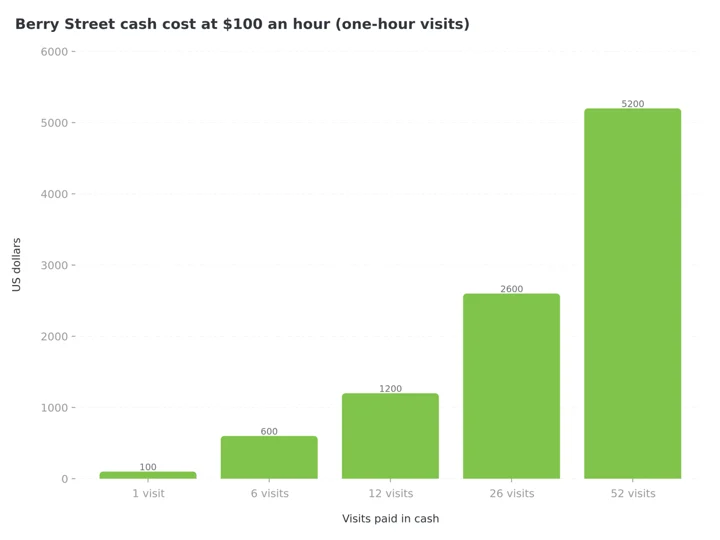 Figure 1: Weekly cash visits for a year cost $5,200 before any late or no-show fees.
A denied claim: two pages, two answers
A denied claim is where Berry Street's pages disagree.
 The billing rule that matters most sits in the policy text, not the FAQ.
The insurer-page FAQ, under the heading "Denied Claims Guarantee," says that if your insurance denies coverage or "indicates a different patient responsibility than expected," then "you won't be charged for any past appointments."
The policy page says something else: "If your insurance denies any part of your claim, you agree to be responsible to pay the full balance. All outstanding balances will be automatically charged after 30 days unless a mutually agreed upon payment plan has been established."
I could not tell which text wins. The policy page is dated September 11, 2026; the guarantee sits in an undated FAQ answer. A promise in marketing copy and a clause in the agreement you accept can point in different directions, and the agreement carries the legal weight.
The practical fix is cheap. Before your first visit, email [email protected] and ask whether the Denied Claims Guarantee applies to your visits, and keep the reply. Two App Store reviewers (March 23 and February 3, 2026) said that after their first booking they were told their insurance was not accepted or not covered, even though both named plans Berry Street lists (Blue Cross Blue Shield and UnitedHealthcare). A third reviewer on January 27, 2026 said Berry Street would not provide proof of an avoided insurance claim. These are individual reports I could not verify.
When Berry Street charges your card
WARNING
Check your email receipt after every visit. The policy allows card charges without prior notice.
The policy page states the rules under "Payment Authorization":
- Card charges can happen without a heads-up. "You authorize charges to your credit card on file without prior notification unless there is a change in the amount due."
- Changes get a notice. "We will always notify you of any changes to your fees before charging your card," and the policy says a receipt for each payment goes to your email.
- Payment is due at the visit. "Appointment fees are due at the time of service. We accept check, Venmo/PayPal, or credit card."
- Unpaid balances auto-charge. "All outstanding balances will be automatically charged after 30 days."
The $75 late change and no-show fee
The policy page sets the fee. To avoid it you need 24 hours notice by text, by email or by canceling in the app. Without it, "we will charge your card on file a late change fee in order to compensate your provider." The listed fees are:
- Medical Nutrition Therapy: $75.
- Prescribing appointments: $75.
The no-show rule is separate: "If you are 15 minutes late (or more) to your appointment without notice, we will consider this a no-show and will charge your card on file. It is at the discretion of your provider to have a shorter appointment."
This is the loudest billing topic in the reviews. Nine of the 100 most recent App Store reviews mention a late-change or no-show fee. The four from 2025 that name an amount say $100. The four from December 2025 on say $75. One review names no amount. The policy page now shows $75, and I found no dated notice of when the amount changed.
Several describe a login or video problem, then a charge. One reviewer wrote that the person on the other end "can't hear me," then faced "$75 over something that's not in my control." These are reviewer reports, but the policy as written does not oblige the provider to waive a fee for a technical problem.
 A frozen video call can still count as a late arrival under the 15-minute rule.
TIP
If the video link fails, text or email Berry Street before the 15-minute mark. The policy counts a late arrival "without notice" as a no-show, so a timestamped message is your best record.
If you think a fee was charged in error, email [email protected] the same day with the time you canceled or tried to join.
Two of four done. The denied-claim fix is getting close.
⏱️ Progress 2/4 • ~7 minutes in • Keep going
✅ Step 1: What you pay with insurance (done)
✅ Step 2: The $100 cash rate and the $75 fee (done)
👉 Step 3: Denied claims, Medicare and Medicaid (you're here)
🧩 One email that settles the denied-claim question before you book (almost there)
Does Berry Street take Medicare or Medicaid?
Medicare, yes for a short list of conditions. Medicaid, not yet.
The Medicare page says: "Medicare covers Medical Nutrition Therapy (MNT) specifically for patients managing Type 2 Diabetes, Chronic Kidney Disease (CKD), or Post-Transplant Nutrition." It adds that sessions "may be 100% covered" and "We help navigate the referral requirements."
The federal rule agrees on the referral. Under 42 CFR 410.132, Medicare Part B pays for MNT "when the beneficiary is referred for the service by a physician," and a physician may refer only a beneficiary "diagnosed with diabetes or renal disease." By my reading, a Medicare patient without one of those diagnoses should not expect Part B to pay for a dietitian visit, so ask Berry Street what the cost would be before booking.
The Medicaid page is headed "Medicaid Dietitians & Nutritionists Covered by Insurance (coming soon)" and says "Medicaid coverage is soon coming to Berry Street!" The HIPAA notice in the policy text, however, says Berry Street bills "your insurer, Medicare Advantage, or Medicaid." By my reading, that line is company-wide boilerplate that covers the GLP-1 prescribing side too, so I would not assume a Medicaid dietitian visit is covered in your state. Ask before booking.
What the GLP-1 program costs
Berry Street also prescribes GLP-1 drugs, and the homepage promotes them. The GLP-1 page says "Appointments are billed per visit. Medication is billed monthly. Both are covered by insurance." It lists appointments "As low as $0" and medication "As low as $25/mo," with "no membership fee." It also says: "Coverage and a $25 medication price are not guaranteed."
If your plan does not cover the drug, the GLP-1 FAQ lists manufacturer cash options such as Wegovy or Ozempic through NovoCare at $149 to $349 a month and Zepbound through LillyDirect at $299 to $699. Berry Street says it is not affiliated with Novo Nordisk or Eli Lilly. Weight-loss medication is a decision for you and your doctor.
Is the Berry Street app free?
Yes. The App Store listing shows Berry Street Nutrition Therapy as free with no in-app purchases, rated 4.8 from 2,790 ratings, on version 2.8.0 released October 13, 2026. The Google Play listing shows the app as free with a 4.3 rating from 1,057 ratings and 10K+ downloads.
Any cost comes through Berry Street's billing, not the app stores. Its app page lists meal tracking and dietitian chat.
Seven recent reviewers mention Lose It. Six describe the link between the two apps as missing, partial or unreliable, and one praises the sync.
What users say about Berry Street
I read the 100 most recent App Store reviews from the iTunes reviews feed, posted between June 27, 2025 and September 27, 2026. The split: 33 five-star, 6 four-star, 16 three-star, 12 two-star and 33 one-star. That averages 2.94 stars, well below the 4.8 the store shows across all 2,790 ratings. Reviewers skew toward complaints, and every review sampled is on app versions 1.8.1 to 2.6.0, while the current version is 2.8.0.
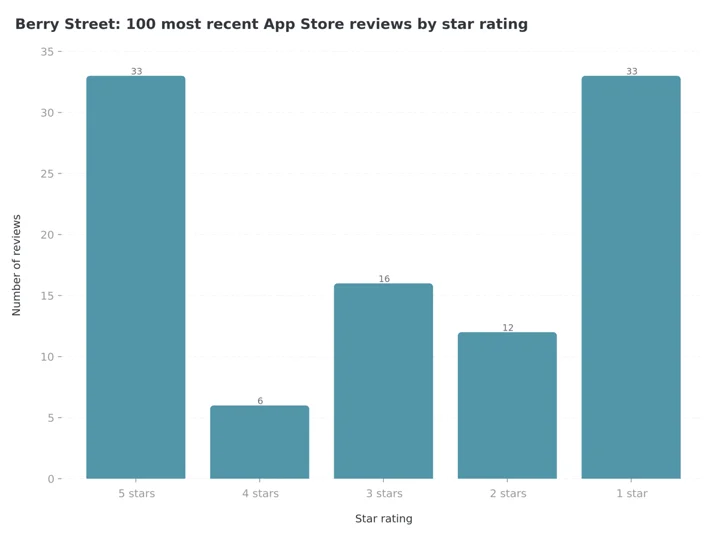 Figure 2: Recent reviews split almost evenly between five stars and one star.
Of the 45 reviews at one or two stars, 10 are about fees or coverage, 3 are about a dietitian no-show or unanswered support, and 32 are about the app: logging, login loops, booking, account deletion and AI food estimates, plus one about AI transcription of sessions. The policy page does say that by using telehealth you "authorize the transcription of sessions." Eleven reviews mention AI: eight criticize its accuracy or how much of the app it takes over, one is the transcription complaint, one praises it and one is mixed.
Billing and coverage complaints total 11 of 100: 9 about the late-change or no-show fee and 2 about a plan that Berry Street lists being refused after booking. One 5-star reviewer wrote that after "asking 4 times" they were "completely covered." Another 5-star reviewer said they could not continue because of their insurance, and advised "consulting with insurance before dietitian appt."
Berry Street's homepage says "Rated 4.9 / 5 from 864 reviews" without naming the review site in that line, so I could not check that number.

What the research says about dietitian care
Weight. A systematic review of 62 randomized trials found that weight management led by a dietitian produced 4.01 percentage points more weight loss than control conditions (Morgan-Bathke et al., 2023).
Prediabetes. A meta-analysis of 13 trials found that nutrition therapy from a dietitian lowered HbA1c by 0.30 percentage points and fasting glucose by 4.97 mg/dL compared with standard care (Dudzik et al., 2023).
Type 2 diabetes. A meta-analysis of 14 studies with 3,338 participants found HbA1c 0.47 percentage points lower and weight 1.49 kg lower in the dietitian groups (Siopis et al., 2021).
Telehealth. A meta-analysis of 58 trials with 13,942 adults with type 2 diabetes found telemedicine lowered HbA1c by 0.38 compared with usual care, with high heterogeneity (Jiang et al., 2026).
I found no published study on Berry Street's own patients. These studies support the service Berry Street sells. They do not show it works better than a local dietitian your plan also covers.
Who Berry Street is worth using for
Berry Street may suit you if:
- You have commercial insurance and the coverage check shows $0 or a small copay.
- You have a condition a dietitian treats, such as diabetes, PCOS, IBS or disordered eating. Our diabetes macro calculator and PCOS macro calculator give you starting numbers to bring to the first visit.
- You want video visits with a licensed dietitian and not an app coach.
- You can cancel or reschedule at least 24 hours ahead, so the $75 fee is unlikely to apply.
Berry Street may not suit you if:
- You are on Medicaid in a state where it is not yet live, or on Medicare without diabetes or kidney disease.
- You would pay $100 an hour yourself and want weekly support. A year costs $5,200.
- You need a clear written answer on denied claims before you book.
- You mainly want a food log. Recent reviewers rate the log lower than the dietitians.
If you are comparing paid programs, these guides cover similar questions: the best Noom alternatives, Foodvisor vs Noom on dietitian coaching and Nutrisense pricing. Nourish and Fay also bill insurance: Nourish cost and Fay cost. Since Berry Street reviewers often mention syncing Lose It, our best Lose It alternatives guide may help if the food log is your sticking point. Season Health also bills insurance and lists its own self-pay prices: Season Health cost, insurance and fees.
How to see a Berry Street dietitian without a surprise bill: 5 steps
- Run the coverage check. Enter your insurance on the Berry Street site and keep the email that lists any patient responsibility.
- Call your insurer. Ask whether nutrition counseling is covered, which diagnoses qualify, whether there is a visit limit and how much of your deductible is left.
- Email support before the first visit. Ask whether the Denied Claims Guarantee applies to your visits and save the reply.
- Set a 48-hour reminder. A cancellation inside 24 hours or arriving 15 minutes late costs $75. A two-day alert leaves time to cancel.
- Compare each charge with your cost email. If a fee or balance looks wrong, email [email protected] the same day with the date and time.
Tracking food between dietitian visits
A dietitian sees you for an hour. The food log covers the rest of the week, and that log is what your dietitian works from at the next visit.
 A week of logged meals gives your dietitian something concrete to work from. Berry Street's reviewers split on its own log, so it helps to know your options.
NutriScan, the app my team makes, estimates calories and macros from a photo. It has a Free plan with 5 AI food scans a week and a Premium plan at about $59 a year, and the plans are listed in our pricing breakdown. NutriScan has no dietitians and cannot bill insurance, so it does not replace Berry Street, and photo estimates can miss hidden oil or mixed dishes. It can give you a meal record to show your dietitian. The meal scan guide shows how a photo becomes a logged meal.
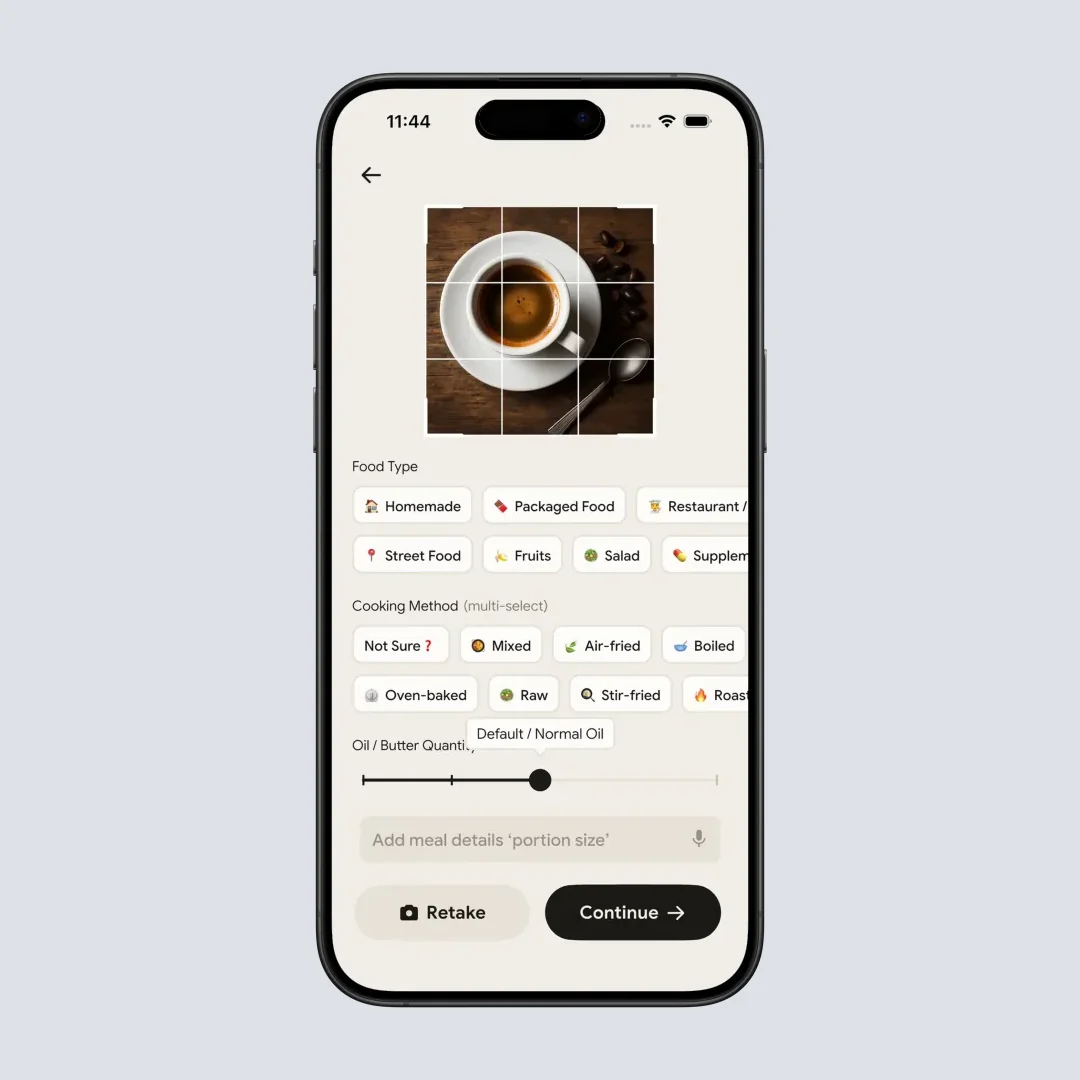
Home > Camera Icon > Click Picture: pick the food type before the scan runs.
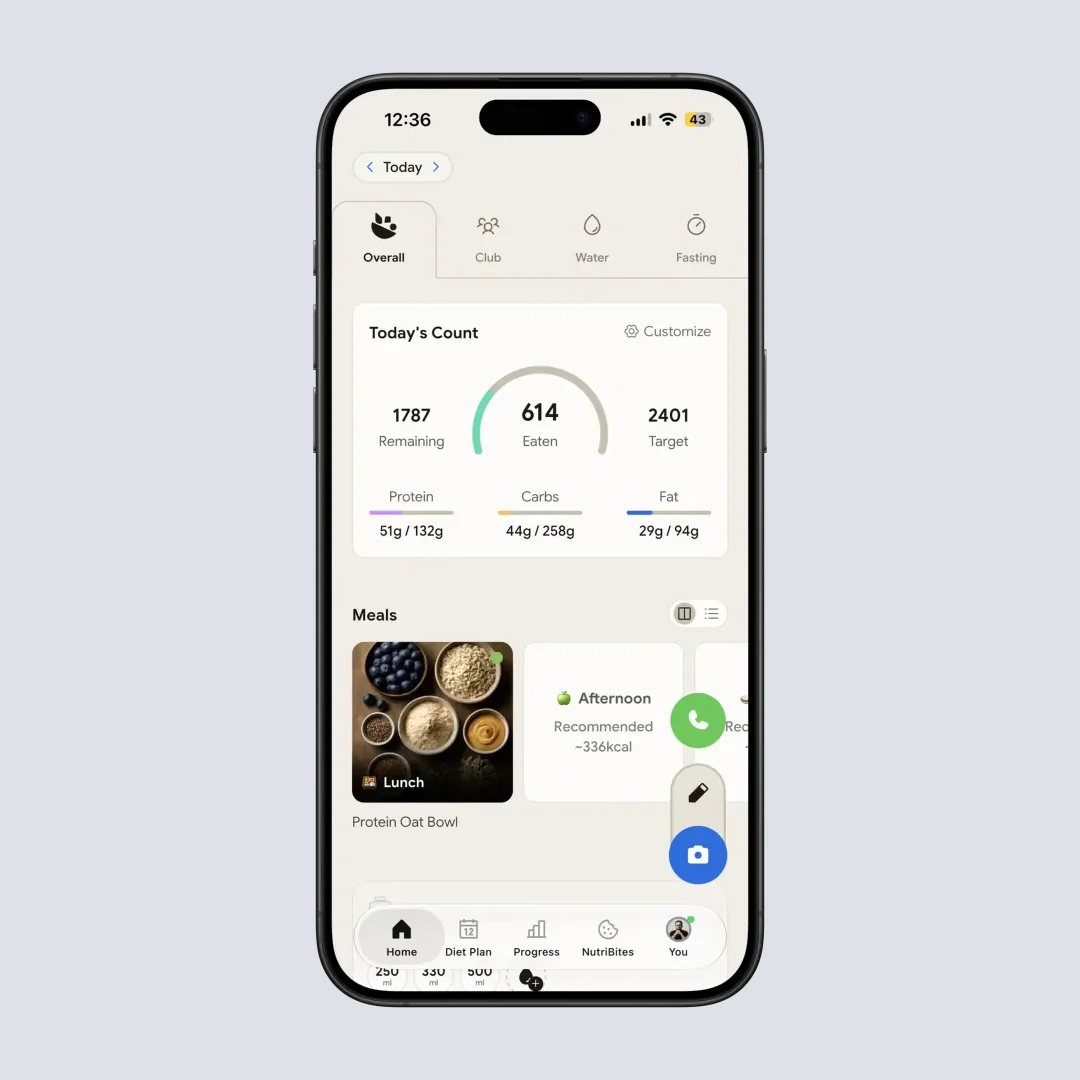
Home > Overall tab: the daily totals you can show your dietitian at the next visit.
Berry Street cost in one paragraph
Berry Street can cost you nothing if your plan covers nutrition counseling and your deductible is met. Without that, the stated rate is $100 an hour, and every late change or no-show adds $75. The one open question is a denied claim, where the FAQ and the policy page give opposite answers, so get support's reply in writing before your first visit.
If you book, a meal record makes each hour with your dietitian go further. You can download NutriScan and bring a week of photo-logged meals to your next visit.
Berry Street pricing FAQ
Is Berry Street free?
Not for everyone. Berry Street bills each visit to your insurance, and its pages say 95% to 96% of patients pay $0. Copays, coinsurance and deductibles still apply. The only cash rate it states is $100 an hour.
How much does Berry Street cost without insurance?
$100 per hour, the only cash rate Berry Street states. Twelve weekly one-hour visits cost $1,200. A superbill on request lets you claim any out-of-network benefits.
What is the $75 charge from Berry Street?
The late change and no-show fee. It applies with under 24 hours notice, a missed visit, or arriving 15 or more minutes late, and goes on your card on file.
Does Berry Street take Medicare or Medicaid?
Medicare, for diabetes, chronic kidney disease or post-transplant care, with a physician referral. The Medicaid page says coverage is coming soon, so ask before you book.
What happens if my insurer denies a Berry Street claim?
The insurer-page FAQ says you will not be charged for past visits. The policy page says you owe the full balance, charged after 30 days. Get support's answer in writing.
All four covered.
⏱️ Progress 4/4 • Done
✅ Step 1: What you pay with insurance
✅ Step 2: The $100 cash rate and the $75 fee
✅ Step 3: Denied claims, Medicare and Medicaid
✅ One email that settles the denied-claim question before you book: ask [email protected] whether the Denied Claims Guarantee applies to your visits, and keep the reply (revealed)