Noom vs Simple 2026: Which Coach Style Feels More Helpful?
 ChatGPT
  Claude
  AI Mode
  Perplexity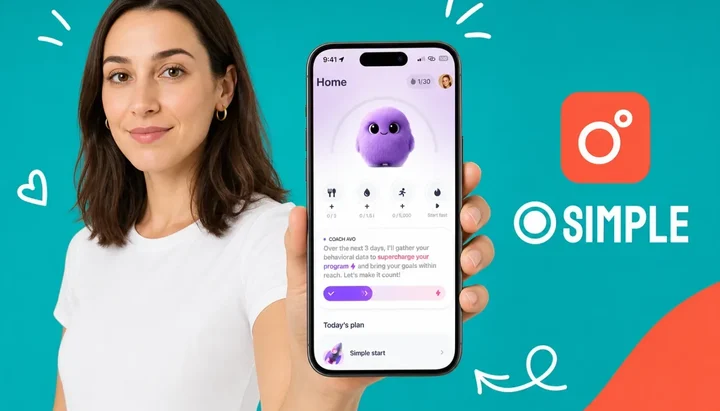
Who is going to talk to you on the day you do not want to do this? 🤔 That is the real question behind every weight-loss app purchase.
TL;DR - Noom vs Simple 2026
• Noom: human coach + daily CBT-style lessons + color-coded food log. Best for people who want to understand their eating habits. $209/year annual plan.
• Simple: AI coach Avo + 16:8 fasting clock + photo meal logging with a 1-to-4 nutrition score. Best for people who want light, instant nudges. Generous free tier; Premium ~$30/month.
• Coaching feel: Noom = smart teacher with limited office hours. Simple = friendly tutor who never sleeps but only reacts.
• The deciding test: which app would you still open in week 7, on the day you do not feel like it?
People do not really buy a weight-loss app. They buy a coach. The actual question, every single time someone hovers over the checkout button, is "who is going to talk to me on the day I do not want to do this?" The answer Noom and Simple give to that question is wildly different, and that is the only reason this comparison matters.
Noom answers it with a person and a curriculum. You get short psychology lessons, a color-coded food log, and, if you pay enough, a human coach who messages you in the app. Simple answers it with a chatbot and a fasting clock. You get Avo, an AI coach that talks back inside the app, a 16:8 window by default, and a nutrition score on every meal photo. One feels like a class. The other feels like a smart friend on your phone. Both can move the scale. They will not feel the same on a bad Tuesday.
This guide walks through what each one actually does in 2026, how the coaching feels in real life, what they cost after the first checkout, and the kind of person each one is built for. By the end, you should know which app you would still open in week 7, which is the only number that matters in this category.
IMPORTANT
Your Noom vs Simple decision plan at a glance.
A quick roadmap so you can pick fast and pick once.
⏱️ Progress 0/4 • ~0 minutes in • Keep going
⏳ Step 1: What each app actually sells
⏳ Step 2: How the coaching feels on a bad day
⏳ Step 3: Pricing with the catches included
🔍 The 14-day test that ends the debate for you (revealed near the end)
What You Are Actually Paying For in Each App 💰
Noom's whole pitch is that weight loss is a thinking problem. The app is built around daily psychology lessons drawn from cognitive behavioral therapy, a color-coded food database that sorts everything you eat into green, yellow, and orange "food density" buckets, and a tracker that ties calories, weight, and steps together. On the paid plans, you also get a coach who responds to chat messages, plus a peer group inside the app. Forbes Health, after running its own testing, gave Noom a 5 star rating and called it the best program for busy people in 2026 (Forbes Health, 2026). Healthline puts the same idea in plainer language: Noom is "designed to address the why behind your habits" rather than the what (Healthline, 2026).
Simple is closer to a fasting tracker with a chatbot bolted on. The center of the app is the fasting timer, which defaults to a 16-hour fast and 8-hour eating window. Around that, you get Coach Avo, the in-app AI that sends "proactive prompts, timely tips, and real-time answers" 24 hours a day, plus a meal logger that uses photos and short text descriptions, a 1-to-4 nutrition score on every meal, and habit trackers for water, mood, and sleep (Trustpilot Simple Life, 2026). Fortune's dietitian-led review in April 2026 scored Simple 4 out of 5 and called it "a great choice for anyone wanting to try intermittent fasting with additional support" (Fortune, 2026).
So the surface-level summary is honest enough: Noom is a behavior school with a human coach available. Simple is a fasting app with an AI buddy. Where it gets interesting is what those two designs feel like on a hard day.
 Both apps live or die on one habit: whether you keep opening that chat.
IMPORTANT
Checkpoint: here's where you are right now.
Quick status update so you always know the next best move.
⏱️ Progress 1/4 • ~2 minutes in • Keep going
✅ Step 1: What each app actually sells (done)
👉 Step 2: How the coaching feels on a bad day (you're here)
⏳ Step 3: Pricing with the catches included
🧩 The 14-day test that ends the debate (coming soon)
The Coaching Feel, in Practice 🗣️
Noom's coaching shows up in two places. The first is the daily lesson, which is usually 5 to 10 minutes of reading with a few interactive questions. The content is structured: one week is about why you eat when you are not hungry, another week is about "thought distortions" like all-or-nothing thinking, another is about food environments. It is the closest thing in the consumer app world to a guided CBT workbook. The second is the human coach, who shows up in the chat tab. Coaches respond on their own schedule, usually within 24 to 48 hours, and they tend to ask questions rather than give meal plans. If you ask a Noom coach what to eat for dinner, you are more likely to get "what are you in the mood for, and how does your day so far look?" than a prescription.
That style works beautifully for people who learn by reading and reflecting. It works less well on days when you just want someone to say "eat this, do this, sleep, see you tomorrow." Reviewers have noticed the same thing. A 2026 Cora Health writeup describes Noom's program as "designed around changing eating behavior through CBT-informed principles" and notes that "real" coaching depth depends on which tier you pay for (Cora Health, 2026). Nutrola's 2026 industry comparison gives Noom a 58 percent retention rate, which is high for the coaching category and seems to be driven by the structured curriculum plus the human check-ins (Nutrola, 2026).
Simple's coaching is the opposite shape. Avo is always there. You can ask Avo at 2 a.m. if "two slices of cheese and an apple" is okay to end a fast with, and you will get a friendly, instant answer with a nutrition score and a tiny tip. The app pushes daily action prompts, hydration nudges, and check-ins on how the last fasting window felt. Fortune's tester, Pete, used the free version for a week and called the recommendations "clear and easy to understand," and praised the app for not using "food shaming or body shaming tactics" (Fortune, 2026). On the App Store, Simple sits well above a 4-star rating, with reviewers calling it "the best app for intermittent fasting and simply good nutrition discipline" (App Store Simple reviews, 2026).
The catch with AI-only coaching
Avo is, in the end, a chatbot. It does not remember your in-laws are coming next week. It will not nudge you for not weighing in for 4 days the way a human coach might. The intelligence is real and useful, but it is reactive. Noom's human coach can be slower to respond, but a good one will notice that you went quiet and write first.
If you draw the two coach experiences as cartoons, Noom is a smart teacher with limited office hours. Simple is a friendly tutor who never sleeps but does not pick up on what you are not saying.
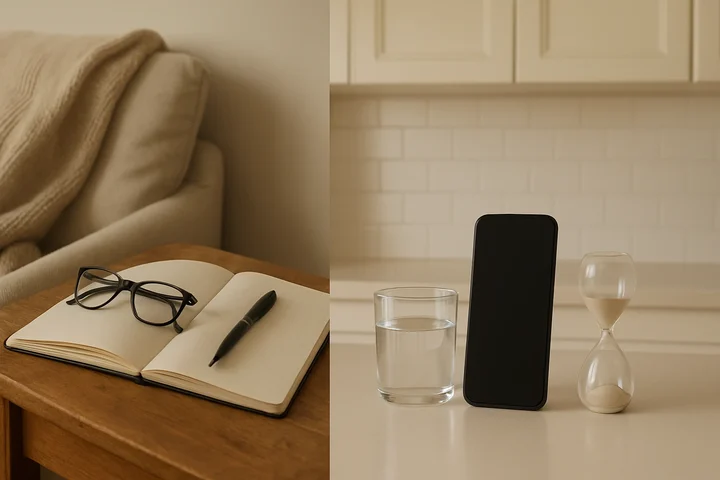 Two coaching styles: Noom asks you to sit down and read; Simple asks you to glance and move on.
What Each Plan Actually Does on Day One 📱
A first-time user opens Noom and lands in a long quiz. The quiz asks about goals, lifestyle, why past attempts have failed, and what mood drives eating. After that, you are dropped into a 16-week core curriculum with a daily lesson, a weigh-in prompt, and a food log. The food log is the heart of the experience. You search a food, and Noom shows you a calorie count plus a green, yellow, or orange tag. Green foods are most nutrient dense per calorie. Orange foods are the opposite. The idea is not to ban orange. It is to make you see the pattern of what you choose without a number telling you off. Within 7 days, most users have logged 3 to 5 weigh-ins, built a small habit of reading the day's lesson with morning coffee, and started a back-and-forth with their coach in the chat.
A first-time user opens Simple and also lands in a quiz, this time about sleep, eating habits, current weight, dietary preference, and goals (Fortune, 2026). The output is a recommended fasting schedule, usually a 16:8 plan to start. On day one, you set your eating window, you log your first meal by snapping a photo or typing a few words, and Avo greets you. The meal you log gets a 1-to-4 nutrition score based on protein, fiber, saturated fat, sodium, and calcium content. Your home screen shows a fasting clock that counts down, your nutrition score for the day, and a couple of habit cards for water and steps. There is no curriculum. There is no human. There is a fasting clock and a friendly AI.
Day one already tells you something
If "log a meal, see a 3, ask Avo what to do about it" sounds like the right amount of support, Simple wins. If "read a lesson about why I keep snacking after dinner, then message a coach about it" sounds better, Noom wins.
IMPORTANT
Checkpoint: midway progress update.
You're halfway - decisions get easier here.
⏱️ Progress 2/4 • ~4 minutes in • Keep going
✅ Step 1: What each app actually sells (done)
✅ Step 2: How the coaching feels on a bad day (done)
👉 Step 3: Pricing with the catches included (current)
⏳ The 14-day test that ends the debate (next)
Pricing in 2026, With the Catches Included 🏷️
Noom's pricing is the more straightforward of the two, though it has tiers. The headline number is $17.42 a month on a 12-month plan, which works out to a one-time $209 charge (Noom Cost 2026, May 2026). If you pay month to month, you are looking at $70 a month, which adds up fast. There is a 7 to 14 day trial window for new users, with the exact length depending on the offer Noom is running (BestCalorieApps Noom Review, 2026). Noom Med, which is the medical weight-loss arm that includes prescription GLP-1 support, starts at $79 for the Microdose program and scales up to $279 for the full-dose plan. For the average person not on a GLP-1, the only number that matters is the annual: $209 for a year of coaching and curriculum. We broke the tiers down line by line in our Noom pricing 2026 guide.
Simple is famously vague about pricing on its site. The Simple homepage and signup flow do not show a price until you finish the questionnaire and enter your email. Fortune's testers tried to surface it three times and gave up, calling out the "lack of price transparency for Premium version" as a real downside (Fortune, 2026). Once you do reach the paywall, third party reviewers consistently report Premium at about $30 per month, with longer plans like 6 or 12 months bringing the effective monthly rate down. The free version of Simple is unusually generous: you keep Coach Avo, nutrition scoring, and the habit trackers. The paid tier mostly unlocks daily personalized check-ins and the full educational library. Our Simple app pricing 2026 breakdown covers the free-vs-Premium line in detail.
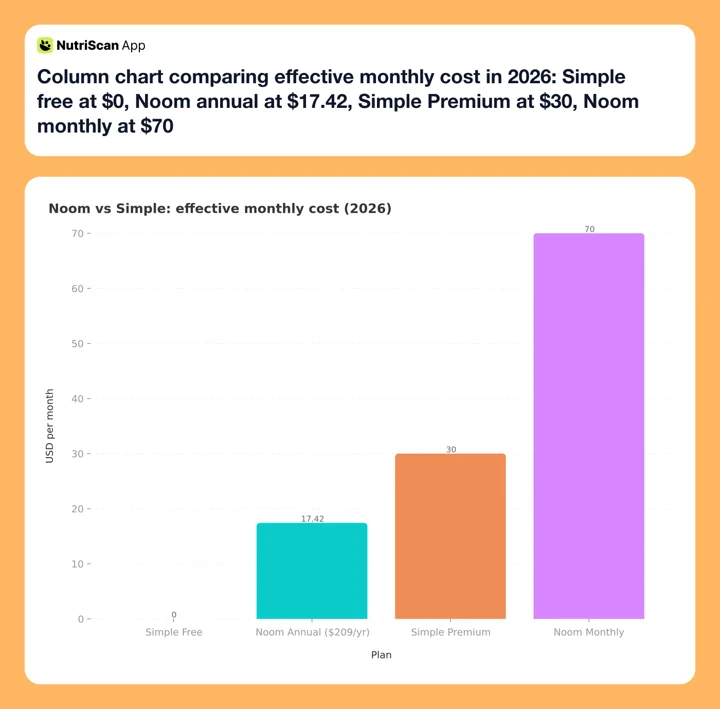 Figure 1: Effective monthly cost in 2026. Noom's annual plan is the cheapest paid option; Noom's monthly plan is the worst deal in the category.
So as a sticker comparison, as Figure 1 shows: a year of Noom at $209 lands roughly in the same neighborhood as a year of Simple Premium at $30 a month ($360), with Simple slightly more expensive on average. Noom's monthly plan at $70 is the worst deal in the category for the casual user. Simple's free tier is the best deal in the category for someone who only wants a fasting clock and a chatbot.
If money is the deciding factor and the goal is fasting, the Simple free tier is the rational starting point. If money is the deciding factor and the goal is "change how I eat," Noom annual at $209 is a fair price for what is, structurally, a behavioral course plus a coach.
Who Each App Fits, Honestly 🎯
Noom fits people who want to read their way out of a habit. The classic Noom user is someone who has tried four diets, knows the calorie math, and has now decided the problem is in their head, not their fridge. The curriculum is written like a friendly self-help book, the human coach asks reflective questions, and the color-coded log is teaching you, not policing you. If you are the kind of person who underlines paragraphs in Atomic Habits, you will get along with Noom.
Noom is a poor fit for someone who wants a fast tracker and not a class. The lessons are short, but they are still daily reading. Multiple reviewers, including a 2026 GAYA review that scored Noom 2.5 out of 5, have complained that the program feels slow at the start, that the coach is not always as personal as the marketing suggests, and that the $199 to $209 price stings more if you do not actually read the lessons (GAYA Noom Review, 2026). If you skim through the lessons in week 1, you have basically paid for a calorie tracker with a chat tab. For a deeper look at that tradeoff, see our honest Noom review for 2026.
Simple fits people who want to try intermittent fasting without committing to a coach and without paying every month to get started. The default 16:8 plan is the most studied protocol in the IF research, and a 2025 BMJ review confirmed that intermittent fasting produced weight-loss results similar to continuous calorie restriction in the medium term (BMJ, 2025). Avo's tone is gentle, the photo log is fast, and the nutrition score gives you a way to think about meal quality without counting every gram. If you want a stopwatch with a smart friend, Simple fits. And if you want to know your actual calorie and macro targets before picking either app, our free macro calculator takes about two minutes.
Who should not use Simple
Simple is a poor fit for people with a history of disordered eating, people who are pregnant or breastfeeding, and anyone for whom long fasting windows are not medically appropriate. The Fortune review's consulting dietitian, Sydney Lappe, is explicit on this point: intermittent fasting "isn't advisable for everyone," and she names disordered eating history, low bone density, pregnancy, breastfeeding, and unstable blood sugar as reasons to avoid it without a clinician's guidance (Fortune, 2026).
Simple also does not have a human coach. If you crash, Avo will reply. Avo will not actually know that you crashed.
 Whichever app you pick, the meal still has to happen in real life.
Noom vs Simple Side by Side: What Matters on Day 30 ⚖️
Most app comparisons stop at the feature checklist. The honest test is what is still working in week 4, when the novelty is gone. Here is how the two land at that point.
| Factor | Winner | Why |
|---|---|---|
| Logging speed | Simple | Photo + one-line description takes ~5 seconds; Noom's search-pick-confirm takes ~20 seconds per item |
| Food data accuracy | Noom | USDA-style curated database; Simple's photo log is not portion-accurate |
| Sticking with it | Even | Noom's curriculum vs Simple's fasting clock + Avo nudges; Noom retention ~58% |
| Emotional weight | Depends | Noom asks you to think; Simple asks you to glance and move on |
| Human support | Noom | Simple has no human option at any price |
| Free tier | Simple | Avo, nutrition scoring, and habit trackers all free |
Logging speed. Simple wins. The photo log plus the 1-to-4 nutrition score is the lightest food log in the category. Noom's color-coded database is fine, but searching, picking a portion, and confirming takes about 20 seconds per item, where Simple's photo plus a one-line description can be 5 seconds.
Accuracy of the food data. Noom wins. Noom's database is built on USDA-style nutrient data with manual curation. Simple's photo log is described in Fortune's review as not always portion-accurate, since you can log "Greek yogurt, blueberries, and granola" without ever telling the app how much you ate (Fortune, 2026). If you want accurate calorie totals at the end of the week, Noom is closer.
Sticking with it. Roughly even, but for different reasons. Noom's curriculum gives people a reason to open the app even when the scale is not moving. Simple's fasting clock and Avo nudges give people a reason to open it before the eating window starts. Long-term retention data is sparse on Simple, but Nutrola pegs Noom at a 58 percent retention rate, which is strong for the category (Nutrola, 2026).
Emotional weight. Noom feels heavier. The reading, the coach, the weekly graphs, all of it asks you to think. Simple feels lighter. The fasting clock, the friendly chatbot, the photo log, all of it asks you to glance and move on. Neither is better. They are different kinds of effort.
Best moment. With Noom, it is the week 3 lesson where something finally clicks about why you eat after a fight or a hard meeting. With Simple, it is the morning you realize the 16-hour fasting window is no longer hard and your breakfast has quietly turned into "a real meal at 11."
IMPORTANT
Checkpoint: final stretch before the reveal.
One last nudge - the 14-day test is almost here.
⏱️ Progress 3/4 • ~6 minutes in • Keep going
✅ Step 1: What each app actually sells
✅ Step 2: How the coaching feels on a bad day
✅ Step 3: Pricing with the catches included
✨ The 14-day test that ends the debate (about to reveal)
How NutriScan Fits Next to Both 📸
NutriScan exists in a third spot from these two, and it is worth naming honestly. NutriScan is a photo-first calorie scanner with AI suggestions, not a coaching curriculum and not a fasting clock. If the appeal of Simple is "snap a photo, get a score, move on," then NutriScan offers the same fast-logging muscle without locking you into intermittent fasting. You point the camera at your plate, and the AI identifies the food and breaks down calories and macros in seconds. The meal scan guide shows exactly how the flow works.
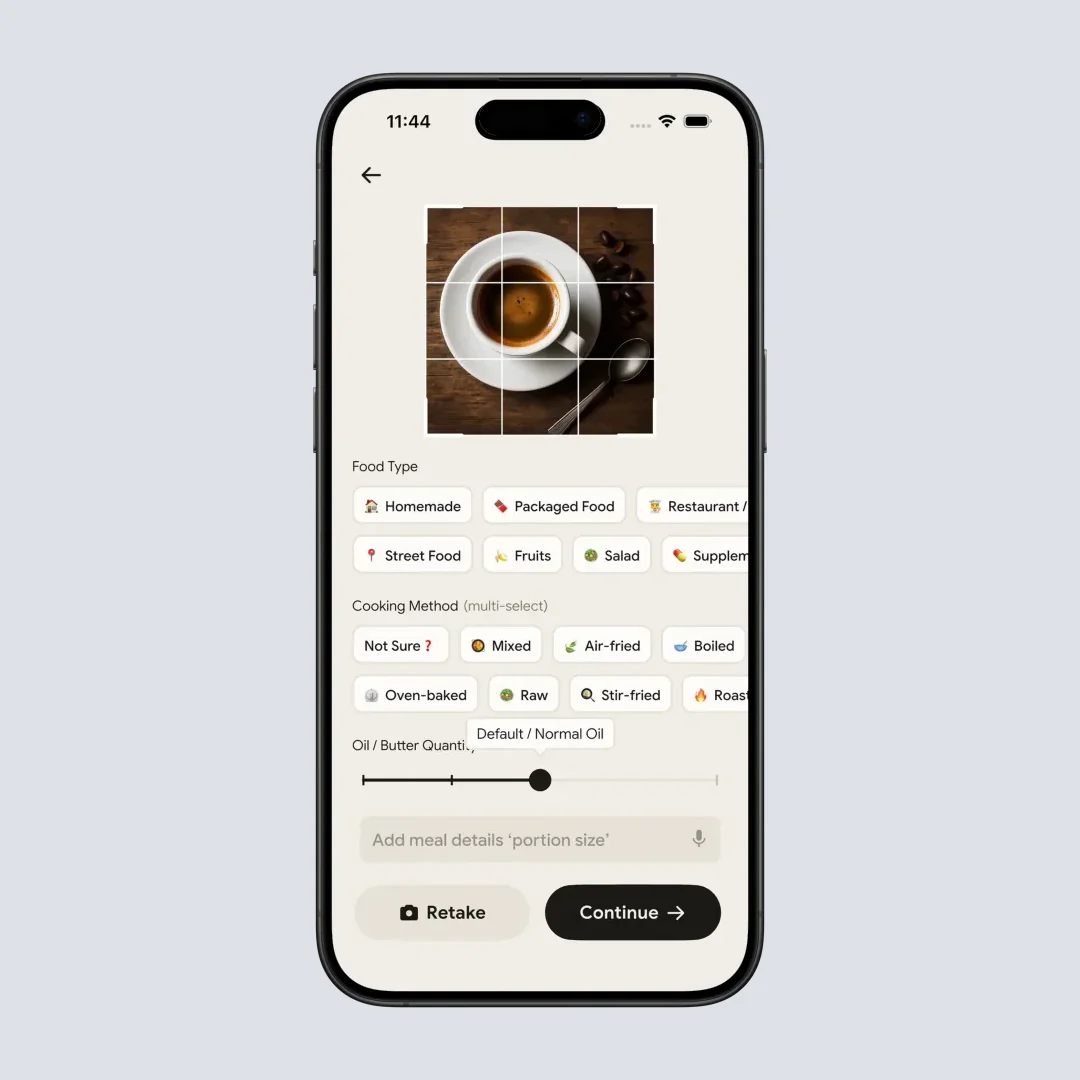
NutriScan's photo logging: Home > Camera Icon > Click Picture > Crop > instant nutrition breakdown
And if the appeal of Noom is having someone to talk to, NutriScan ships Monika, a voice-powered AI nutritionist you can actually call from the home screen. Free users get 4 calls a week; Premium is unlimited. You can ask questions mid-grocery-run or just tell her what you ate and she logs it for you.
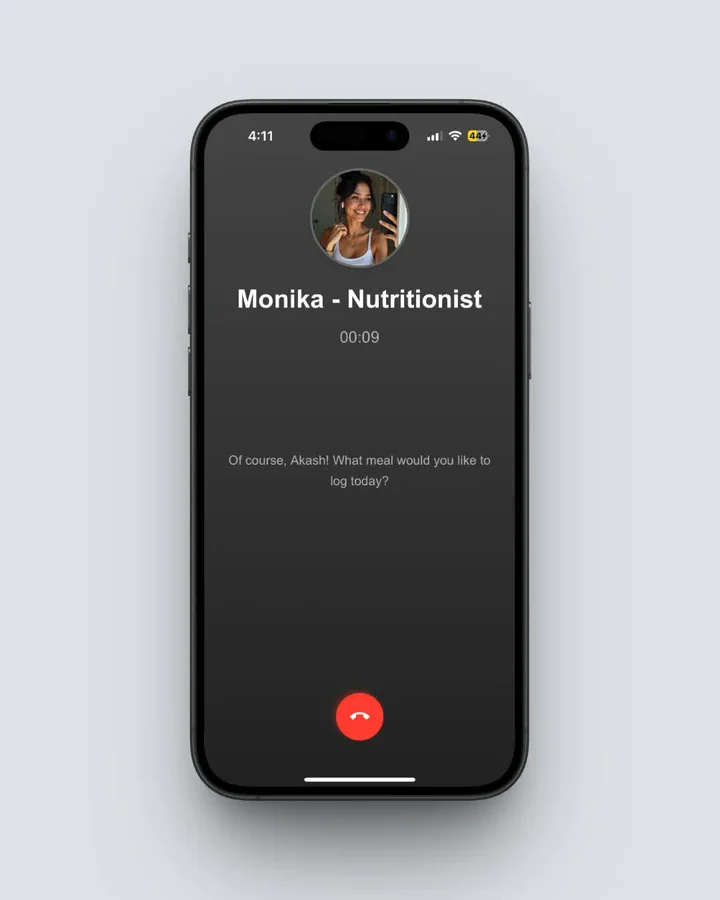 Monika, NutriScan's voice AI coach: Home > Click Call Button. Ask anything, or log a meal by saying it out loud.
The full picture of how NutriScan stacks against Noom's coaching model sits in our NutriScan vs Noom comparison, and a separate writeup covers whether NutriScan Premium is worth it in 2026 for anyone weighing the photo-scan side specifically.
Frequently Asked Questions ❓
Which one is cheaper if I am just starting out?
The free tier of Simple. Coach Avo, nutrition scoring, and habit trackers are all included free. The catch is no daily Avo check-ins and no full educational library. If you are willing to pay, Noom annual at $209 is the lowest dollar-per-day option that includes a curriculum and a human coach (Noom, May 2026).
Do I really need intermittent fasting to use Simple?
It is the core experience of the app, and the home screen is built around a fasting clock. You can use the food log and habits without fasting strictly, but you will not be using most of what the paid tier is built to do. If fasting is not the goal, Noom or a straight tracker is a better fit.
Can I get a human coach inside Simple?
No. Coach Avo is AI. Simple's positioning is explicit on this, and the company markets Avo as "available 24/7," which is a feature of being AI (Trustpilot Simple Life, 2026). If you want a person to message, Noom is the right pick.
Is Noom worth $209 a year if I just want to lose 10 pounds?
It depends on how you respond to lessons. If you actually read the daily content and engage with the coach, Forbes Health and Healthline both rate Noom as the best behavior-change program in 2026 (Forbes Health, 2026). If you suspect you will skip the lessons and only track food, you are paying for things you will not use, and a straight tracker would do the job for less.
Does Simple work as well as a calorie-restriction diet?
A 2025 BMJ review of intermittent fasting concluded that IF strategies produced weight-loss results similar to continuous calorie restriction in the medium term, with similar dropout rates (BMJ, 2025). The honest answer is that the mechanism of any weight loss is still a calorie deficit. Simple makes that deficit easier by compressing the eating window, but it does not bypass the math.
Which one has the better food database?
Noom. The color-coded green, yellow, and orange system is built on calorie density and nutrient density, and the underlying data is closer to the USDA standard. Simple's logging is faster because it is photo and free-text first, which trades some accuracy for speed (Fortune, 2026).
Can I cancel either one easily?
Both. Noom's cancellation is handled through your app store or the Noom website, and the 7 to 14 day trial gives you time to back out before the annual charge hits (BestCalorieApps, 2026). Simple is canceled through your app store, and the lack of trial means you should be ready before you hit Premium. We wrote a step-by-step Simple cancellation guide if you need it.
So Which One Feels More Helpful? 🏁
Noom feels more helpful on the day you are confused about why you keep eating after dinner. The lesson will name it, the coach will ask about it, and you will leave that session with a sentence you can use the next time.
Simple feels more helpful on the day you do not want to think. The fasting clock is already running, Avo asks how the morning went, you snap a photo of lunch, you get a 3, you move on.
Both of those days exist. The honest pick is whichever one matches the days you have more of. People who want to be taught will get more out of Noom. People who want to be nudged will stay longer with Simple. The wrong reason to pick either one is the marketing on the homepage. The right reason is the day in week 7 where you almost did not open the app, and the version of the coach you want for that day is the version you should be paying for now.
If you are still on the fence, do this. Spend a week on the Simple free tier and a week on the Noom 7-day trial. After 14 days, the app you opened first in the morning, on the day you did not feel like it, is the one. Pay for that one. Cancel the other on day 13.
And if what you actually want is the fast photo logging without the fasting clock or the curriculum, download NutriScan and scan your next meal in under 5 seconds. The free tier includes meal scanning and 4 Monika calls a week, which is a pretty good way to find out whether an AI coach is your style before you pay anyone anything.
IMPORTANT
You made it through the whole decision. Nicely done.
Here is everything you just unlocked.
⏱️ Progress 4/4 • ~8 minutes in • Nicely done
✅ Step 1: What each app actually sells
✅ Step 2: How the coaching feels on a bad day
✅ Step 3: Pricing with the catches included
✅ The 14-day test that ends the debate (revealed above: one week free Simple, one week Noom trial, keep the app you opened on the day you did not feel like it)