Vegetable Khichdi: calorías, nutrición y beneficios para la salud
A traditional comfort food combining rice and lentils con vegetables—one of India's la mayoría digestible and nutrient-dense dishes, perfect for todo health goals.
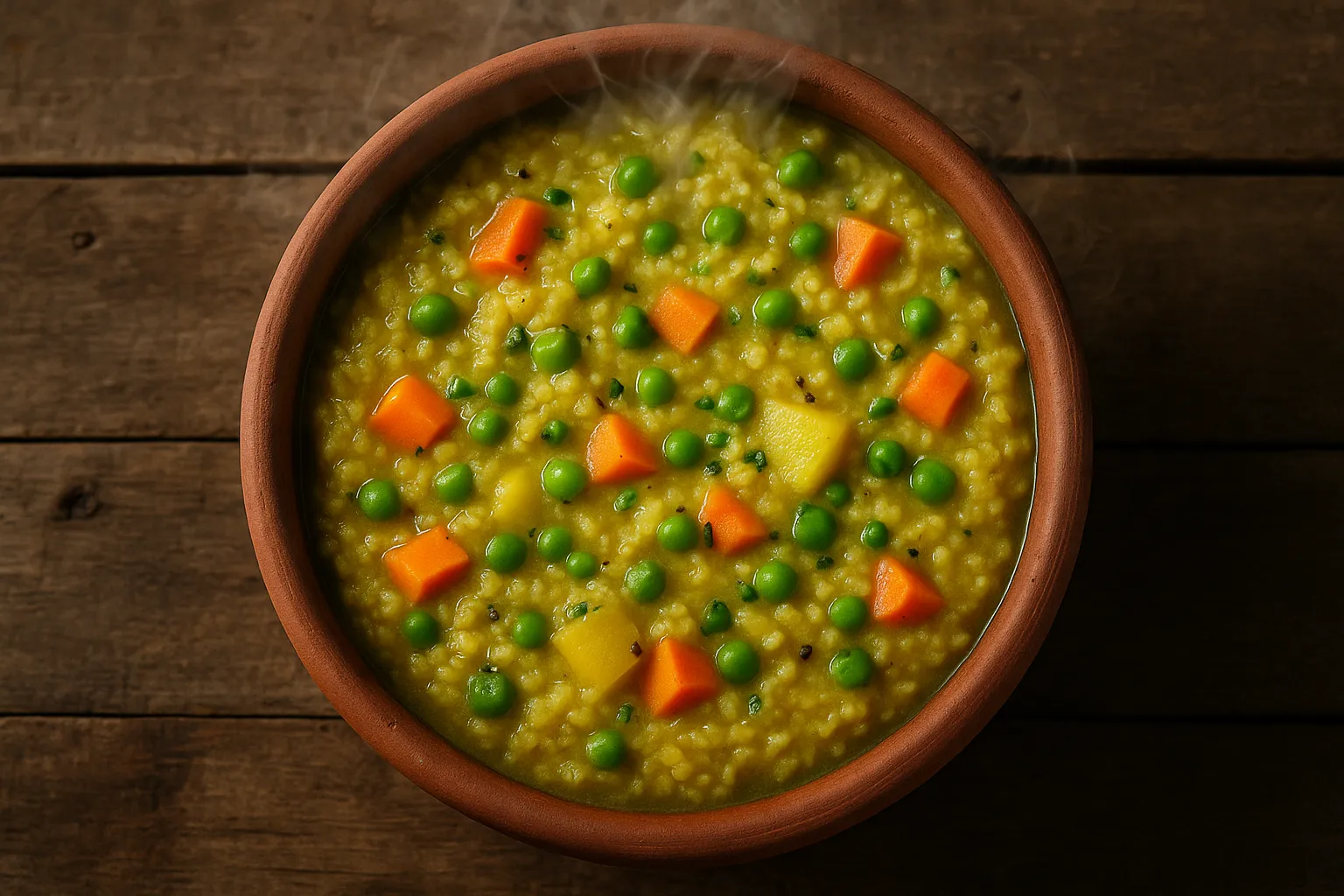
Datos Rápidos de Nutrición
Per 1 Cup Cocido Vegetable Khichdi (240g)
| Nutriente | Cantidad |
|---|---|
| Calorías | 150 kcal |
| Proteínas | 5.2g |
| Carbohidratos | 26g |
| Fibra | 3.8g |
| Azúcares | 1.2g |
| Grasas | 2.1g |
| Hierro | 2.4mg |
| Phosphorus | 165mg |
| Magnesio | 42mg |
| Potasio | 285mg |
Desglose de Macronutrientes
 ChatGPT
  Claude
  AI Mode
  Perplexity
CONSEJO DEL NUTRICIONISTA
Vegetable khichdi's rice-lentil combination proporciona a complete amino acid profile rare in plant-based meals. El resistant starch in cooled khichdi mejora gut health and azúcar en sangre control. Add ghee (clarified butter) for vitamina A absorption, but límite to 1 teaspoon por porción.
Mitos vs Realidad
MITO #1: Khichdi es Too Heavy for Pérdida de Peso
REALIDAD: Vegetable khichdi con 150 calorías and 5.2g proteínas actually apoya pérdida de peso. El rice-lentil combination produces resistant starch cuando cooled, cuál burns 30% más calorías que regular starch durante digestion.
MITO #2: Khichdi Causes Blood Azúcar Spikes
REALIDAD: Cuando prepared in 1:1 rice-lentil ratio, khichdi has a moderado glycemic index (50-60). Lentil fibra slows carb absorption, making it safer for diabetics que white rice alone.
MITO #3: Khichdi Lacks Nutrientes
REALIDAD: One cup proporciona 2.4mg hierro (15% DV), complete proteínas, 3.8g fibra, and nutrientes from mixed vegetables. Ayurvedic los estudios muestran khichdi's bioavailability aumenta cuando ghee es added, aiding nutrient absorption.
MITO #4: You Must Add Ghee for Taste and Health
REALIDAD: Ghee adds flavor but 1 teaspoon (45 calorías) es sufficient. Vegetable khichdi retains nutrition and taste con minimal grasas. Excess ghee aumenta calorías and grasas saturadas unnecessarily.
MITO #5: Khichdi es Solo for Sick Personas
REALIDAD: Mientras valued in Ayurveda for recovery, khichdi's balanced nutrition (complete proteínas, fibra, micronutrients) makes it excellent for athletes, embarazo, pérdida de peso, and diario health maintenance.
NutriScore por Objetivos de Salud
| Objetivo de Salud | NutriScore | ¿Por qué esta puntuación? |
|---|---|---|
| Pérdida de Peso |  | 150 calorías, complete proteínas, 3.8g fibra promueve fullness; resistant starch cuando cooled enhances grasas burning. |
| Ganancia Muscular | | 5.2g complete proteínas; 1.5 cups con yogurt curd = 15g proteínas, 225 calorías for post-workout recovery. |
| Control de Diabetes |  | Moderado GI (50-60); 1:1 rice-lentil ratio; fibra controls azúcar en sangre. Mejor served con vegetables and curd for complete meal. |
| Control del SOP | | Complete proteínas aids hormonal balance; bajo added azúcar; fibra apoya insulin sensitivity. Pair con non-starchy vegetables. |
| Nutrición en el Embarazo | | Easy to digest durante nausea; hierro (15% DV) previene anemia; complete proteínas apoya fetal development; potasio regulates fluids. |
| Viral/Recuperación de Gripe | | Soft texture ideal for sore throats; easily digestible; warm temperature soothes; proteínas aids immune recovery; minimal irritants. |
NUTRICIÓN PERSONALIZADA
Track your khichdi porciones and prepare variations con NutriScan to optimize nutrition for your personal health goals!
Respuesta de Azúcar en Sangre to Vegetable Khichdi
Vegetable khichdi's moderado glycemic index (50-60) creates a gradual glucosa en sangre rise, especialmente cuando el 1:1 rice-lentil ratio es maintained.
Curva Típica de Respuesta de Glucosa
Este gráfico muestra respuesta típica de glucosa en sangre para individuos sanos en general. Las respuestas individuales pueden variar. No es consejo médico.
Cómo to Optimize Blood Azúcar Control
- 🥄 Chill Antes Eating: Cooled khichdi develops resistant starch, reducing glycemic response by 25%
- 🥛 Pair con Curd: Griego yogurt or Indian curd (dahi) slows carb absorption via grasas and proteínas
- 🥬 Add Extra Vegetables: Non-starchy vegetables (spinach, carrots, broccoli) increase fibra and nutrientes
- ⏰ Eat at Lunch: Midday consumption mejor tolerated que evening for azúcar en sangre management
Importancia Cultural
Vegetable khichdi es a cornerstone of Indian cuisine, representing simplicity, nutrition, and medicinal wisdom spanning thousands of years.
In India:
- Staple comfort food in cada Indian household; served to children and recovering patients
- Ayurvedic medicine values khichdi as el la mayoría digestible grain-legume combination (tridosha balancing)
- Regional variations: South India uses moong dal; North India uses mixed dals (masoor, tuvar); East India adds vegetables
- Festival and religious significance: khichdi given as prasad (blessed food) durante celebrations
- Grandmother remedy for fever, digestive issues, and postpartum recovery
Global Impact:
- Growing recognition in wellness communities for digestibility and nutritional balance
- Adoption in Mediterranean and wellness diets as a complete plant-based proteínas source
- Ayurvedic practitioners globally recommend khichdi for detox and reset diets
- Vegan athletes discovering rice-lentil combination as affordable complete proteínas
Compara y Sustituye
Vegetable Khichdi vs Similar Comfort Foods (Por 100g)
| Nutriente | 🥘 Khichdi | 🍚 White Rice | 🍝 Pasta | 🥣 Oatmeal | 🍲 Lentil Soup |
|---|---|---|---|---|---|
| Calorías | 63 kcal | 68 kcal | 131 kcal | 68 kcal | 35 kcal |
| Carbohidratos | 11g | 15g | 25g | 12g | 6g |
| Fibra | 1.6g | 0.4g | 1.8g | 1.7g | 1.6g |
| Proteínas | 2.2g | 1.3g | 5g | 2.4g | 2.2g |
| Grasas | 0.9g | 0.3g | 1.1g | 1.4g | 0.4g |
| Azúcar | 0.5g | 0g | 0.7g | 0.4g | 0.3g |
| Mejor Para | Complete, digestible | Quick energy | Italian meals | Breakfast | Proteínas boost |
Preguntas Frecuentes
Es vegetable khichdi bueno for pérdida de peso?
Yes, vegetable khichdi apoya pérdida de peso con 150 calorías por taza, 5.2g complete proteínas, and 3.8g fibra ese promueve fullness. Cuando cooled, rice develops resistant starch (burns 30% más calorías durante digestion). Mejor practice: prepare con 1 teaspoon ghee or oil maximum; add vegetables for volume sin calorías.
¿Pueden los diabéticos comer vegetable khichdi?
Vegetable khichdi es excellent for diabetes—el 1:1 rice-lentil ratio creates a moderado glycemic index (50-60). Lentil fibra slows carb absorption, preventing azúcar en sangre spikes. Optimal porción: 1 cup con added non-starchy vegetables and curd (dahi) to further slow glucose absorption.
Cómo mucho proteínas es in vegetable khichdi?
One cup proporciona 5.2g complete proteínas con todo nine esencial amino acids—rare in plant foods alone. Este makes khichdi unique; combining con yogurt (5g) or curd brings total to 10g, equivalent to one egg. Perfect for vegetarians and vegans seeking complete proteínas sources.
Qué son el main beneficios para la salud of vegetable khichdi?
Key benefits: complete proteínas for muscle; 3.8g fibra for digestion; 2.4mg hierro (15% DV) preventing anemia; resistant starch (cuando cooled) for gut health; 285mg potasio for heart function; and Ayurvedic tridosha balance promoting overall wellness.
Cuando es el mejor tiempo to eat vegetable khichdi?
Ideal for lunch (midday digestion strongest) or dinner (light, easily digestible). Durante recovery from illness, khichdi's soft texture soothes digestion; warm temperature eases congestion. Post-workout con curd/yogurt enhances muscle recovery. Evitar as late-night meal for optimal digestion.
Cómo mucho vegetable khichdi debería I eat per día?
Peso loss: 1 cup diario (150 cal); ganancia muscular: 1.5 cups con yogurt (225 cal + 15g proteínas); diabetes: 1 cup con extra vegetables; embarazo: 1.5 cups (proporciona 265 calorías, 8g proteínas, hierro); recovery: 1 cup cada 4 hours. Track porciones con NutriScan aplicación to match your calorie goals.


Similar Comfort Foods
4505 Chicharrones Classic Chili Salt
7 Eleven Japan Crispy Corn Cheese
Explore Más Nutrition Tools & Resources
App de agua y calorías gratis con registro diario
App de ayuno intermitente gratis con temporizador
App de macros: NutriScan las rellena desde una foto
App de plan de comidas para volumen limpio
App de plan de comidas vegetariano con objetivo de proteína
App de Plan de Dieta India Vegetariana y No Vegetariana
App de plan de dieta mediterránea que cuenta el aceite
App nutricionista con IA que lee tus comidas
App para Subir de Peso: Plan de Dieta con IA
Ayuno Intermitente para Mujeres, Timer y Registro de Comidas
Coach de pérdida de peso ChatGPT: con registro
Contador de Calorías Activado por Voz - Di tus Comidas y Rastrea Nutrición Sin Manos — 2026
Contador de calorías ChatGPT: alternativa que no lo olvida
Contador de Calorías con IA: calorías con fotos, gratis
Contador de calorías de comida rápida con foto
Contador de calorías gratis con fotos | NutriScan
Contador de Calorías para Comida Española - Información Nutricional Instantánea — 2026
Escáner de Etiquetas Nutricionales para tu Ración Real
Generador Lista de Compras Keto
Generador Lista de Compras Mensual
Guía Proteína Tercer Trimestre
Plan de comidas semanal con calorías y lista de compras
Plan de dieta ChatGPT: alternativa que registra comidas
Plan de Dieta para Ganar Peso España