Potassium: How Much You Need, Top Foods, and Liquid I.V.
 ChatGPT
 Claude
 AI Mode
 Perplexity
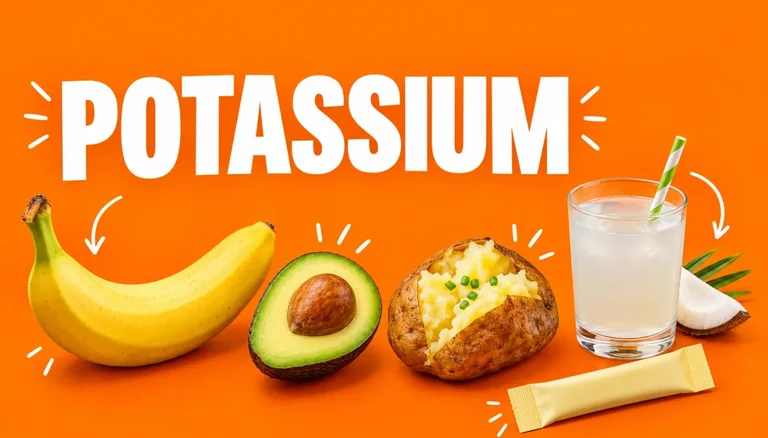
Adults need 2,600 mg (women) to 3,400 mg (men) of potassium a day. One Liquid I.V. Hydration Multiplier stick has about 370 mg of it, a little less than a medium banana at 422 mg. Most of the potassium in a healthy diet comes from food, and the best sources are beans, potatoes, dried fruit, fruit juice, dairy and fish.
Daily needs, food values and safety notes checked on October 14, 2026 against the NIH Office of Dietary Supplements potassium fact sheet (which draws on the National Academies 2019 report and USDA FoodData Central). Liquid I.V. and food-page numbers come from the linked NutriScan food pages.
Summary
- Daily target: the National Academies set an Adequate Intake of 3,400 mg for men and 2,600 mg for women aged 19 and over. The FDA Daily Value on labels is 4,700 mg.
- Liquid I.V.: a 16 g Hydration Multiplier stick lists 370 mg, which is 8% of the Daily Value.
- Banana, potato, coconut water: a medium banana has 422 mg, a medium baked potato (flesh only) 610 mg, and a 240 g cup of coconut water about 600 mg.
- Most people eat too little. The NIH fact sheet says US dietary surveys show intakes below the recommendation and that the Dietary Guidelines for Americans call potassium a nutrient of public health concern.
- Not for everyone. People with kidney disease or on ACE inhibitors or angiotensin receptor blockers can retain potassium and should ask their doctor before using potassium-rich drinks or supplements.
How much potassium do you need a day?
The National Academies of Sciences, Engineering, and Medicine set Adequate Intakes (AIs) for potassium in 2019. An AI is the intake level assumed to be enough for healthy people, based on what healthy groups actually eat. The NIH Office of Dietary Supplements lists them by age:
| Group | Adequate Intake per day |
|---|---|
| Children 4 to 8 years | 2,300 mg |
| Boys 9 to 13 years | 2,500 mg |
| Girls 9 to 13 years | 2,300 mg |
| Males 14 to 18 years | 3,000 mg |
| Females 14 to 18 years | 2,300 mg |
| Men 19 and over | 3,400 mg |
| Women 19 and over | 2,600 mg |
| Pregnancy, 19 to 50 years | 2,900 mg |
| Breastfeeding, 19 to 50 years | 2,800 mg |
Food and supplement labels use a different number. The FDA Daily Value (DV) for potassium is 4,700 mg for adults and children aged 4 and over, and labels show percentages against it. That is why a stick or a banana looks small on a label: 422 mg is 9% of 4,700 mg but 12% of a man's 3,400 mg AI and 16% of a woman's 2,600 mg.
The same fact sheet says people in the United States eat less potassium than recommended, which is why the Dietary Guidelines for Americans name it a nutrient of public health concern.
How much potassium is in common foods?
These values come from Table 2 of the NIH fact sheet, which uses USDA FoodData Central. Percent DV is against 4,700 mg. Foods with a NutriScan page are linked.
| Food | Serving | Potassium | % DV |
|---|---|---|---|
| Dried apricots | 1/2 cup | 755 mg | 16% |
| Lentils, cooked | 1 cup | 731 mg | 16% |
| Acorn squash, mashed | 1 cup | 644 mg | 14% |
| Prunes, dried | 1/2 cup | 635 mg | 14% |
| Raisins | 1/2 cup | 618 mg | 13% |
| Baked potato, flesh only | 1 medium | 610 mg | 13% |
| Kidney beans, canned | 1 cup | 607 mg | 13% |
| Orange juice | 1 cup | 496 mg | 11% |
| Soybeans, boiled | 1/2 cup | 443 mg | 9% |
| Banana | 1 medium | 422 mg | 9% |
| Milk, 1% | 1 cup | 366 mg | 8% |
| Spinach, raw | 2 cups | 334 mg | 7% |
| Chicken breast, grilled | 3 oz | 332 mg | 7% |
| Salmon, farmed, cooked | 3 oz | 326 mg | 7% |
| Tomato, raw | 1 medium | 292 mg | 6% |
| Broccoli, cooked | 1/2 cup | 229 mg | 5% |
| Apple with skin | 1 medium | 195 mg | 4% |
| Rice, brown, cooked | 1 cup | 154 mg | 3% |
| Rice, white, cooked | 1 cup | 54 mg | 1% |
| Bread, white | 1 slice | 37 mg | 1% |
The NIH fact sheet counts a food as a high source at 20% of the DV or more. No single food in its table reaches that, so the usual route to the target is several servings across the day.
One day built only from rows above: a cup of orange juice (496 mg), a banana (422), a cup of 1% milk (366), a baked potato (610), 3 oz of salmon (326) and 2 cups of raw spinach (334) adds up to 2,554 mg. That is 98% of a woman's 2,600 mg AI and 75% of a man's 3,400 mg.
How much potassium is in a banana?
A medium banana (118 g) has 422 mg of potassium, or 9% of the DV, per the NIH fact sheet. Our banana page lists the same 422 mg. A banana is a decent source but not a leader: a cup of cooked lentils has 731 mg, and half a cup of dried apricots has 755 mg.
How much potassium is in a potato?
A medium baked potato, flesh only, has 610 mg, or 13% of the DV (NIH fact sheet). The skin adds more. Our potato page lists 544 mg per 100 g of baked potato with skin, so a 150 g Yukon Gold has about 816 mg and a 250 g russet about 1,360 mg. Those two numbers are our arithmetic on the per-100 g figure. Butter, sour cream and oil are not counted.
How much potassium is in coconut water?
USDA FoodData Central lists plain coconut water (SR Legacy entry "Nuts, coconut water (liquid from coconuts)") at 250 mg of potassium per 100 g. A 240 g cup is about 600 mg, or 13% of the DV, which is more than a banana. That is our arithmetic on the USDA per-100 g figure. Bottled brands differ, and flavored or blended ones can differ a lot, so the label beats this number.
How much potassium is in Liquid I.V.?
One Hydration Multiplier stick (16 g) lists 370 mg of potassium on our Liquid IV page, which is 8% of the 4,700 mg DV. The same label panel shows 45 calories, 11 g of carbohydrate and 500 mg of sodium.
Here is how one stick compares, using the figures above:
| Item | Potassium | % DV |
|---|---|---|
| Liquid I.V. Hydration Multiplier, 1 stick | 370 mg | 8% |
| Banana, 1 medium | 422 mg | 9% |
| Coconut water, 1 cup (240 g) | about 600 mg | 13% |
| Orange juice, 1 cup | 496 mg | 11% |
| Baked potato, flesh only, 1 medium | 610 mg | 13% |
A stick is 88% of one banana's potassium (370 / 422). Against a woman's 2,600 mg AI it is 14%, and against a man's 3,400 mg AI it is 11%. A stick matters more for its sodium and sugar, which are what the product is built around, than for its potassium. If you drink one on a hot or hard training day, count its 370 mg toward that day's total. If you drink one every day on top of a normal diet, the potassium is small next to what you already eat.
Do you need potassium from a drink or a supplement?
For most healthy people, no. Food covers it. The NIH fact sheet notes that many supplement makers cap potassium at 99 mg per product (about 2% of the DV), because the FDA has ruled that some oral potassium chloride drug products above 99 mg are unsafe after links to small-bowel lesions. A stick of electrolyte powder is a small, optional top-up for a day of heavy sweating, not a requirement.
Who should be careful with extra potassium?
In healthy people with normal kidney function, high potassium from food is not a known risk, because the kidneys remove the excess in urine. The National Academies set no upper limit for potassium for that reason.
The picture changes with impaired potassium excretion. The NIH fact sheet lists chronic kidney disease and certain medicines, including ACE inhibitors such as benazepril and angiotensin receptor blockers such as losartan, as causes of hyperkalemia, meaning blood potassium above 5.0 mmol/L. It adds that type 1 diabetes, heart failure, adrenal insufficiency and liver disease can also raise the risk. Severe hyperkalemia can cause muscle weakness, paralysis and heart palpitations.
If you have kidney disease or take blood pressure medicine
Ask your doctor or a registered dietitian before you add potassium-rich drinks, salt substitutes or supplements. Salt substitutes are usually potassium chloride. This article is general information and does not replace your care team's advice.
What does potassium do for blood pressure?
The NIH fact sheet describes the DASH eating pattern, built around fruit, vegetables and low-fat dairy, which lowered systolic blood pressure by an average of 5.5 mmHg and diastolic by 3.0 mmHg. DASH gives about three times the potassium of the average American diet, but it also raises magnesium and calcium and cuts other things, so the drop cannot be credited to potassium alone.
How do you track your potassium?
The FDA requires potassium on the Nutrition Facts label, and food databases list it too. In NutriScan, a meal's Nutrition Details page lists micronutrients under the macros, with a Show More button for the full list. Potassium is one of 18 items you can pin to Today's Count on the Home screen (up to 6 at a time), so you can watch it next to calories and protein.
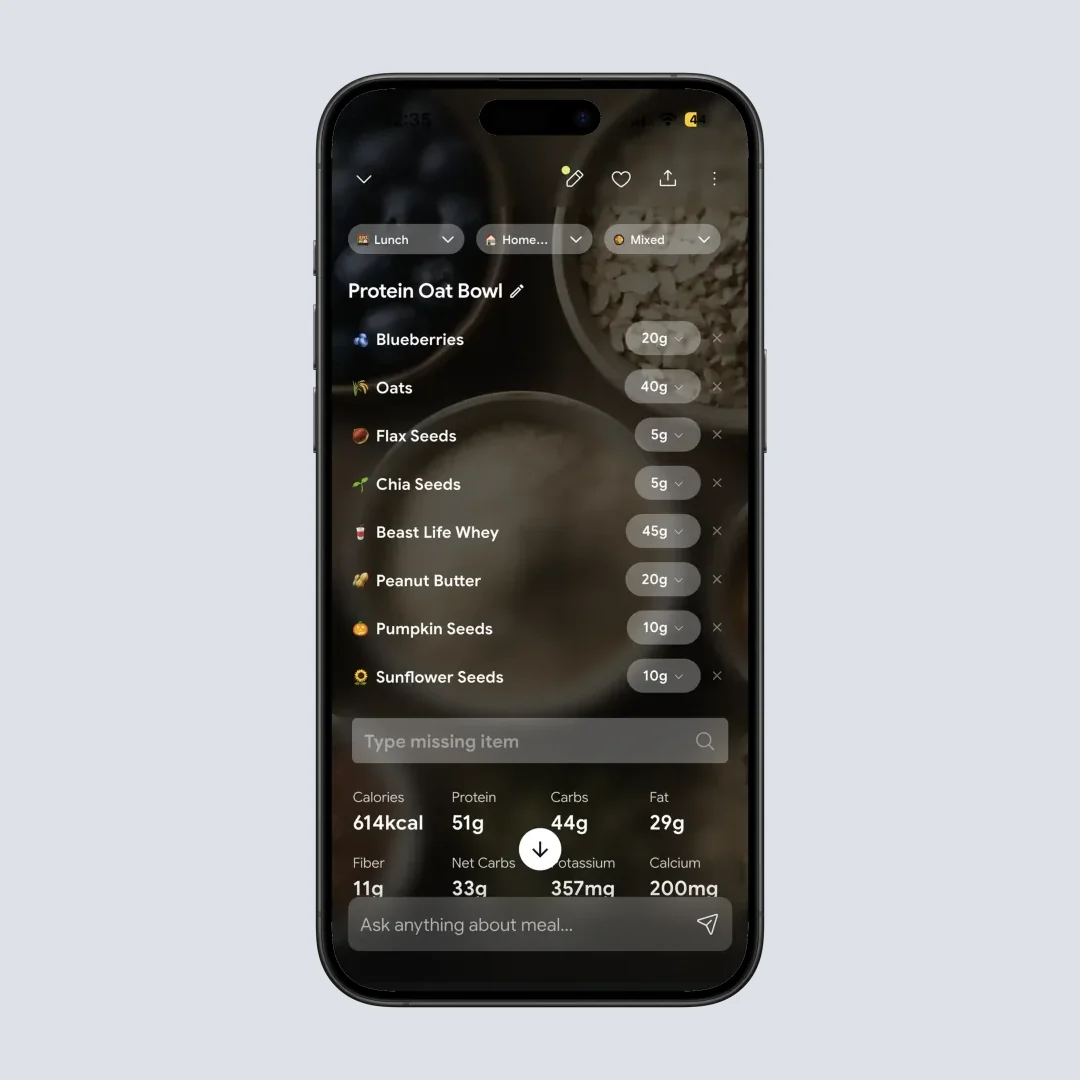
Nutrition Details for a logged meal. Micronutrients sit below the macro cards.
The free plan includes 5 scans a week, and scanning a plate gives you the nutrition for what you ate, micronutrients included. If you want to compare apps on micronutrient depth, see our guide to the best apps for micronutrient tracking. For the other half of the electrolyte pair, read how much sodium per day is the limit. For the mineral side of a balanced plate, see how much iron per day you need.
What else do people ask about potassium?
How much potassium is in Liquid I.V.?
One Liquid I.V. Hydration Multiplier stick (16 g) lists 370 mg of potassium on our Liquid IV food page, which is 8% of the 4,700 mg Daily Value. A medium banana has 422 mg.
How much potassium does a banana have?
A medium banana (118 g) has 422 mg of potassium, or 9% of the Daily Value, according to the NIH Office of Dietary Supplements, which takes the figure from USDA FoodData Central.
How much potassium is in a potato?
One medium baked potato, flesh only, has 610 mg, or 13% of the Daily Value (NIH Office of Dietary Supplements). Our potato page lists 544 mg per 100 g of baked potato with the skin, so a 150 g Yukon Gold gives about 816 mg.
How much potassium is in coconut water?
USDA FoodData Central lists 250 mg of potassium per 100 g of coconut water. A 240 g cup therefore has about 600 mg, which is 13% of the Daily Value and more than a banana. Packaged brands vary, so check the label.
How much potassium do you need a day?
The National Academies set an Adequate Intake of 3,400 mg a day for men and 2,600 mg for women aged 19 and over. The FDA Daily Value used on labels is 4,700 mg for adults and children aged 4 and over.
Can you get too much potassium?
In people with healthy kidneys, extra potassium from food leaves in the urine and is not a known risk, and the National Academies set no upper limit. People with chronic kidney disease, or who take ACE inhibitors or angiotensin receptor blockers, can build up too much (hyperkalemia) and should ask their doctor before adding potassium-rich drinks or supplements.