Besan Bhujia (Sev): Kalorien, Nährwerte und gesundheitliche Vorteile
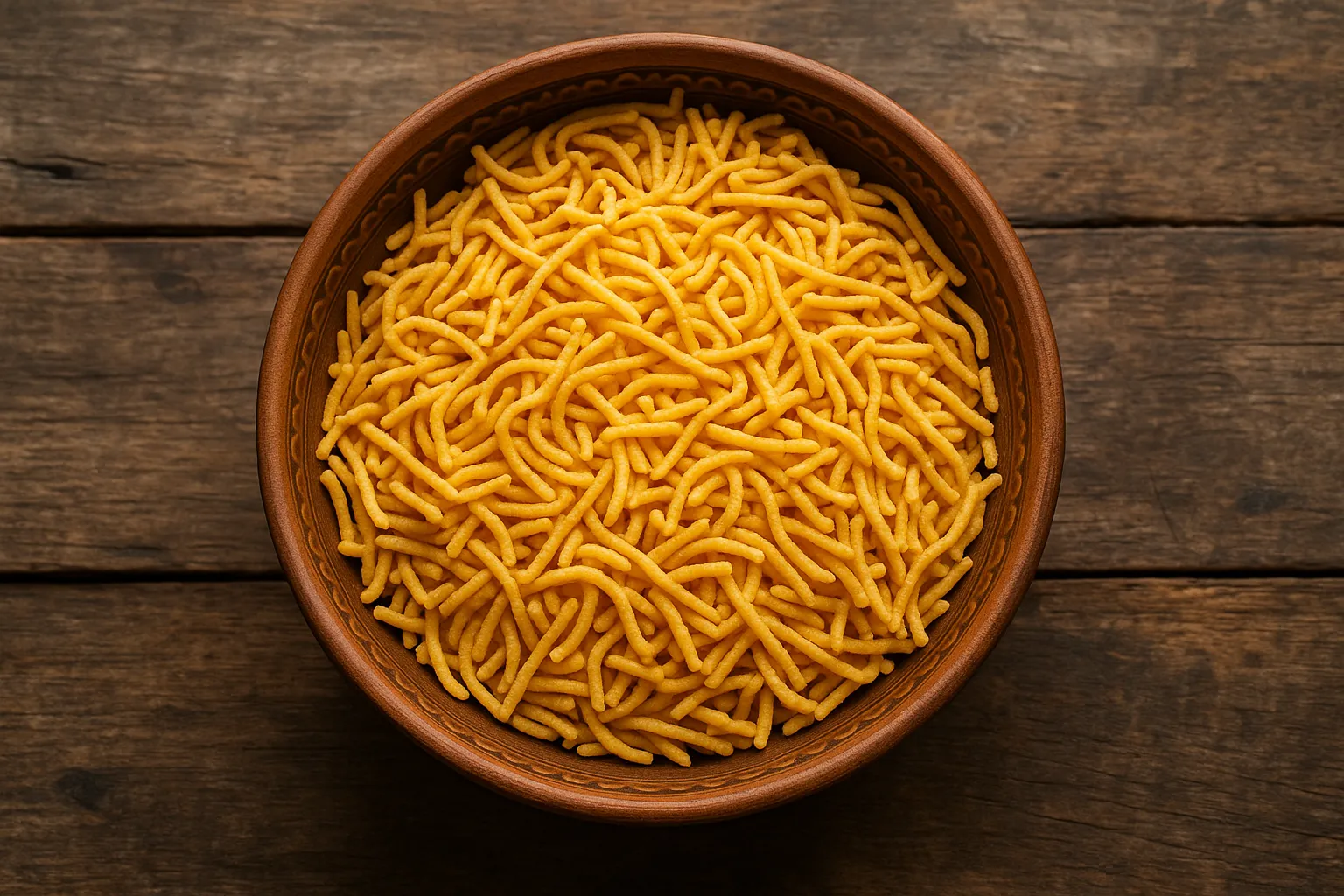
Popular Indian savory snack gemacht from chickpea flour, loved for its crispy texture and addictive taste across India.
Schnelle Nährwertübersicht
Per 100 g (approximately 2 cups)
| Nährstoff | Menge |
|---|---|
| Kalorien | 580 kcal |
| Protein | 12 g |
| Kohlenhydrate | 36 g |
| Ballaststoffe | 10 g |
| Zucker | 0 g |
| Fett | 44 g |
| Natrium | 780 mg |
| Kalium | 582 mg |
| Eisen | 2.6 mg |
| Kalzium | 30 mg |
Makronährstoff-Verteilung
 ChatGPT
  Claude
  AI Mode
  Perplexity
ERNÄHRUNGSBERATER-EINBLICK
Chickpea flour liefert 12 g Protein and 10 g Ballaststoffe per 100 g, making it nutritionally superior to potato-based snacks. Jedoch, deep frying erhöht calorie density to 580 kcal per 100 g. Practice strict Portionskontrolle and reserve for occasional treats.
Mythencheck
MYTHOS #1: Besan Bhujia ist a Gesund Protein Snack
WAHRHEIT: Während besan bhujia enthält 12 g Protein per 100 g, it auch has 580 Kalorien and 44 g Fett from deep frying. You'd consume 290 Kalorien to bekommen just 6 g Protein from a klein 50 g serving. Chickpea flour ist Protein-rich (24-25%), but frying negates viele benefits. Besser Protein sources: geröstet chickpeas, dal, paneer.
MYTHOS #2: It's Okay to Eat Bhujia Täglich Weil It's Gemacht from Chickpeas
WAHRHEIT: At 580 Kalorien per 100 g, täglich consumption leads to gewicht gain and health issues. Der niedrig glycemic index benefit of chickpea flour ist diminished by excessive Fett and Kalorien. Machen it an occasional treat, not a täglich snack.
MYTHOS #3: Homemade Bhujia ist Viel Healthier
WAHRHEIT: Homemade bhujia ist besser controlled for quality and Natrium but still requires deep frying for authentic taste and texture. It has der gleich calorie density (550-600 kcal per 100 g). Portion kontrolle matters whether homemade or geschäft-bought.
MYTHOS #4: Besan Bhujia ist Gut for Diabetics Weil Chickpeas Have Niedrig GI
WAHRHEIT: Während chickpeas have a niedrig glycemic index, der deep frying and hoch Fett content (44 g per 100 g) affect insulin sensitivity and Blutzucker kontrolle. Diabetics sollte grenze strictly and wählen whole chickpeas instead.
MYTHOS #5: Bhujia ist a Besser Snack Als Chips
WAHRHEIT: Besan bhujia has mehr Protein (12 g vs 6-7 g) and Ballaststoffe (10 g vs 3-4 g) als potato chips, but similar hoch Kalorien (580 vs 540 kcal per 100 g) and both sind deep-gebraten. Both sollte be occasional treats, not regular snacks. Neither ist "gesund."
MYTHOS #6: You Kann Eat Unlimited Bhujia if Paired mit Tea
WAHRHEIT: Tea doesn't cancel out Kalorien. A typical "tea-zeit" serving of 50 g bhujia = 290 Kalorien and 22 g Fett. Multiple servings throughout der tag kann easily add 500-700 excess Kalorien, leading to gewicht gain regardless of was beverage you pair it mit.
NutriScore nach Gesundheitsziel
| Gesundheitsziel | NutriScore | Warum diese Bewertung? |
|---|---|---|
| Gewichtsverlust |  | 580 Kalorien and 44 g Fett per 100 g. Extremely calorie-dense snack that sabotages Gewichtsverlust. A klein handful (50 g) = 290 Kalorien. Vermeiden completely or grenze to 15-20 g once weekly. |
| Muskelaufbau |  | Liefert Protein (12 g per 100 g) but inefficient source (580 kcal for 12 g Protein). Hoch Fett content not ideal for lean muscle. Besser options: dal, chickpeas, paneer, Protein powder. |
| Diabetes-Management | | Chickpea flour has niedrig GI but deep frying adds excessive Fett affecting insulin. Hoch Natrium (780 mg) auch problematic. If consumed, strict 15-20 g grenze mit vegetables. Vermeiden regularly. |
| PCOS-Management | | Hoch Fett and Kalorien worsen insulin resistance. Deep-gebraten foods contribute to hormonal imbalance. Wählen whole chickpeas, geröstet snacks, or nuts instead. Vermeiden bhujia completely if PCOS. |
| Schwangerschaftsernährung | | Liefert Protein and Eisen but extremely hoch in Natrium (780 mg) and Fett (44 g). Occasional klein Portion okay; prefer healthier Protein sources like dal, nuts, paneer for täglich nutrition. |
| Viral/Flu Recovery | | Gebraten foods sind hard to digest während illness. Hoch Natrium kann worsen dehydration. Besser options: khichdi, dal, fruits, nuts. Vermeiden bhujia until fully recovered. |
PERSONALISIERTE ERNÄHRUNG
Verfolgen Sie Ihre Mahlzeiten mit NutriScan for personalized NutriScores based on your specific health goals!
Blutzucker-Reaktion auf Besan Bhujia
Understanding wie besan bhujia affects Blutglukose kann help you machen informed decisions ungefähr Portion sizes and consumption frequency.
Typische Glukosekurve
*Diese Grafik zeigt typical Blutglukose response for general gesund individuals. Individuelle Reaktionen können variieren. Keine medizinische Beratung.*
So minimierst du den Effekt
Während besan bhujia sollte be limited, pairing strategies kann reduce negative effects:
- 🥗 Roh vegetable sticks (cucumber, carrot, bell pepper) - Ballaststoffe slows absorption
- 🥛 Buttermilk (chaas) - Protein and probiotics balance der snack
- 🥜 Mixed nuts (mandeln, walnuts) - Gesund fats slow glucose spike
- 🍵 Green tea - Antioxidants kann help mit Fett Stoffwechsel
Besser strategy: Replace bhujia entirely mit geröstet chickpeas (240 kcal, 12 g Protein, 0 g added Fett per 100 g) for similar taste mit far besser nutrition.
Kulturelle Bedeutung
Besan bhujia (auch called sev) ist a beloved savory snack deeply embedded in Indian culinary culture.
In India:
- Wesentlich component of bhel puri, sev puri, and andere chaat dishes
- Popular tea-zeit snack across alle regions
- Symbol of hospitality offered to guests mit chai
- Regional varieties: Ratlami sev (spicy), Pune sev, Bikaner bhujia (spicy and crunchy)
- Festival favorite während Diwali and andere celebrations
Production & Varieties:
- Gemacht from chickpea flour (besan) mit spices and seasonings
- Deep-gebraten until crispy and golden
- Variations include plain sev, masala bhujia, aloo bhujia (mit potato)
- Commercial brands like Haldiram's, Bikaji, Bikanervala popular nationwide
Global Adoption:
- Popular in Indian diaspora communities worldwide
- Growing interest in Indian snacks (namkeen) in international markets
- Fusion applications in modern cuisine (bhujia topping for salads, soups)
Cultural Context:
- Snacking culture in India traditionally beinhaltet namkeen (savory snacks)
- Oft homemade während festivals for freshness and quality
- Symbol of Indian street food and chaat culture
Vergleichen und ersetzen
Besan Bhujia vs Similar Snacks (Per 100 g)
| Nährstoff | 🍲 Besan Bhujia | 🥔 Potato Chips | 🥜 Geröstet Chickpeas | 🌰 Mixed Nuts (Dry) |
|---|---|---|---|---|
| Kalorien | 580 kcal | 540 kcal | 240 kcal | 590 kcal |
| Kohlenhydrate | 36 g | 52 g | 40 g | 21 g |
| Ballaststoffe | 10 g | 3.5 g | 12 g | 8 g |
| Protein | 12 g | 6.5 g | 12 g | 20 g |
| Fett | 44 g | 35 g | 4 g | 52 g |
| Natrium | 780 mg | 580 mg | 320 mg | 15 mg |
| Eisen | 2.6 mg | 1.2 mg | 3.4 mg | 2.8 mg |
| Am besten für | Rare treat, festivals | Rare treat, occasional | Gesund snacking | Gesund fats, Protein |
Häufige Fragen
Ist Besan Bhujia gut zum Abnehmen?
No, besan bhujia ist one of der worst choices for Gewichtsverlust due to extremely hoch calorie density.
Warum it's problematic:
- 580 Kalorien per 100 g (one of der highest among snacks)
- 44 g Fett per 100 g from deep frying
- A klein handful (50 g) = 290 Kalorien, easily exceeding snack budgets
- Easy to overeat due to addictive taste and texture
- Hoch Natrium (780 mg) causes water retention
If you must have it während losing gewicht:
- Grenze to 15-20 g maximum (ungefähr 2-3 tablespoons) = 90-115 Kalorien
- Machen it a rare weekly treat, not täglich snack
- Pair mit roh vegetables to add volume and Ballaststoffe
- Track every gram accurately mit NutriScan app
Besser alternatives: Geröstet chickpeas (240 kcal, gleich Protein, 4 g Fett vs 44 g), air-popped popcorn (387 kcal, niedrig Fett), geröstet fox nuts (347 kcal, hoch Ballaststoffe).
Dürfen Diabetiker Besan Bhujia essen?
Diabetics sollte strictly grenze besan bhujia and preferably vermeiden it. Während chickpea flour has benefits, der deep frying negates them.
Warum diabetics sollte be cautious:
- Hoch Fett content (44 g per 100 g) affects insulin sensitivity
- Excessive Kalorien (580 kcal) contribute to gewicht gain and poor Blutzucker kontrolle
- Hoch Natrium (780 mg) erhöht blood pressure risk
- Während chickpeas have niedrig GI, frying changes der impact
If consumed (nicht empfohlen):
- Strict Portion: 15-20 g maximum (less als 2 tablespoons)
- Pair mit Ballaststoffe-rich roh vegetables
- Monitor Blutzucker 2 hours nach eating
- Beste timing: mid-morning wenn die meisten active, nie evening/night
- Frequency: once per woche maximum, not täglich
Besser options: Whole gekocht chickpeas (164 kcal, 8.9 g Protein, 0.6 g Fett per 100 g), geröstet chickpeas, makhana (fox nuts), geröstet nuts.
Wie viel Protein enthält Besan Bhujia?
Besan bhujia enthält 12 grams of Protein per 100 g from chickpea flour. Jedoch, it's an inefficient Protein source due to extremely hoch Kalorien and Fett.
Protein efficiency comparison:
- Besan bhujia: 12 g Protein / 580 kcal = 2.1% Protein efficiency
- Dal (gekocht lentils): 9 g Protein / 116 kcal = 7.8% Protein efficiency
- Paneer: 18 g Protein / 265 kcal = 6.8% Protein efficiency
- Greek yogurt: 10 g Protein / 59 kcal = 17% Protein efficiency
Bottom line: To bekommen 12 g Protein from bhujia, you'd consume 580 Kalorien and 44 g Fett. Besser Protein sources provide der gleich Protein for 100-300 Kalorien mit minimal Fett.
Verwenden chickpea flour benefits by: Making besan chilla (savory pancake), adding to soups, baking chickpea flatbreads, or eating whole geröstet chickpeas instead of gebraten bhujia.
Welche Gesundheitsvorteile bietet Kichererbsenmehl?
Chickpea flour (besan) has excellent nutritional properties, though deep-frying into bhujia reduziert benefits.
Chickpea Flour Benefits:
- Hoch Protein: 24.4-25.4% Protein compared to wheat flour (9.3-14.3%)
- Niedrig Glycemic Index: Hoch Ballaststoffe, oligosaccharides, and resistant starch slow Blutzucker rise
- Rich in Minerals: Phosphorus, magnesium, Kalium support bone and Herzgesundheit
- Hoch Ballaststoffe: 10 g per 100 g in bhujia (though whole chickpeas have mehr)
- Disease Risk Reduction: Kann help reduce risk of heart disease, Diabetes, obesity wenn consumed in healthier forms
Wie to maximize benefits:
- Verwenden chickpea flour to machen besan chilla (savory pancake) - pan-gekocht, not deep-gebraten
- Add to soups and stews for Protein and thickness
- Machen chickpea flatbreads (gebacken or pan-gekocht)
- Eat whole geröstet chickpeas for maximum nutrition mit minimal processing
Ist Besan Bhujia gesünder als Kartoffelchips?
Besan bhujia ist marginally besser als potato chips nutritionally, but both sind unhealthy deep-gebraten snacks to grenze strictly.
Nutritional Comparison (per 100 g):
| Aspect | Besan Bhujia | Potato Chips | Winner |
|---|---|---|---|
| Kalorien | 580 kcal | 540 kcal | Chips |
| Protein | 12 g | 6.5 g | Bhujia ✓ |
| Ballaststoffe | 10 g | 3.5 g | Bhujia ✓ |
| Fett | 44 g | 35 g | Chips |
| Natrium | 780 mg | 580 mg | Chips |
| Glycemic | Niedriger (chickpea flour) | Höher (potato) | Bhujia ✓ |
| Eisen | 2.6 mg | 1.2 mg | Bhujia ✓ |
Verdict:
- Bhujia bietet mehr Protein, Ballaststoffe, and Mineralien
- Both sind equally unhealthy due to deep frying and hoch Kalorien
- Besser choice: neither on a regular basis
Truly gesund alternatives:
- Geröstet chickpeas: 240 kcal, 12 g Protein, 4 g Fett
- Air-popped popcorn: 387 kcal, niedrig Fett, whole grain
- Geröstet fox nuts: 347 kcal, hoch Ballaststoffe
- Gebacken vegetable chips: 200-300 kcal, minimal oil
Wie viel Besan Bhujia darf ich pro Tag essen?
Maximum täglich recommendation: 15-25 g (ungefähr 2-3 tablespoons or klein handful)
Dies liefert approximately:
- 90-145 Kalorien
- 1.8-3 g Protein
- 6.6-11 g Fett
- 117-195 mg Natrium
Besser approach:
- Machen it occasional, not täglich: 1-2 times per woche maximum
- Festival/celebration treat: Reserve for special occasions
- Portion kontrolle trick: Pre-Portion 20 g in klein bowl; don't eat from package
Was happens mit excessive consumption:
- 50 g bhujia = 290 Kalorien, 22 g Fett, 390 mg Natrium (gewicht gain, blood pressure issues)
- 100 g bhujia = 580 Kalorien, 44 g Fett, 780 mg Natrium (equivalent to a voll meal)
- Täglich consumption leads to obesity, heart disease, Diabetes, hypertension
Healthier täglich snacking:
- 30 g geröstet nuts (180 kcal, gesund fats, Protein)
- 50 g geröstet chickpeas (120 kcal, 6 g Protein)
- 1 cup air-popped popcorn (31 kcal, whole grain)
- Frisch fruits mit nut butter
Track alle snacks mit NutriScan app to maintain calorie balance and health goals.




Ähnliche nahrhafte Lebensmittel
4505 Chicharrones Classic Chili Salt
7 Eleven Japan Crispy Corn Cheese
Weitere Ernährungs-Tools & Ressourcen
Beste Proteinergänzungen für Frauen
Bulking Meal Plan App für deinen Kalorienüberschuss
ChatGPT Abnehmcoach Alternative mit Ernährungstagebuch
ChatGPT Diätplan Alternative, die dein Essen erfasst
ChatGPT Kalorienzähler Alternative mit Tagessumme
Drittes Trimester Protein Leitfaden
Ernährungsplan für 40-jährige Männer
Fast Food Kalorienzähler, der das Tablett liest
Gewichtszunahme Diätplan Deutschland
Indische Diätplan App mit Veg- und Non-Veg-Optionen
Intervallfasten für Frauen, Timer und Essprotokoll
Intervallfasten Tracker App: gratis Fasten-Timer
Kalorien für deutsches Essen berechnen
Kalorienzähler App mit Foto: kostenlos Kalorien sehen
Kalorienzähler für deutsche Gerichte - Sofortige Nährwertangaben für jede Mahlzeit — 2026
Keto Diät Plan App: 28-Tage-Plan und Kohlenhydrate zählen
KI Ernährungsberater App, die deine Mahlzeiten liest
KI-Lebensmittel-Tracker Deutschland
Kostenlose Kalorienzähler-App mit KI-Foto-Scan | NutriScan
Makro-Tracker-App, die die Werte per Foto ausfüllt
Mediterrane Diät App, die das Öl mitzählt
Mikronährstoffe Tracker App für Vitamine und Mineralstoffe
Monatliche Einkaufsliste Generator
Nahrungsergänzungsmittel-Analysator & Planer
Nährwertetiketten Scanner App für deine Portion
NutriScore App: Bewertung für jede Mahlzeit | NutriScan
Sprachaktivierter Kalorienzähler - Sag deine Mahlzeiten an und tracke Nährstoffe freihändig — 2026
Vegetarischer Ernährungsplan App mit Proteinziel
Wasser und Kalorien Tracker App: gratis Trinkprotokoll
Wochenplan Essen App mit Kalorien und Einkaufsliste
Yazio Alternative kostenlos mit KI-Foto-Scan | NutriScan