Salsa: Kalorien, Nährwerte und gesundheitliche Vorteile
Frisch, flavorful, and incredibly nahrhaft - der perfect niedrig-calorie condiment packed mit Vitamine, Antioxidantien, and metabolic benefits.
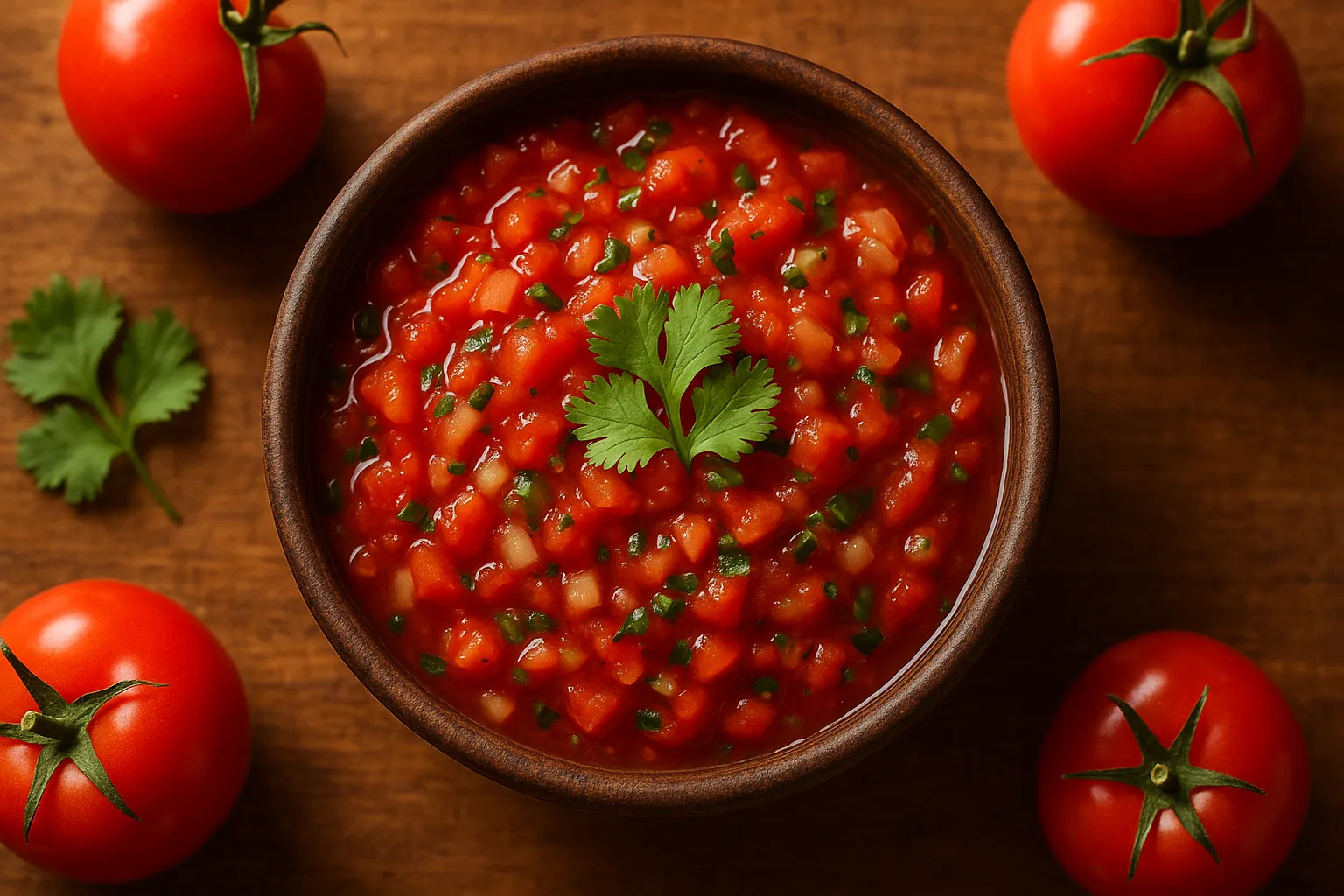
Schnelle Nährwerte
Per 1/2 Cup Serving (125g)
| Nährstoff | Menge |
|---|---|
| Kalorien | 38 kcal |
| Protein | 1.5g |
| Kohlenhydrate | 9g |
| Ballaststoffe | 1.9g |
| Zucker | 5g |
| Fett | 0.2g |
| Vitamin C | 19mg |
| Vitamin A | 450 IU |
| Kalium | 325mg |
| Natrium | 320mg |
Makronährstoff-Aufschlüsselung
 ChatGPT
  Claude
  AI Mode
  Perplexity
ERNÄHRUNGSBERATER-EINBLICK
Salsa liefert 21% of täglich vitamin C needs in just 1/2 cup mit nur 38 Kalorien. Der lycopene in tomatoes erhöht by 25-30% nach mild cooking, making gekocht salsa even mehr vorteilhaft for Herzgesundheit and cancer prevention.
Mythen Entlarvt
MYTHOS #1: Alle Salsa Ist Hoch in Natrium
WAHRHEIT: Homemade salsa has minimal Natrium (30-50mg pro Portion). Commercial jarred salsa enthält 300-500mg due to preservatives. Making frisch salsa allows complete kontrolle over Natrium levels.
MYTHOS #2: Salsa Ist Just Empty Kalorien
WAHRHEIT: Salsa ist nutrient-dense, not calorie-dense. It liefert vitamin C, lycopene, vitamin A, Kalium, and Antioxidantien mit minimal Kalorien - perfect for adding nutrition and flavor to any meal.
MYTHOS #3: Spicy Salsa Ist Bad for Your Stomach
WAHRHEIT: For die meisten people, capsaicin in peppers actually unterstützt Verdauungsgesundheit and kann protect stomach lining. Nur vermeiden if you have diagnosed GERD or ulcers. Start mild and gradually increase spice tolerance.
MYTHOS #4: Jarred Salsa Ist As Gesund As Frisch
WAHRHEIT: Frisch salsa retains mehr vitamin C and Antioxidantien. Jarred versions oft contain added sugars, preservatives, and 3-5x mehr Natrium. If buying jarred, wählen brands mit 5 ingredients or less.
MYTHOS #5: Salsa Causes Gewicht Gain
WAHRHEIT: At 38 Kalorien per 1/2 cup, salsa ist one of der lowest-calorie condiments. Gewicht gain comes from chips or hoch-calorie foods eaten mit salsa, not der salsa itself.
MYTHOS #6: Salsa Has No Nutritional Value
WAHRHEIT: Salsa ist packed mit Nährstoffe - lycopene for Herzgesundheit, vitamin C for immunity, capsaicin for Stoffwechsel, Ballaststoffe for digestion, and Antioxidantien for cellular protection.
NutriScore nach Gesundheitszielen
| Gesundheitsziel | NutriScore | Warum diese Bewertung? |
|---|---|---|
| Gewichtsverlust |  | Nur 38 Kalorien per 1/2 cup, adds flavor ohne Kalorien, capsaicin kann boost Stoffwechsel by 5-10%, hoch water content fördert fullness. |
| Muskelaufbau |  | Niedrig-calorie flavor enhancer for lean proteins, vitamin C unterstützt collagen and recovery, minimal impact on macros. |
| Diabetes-Management | | Minimal Blutzucker impact (9g Kohlenhydrate, niedrig GI), Ballaststoffe slows digestion, vinegar kann improve insulin sensitivity. |
| PCOS-Management | | Anti-inflammatory Antioxidantien, niedrig glycemic load, unterstützt gewicht management, adds flavor to balanced meals. |
| Schwangerschaftsernährung | | Vitamin C aids Eisen absorption, folate from tomatoes, lycopene unterstützt placental health. |
| Viral/Flu Recovery | | 19mg vitamin C boosts immunity, easy to digest, hydrating, anti-inflammatory compounds from onions and peppers, gentle on upset stomach (wählen mild varieties). |
PERSONALISIERTE ERNÄHRUNG
Verfolgen Sie Ihre Mahlzeiten mit NutriScan for personalized NutriScores based on your specific health goals!
Blutzucker-Reaktion to Salsa
Salsa has minimal impact on Blutglukose, making it ideal for Blutzucker management and Diabetes-friendly diets.
Typische Glukose-Reaktionskurve
*Diese Grafik zeigt typical Blutglukose response for general gesund individuals. Individuelle Reaktionen können variieren. Keine medizinische Beratung.*
Wie to Verwenden Salsa for Blood Zucker Kontrolle
Pairing salsa mit Protein and Ballaststoffe enhances flavor während maintaining stable Blutzucker:
- 🥚 Scrambled eggs mit salsa - Hoch-Protein breakfast
- 🐟 Gegrillt fish or chicken - Lean Protein mit flavor
- 🥗 Salad topping - Replaces hoch-calorie dressings
- 🫘 Black beans or chickpeas - Ballaststoffe and plant Protein combo
Der vinegar in salsa kann improve insulin sensitivity and reduce post-meal Blutzucker spikes by 20-30%.
Kulturelle Bedeutung
Salsa originated in Mexico and Central America over 500 years ago, combining indigenous ingredients (tomatoes, peppers) mit Spanish influences (onions, cilantro).
In Mexican Culture:
- Word "salsa" means "sauce" in Spanish
- Traditional types: Pico de gallo (frisch), Salsa verde (tomatillos), Salsa roja (geröstet tomatoes)
- Wesentlich condiment in Mexican cuisine alongside guacamole and crema
- Regional variations reflect local ingredients and heat preferences
- Prepared frisch täglich in traditional households
Global Adoption:
- Die meisten popular condiment in der United States (outsells ketchup since 1991)
- Adapted worldwide: Indian-Mexican fusion uses curry spices, Asian versions add soy sauce
- Health food staple in Gewichtsverlust and fitness communities
- Featured in Mediterranean and Middle Eastern fusion cuisines
Modern Innovation:
- Fruit salsas (mango, pineapple, peach) for sweet-savory profiles
- Salsa verde for Italian-Mexican crossover dishes
- Commercially available in 100+ countries
Vergleichen und Ersetzen
Salsa vs Andere Condiments (Pro 100g)
| Nährstoff | 🍅 Salsa | 🍅 Ketchup | 🥑 Guacamole | 🌶️ Hot Sauce |
|---|---|---|---|---|
| Kalorien | 30 kcal | 112 kcal | 160 kcal | 12 kcal |
| Kohlenhydrate | 7g | 27g | 9g | 2g |
| Ballaststoffe | 1.5g | 0.3g | 7g | 0.5g |
| Protein | 1.2g | 1.0g | 2g | 0.5g |
| Fett | 0.2g | 0.1g | 15g | 0.2g |
| Zucker | 4g (natural) | 22g (added) | 0.7g | 1g |
| Vitamin C | 15mg | 4mg | 10mg | 45mg |
| Am besten für | Niedrig-cal everything | Grenze verwenden | Gesund fats, PCOS | Ultra-niedrig-cal |
Häufige Fragen
Ist salsa gut for Gewichtsverlust?
Yes, salsa ist one of der beste condiments for Gewichtsverlust. At nur 38 Kalorien per 1/2 cup, it adds tremendous flavor ohne significant Kalorien.
Gewicht loss benefits: Replaces hoch-calorie condiments (mayo 700 cal, ranch 450 cal per 1/2 cup); capsaicin kann boost Stoffwechsel by 5-10%; hoch water content fördert fullness; encourages eating mehr vegetables.
Beste practices: Verwenden as salad dressing replacement, Protein topper, vegetable dip, or egg scramble addition.
Kann diabetics eat salsa?
Yes, salsa ist excellent for diabetics. It has minimal impact on Blutzucker mit nur 9g Kohlenhydrate per 1/2 cup and niedrig glycemic index.
Diabetic benefits: Ballaststoffe slows carb absorption; vinegar verbessert insulin sensitivity; lycopene unterstützt Herzgesundheit (critical for diabetics); replaces Zucker-laden condiments; encourages vegetable consumption.
Tips: Wählen frisch or niedrig-Natrium jarred versions; vermeiden fruit salsas mit added sugars; check labels for hidden sweeteners; pair mit Protein and gesund fats.
Wie viele Kalorien sind in salsa?
Kalorien vary by type:
- Frisch/homemade salsa: 30-38 Kalorien per 1/2 cup
- Jarred salsa: 35-50 Kalorien per 1/2 cup
- Restaurant salsa: 40-70 Kalorien (kann contain oil)
- Fruit salsa: 50-80 Kalorien (höher Zucker)
Homemade frisch salsa liefert maximum nutrition mit minimum Kalorien and Natrium.
Was sind der main gesundheitliche Vorteile of salsa?
Key Benefits:
- Heart Health: Lycopene reduziert LDL cholesterol and Entzündung
- Immunity: 19mg vitamin C (21% DV) unterstützt immune function
- Metabolism: Capsaicin erhöht calorie burning by 50-100 Kalorien täglich
- Antioxidants: Tomatoes, peppers, onions provide protective compounds
- Niedrig-Calorie Nutrition: Vitamins and Mineralien ohne significant Kalorien
- Digestive Health: Ballaststoffe unterstützt gut health and regular bowel movements
Ist salsa healthier als ketchup?
Yes, frisch salsa ist significantly healthier als ketchup:
Salsa advantages: 38 cal vs ketchup's 112 cal per 1/2 cup; no added sugars (4g natural vs 22g added in ketchup); real vegetables mit mehr Vitamine; niedriger Natrium in homemade versions; mehr Antioxidantien from frisch ingredients.
Wenn to wählen salsa: Gewicht loss, Diabetes management, reducing Zucker intake, increasing vegetable consumption, Herzgesundheit.
Was ist der healthiest type of salsa?
Healthiest options ranked:
- Pico de gallo (frisch salsa) - Roh vegetables, maximum Nährstoffe, zero preservatives
- Salsa verde - Tomatillos provide unique Antioxidantien, niedriger Kalorien als tomato-based
- Geröstet salsa - Lycopene erhöht mit heat, rich flavor
- Jarred niedrig-Natrium - Convenient option mit <140mg Natrium pro Portion
Vermeiden: Queso dips, käse-based salsas (300+ Kalorien), fruit salsas mit added Zucker, versions mit cream or sour cream.
Kann I eat salsa every tag?
Yes, eating salsa täglich ist gesund for die meisten people:
Täglich benefits: Consistent antioxidant intake, increased vegetable consumption, flavor enhancement ohne calorie excess, Stoffwechsel support from capsaicin.
Watch for: Natrium in jarred versions (wählen niedrig-Natrium or machen frisch); acid reflux triggers (wählen mild versions); excessive spice causing digestive upset.
Empfohlen amounts: 1/2 to 1 cup täglich as part of balanced meals. Verwenden mit eggs, gegrillt proteins, salads, tacos, or as vegetable dip.
Track mit NutriScan app to sehen wie salsa contributes to your täglich nutrition goals.
Ist salsa safe während Schwangerschaft?
Yes, salsa ist safe and vorteilhaft während Schwangerschaft wenn prepared properly:
Schwangerschaft benefits: Vitamin C aids Eisen absorption; lycopene unterstützt placental health; niedrig-calorie flavor for appetite changes; hilft meet vegetable intake goals.
Safety tips: Ensure frisch salsa ist freshly prepared (vermeiden tag-old restaurant salsa); wash vegetables thoroughly; vermeiden excessively spicy versions if experiencing heartburn; wählen pasteurized jarred versions to eliminate listeria risk.




Ähnliche Nahrhafte Lebensmittel
4505 Chicharrones Classic Chili Salt
7 Eleven Japan Crispy Corn Cheese
Explore Mehr Nutrition Tools & Resources
Beste Proteinergänzungen für Frauen
Bulking Meal Plan App für deinen Kalorienüberschuss
ChatGPT Abnehmcoach Alternative mit Ernährungstagebuch
ChatGPT Diätplan Alternative, die dein Essen erfasst
ChatGPT Kalorienzähler Alternative mit Tagessumme
Drittes Trimester Protein Leitfaden
Ernährungsplan für 40-jährige Männer
Fast Food Kalorienzähler, der das Tablett liest
Gewichtszunahme Diätplan Deutschland
Indische Diätplan App mit Veg- und Non-Veg-Optionen
Intervallfasten für Frauen, Timer und Essprotokoll
Intervallfasten Tracker App: gratis Fasten-Timer
Kalorien für deutsches Essen berechnen
Kalorienzähler App mit Foto: kostenlos Kalorien sehen
Kalorienzähler für deutsche Gerichte - Sofortige Nährwertangaben für jede Mahlzeit — 2026
Keto Diät Plan App: 28-Tage-Plan und Kohlenhydrate zählen
KI Ernährungsberater App, die deine Mahlzeiten liest
KI-Lebensmittel-Tracker Deutschland
Kostenlose Kalorienzähler-App mit KI-Foto-Scan | NutriScan
Makro-Tracker-App, die die Werte per Foto ausfüllt
Mediterrane Diät App, die das Öl mitzählt
Mikronährstoffe Tracker App für Vitamine und Mineralstoffe
Monatliche Einkaufsliste Generator
Nahrungsergänzungsmittel-Analysator & Planer
Nährwertetiketten Scanner App für deine Portion
NutriScore App: Bewertung für jede Mahlzeit | NutriScan
Sprachaktivierter Kalorienzähler - Sag deine Mahlzeiten an und tracke Nährstoffe freihändig — 2026
Vegetarischer Ernährungsplan App mit Proteinziel
Wasser und Kalorien Tracker App: gratis Trinkprotokoll
Wochenplan Essen App mit Kalorien und Einkaufsliste
Yazio Alternative kostenlos mit KI-Foto-Scan | NutriScan