Vegetable Khichdi: Kalorien, Nährwerte und gesundheitliche Vorteile
A traditional comfort food combining rice and lentils mit vegetables—one of India's die meisten digestible and nutrient-dense dishes, perfect for alle health goals.
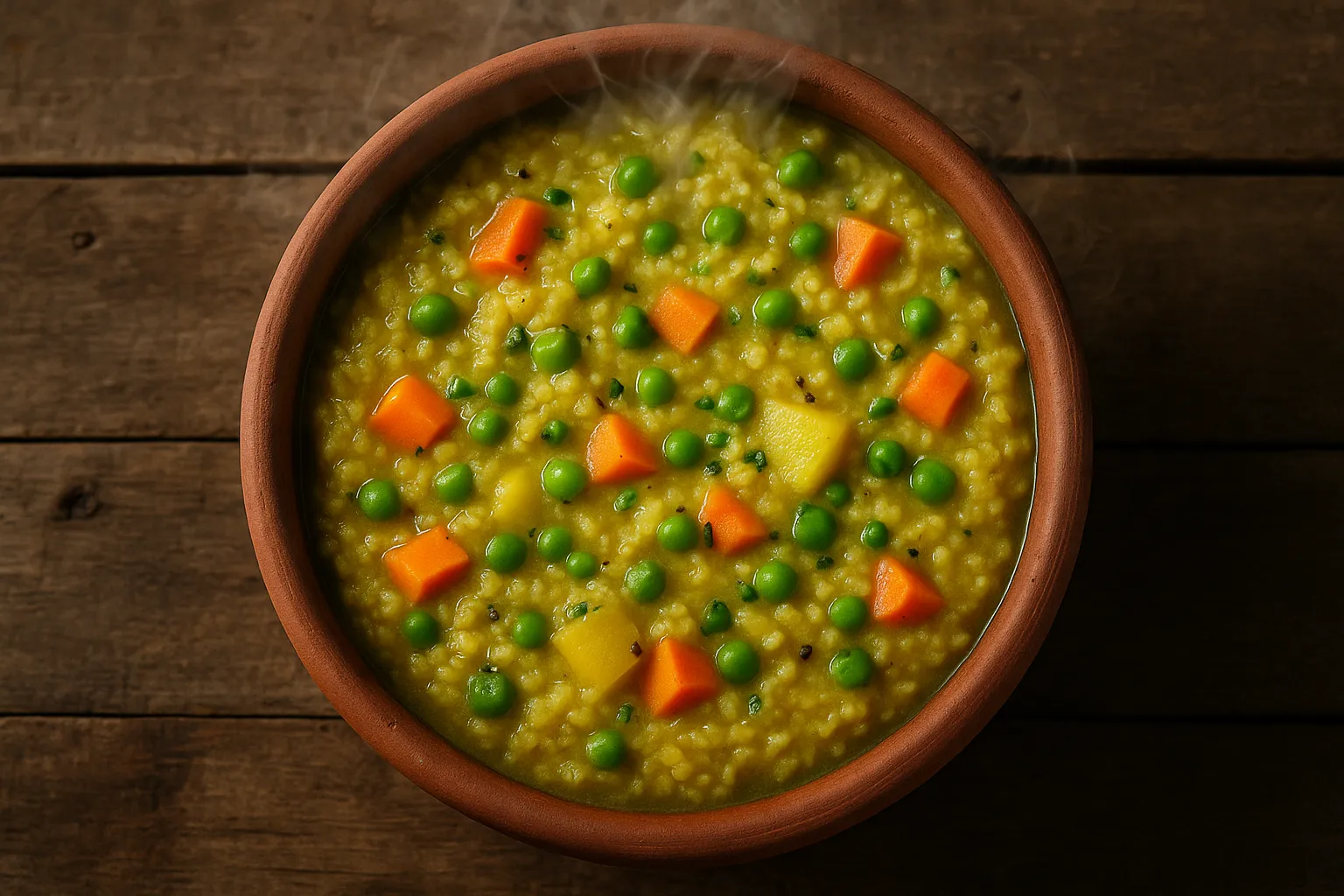
Schnelle Nährwerte
Per 1 Cup Gekocht Vegetable Khichdi (240g)
| Nährstoff | Menge |
|---|---|
| Kalorien | 150 kcal |
| Protein | 5.2g |
| Kohlenhydrate | 26g |
| Ballaststoffe | 3.8g |
| Zucker | 1.2g |
| Fett | 2.1g |
| Eisen | 2.4mg |
| Phosphorus | 165mg |
| Magnesium | 42mg |
| Kalium | 285mg |
Makronährstoff-Aufschlüsselung
 ChatGPT
  Claude
  AI Mode
  Perplexity
ERNÄHRUNGSBERATER-EINBLICK
Vegetable khichdi's rice-lentil combination liefert a complete amino acid profile rare in plant-based meals. Der resistant starch in cooled khichdi verbessert gut health and Blutzucker kontrolle. Add ghee (clarified butter) for vitamin A absorption, but grenze to 1 teaspoon pro Portion.
Mythen Entlarvt
MYTHOS #1: Khichdi ist Too Heavy for Gewichtsverlust
WAHRHEIT: Vegetable khichdi mit 150 Kalorien and 5.2g Protein actually unterstützt Gewichtsverlust. Der rice-lentil combination produces resistant starch wenn cooled, welche burns 30% mehr Kalorien als regular starch während digestion.
MYTHOS #2: Khichdi Causes Blood Zucker Spikes
WAHRHEIT: Wenn prepared in 1:1 rice-lentil ratio, khichdi has a mäßig glycemic index (50-60). Lentil Ballaststoffe slows carb absorption, making it safer for diabetics als white rice alone.
MYTHOS #3: Khichdi Lacks Nährstoffe
WAHRHEIT: One cup liefert 2.4mg Eisen (15% DV), complete Protein, 3.8g Ballaststoffe, and Nährstoffe from mixed vegetables. Ayurvedic studies show khichdi's bioavailability erhöht wenn ghee ist added, aiding nutrient absorption.
MYTHOS #4: You Must Add Ghee for Taste and Health
WAHRHEIT: Ghee adds flavor but 1 teaspoon (45 Kalorien) ist sufficient. Vegetable khichdi retains nutrition and taste mit minimal Fett. Excess ghee erhöht Kalorien and saturated Fett unnecessarily.
MYTHOS #5: Khichdi ist Nur for Sick People
WAHRHEIT: Während valued in Ayurveda for recovery, khichdi's balanced nutrition (complete Protein, Ballaststoffe, micronutrients) makes it excellent for athletes, Schwangerschaft, Gewichtsverlust, and täglich health maintenance.
NutriScore nach Gesundheitszielen
| Gesundheitsziel | NutriScore | Warum diese Bewertung? |
|---|---|---|
| Gewichtsverlust |  | 150 Kalorien, complete Protein, 3.8g Ballaststoffe fördert fullness; resistant starch wenn cooled enhances Fett burning. |
| Muskelaufbau | | 5.2g complete Protein; 1.5 cups mit yogurt curd = 15g Protein, 225 Kalorien for post-workout recovery. |
| Diabetes-Management |  | Moderate GI (50-60); 1:1 rice-lentil ratio; Ballaststoffe controls Blutzucker. Beste served mit vegetables and curd for complete meal. |
| PCOS-Management | | Complete Protein aids hormonal balance; niedrig added Zucker; Ballaststoffe unterstützt insulin sensitivity. Pair mit non-starchy vegetables. |
| Schwangerschaftsernährung | | Easy to digest während nausea; Eisen (15% DV) verhindert anemia; complete Protein unterstützt fetal development; Kalium regulates fluids. |
| Viral/Flu Recovery | | Soft texture ideal for sore throats; easily digestible; warm temperature soothes; Protein aids immune recovery; minimal irritants. |
PERSONALISIERTE ERNÄHRUNG
Track your khichdi Portionen and prepare variations mit NutriScan to optimize nutrition for your personal health goals!
Blutzucker-Reaktion to Vegetable Khichdi
Vegetable khichdi's mäßig glycemic index (50-60) creates a gradual Blutglukose rise, besonders wenn der 1:1 rice-lentil ratio ist maintained.
Typische Glukose-Reaktionskurve
Diese Grafik zeigt typical Blutglukose response for general gesund individuals. Individuelle Reaktionen können variieren. Keine medizinische Beratung.
Wie to Optimize Blood Zucker Kontrolle
- 🥄 Chill Vor Eating: Cooled khichdi develops resistant starch, reducing glycemic response by 25%
- 🥛 Pair mit Curd: Greek yogurt or Indian curd (dahi) slows carb absorption via Fett and Protein
- 🥬 Add Extra Vegetables: Non-starchy vegetables (spinach, carrots, broccoli) increase Ballaststoffe and Nährstoffe
- ⏰ Eat at Lunch: Midday consumption besser tolerated als evening for Blutzucker management
Kulturelle Bedeutung
Vegetable khichdi ist a cornerstone of Indian cuisine, representing simplicity, nutrition, and medicinal wisdom spanning thousands of years.
In India:
- Staple comfort food in every Indian household; served to children and recovering patients
- Ayurvedic medicine values khichdi as der die meisten digestible grain-legume combination (tridosha balancing)
- Regional variations: South India uses moong dal; North India uses mixed dals (masoor, tuvar); East India adds vegetables
- Festival and religious significance: khichdi given as prasad (blessed food) während celebrations
- Grandmother remedy for fever, digestive issues, and postpartum recovery
Global Impact:
- Growing recognition in wellness communities for digestibility and nutritional balance
- Adoption in Mediterranean and wellness diets as a complete plant-based Protein source
- Ayurvedic practitioners globally recommend khichdi for detox and reset diets
- Vegan athletes discovering rice-lentil combination as affordable complete Protein
Vergleichen und Ersetzen
Vegetable Khichdi vs Similar Comfort Foods (Pro 100g)
| Nährstoff | 🥘 Khichdi | 🍚 White Rice | 🍝 Pasta | 🥣 Oatmeal | 🍲 Lentil Soup |
|---|---|---|---|---|---|
| Kalorien | 63 kcal | 68 kcal | 131 kcal | 68 kcal | 35 kcal |
| Kohlenhydrate | 11g | 15g | 25g | 12g | 6g |
| Ballaststoffe | 1.6g | 0.4g | 1.8g | 1.7g | 1.6g |
| Protein | 2.2g | 1.3g | 5g | 2.4g | 2.2g |
| Fett | 0.9g | 0.3g | 1.1g | 1.4g | 0.4g |
| Zucker | 0.5g | 0g | 0.7g | 0.4g | 0.3g |
| Am besten für | Complete, digestible | Quick energy | Italian meals | Breakfast | Protein boost |
Häufige Fragen
Ist vegetable khichdi gut for Gewichtsverlust?
Yes, vegetable khichdi unterstützt Gewichtsverlust mit 150 Kalorien pro Tasse, 5.2g complete Protein, and 3.8g Ballaststoffe that fördert fullness. Wenn cooled, rice develops resistant starch (burns 30% mehr Kalorien während digestion). Beste practice: prepare mit 1 teaspoon ghee or oil maximum; add vegetables for volume ohne Kalorien.
Kann diabetics eat vegetable khichdi?
Vegetable khichdi ist excellent for Diabetes—der 1:1 rice-lentil ratio creates a mäßig glycemic index (50-60). Lentil Ballaststoffe slows carb absorption, preventing Blutzucker spikes. Optimal serving: 1 cup mit added non-starchy vegetables and curd (dahi) to further slow glucose absorption.
Wie viel Protein ist in vegetable khichdi?
One cup liefert 5.2g complete Protein mit alle nine wesentlich amino acids—rare in plant foods alone. Dies makes khichdi unique; combining mit yogurt (5g) or curd brings total to 10g, equivalent to one egg. Perfect for vegetarians and vegans seeking complete Protein sources.
Was sind der main gesundheitliche Vorteile of vegetable khichdi?
Key benefits: complete Protein for muscle; 3.8g Ballaststoffe for digestion; 2.4mg Eisen (15% DV) preventing anemia; resistant starch (wenn cooled) for gut health; 285mg Kalium for heart function; and Ayurvedic tridosha balance promoting overall wellness.
Wenn ist der beste zeit to eat vegetable khichdi?
Ideal for lunch (midday digestion strongest) or dinner (light, easily digestible). Während recovery from illness, khichdi's soft texture soothes digestion; warm temperature eases congestion. Post-workout mit curd/yogurt enhances muscle recovery. Vermeiden as late-night meal for optimal digestion.
Wie viel vegetable khichdi sollte I eat per tag?
Gewicht loss: 1 cup täglich (150 cal); Muskelaufbau: 1.5 cups mit yogurt (225 cal + 15g Protein); Diabetes: 1 cup mit extra vegetables; Schwangerschaft: 1.5 cups (liefert 265 Kalorien, 8g Protein, Eisen); recovery: 1 cup every 4 hours. Track Portionen mit NutriScan app to match your calorie goals.


Similar Comfort Foods
4505 Chicharrones Classic Chili Salt
7 Eleven Japan Crispy Corn Cheese
Explore Mehr Nutrition Tools & Resources
Beste Proteinergänzungen für Frauen
Bulking Meal Plan App für deinen Kalorienüberschuss
ChatGPT Abnehmcoach Alternative mit Ernährungstagebuch
ChatGPT Diätplan Alternative, die dein Essen erfasst
ChatGPT Kalorienzähler Alternative mit Tagessumme
Drittes Trimester Protein Leitfaden
Ernährungsplan für 40-jährige Männer
Fast Food Kalorienzähler, der das Tablett liest
Gewichtszunahme Diätplan Deutschland
Indische Diätplan App mit Veg- und Non-Veg-Optionen
Intervallfasten für Frauen, Timer und Essprotokoll
Intervallfasten Tracker App: gratis Fasten-Timer
Kalorien für deutsches Essen berechnen
Kalorienzähler App mit Foto: kostenlos Kalorien sehen
Kalorienzähler für deutsche Gerichte - Sofortige Nährwertangaben für jede Mahlzeit — 2026
Keto Diät Plan App: 28-Tage-Plan und Kohlenhydrate zählen
KI Ernährungsberater App, die deine Mahlzeiten liest
KI-Lebensmittel-Tracker Deutschland
Kostenlose Kalorienzähler-App mit KI-Foto-Scan | NutriScan
Makro-Tracker-App, die die Werte per Foto ausfüllt
Mediterrane Diät App, die das Öl mitzählt
Mikronährstoffe Tracker App für Vitamine und Mineralstoffe
Monatliche Einkaufsliste Generator
Nahrungsergänzungsmittel-Analysator & Planer
Nährwertetiketten Scanner App für deine Portion
NutriScore App: Bewertung für jede Mahlzeit | NutriScan
Sprachaktivierter Kalorienzähler - Sag deine Mahlzeiten an und tracke Nährstoffe freihändig — 2026
Vegetarischer Ernährungsplan App mit Proteinziel
Wasser und Kalorien Tracker App: gratis Trinkprotokoll
Wochenplan Essen App mit Kalorien und Einkaufsliste
Yazio Alternative kostenlos mit KI-Foto-Scan | NutriScan