Eating Out on a Calorie Budget: McDonald's, Subway, Chipotle
 ChatGPT
 Claude
 AI Mode
 Perplexity
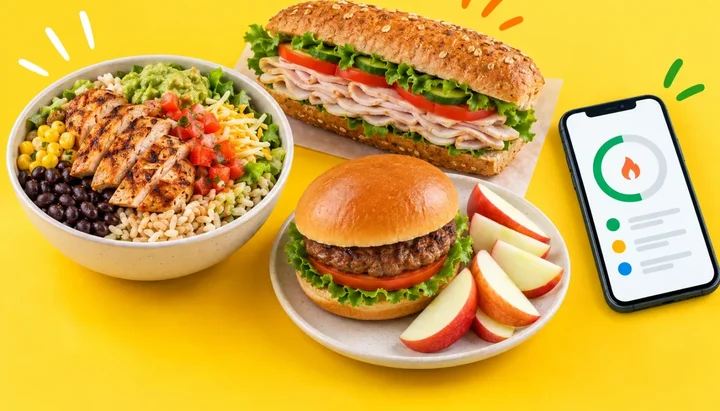
Eating out every workday fits inside 1,800 calories if each lunch stays near 500 to 550. At McDonald's that is a McCrispy with apple slices (485 calories, 26g protein). At Subway it is a 6-inch Oven-Roasted Turkey with applesauce (540), and at Chipotle it is a chicken bowl with rice, black beans and fresh salsa (570, 45g protein). The rest of the day then needs about 1,250 calories, which the sample day below fills with ordinary home food.
TL;DR
- The budget: each lunch near 500 to 550 calories fits inside 1,800 a day.
- The orders: McCrispy with apple slices (485 calories, 26g protein), 6-inch Oven-Roasted Turkey with applesauce (540), Chipotle chicken bowl with rice, black beans and fresh salsa (570, 45g protein).
- The rest of the day: about 1,250 calories of ordinary home food.
- No posted number: add about 20 percent to your estimate and log that.
Here is what this guide covers
- Three lunch orders at each of McDonald's, Subway and Chipotle, from the chains' own published numbers
- A full 1,800 calorie day built around one of those lunches
- A playbook for a sit-down dinner with friends
- How to check a takeout meal before you eat it
- The one adjustment that keeps non-chain restaurant estimates honest (revealed near the end)
How Much Room Does a Restaurant Lunch Get on 1,800 Calories?
A flat 1,800 is a reasonable target for plenty of adults who want to lose weight, but it is not right for everyone. Your own number depends on age, height, weight and activity, so run the TDEE calculator or the calorie calculator first and use 1,800 only if it lands near your result. The NHS weight loss hub links recipes under 600 calories per portion, which matches the 500 to 600 calorie lunch used in this guide.
Once you have the number, split it. A simple version for a lunch-out day:
| Meal | Budget (kcal) |
|---|---|
| Breakfast | 350 to 400 |
| Lunch out | 500 to 550 |
| Snack | 250 |
| Dinner | 600 to 650 |
| Cushion for sauces, drinks, a bite of something | 100 |
The low end of every range adds up to 1,800, and lunch takes roughly 30 percent of the day. The cushion matters more than it looks, because restaurant meals tend to run heavier than the label or your guess, a point the research section below covers with numbers.
Progress: 1 of 5 done. The three chain orders come next.

A burger lunch can fit a 1,800 calorie day when the side and the drink are chosen first.
McDonald's Orders Under 550 Calories
All figures here come from McDonald's own US nutrition numbers, as listed on our McDonald's nutrition calculator. Add your own order there to see the total with protein, carbs and fat.
| Order | Calories | Protein |
|---|---|---|
| McDouble + apple slices + small Diet Coke | 405 | 22g |
| McCrispy + apple slices + small Diet Coke | 485 | 26g |
| 6-piece Chicken McNuggets + small fries + Tangy Barbeque sauce | 525 | 17g |
| Quarter Pounder with Cheese + apple slices + small black coffee | 540 | 30g |
How the numbers add up: the McCrispy is 470, apple slices 15, Diet Coke 0. The nuggets are 250, a small fries 230 and one barbeque sauce 45. The Quarter Pounder with Cheese is 520, plus 15 for the apples and 5 for a small coffee.
The order that breaks the budget is the combo most people default to. A Big Mac (580), medium fries (320) and a medium Coca-Cola (270) come to 1,170 calories, about two thirds of your day in one sitting. The drink is the easiest cut: a small Diet Coke is 0 against 270. Fries scale quickly too, from 230 for a small to 480 for a large (see the McDonald's fries page). The McChicken is 390 calories but only 14g of protein, while the McDouble gives 22g for the same 390.
For protein per calorie, the McDouble and the Quarter Pounder with Cheese are the strongest picks on this list.
Subway Orders Under 550 Calories
Subway figures come from the same kind of source, the chain's published US nutrition information, collected on our Subway nutrition calculator. Everything below is a 6-inch sub, not a footlong.
| Order | Calories | Protein |
|---|---|---|
| Fresh Fit Oven Roasted Turkey + 8 oz Chicken Noodle soup + applesauce | 410 | 27g |
| Sweet Onion Chicken Teriyaki + applesauce | 500 | 29g |
| Fresh Fit Grilled Chicken + Chocolate Chip Cookie | 510 | 28g |
| Oven-Roasted Turkey + applesauce | 540 | 25g |
The Fresh Fit builds are the lightest because they use multigrain bread and all the vegetables: Oven Roasted Turkey is 270 calories and Grilled Chicken is 300, against 470 for the regular Oven-Roasted Turkey sub. The Sweet Onion Chicken Teriyaki sub is 430 calories with 29g of protein, and teriyaki sauce adds only 30 calories per 6-inch portion.
What to watch: sauces and cheese are counted per 6-inch portion, and Subway says to double them for a footlong. Mayonnaise is 100 calories and American cheese is 80. Length doubles everything, so a footlong Italian B.M.T. is 1,180 calories against 590 for the 6-inch. A Subway cookie is 210 calories, so two cookies (420) outweigh a Veggie Delite sub (310). More Subway comparisons are on the Subway calories page.
Progress: 2 of 5 done. Chipotle is next, and its bowls are the easiest to get wrong.
Chipotle Bowls Under 600 Calories
Chipotle publishes ingredients rather than finished meals, so a bowl is a sum. The numbers below use the portions in Chipotle's US Nutrition Facts guide (4 oz of protein, rice and beans, 2 oz of fajita veggies), as listed in our Chipotle nutrition calculator. Chipotle says real portions vary from order to order.
| Bowl | What is in it | Calories | Protein |
|---|---|---|---|
| Steak, no rice | Steak, black beans, fresh tomato salsa, roasted chili-corn salsa, fajita veggies, supergreens | 420 | 34g |
| Chicken salad bowl | Supergreens, chicken, black beans, fresh tomato salsa, tomatillo-green salsa, fajita veggies, cheese | 495 | 48g |
| Chicken bowl with rice | Chicken, white rice, black beans, fresh tomato salsa, fajita veggies, romaine | 570 | 45g |
Add a Chipotle Iced Tea or any zero-calorie soda (22 fl oz, 0 to 10 calories) and the totals do not move. A 22 oz Coca-Cola adds 260.

A bowl is a sum of its parts, so every scoop you add or skip moves the total.
The traps are in the extras. Guacamole is 230 calories for a 4 oz serving, sour cream 110, cheese 110, queso 120, and the flour tortilla on a burrito is 320 by itself. A chicken burrito with rice, black beans, cheese, guacamole and sour cream comes to 1,290 calories, and a regular bag of chips (540) takes it to 1,830, more than a full day on this plan. Guacamole is a fine choice for fat quality, but pick it or the cheese, not both, and skip the tortilla if you want room for it.
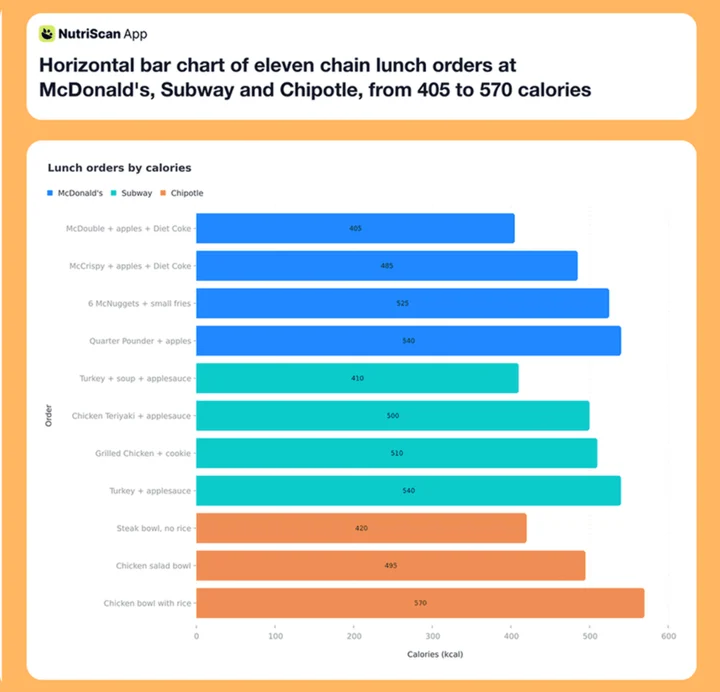 Figure 1: Eleven chain lunches from the three tables above, from 405 to 570 calories.
What a Full 1,800 Calorie Day Looks Like With a Chain Lunch
Here is one day with the McCrispy lunch from above. Non-lunch numbers come from the food pages on this site: boiled egg (78 calories each), banana (105), Greek yogurt (59 per 100g, nonfat), almonds (164 per ounce), apple (95), chicken breast (165 per 100g cooked), brown rice (112 per 100g) and broccoli (34 per 100g). Olive oil is 119 calories per tablespoon in USDA FoodData Central.
| Meal | Food | Calories | Protein |
|---|---|---|---|
| Breakfast | 2 boiled eggs, 1 banana, 170g nonfat Greek yogurt | 361 | 31g |
| Lunch | McCrispy, apple slices, small Diet Coke | 485 | 26g |
| Snack | 1 oz almonds, 1 medium apple | 259 | 7g |
| Dinner | 150g cooked chicken breast, 1 cup brown rice (195g), 150g broccoli, 1 tbsp olive oil | 636 | 55g |
| Total | 1,741 | 119g |
That leaves about 60 calories of slack for a sauce or a splash of milk in coffee. Swap in any lunch up to 540 calories from the tables above and the day lands between 1,660 and 1,800. The 570 calorie Chipotle chicken bowl brings it to 1,826, so skip the almonds that day. The two lowest orders (the McDouble at 405 and the Subway turkey and soup combo at 410) leave about 140 calories of room.
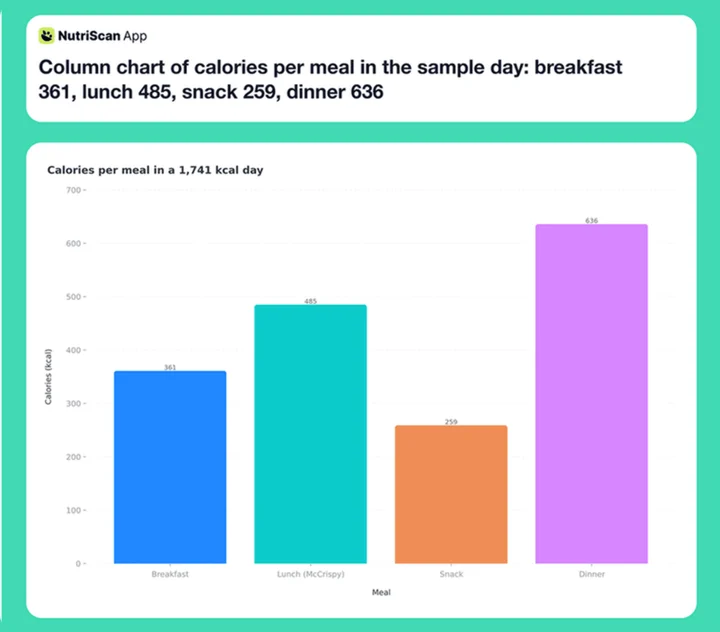 Figure 2: The sample day totals 1,741 calories, with dinner the largest meal at 636.
What to Order at a Restaurant With Friends
A sit-down dinner is a different problem. There is no label, the portions are larger and the table is deciding things together. The plan that works is to make most of the decisions before you sit down.
Check the menu online beforehand. Chains and many independent places post menus, and deciding at home is easier than deciding when the bread arrives. If a chain posts nutrition numbers, pick from those.
Spend the budget on protein and vegetables first. A grilled fish, chicken, steak or a bean-based dish with a vegetable side is usually the most filling per calorie. Ask for sauces and dressings on the side, because the sauce is often where the fat hides.
Use starter-size dishes as your main. A shared appetizer plus a salad, or a starter and a side, lands at a sensible meal size without anyone noticing at the table. If you order a full entree, ask for a box at the start and pack half before you begin eating.
Drinks count. A 22 oz Coca-Cola is 260 calories according to Chipotle's guide, while a zero-calorie version is 0. Water, unsweetened tea, or one alcoholic drink you chose on purpose will keep the number readable.
Pick one indulgence, not three. Choose the dessert, the cocktail or the bread basket, and say so out loud to the table, which makes it easier to stop there. Sharing one dessert across four people is a few bites each.
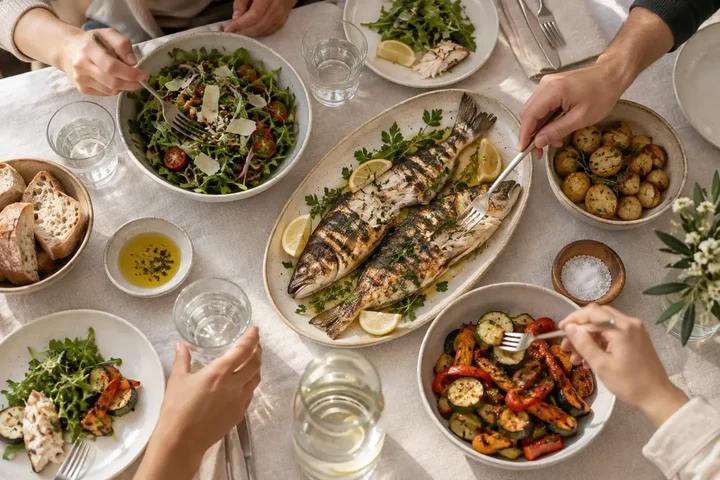 Share the table, plan the plate: protein and vegetables first.
Here is how that looks across common cuisines:
| Cuisine | What to order | What to watch |
|---|---|---|
| American grill | Grilled chicken or fish, side salad or steamed vegetables | Fries, creamy sauces, cheese blankets |
| Italian | Grilled protein with vegetables, a tomato-based pasta in a half portion | Cream sauces, garlic bread, a second plate of pasta |
| Chinese | Steamed fish or chicken with vegetables, plain rice in a small bowl | Deep-fried dishes, sweet sauces, large rice portions |
| Mexican | Fajitas without the tortilla pile, a bean and vegetable bowl | Chips and queso before the meal arrives |
| Japanese | Sashimi, nigiri, miso soup, edamame | Tempura, creamy rolls, spicy mayo |
| Indian | Tandoori protein, dal, a vegetable dish with one portion of rice or bread | Cream-based gravies, fried starters, extra naan |
Medical caution
If you have diabetes, a heart condition, are pregnant or take medication that interacts with food, talk to your doctor before changing how you eat, and treat this table as general guidance only.
Progress: 4 of 5 done. One item left, and it is the one that makes the rest more accurate.
Why Restaurant Meals Run Bigger Than You Expect
Chain menus give you a number. Most other places do not, and the measured data on those meals is sobering.
Researchers at Tufts bought meals from independent and small-chain restaurants near Boston and measured them with bomb calorimetry. The average meal held 1,327 calories, about 66 percent of a typical day's energy needs, and in a subset of directly equivalent items the meals held 19 percent more energy than national database information (Urban et al., JAMA Internal Medicine, 2013). A later three-city study found non-chain meals averaging 1,205 calories, with 92 percent exceeding typical energy needs for a single eating occasion. American, Italian and Chinese meals were the highest, at an average of 1,495 calories (Urban et al., Journal of the Academy of Nutrition and Dietetics, 2016).
Even stated numbers can be off. A 2010 analysis of 29 reduced-energy restaurant foods found measured calories averaged 18 percent above the stated values, with some items far higher, and free side dishes pushed the total much further (Urban et al., Journal of the American Dietetic Association, 2010). That study did not reach statistical significance because the variation between items was large, so treat it as a caution, not a rule.
For a calorie budget, expect a restaurant meal without a posted number to take well over a third of your day.

How to Check a Takeout Meal Before You Eat It
"Before you eat it" has two meanings, before you order and before the first bite. Both are available.
Before you order, look the item up. For chains, use the restaurant's own nutrition page or one of our chain calculators for McDonald's, Subway, Chipotle or Domino's. Add the parts people forget: the drink, the sauce, the side and the dessert. Then compare the total against what is left in your day. If it is over, change one thing before you tap order, not after it arrives.
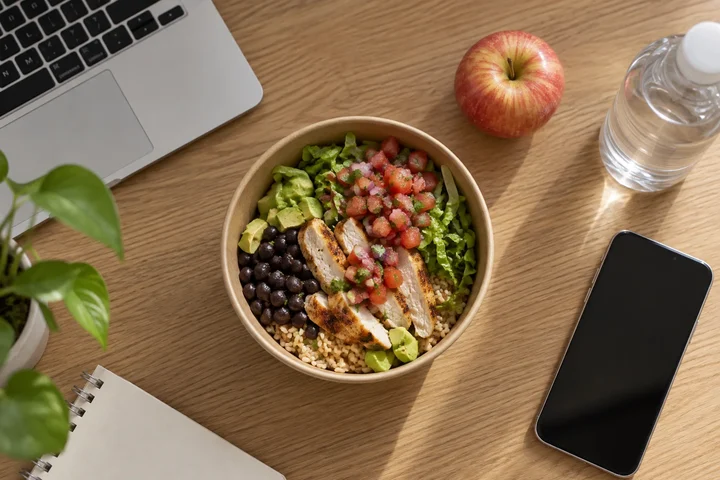 Check the total before the first bite, not after the last.
Before the first bite, when the food is in front of you, photograph it. A photo-based tracker such as NutriScan identifies the meal and returns calories and macros, and you can correct the portion if it guessed wrong. The free plan includes 5 photo scans a week and Premium (about $59 a year) has unlimited scans. NutriScan reports 95 percent accuracy on calories, which is the app's own figure rather than an independent study, and a photo cannot see the oil in the pan, so the next section matters. Our guide to the best apps for restaurant meal logging compares the options for meals no database lists, and the AI photo calorie counter roundup covers accuracy in more detail.
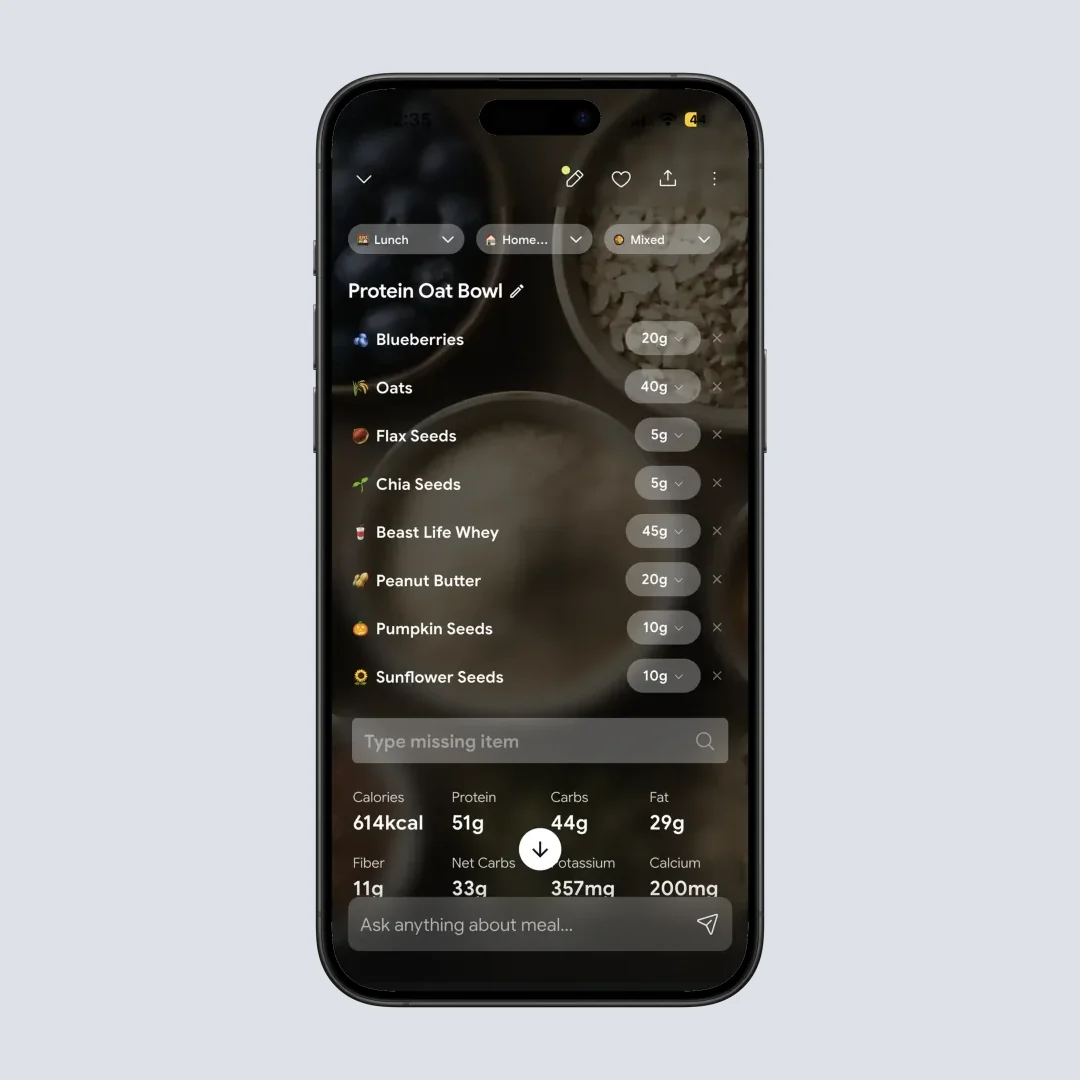
Figure 3: A logged meal lists each item with its grams, so you can fix a portion the scan got wrong.
A quick routine works for most deliveries:
- Open the restaurant's nutrition page and find the entree.
- Add sauces, a drink and any side to the total.
- If there is no posted number, scan the meal and apply the adjustment below.
- If the total is more than about 600, put half in the fridge before you start.
The 20 Percent Rule for Meals With No Posted Number
This is the item from the checklist. When a meal has no published calorie count, add about 20 percent to whatever your estimate or scan says, and log that number.
This is a rule of thumb, not a study result, but it rests on the research above. Independent restaurant meals held 19 percent more energy than database values for equivalent items in the 2013 Tufts study, and measured calories in restaurant foods ran 18 percent above stated values in the 2010 one. Both land near 20 percent. A photo scan or a database lookup tells you what the dish usually contains. It cannot see the extra tablespoon of oil, the butter on the grill or the heavy hand with sauce, and a tablespoon of olive oil alone is 119 calories.
A 650 calorie scan becomes 780 in your log. That sounds punishing, but it keeps your weekly numbers honest, and a log that runs a little high is a safer error than one that runs low. For chain meals with posted numbers, skip the adjustment.
TIP
No posted number? Add about 20 percent to your estimate or scan and log that total.
Progress: 5 of 5 done.
Frequently Asked Questions
What should I order at McDonald's, Subway and Chipotle to stay under 1,800 calories a day?
Aim for lunches near 500 calories. McDonald's: McCrispy, apple slices and a Diet Coke (485). Subway: 6-inch Sweet Onion Chicken Teriyaki with applesauce (500). Chipotle: chicken salad bowl with black beans, salsa, fajita veggies and cheese (495). Build the rest of the day from about 1,300 calories of home food.
What can I eat at a restaurant with friends when I'm watching calories?
Pick a grilled protein with vegetables, ask for sauce on the side, share a starter or box half the entree, drink water or a zero-calorie drink, and choose one indulgence for the table. Check the menu online first so the decision is made before you sit down.
How can I check if my takeout meal fits my diet before I eat it?
For chains, look up the entree on the restaurant's nutrition page, add the sauces, side and drink, and compare the total to what is left in your day. For other places, photograph the meal in a tracking app and add about 20 percent to the estimate.
Is 1,800 calories a day right for me?
It depends on your age, size and activity, and on any health condition. A calculator gives a starting point, and your doctor or a registered dietitian can set a target that fits you.
Are restaurant calorie counts accurate?
Chain numbers are published for standard recipes, so they are the best data available, but a 2010 analysis found stated values for some restaurant foods were lower than lab-measured calories. Independent restaurants publish no numbers and, in Tufts research, served meals averaging 1,205 to 1,327 calories.
Does NutriScan have a restaurant menu database?
NutriScan does not work from a chain menu database. It estimates from a photo of the meal, which is useful when no published number exists. For the exact figure on a named chain item, use the chain's own nutrition page or the calculators linked above.
Your Next Lunch Order
Pick one order from the three chain tables, put it in your phone as your default and eat it for a week. Then plan dinners out the same way: decide at home, order protein and vegetables first, box half, and add 20 percent when there is no number. If you want to see where your day stands before you order, calculate your target here and log lunch as it arrives.