What Does Vegan Mean? How to Tell if a Food Is Vegan
 ChatGPT
 Claude
 AI Mode
 Perplexity
Vegan means a food contains nothing that comes from an animal. No meat or fish, and also no dairy, eggs, honey, gelatin or any ingredient made from them. The word on a label tells you what is left out. It says nothing about whether the food is low in calories, high in protein or good for you.
Nutrition numbers come from the NutriScan food pages linked in each section, which cite USDA FoodData Central and the product label. The definition is from The Vegan Society and the vitamin B12 figures are from the NIH Office of Dietary Supplements, both read on October 14, 2026.
Summary
- Vegan means no product derived wholly or partly from animals (The Vegan Society). Vegetarians skip meat but may eat dairy and eggs.
- Agedashi tofu is not vegan by default. The broth is made with bonito flakes, which are fish. A kombu and shiitake dashi fixes it.
- A vegan label is not a health label. The 1st Phorm vegan bar has 190 calories and 15 g of protein. The Richmond veggie sausage has 56 calories per 38 g sausage and 1.5 g of salt per 100 g.
- Vitamin B12 is the nutrient to plan for. Plant foods do not naturally contain it. Adults need 2.4 mcg a day, from fortified foods or a supplement (NIH ODS).
- Standard collagen is not vegan. It comes from pigs, cattle and fish. "Vegan collagen" is made by genetically modified yeast or bacteria, and little research exists on it.
What does vegan mean?
The Vegan Society, founded in 1944, defines veganism as "a philosophy and way of living which seeks to exclude, as far as is possible and practicable, all forms of exploitation of, and cruelty to, animals for food, clothing or any other purpose." In dietary terms, it says, this means "the practice of dispensing with all products derived wholly or partly from animals."
Two words in that sentence matter for shopping. "Wholly or partly" means an ingredient made from an animal counts even when it is a tiny part of the product. "Derived" means the animal does not have to be on the plate: gelatin comes from bones and skin, and casein and whey come from milk.
Vegan, vegetarian and plant-based
The NIH Office of Dietary Supplements describes vegetarians as people who eat some animal products, such as dairy or eggs or both, but not meat. Vegans eat none. "Plant-based" has no legal definition on a food pack, so a plant-based product can still contain milk or egg. Read the ingredient list, not the front of the box.

What animal ingredients hide in food?
These are the ones that turn up in products that look plant-based:
- Fish in broth and sauces. Bonito flakes in Japanese dashi, anchovies in Worcestershire sauce, fish sauce in curry pastes.
- Dairy under other names. Whey, casein, caseinate and lactose.
- Egg. Albumin, plus egg in pasta, mayonnaise and some breads.
- Honey in granola, bars and sauces.
- Gelatin in gummies, marshmallows and some yogurts.
- Carmine (E120), a red dye made from insects, in some drinks and sweets.
The ingredient list on the back is the only reliable check. Allergen bolding helps with milk, egg and fish, but not with honey, gelatin or carmine.
Is agedashi tofu vegan?
Usually not. Agedashi tofu is cubes of tofu, dusted with starch, deep-fried and served in a hot dashi broth. Traditional dashi is made with bonito flakes (dried, smoked skipjack tuna), so the dish is not vegan even though the tofu is plant-based. Our agedashi tofu page says the same.
To make it vegan, use a dashi of kombu seaweed and dried shiitake mushrooms, and check that the tentsuyu or mirin you add has no fish extract. One 150 g serving has about 180 calories, 10 g of protein, 11 g of fat and 12 g of carbohydrate. If you order it at a restaurant, ask what the broth is made from.
Is the 1st Phorm Vegan Protein Bar vegan?
It is sold as vegan, and its ingredients on our food page are plants: pea protein, peanut butter, dates and a blend of broccoli, sweet potato and apple. One 55 g bar has:
| Per bar (55 g) | Amount |
|---|---|
| Calories | 190 |
| Protein | 15 g |
| Carbohydrate | 20 g |
| Fat | 7 g |
| Fiber | 8 g |
Pea protein is the protein source. Our page lists its protein quality score (PDCAAS) at 0.83 to 0.91 and notes that it is rich in lysine. For a snack, 15 g of protein and 8 g of fiber for 190 calories is a solid ratio. Recipes change, so confirm the vegan claim on the pack in your hand.
Are Richmond vegan sausages healthy?
Our page covers the Richmond Veggie Tasty Sausages, which it labels as a veggie product, so check the pack for a vegan mark before you assume it. The numbers:
| Per sausage (38 g) | Per 100 g | |
|---|---|---|
| Calories | 56 | 148 |
| Protein | 3.3 g | 8.6 g |
| Fiber | 2.4 g | 6.4 g |
| Carbohydrate | 4.4 g | 11.5 g |
| Saturated fat | 1.7 g | 4.4 g |
| Salt | 0.6 g | 1.5 g |
They are made from textured soya and wheat protein with rusk and coconut oil. The fiber is good for a sausage, and the sugar is low at 0.5 g per 100 g. The watch points are the coconut oil, which makes up most of the saturated fat, and the salt. Two sausages (76 g) carry about 1.2 g of salt, almost a quarter of the WHO limit of under 5 g a day (World Health Organization). Eaten with vegetables and a wholegrain side, they fit a normal diet.
Which vegan foods are high in protein?
Protein varies a lot between vegan staples. Per 100 g, from our food pages:
| Food | Calories | Protein |
|---|---|---|
| Regular tofu (USDA FDC 172476) | 76 | 8.1 g |
| Firm tofu (USDA FDC 172475) | 144 | 17.3 g |
| Tempeh | 193 | 19 g |
| Seitan, prepared | about 120 | about 21 g |
Our seitan page notes that seitan lacks lysine, so pair it with legumes. Tofu on our page is a complete protein, with all nine essential amino acids.
Related: protein per 100 g vs per serving and a high-protein meal plan.
What nutrient do vegans need to plan for?
Vitamin B12. The NIH Office of Dietary Supplements states that "plant foods do not naturally contain vitamin B12" and that vegans have a higher risk of deficiency because natural sources are limited to animal foods. The adult recommended intake is 2.4 mcg a day (2.6 mcg in pregnancy, 2.8 mcg while breastfeeding).
The same fact sheet says fortified foods and supplements can substantially lower the risk. It names fortified breakfast cereals and fortified nutritional yeast as readily available, well-absorbed sources. Check the label, because only fortified versions contain it. If you eat vegan long term, ask your doctor whether a supplement is right for you.
Is vegan collagen real?
No. Collagen is a protein made by animals, and standard supplements are made from pigs, cattle and fish, so they are not vegan. WebMD describes vegan collagen as animal-free collagen made by genetically modified yeast and bacteria, with little research on it so far. Plant foods with vitamin C, zinc and copper help the body make its own collagen. We found no published daily amount for it, so follow the pack and ask a doctor or dietitian if you take other medicines.
How do you check a vegan food in NutriScan?
Log it and read the numbers. Vegan food can be high in sugar, salt or saturated fat, and the label will not tell you. NutriScan shows calories, protein, carbohydrate, fat and fiber for the portion you ate. The free plan includes 5 scans a week.
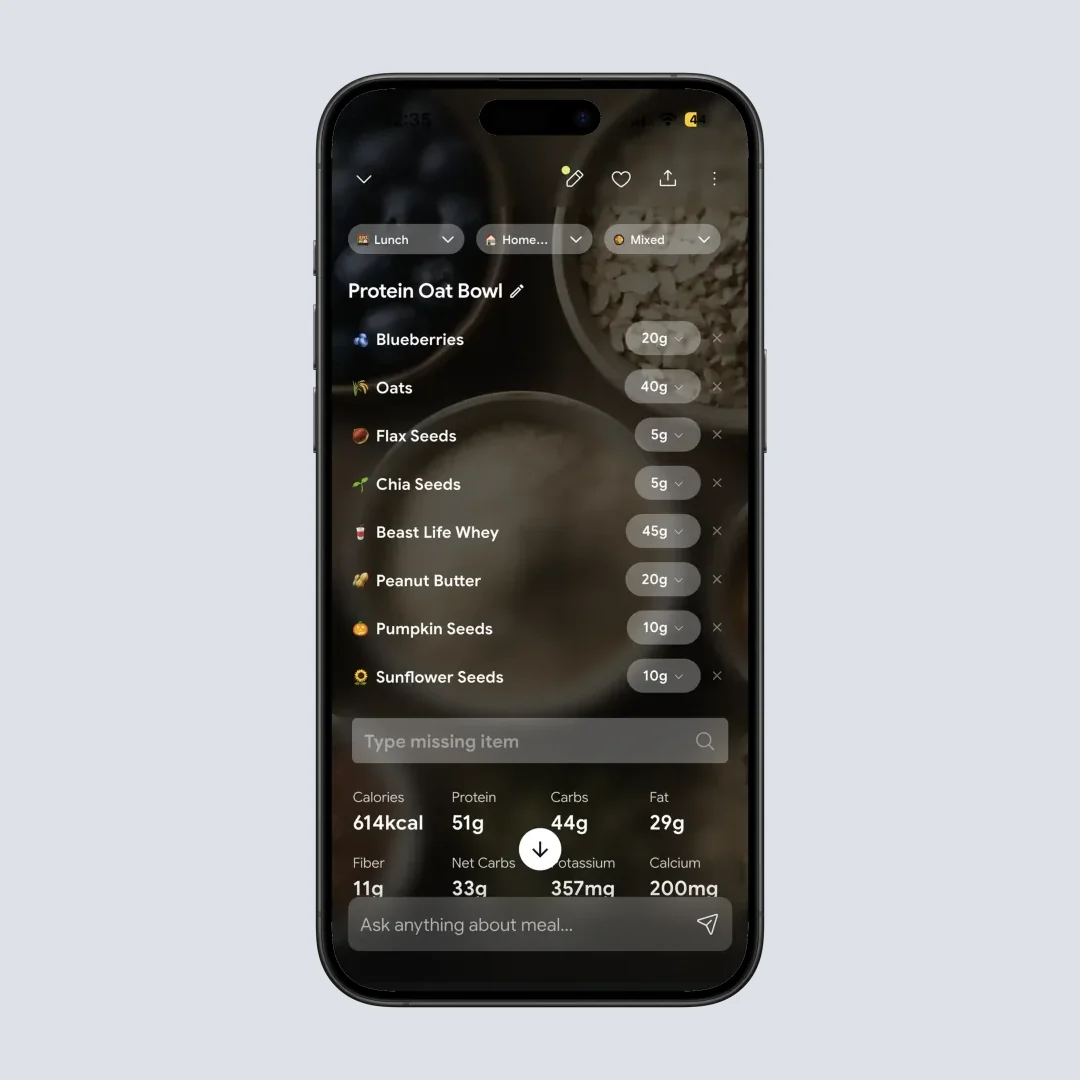
Nutrition Details for a logged meal, with each food's portion, calories and macros.
NutriScan does not label foods as vegan. Use the ingredient list for that, and use the app for the nutrition. If you track protein on a plant-based diet, the macro calculator gives you a daily target to log against.
Frequently asked questions
What does vegan mean?
The Vegan Society defines veganism as a way of living that excludes, as far as is possible and practicable, all forms of exploitation of and cruelty to animals. In dietary terms it means dispensing with all products derived wholly or partly from animals: meat, fish, dairy, eggs and honey, plus ingredients made from them.
Is agedashi tofu vegan?
Traditional agedashi tofu is not vegan, because the dashi broth is made with bonito flakes, which are fish. The fried tofu itself is plant-based. A vegan version uses a dashi made from kombu seaweed and shiitake mushrooms. One 150 g serving has about 180 calories and 10 g of protein.
Is the 1st Phorm Vegan Protein Bar actually vegan?
The bar is sold as vegan, and the ingredients on our food page (pea protein, peanut butter, dates and a vegetable blend) are all plant-based. One 55 g bar has 190 calories, 15 g of protein, 7 g of fat and 8 g of fiber. Check the pack for the current ingredient list, because recipes change.
Are Richmond veggie sausages healthy?
They are a moderate choice. One 38 g sausage has 56 calories, and per 100 g they carry 8.6 g of protein and 6.4 g of fiber. They also carry 4.4 g of saturated fat (from coconut oil) and 1.5 g of salt per 100 g. Two sausages come to about 1.2 g of salt, almost a quarter of the WHO limit of under 5 g a day. Our page lists the range as veggie, so check the pack for a vegan label before you serve them to vegans.
What nutrient do vegans need to plan for?
Vitamin B12. The NIH Office of Dietary Supplements says plant foods do not naturally contain it and that vegans have a higher risk of deficiency. Adults need 2.4 mcg a day. Fortified foods such as fortified nutritional yeast or cereal, or a supplement, cover it.
Is vegan collagen real collagen?
No. Collagen is made by animals, and standard collagen supplements come from pigs, cattle and fish. WebMD describes vegan collagen as animal-free collagen made by genetically modified yeast and bacteria, with little research on it so far. Plant foods with vitamin C, zinc and copper help the body make its own collagen. We found no published daily amount for them, so follow the dose on the pack.