What Is Gluten? Which Foods Have It and Which Don't
 ChatGPT
 Claude
 AI Mode
 Perplexity
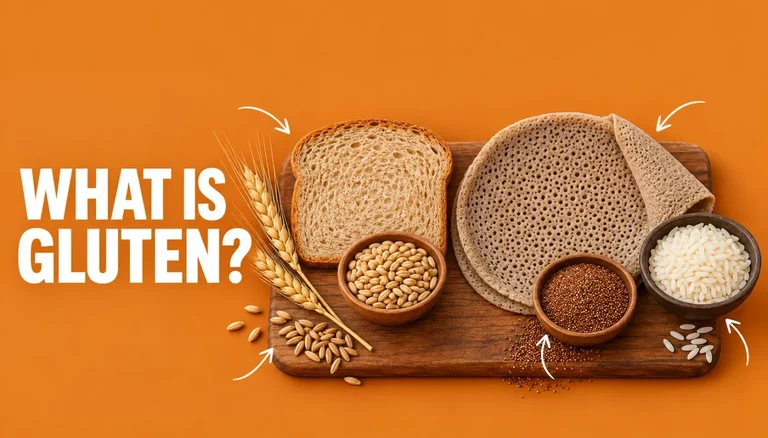
Gluten is a protein found naturally in wheat, barley and rye. It gives bread dough its stretch, and it turns up in many foods you would not guess, from soy sauce to candy. For most people it is harmless. For the roughly 1 in 100 people who have celiac disease, it damages the small intestine.
Facts on gluten, celiac disease and labels are from the NIDDK (National Institutes of Health) and the FDA, both checked on October 14, 2026. Food details come from the linked NutriScan food pages.
Summary
- Gluten is a protein in wheat, barley and rye. The NIDDK also names triticale, durum, emmer, semolina and spelt.
- Celiac disease affects about 1 percent of people worldwide and about 2 million people in the United States, per the NIDDK. The only treatment is a gluten-free diet for life.
- A gluten-free label in the US means less than 20 parts per million of gluten, per the FDA.
- Injera is gluten-free when it is 100% teff. Dashi is gluten-free when made from kombu and bonito. Twix Bits contain wheat and are not gluten-free.
- No evidence shows a gluten-free diet improves health or weight loss in people without celiac disease or another gluten-related condition, says the NIDDK.
What is gluten?
Gluten is a group of proteins that occur naturally in certain grains. The NIDDK's definition page describes it as a protein found in wheat, barley and rye, common in bread, pasta, cookies and cakes. In dough, it forms an elastic network that traps gas and gives bread its chew. Seitan is the extreme case: it is wheat dough washed until only the gluten is left. Dry vital wheat gluten, the flour it starts from, is 75 g of protein per 100 g on our page.
Which grains and ingredients contain gluten?
The NIDDK's guide to eating with celiac disease lists the sources:
- Wheat, including durum, emmer, semolina and spelt
- Barley, which shows up in malt, malt extract, malt vinegar and brewer's yeast
- Rye
- Triticale, a cross between wheat and rye
Gluten is found in foods made from these grains, such as baked goods, baking mixes, breads, cereals and pasta. Beer, lager, ale, flavored liquors and malt drinks may also contain it. The NIDDK adds that colorings, flavorings, starches and thickeners can be made from gluten grains, so it can sit in candy, condiments, hot dogs and sausages, ice cream, salad dressing and soups.

Which foods are naturally gluten-free?
Per the NIDDK, meat, fish, fruits, vegetables, rice and potatoes are naturally gluten-free as long as nothing with gluten is added in the seasoning or sauce. Flours from potatoes, rice, corn, soy, nuts, cassava, amaranth, quinoa, buckwheat and beans are also safe.
Oats are the exception to watch. The NIDDK says most people with celiac disease can safely eat moderate amounts of oats, but they should be labeled gluten-free, because cross-contact with wheat, barley or rye is common. Cross-contact means gluten-free food touching gluten-containing food during growing, processing, storage, cooking or serving.
Do these common foods have gluten?
| Food | Gluten? | Why |
|---|---|---|
| White rice | No | Rice is naturally gluten-free (NIDDK) |
| Quinoa | No | Quinoa flour is on the NIDDK safe list |
| Teff | No | A grain unrelated to wheat, barley and rye; see our teff page |
| Injera | Only if 100% teff | Some commercial injera adds wheat or barley |
| Dashi | Homemade: no. Instant: check | Instant powders may add wheat-based soy sauce |
| Soy sauce | Yes, traditional | Brewed with wheat; tamari is sold as the wheat-free option |
| Twix Bits | Yes | Wheat flour in the cookie base |
| Seitan | Yes | It is concentrated wheat gluten |
| Barley | Yes | One of the three gluten grains |
| Rye bread | Yes | Rye contains gluten, though less than wheat |
| Oats | Only by cross-contact | Choose oats labeled gluten-free |
Does injera have gluten?
Traditional injera is made from teff flour and water, fermented for 2 to 3 days, per our injera page. Teff is not wheat, barley or rye, so 100% teff injera is gluten-free. Our teff page lists it as naturally gluten-free.
The catch is the word "traditional." Our injera page notes that many commercial versions mix in wheat or barley flour to cut cost. Restaurant and store-bought injera can differ from one batch to the next, so ask whether it is 100% teff. Check the ingredient list on packaged injera. If you have celiac disease, also ask whether the pan or griddle is shared with wheat batter.
Is dashi gluten free?
Homemade dashi has no gluten. It is kombu (kelp) steeped in water, sometimes with dried bonito flakes. Neither one is wheat, barley or rye. Our dashi page puts a cup at about 5 calories.
Instant dashi is where it goes wrong. Our page says some commercial powders contain wheat-based soy sauce or other additives. Traditional soy sauce is brewed with wheat, so anything flavored with it carries gluten unless the pack says otherwise. If you cook for someone with celiac disease, make dashi from scratch or buy a powder with a gluten-free label.
Are Twix Bits gluten free?
No. Our Twix Bits page lists wheat among the allergens, along with milk and soy, and says they may contain peanuts. The cookie base is made with enriched wheat flour. A 30 g serving is 140 calories. They are not suitable for celiac disease, and the label on your pack is the final word because recipes change by market.
What does a gluten-free label mean?
In the US, the FDA requires that foods labeled "gluten-free," "no gluten," "free of gluten" or "without gluten" contain less than 20 parts per million (ppm) of gluten. The NIDDK says that amount is too small to cause problems in most people with celiac disease.
A food can also carry the label only if it has no ingredient that is wheat, rye, barley or a cross of them, unless that ingredient was processed to remove gluten and the food still tests under 20 ppm. Manufacturers had until August 2014 to bring labels into line.
Two gaps to know about, both from the NIDDK. The rule does not apply to foods regulated by the USDA, such as meat, poultry and some egg products. It also does not apply to most alcoholic drinks, which the Treasury Department regulates.
Outside the US, the rules differ by country. Check your own country's labeling law and the pack.
Is gluten-free bread healthier?
Not on its own. The NIDDK warns that some packaged gluten-free foods have more fat and sugar than the same foods with gluten, and that they tend to cost more. For someone with celiac disease, gluten-free bread is the safe choice. For everyone else, compare the nutrition label of a gluten-free loaf with a regular one. Look at calories, fiber, sugar and fat per slice rather than the "gluten-free" badge.
Who needs to avoid gluten?
People with celiac disease, an autoimmune disease where gluten damages the small intestine, need a gluten-free diet for life, per the NIDDK. Your doctor or a registered dietitian sets the plan.
The NIDDK also says that if you think you might have celiac disease, talk to your doctor about testing before you stop eating gluten, since avoiding it first can make test results inaccurate. Starting a gluten-free diet on your own can also leave you short of fiber, iron and calcium.
Medical note
This article is general information, not medical advice. If you have celiac disease, a wheat allergy or another condition tied to gluten, follow your doctor's or dietitian's advice and read every label.
How can NutriScan help if you avoid gluten?
When you create a diet plan in NutriScan (a Premium feature), the form asks "Any Food Restrictions?" and lets you pick Gluten, Dairy, Soy or Lactose Intolerance. While the plan builds, one step reads "Considering your dietary restrictions and allergies."
NutriScan does not detect gluten in a scan, so keep reading ingredient lists and labels yourself. What the app does do is track calories and macros for what you eat. The free plan includes 5 scans a week. For other diet-specific starting points, see our diabetes macro calculator and the guide to brown rice vs white rice. For fiber from gluten-free grains, see how much fiber per day.
What else do people ask about gluten?
What is gluten?
Gluten is a protein found naturally in wheat, barley and rye. The NIDDK also lists triticale, a wheat and rye cross, and wheat types such as durum, emmer, semolina and spelt. It is what makes bread dough stretchy.
Does injera have gluten?
Traditional injera made from 100% teff is gluten-free, because teff is not wheat, barley or rye. Some commercial injera is mixed with wheat or barley flour, so ask whether it is 100% teff or check the label.
Is dashi gluten free?
Homemade dashi from kombu and bonito flakes has no wheat, barley or rye in it. Some instant dashi powders add soy sauce made with wheat or other additives, so read the ingredient list on the pack.
Are Twix Bits gluten free?
No. Twix Bits contain wheat flour in the cookie base, plus milk and soy, and may contain peanuts, according to our Twix Bits page. They are not suitable for celiac disease.
What does a gluten-free label mean in the US?
The FDA requires foods labeled gluten-free, no gluten, free of gluten or without gluten to contain less than 20 parts per million of gluten. Manufacturers had until August 2014 to comply. The rule does not cover USDA-regulated meat and poultry or most alcoholic drinks.
Is gluten-free bread healthier than regular bread?
Not by default. The NIDDK notes that some packaged gluten-free foods are higher in fat and sugar than the versions with gluten, and that they tend to cost more. It is the right choice if you have celiac disease and a matter of taste otherwise.
Should I go gluten-free to lose weight?
The NIDDK says researchers have found no evidence that a gluten-free diet promotes better health or weight loss for the general population. If you suspect celiac disease, get tested before you cut gluten, because avoiding it first can make test results inaccurate.