Gado-Gado : calories, nutrition et bienfaits pour la santé
Indonesia's vibrant vegetable salad with rich peanut sauce—packed with plant-based protein, fiber, and essential nutrients for every health goal.
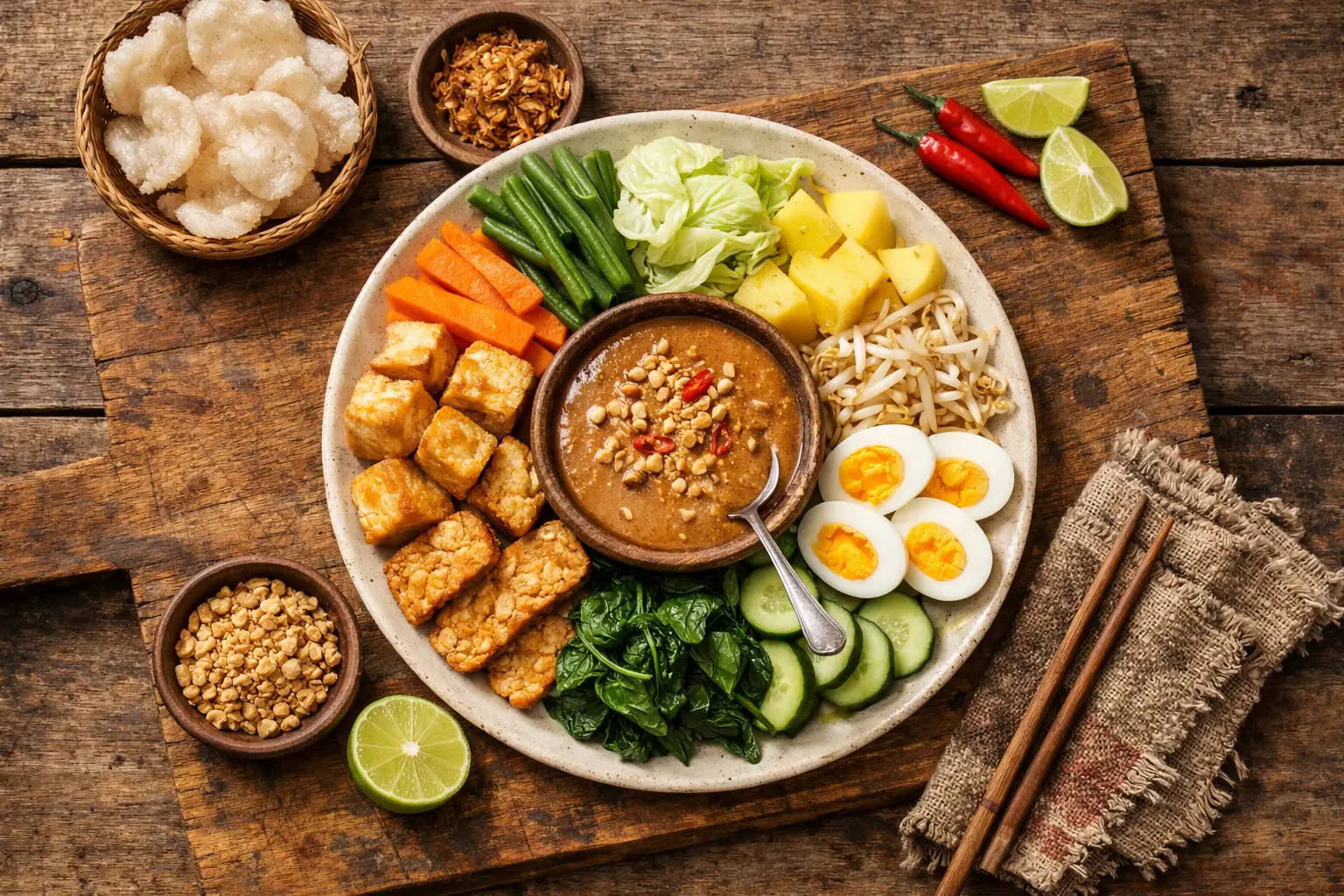
Infos nutritionnelles rapides
Per 1 Cup (236g)
| Nutrient | Amount |
|---|---|
| Calories | 315 kcal |
| Protein | 12g |
| Carbohydrates | 28g |
| Fiber | 6g |
| Sugars | 4g |
| Fat | 16g |
| Saturated Fat | 3g |
| Sodium | 472mg |
| Potassium | 315mg |
| Iron | 1.6mg |
Répartition des macronutriments
 ChatGPT
  Claude
  AI Mode
  Perplexity
NUTRITIONIST INSIGHT
Gado-gado is a nutritional powerhouse combining vegetables, plant-based protein, and healthy fats. The variety of vegetables provides diverse phytonutrients, while the peanut sauce delivers vitamin E and heart-healthy monounsaturated fats.
Mythes à déconstruire
MYTH #1: Gado-Gado Is Too High in Calories for Weight Loss
TRUTH: One cup has only 315 calories with 6g fiber and 12g protein that promote fullness. Studies show high-fiber, protein-rich meals improve satiety. Control portions of peanut sauce (2-3 tablespoons vs. 1/3 cup) to reduce calories by 100-150.
MYTH #2: The Peanut Sauce Makes It Unhealthy
TRUTH: Peanut sauce provides healthy monounsaturated fats and vitamin E. While calorie-dense, these fats support heart health and nutrient absorption. Use moderate amounts (2-3 tablespoons) and choose versions with minimal added sugar.
MYTH #3: Gado-Gado Doesn't Have Enough Protein
TRUTH: One cup provides 12g protein from tofu, tempeh, eggs, and peanuts—comparable to a glass of milk. This plant-based protein supports muscle maintenance and is suitable for vegetarian diets.
MYTH #4: Diabetics Should Avoid Gado-Gado
TRUTH: Gado-gado's fiber (6g) and protein help moderate blood sugar response. Focus on non-starchy vegetables, limit potatoes and rice cakes, and the combination of protein, fat, and fiber will slow glucose absorption.
MYTH #5: All the Calories Come from Fat
TRUTH: While 47% of calories come from fat (mostly healthy peanut fats), carbs contribute 37% and protein 16%. This balanced macronutrient profile provides sustained energy and prevents blood sugar spikes.
MYTH #6: Gado-Gado Is Just a Side Dish
TRUTH: With 12g protein, 6g fiber, and diverse vegetables, gado-gado is a complete meal. It provides complex carbs for energy, plant-based protein for satiety, and essential vitamins A, C, and E for immunity and skin health.
NutriScore par objectifs de santé
| Health Goal | NutriScore | Why This Score? |
|---|---|---|
| Weight Loss |  | 315 calories with 6g fiber and 12g protein promote fullness. Control peanut sauce portions to reduce calories. High vegetable content supports volume eating. |
| Muscle Gain | | 12g plant-based protein per cup. Add extra tofu, tempeh, or eggs for 15-20g protein. Good post-workout meal with carbs for glycogen replenishment. |
| Diabetes Management | | High fiber (6g) and protein slow glucose absorption. Skip potatoes and rice cakes. Moderate GI when prepared without starchy additions. |
| PCOS Management | | Balanced macros with fiber and protein support insulin sensitivity. Choose non-starchy vegetable versions. Healthy fats from peanuts support hormone production. |
| Pregnancy Nutrition |  | Rich in folate from leafy greens, iron for blood health, protein for fetal development. Diverse vegetables provide vitamin A, C, and calcium. |
| Viral/Flu Recovery | | Easy to digest, vitamin C from vegetables boosts immunity, protein supports tissue repair, diverse phytonutrients aid recovery. |
PERSONALIZED NUTRITION
Track your meals with NutriScan pour des NutriScores personnalisés selon tes objectifs santé !
Réponse glycémique to Gado-Gado
Understanding how gado-gado affects your blood glucose helps you make informed meal decisions.
Typical Glucose Response Curve
This chart shows typical blood glucose response for general healthy individuals. Individual responses may vary. Not medical advice.
Comment atténuer le pic
Gado-gado's natural combination of fiber, protein, and fat already moderates blood sugar, but these tips further optimize glucose response:
- 🥚 Add an extra boiled egg - Increases protein to 18-20g for better satiety
- 🥑 Skip potatoes and rice cakes - Reduces starchy carbs that spike blood sugar
- 🥜 Use 2-3 tablespoons peanut sauce - Provides healthy fat without excess calories
- 🥗 Load up on non-starchy vegetables - Maximizes fiber and nutrient density
This balanced approach keeps blood sugar stable while delivering complete nutrition.
Importance culturelle
Gado-gado is one of Indonesia's most beloved dishes, originating from Java and representing the country's diverse culinary heritage.
In Indonesia:
- National dish served at street stalls (warungs) and upscale restaurants
- Name means "mix-mix" in Javanese, reflecting its diverse ingredients
- Traditional components vary by region: Jakarta adds lontong (rice cakes), while Sundanese versions emphasize raw vegetables
- Served at celebrations, family gatherings, and as everyday comfort food
- Peanut sauce recipes are family treasures passed down through generations
Global Impact:
- Popular in Malaysian and Singaporean cuisine as well
- Gained international recognition as a healthy, plant-based meal option
- Featured in vegetarian and vegan restaurants worldwide
- Represents Indonesian cuisine in international food festivals
- UNESCO recognition of Indonesian cuisine has boosted global interest
Comparer et remplacer
Gado-Gado vs Similar Dishes (Per 100g)
| Nutrient | 🥗 Gado-Gado | 🥜 Pecel (Indonesian) | 🥙 Buddha Bowl | 🥗 Greek Salad |
|---|---|---|---|---|
| Calories | 133 kcal | 140 kcal | 150 kcal | 120 kcal |
| Carbs | 12g | 10g | 18g | 5g |
| Fiber | 2.5g | 3g | 4g | 2g |
| Protein | 5g | 6g | 7g | 4g |
| Fat | 7g | 8g | 6g | 10g |
| Sodium | 200mg | 180mg | 250mg | 400mg |
| Iron | 0.7mg | 1.2mg | 1.5mg | 0.5mg |
| Vitamin C | 15mg | 20mg | 12mg | 8mg |
| Best For | Balanced plant-based meal | Higher fiber, simpler | Grain-based fullness | Low-carb, Mediterranean |
Questions fréquentes
Is gado-gado good for weight loss?
Yes, gado-gado can support weight loss when portions are controlled. One cup provides 315 calories with 6g fiber that promotes fullness and 12g plant-based protein that prevents muscle loss during calorie restriction.
Best practices: Use 2-3 tablespoons of peanut sauce (saves 100-150 calories), load up on non-starchy vegetables (cabbage, bean sprouts, green beans), limit potatoes and rice cakes, and add extra protein from tofu or eggs.
Can diabetics eat gado-gado?
Diabetics can enjoy gado-gado in moderation. The combination of fiber (6g), protein (12g), and healthy fats naturally moderates blood sugar response.
Tips for diabetics:
- Skip potatoes and rice cakes to reduce starchy carbs
- Focus on non-starchy vegetables (cabbage, green beans, bean sprouts, spinach)
- Include tofu, tempeh, and eggs for protein
- Use moderate peanut sauce (2-3 tablespoons)
- Monitor blood sugar 2 hours after eating
The high fiber and protein content helps prevent blood sugar spikes compared to pure carbohydrate meals.
How much protein is in gado-gado?
One cup of gado-gado contains 12g of protein from tofu, tempeh, eggs, and peanuts. This makes it a good plant-based protein source comparable to a glass of milk or 2 ounces of chicken.
For muscle gain or higher protein needs, add extra tofu (7g per 3oz), an additional egg (6g), or tempeh (8g per 3oz) to reach 15-20g protein per serving.
What are the main health benefits of gado-gado?
Key Benefits:
- Digestive Health: 6g fiber supports regular bowel movements and gut health
- Plant-Based Protein: 12g protein for muscle maintenance without meat
- Heart Health: Monounsaturated fats from peanuts support cardiovascular function
- Immunity: Vitamins A and C from vegetables boost immune system
- Nutrient Diversity: Multiple vegetables provide varied phytonutrients and antioxidants
- Blood Health: Iron from leafy greens and tempeh prevents anemia
Is gado-gado high in calories?
Gado-gado is moderately caloric at 315 calories per cup. Most calories come from peanut sauce (47% fat, 141 calories).
To reduce calories:
- Use 2 tablespoons peanut sauce instead of 1/3 cup (saves 100-150 calories)
- Increase vegetable portions (low-calorie volume)
- Skip potatoes and rice cakes (saves 80-100 calories)
- Add more leafy greens and bean sprouts
A lighter version can be 200-250 calories per cup while maintaining protein and fiber.
How much gado-gado should I eat per serving?
General Guidelines:
- 1-1.5 cups - Weight loss or lighter meal (200-400 calories)
- 1.5-2 cups - Maintenance or active lifestyle (400-600 calories)
- 2-2.5 cups - Muscle gain or high activity (600-800 calories)
Adjust based on:
- Peanut sauce amount (2-5 tablespoons changes calories by 150+)
- Inclusion of potatoes or rice cakes (adds 80-100 calories)
- Extra protein additions (tofu, eggs, tempeh add 50-80 calories)
Track your meals with NutriScan app to see how gado-gado fits your personal nutrition goals.
La sauce aux arachides du gado-gado est-elle saine ?
Peanut sauce provides healthy monounsaturated fats, vitamin E, and plant-based protein. However, it's calorie-dense (50-100 calories per tablespoon).
Benefits:
- Heart-healthy fats reduce LDL cholesterol
- Vitamin E acts as antioxidant
- Enhances absorption of fat-soluble vitamins (A, D, E, K) from vegetables
Watch for:
- Added sugar (choose versions with minimal sweeteners)
- Sodium content (can be 100-200mg per tablespoon)
- Portion control (use 2-3 tablespoons vs. 1/3 cup)
Homemade peanut sauce lets you control sugar and sodium for a healthier version.


Aliments nutritifs similaires
4505 Chicharrones Classic Chili Salt
7 Eleven Japan Crispy Corn Cheese
Explore More Nutrition Tools & Resources
Alternative au plan alimentaire ChatGPT qui suit vos repas
Alternative ChatGPT coach perte de poids avec suivi
Alternative Foodvisor gratuite avec scan IA | NutriScan
App prise de poids : plan alimentaire 28 jours
Appli suivi macros qui remplit les chiffres depuis une photo
Application de jeûne intermittent : minuteur gratuit
Application Micronutriments pour Vitamines et Minéraux
Application Nutri-Score : note de chaque repas | NutriScan
Application plan alimentaire indien végé et non végé
Application plan repas prise de masse avec surplus calculé
Application suivi d'eau et de calories gratuite
Calculer les Calories des Aliments
Compteur de calories ChatGPT : alternative complète
Compteur de calories fast food qui lit le plateau
Compteur de calories gratuit avec scan photo IA | NutriScan
Compteur de Calories IA : une photo, vos macros
Compteur de Calories pour Cuisine Française - Informations Nutritionnelles Instantanées — 2026
Générateur Liste de Courses Keto
Générateur Liste de Courses Mensuelle
Jeûne intermittent femme, minuteur et suivi des repas
Nutriscan pour la Perte de Poids
Nutriscan pour le Gain de Masse Musculaire
Nutritionniste IA qui lit vos repas enregistrés
Plan alimentaire méditerranéen qui compte l'huile
Plan Alimentaire pour Hommes de 40 Ans
Plan de Régime Prise de Poids France
Plan de repas végétarien avec objectif protéines
Plan régime keto : appli 28 jours et suivi glucides
Planificateur de repas hebdomadaire avec calories