Aldi Snackin' Sticks Vegan Salami: Calories, Nutrition and Health Benefits
Aldi's plant-based Pepperami rival — 40g protein per 100g, 30% less salt than meat salami, and rich in fiber.
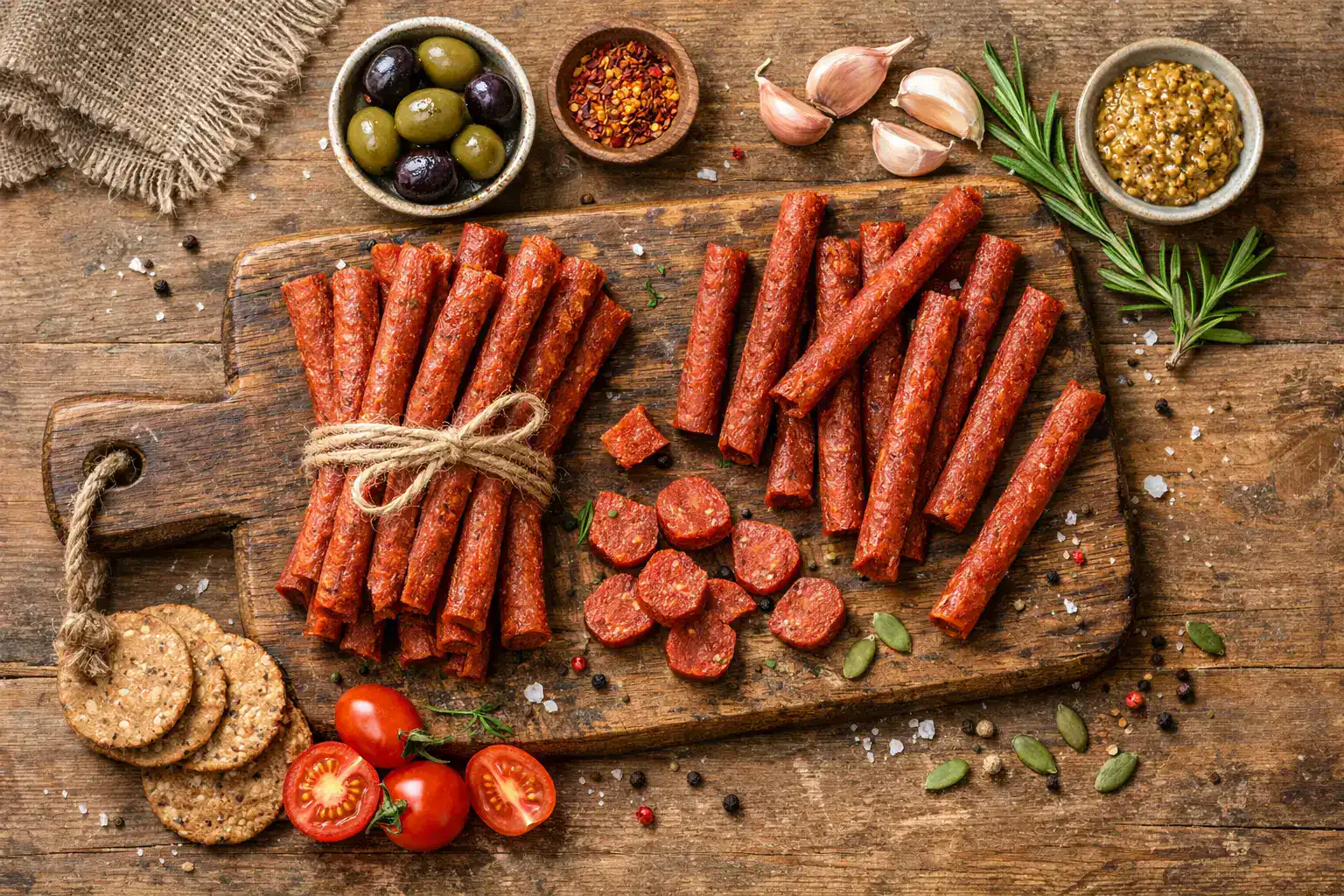
Quick Nutrition Facts
Per 1 Stick (25g) · 2 sticks per 50g pack
| Nutrient | Amount |
|---|---|
| Calories | 90 kcal |
| Protein | 10g |
| Carbohydrates | 2g |
| Fiber | 1g |
| Sugars | 0.5g |
| Fat | 5g |
| Saturated Fat | 1g |
| Sodium | 175mg |
| Iron | 0.8mg |
Macronutrient Breakdown
 ChatGPT
  Claude
  AI Mode
  Perplexity
NUTRITIONIST INSIGHT
Aldi Snackin' Sticks Vegan Salami deliver 40g protein per 100g with 30% less salt and 20% less saturated fat than conventional pork salami. The plant-based protein blend provides sustained energy and fiber that traditional cured meats cannot match.
Myth Busters
MYTH #1: Vegan Salami Sticks Lack Protein
TRUTH: Aldi Snackin' Sticks contain 40g protein per 100g — nearly double that of traditional pork salami (22g). Plant-based protein alternatives can effectively match or exceed meat protein content while providing additional fiber.
MYTH #2: Plant-Based Snack Sticks Are Ultra-Processed Junk
TRUTH: While processed, these sticks have 30% less salt and 20% less saturated fat than meat equivalents. Research shows plant-based meat alternatives have lower fat and saturated fat than corresponding meat products, with comparable or higher protein.
MYTH #3: Vegan Protein Is Incomplete
TRUTH: Blended plant proteins (wheat + pea + soy combinations) complement each other's amino acid profiles. Combined plant protein sources provide adequate essential amino acids for muscle maintenance and overall health.
MYTH #4: High-Protein Vegan Snacks Leave You Hungry
TRUTH: At 40g protein per 100g with added fiber, these sticks promote strong satiety. High-protein snacks significantly reduce subsequent calorie intake and increase feelings of fullness for hours.
MYTH #5: Vegan Meat Alternatives Are Too High in Sodium
TRUTH: While sodium is present, Aldi Snackin' Sticks contain 30% less salt than traditional pork salami. Choosing lower-sodium plant-based alternatives is a practical step toward reducing overall sodium intake from processed snacks.
NutriScore by Health Goals
| Health Goal | NutriScore | Why This Score? |
|---|---|---|
| Weight Loss |  | 90 cal per stick with 10g protein. High protein promotes satiety and reduces overall calorie intake. Limit to 1-2 sticks per snack. |
| Muscle Gain |  | 40g protein per 100g rivals premium protein bars. Convenient post-workout plant protein with minimal carbs. |
| Diabetes Management | | Very low carbs (8g/100g) with negligible glycemic impact from high-protein, low-carb snacks. Safe for blood sugar management. |
| PCOS Management | | Low glycemic impact, high protein. Watch sodium intake; limit to 1-2 sticks per serving. |
| Pregnancy Nutrition | | Good plant protein source. Plant-based protein is safe during pregnancy but supplement with B12, iron, and folate. No listeria risk unlike deli meats. |
| Viral/Flu Recovery | | Protein supports immune recovery. Easy to eat, shelf-stable, no preparation needed. Pair with vitamin C-rich foods. |
PERSONALIZED NUTRITION
Track your meals with NutriScan for personalized NutriScores based on your specific health goals!
Blood Sugar Response to Aldi Snackin' Sticks Vegan Salami
Understanding how these vegan salami sticks affect your blood glucose can help you make informed snacking decisions.
Typical Glucose Response Curve
This chart shows typical blood glucose response for general healthy individuals. Individual responses may vary. Not medical advice.
How to Flatten the Spike
Pairing high-protein snacks with fiber-rich foods further stabilizes blood sugar and extends satiety:
- 🥒 Raw vegetable sticks (carrots, celery, cucumber) - Adds fiber and volume with minimal calories
- 🫒 Hummus or guacamole - Healthy fats slow digestion and add micronutrients
- 🍅 Cherry tomatoes - Vitamin C helps iron absorption from plant protein
- 🥖 Whole grain crackers - Complex carbs for sustained energy release
This combination keeps blood sugar virtually flat while providing a satisfying, balanced snack.
Cultural Significance
Aldi's Eat & Go Snackin' Sticks launched as part of the UK's Veganuary 2026 wave, joining the growing plant-based snacking revolution.
In the UK:
- Part of the UK's £1.1 billion plant-based food market, growing 20% year-on-year
- Positioned as a Pepperami rival — targeting the same convenience snack occasion
- Available in Salami and Chorizo flavours, catering to traditional snack preferences
- Supported by PETA UK's Veganuary campaign alongside La Vie salami sticks
Global Impact:
- Aldi serves 40+ million customers weekly across 10,000+ stores in 11 countries
- Plant-based snacking is the fastest-growing segment in the UK food market
- 30% less salt and 20% less saturated fat than conventional pork-based alternatives
- Contributes to reduced environmental footprint — plant-based meats use up to 93% less land
Compare & Substitute
Aldi Snackin' Sticks vs Similar Snacks (Per 100g)
| Nutrient | 🌱 Aldi Vegan Salami | 🥩 Pork Salami | 🌿 La Vie Vegan Salami | 🥜 Beef Jerky |
|---|---|---|---|---|
| Calories | 360 kcal | 336 kcal | 200 kcal | 250 kcal |
| Carbs | 8g | 1g | 12g | 11g |
| Fiber | 4g | 0g | 5g | 0g |
| Protein | 40g | 22g | 34g | 33g |
| Fat | 20g | 26g | 8g | 5g |
| Sodium | 700mg | 1000mg | 700mg | 2081mg |
| Best For | High protein, convenient | Traditional charcuterie | Low-cal vegan protein | Shelf-stable protein |
Frequently Asked Questions
How many calories are in Aldi Snackin' Sticks Vegan Salami?
Each stick (25g) contains approximately 90 calories. A 50g pack (2 sticks) provides 180 calories with 20g of protein — an excellent protein-to-calorie ratio for a grab-and-go snack.
Per 100g: 360 calories, 40g protein, 8g carbs, 20g fat.
Are Aldi Snackin' Sticks good for weight loss?
Good for weight loss when eaten in moderation. At 90 calories per stick with 10g protein, they provide strong satiety with controlled portions. The high protein content helps preserve muscle mass during calorie restriction.
Best practices: Limit to 1-2 sticks per snack, pair with raw vegetables for volume, and track with NutriScan to stay within daily targets.
Can diabetics eat Aldi Snackin' Sticks Vegan Salami?
Very suitable for diabetics. With only 8g carbs per 100g and 40g protein, these sticks have minimal glycemic impact. The protein content helps stabilize blood sugar levels.
Tips for diabetics:
- Eat 1-2 sticks as a snack (only ~4g carbs)
- Pair with non-starchy vegetables for added fiber
- Monitor sodium intake if on blood pressure medication
- No need to restrict portions for blood sugar reasons
What are the main health benefits?
Key Benefits:
- High Protein: 40g protein per 100g supports muscle maintenance and satiety
- Lower Sodium: 30% less salt than conventional pork salami
- Less Saturated Fat: 20% less saturated fat than meat-based equivalents
- Fiber Content: Contains fiber that meat salami lacks entirely
- No Nitrites: Plant-based production eliminates nitrite exposure
- Convenience: Ready-to-eat, shelf-stable, portable snack format
How do they compare to regular pork salami?
Aldi Snackin' Sticks outperform traditional pork salami in protein (40g vs 22g per 100g), sodium (30% less), and saturated fat (20% less). They also provide fiber that meat salami cannot offer. The main trade-off is slightly higher carbohydrate content (8g vs 1g per 100g) and higher total calories per 100g, though both are low-carb options.
Are they safe during pregnancy?
Plant-based salami sticks are safe during pregnancy and carry zero listeria risk — a key advantage over traditional deli meats. Supplement with B12, iron, and folate as recommended for plant-based diets during pregnancy.
How many sticks should I eat per day?
General Guidelines:
- Weight Loss: 1-2 sticks (90-180 calories, 10-20g protein)
- Muscle Gain: 2-4 sticks (180-360 calories, 20-40g protein)
- General Snacking: 1-2 sticks (90-180 calories, 10-20g protein)
Watch for: Sodium content — a 50g pack provides ~350mg sodium. Keep within 2,300mg daily total.
Track your meals with NutriScan app to see how Aldi Snackin' Sticks fit your personal nutrition goals.


Similar Nutritious Foods
4505 Chicharrones Classic Chili Salt
7 Eleven Japan Crispy Corn Cheese
Explore More Nutrition Tools & Resources
AI Calorie Counter App - Snap a Photo, Get Macros
AI Nutritionist App That Reads Your Logged Meals
Best Protein Supplements for Women
Bulking Meal Plan App That Sets Your Surplus
ChatGPT Calorie Counter Alternative That Keeps the Total
ChatGPT Diet Plan Alternative That Tracks What You Eat
ChatGPT Weight Loss Coach Alternative With a Food Log
Fast Food Calorie Counter App That Reads the Tray
Free Calorie Tracker App with AI Photo Scans | NutriScan
Indian Diet Plan App With Veg and Non Veg Meals
Indian Food Calorie Calculator - Get Instant Nutrition Facts for Desi Meals — 2026
Intermittent Fasting for Women, Timer and Meal Log App
Intermittent Fasting Tracker App - Free Fasting Timer
Macro Tracker App That Fills the Numbers From a Photo
Mediterranean Diet Meal Plan App That Counts the Oil
Micronutrient Tracker App for Vitamins and Minerals
MyFitnessPal Alternative That Stays Free | NutriScan
NutriScore App: A Free Grade on Every Meal | NutriScan
Nutrition Label Scanner App for the Amount You Ate
Second Trimester Protein Guide
Vegetarian Meal Plan App With a Protein Target
Voice Calorie Counter - Speak to Track Meals Hands-Free
Water and Calorie Tracker App - Free Water Log